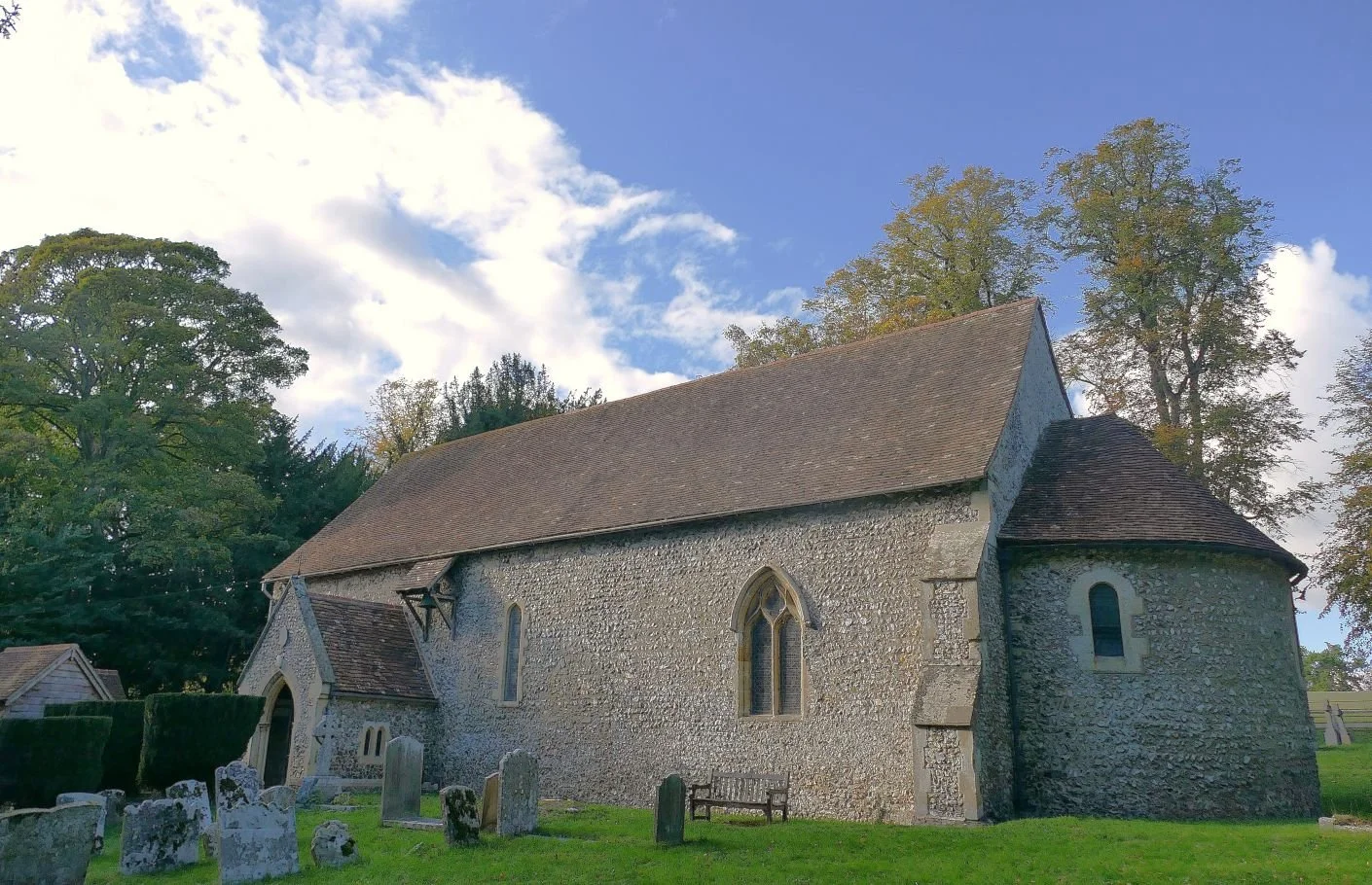
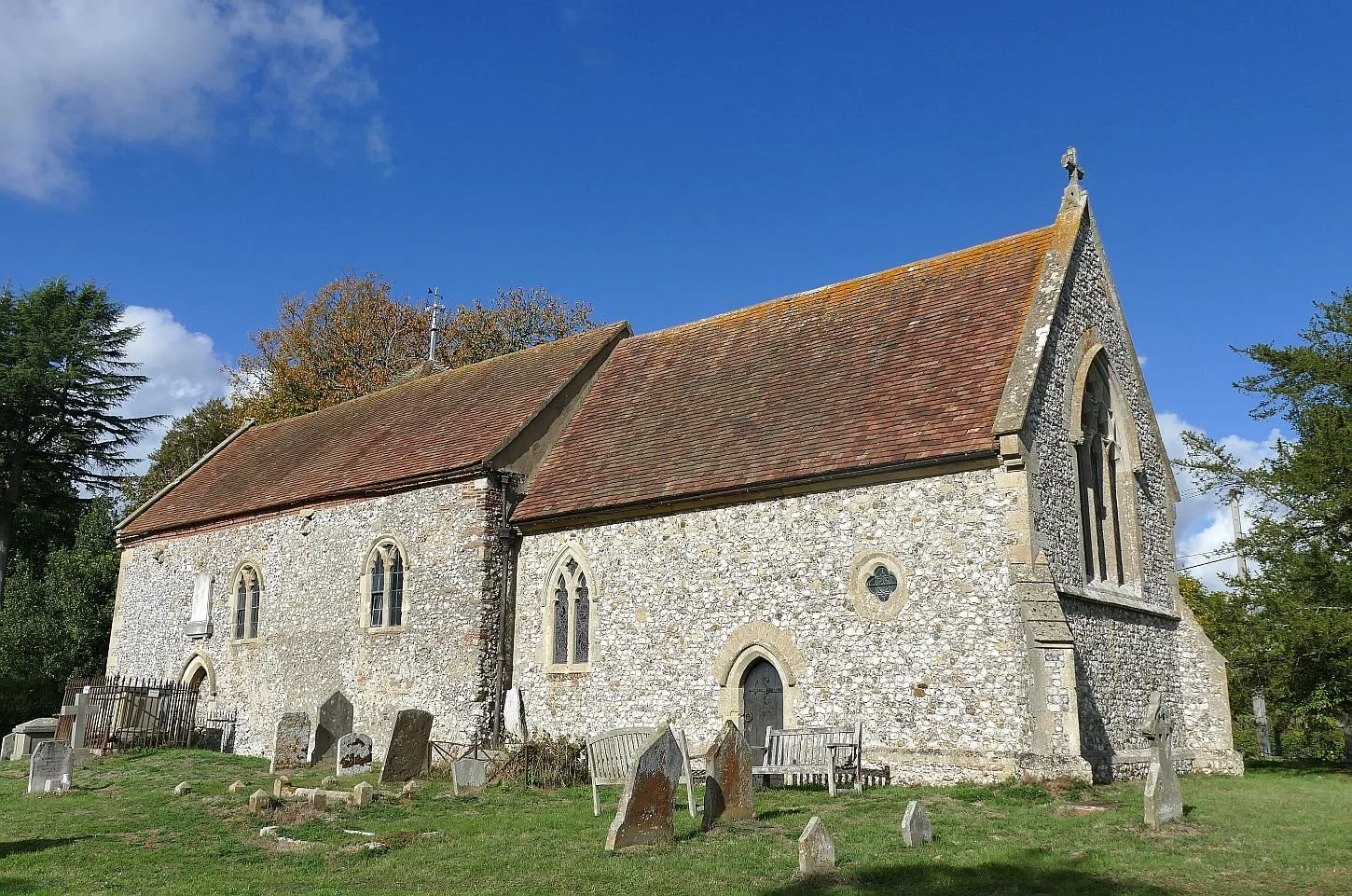
Who wants the seaside in 2026’s heatwave summer? Terroir is seeking shade in England’s middle lands. We’re roughly half way between the classically named Weston super Mare to the west of Bristol, and the rather more down (dæʊn) to earth world of the Thames estuary at Southend on Sea, to the east. Yes, we are back on the Ridgeway National Trail.
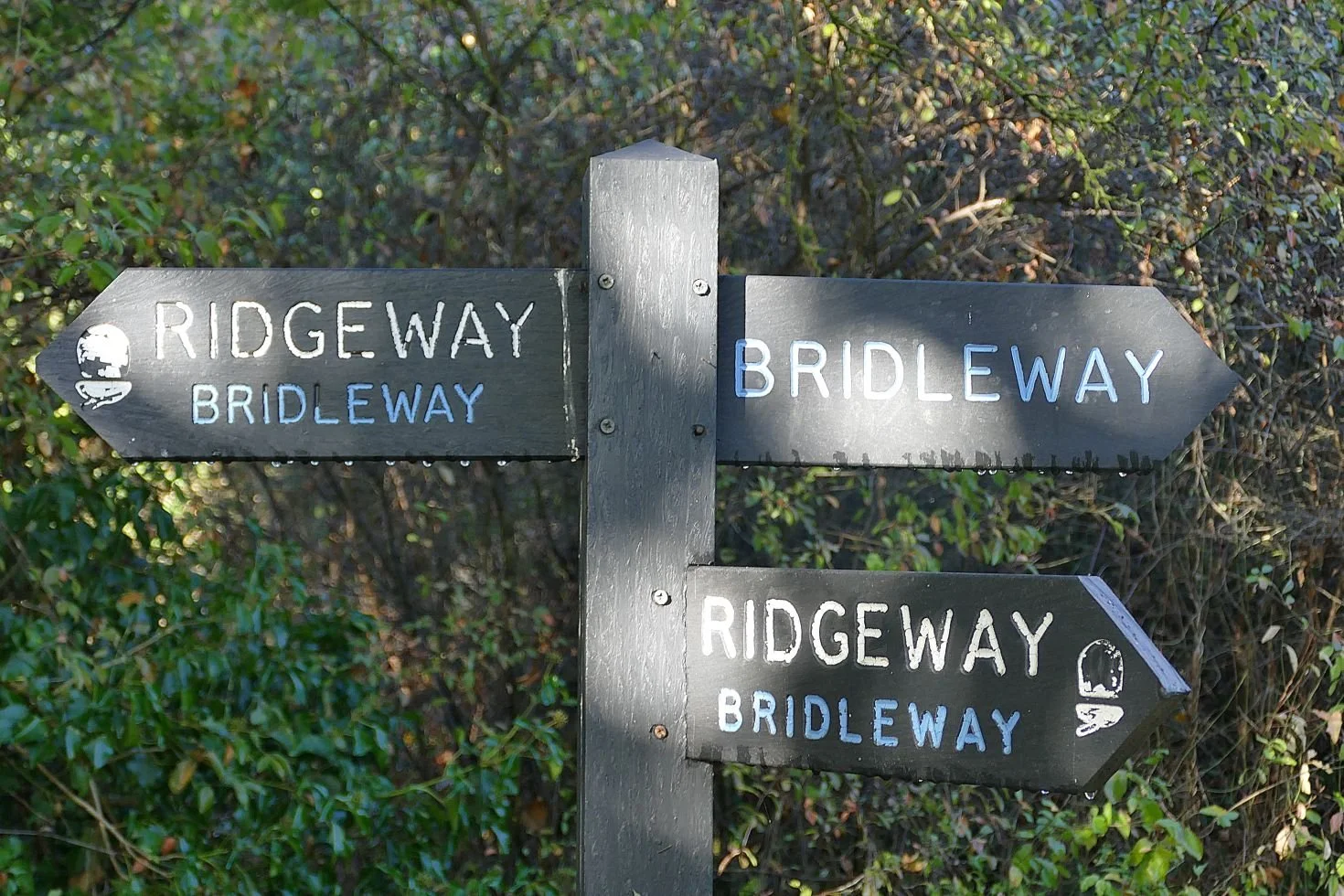
In August, we tramped the flattest and lowest section of the Ridgeway to enable a crossing of the Thames at Goring (pronounced and spelled ‘Goring’, to rhyme with ‘boring’ but no insult intended). For a brief period we entered a rich, verdant and railway dominated landscape, contrasting hugely with the dry and undulating terrain we had travelled between Uffington and the Goring Gap.
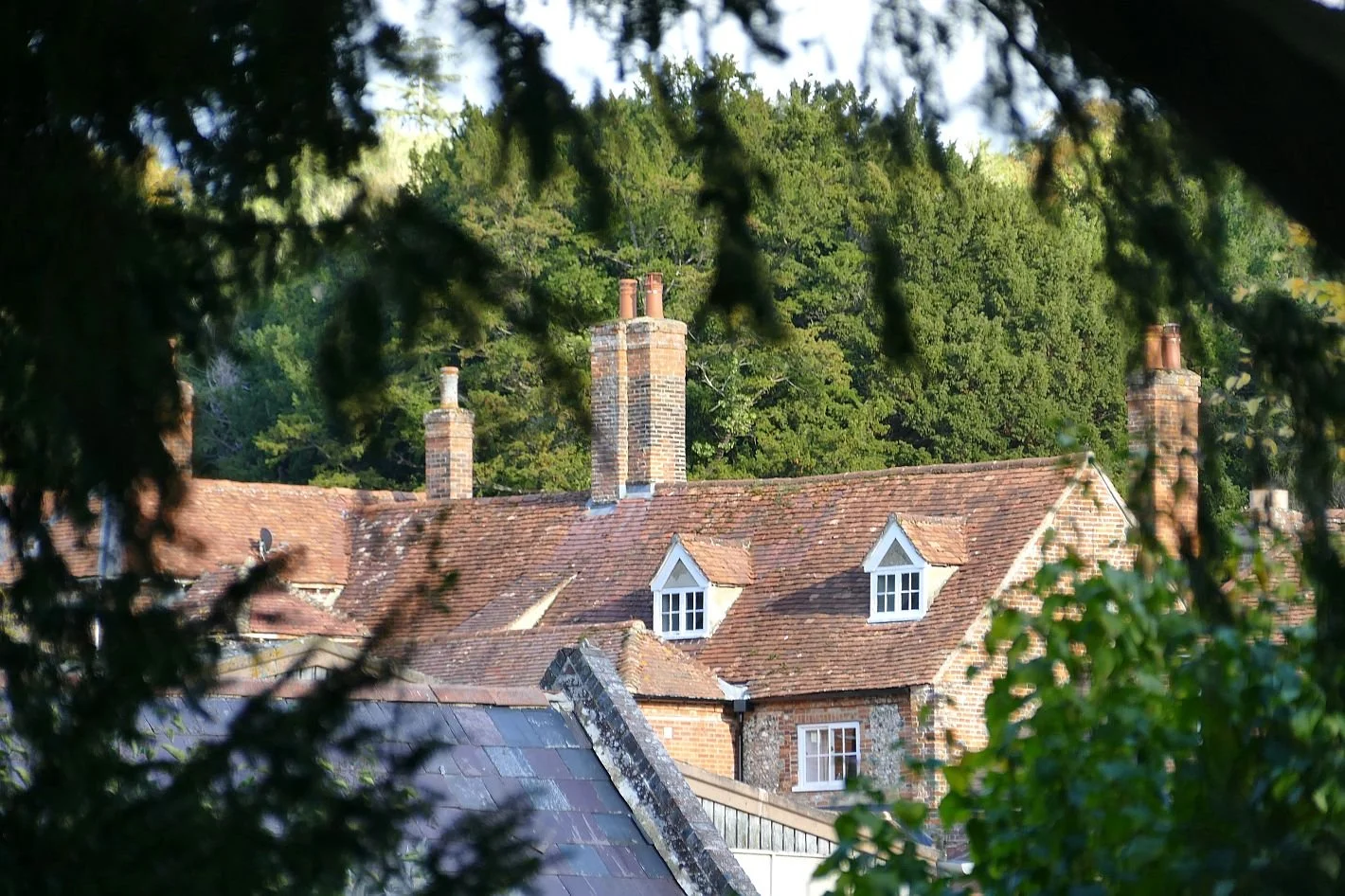
Our final glimpse of the Thames valley, this October, was a classic example of rural/urban fringe border lands, including a golf course, unmanaged woodland, a deserted college campus, and estate parkland. Our re-entry point is definitely on the rural side, but is still trying to understand its role in life.
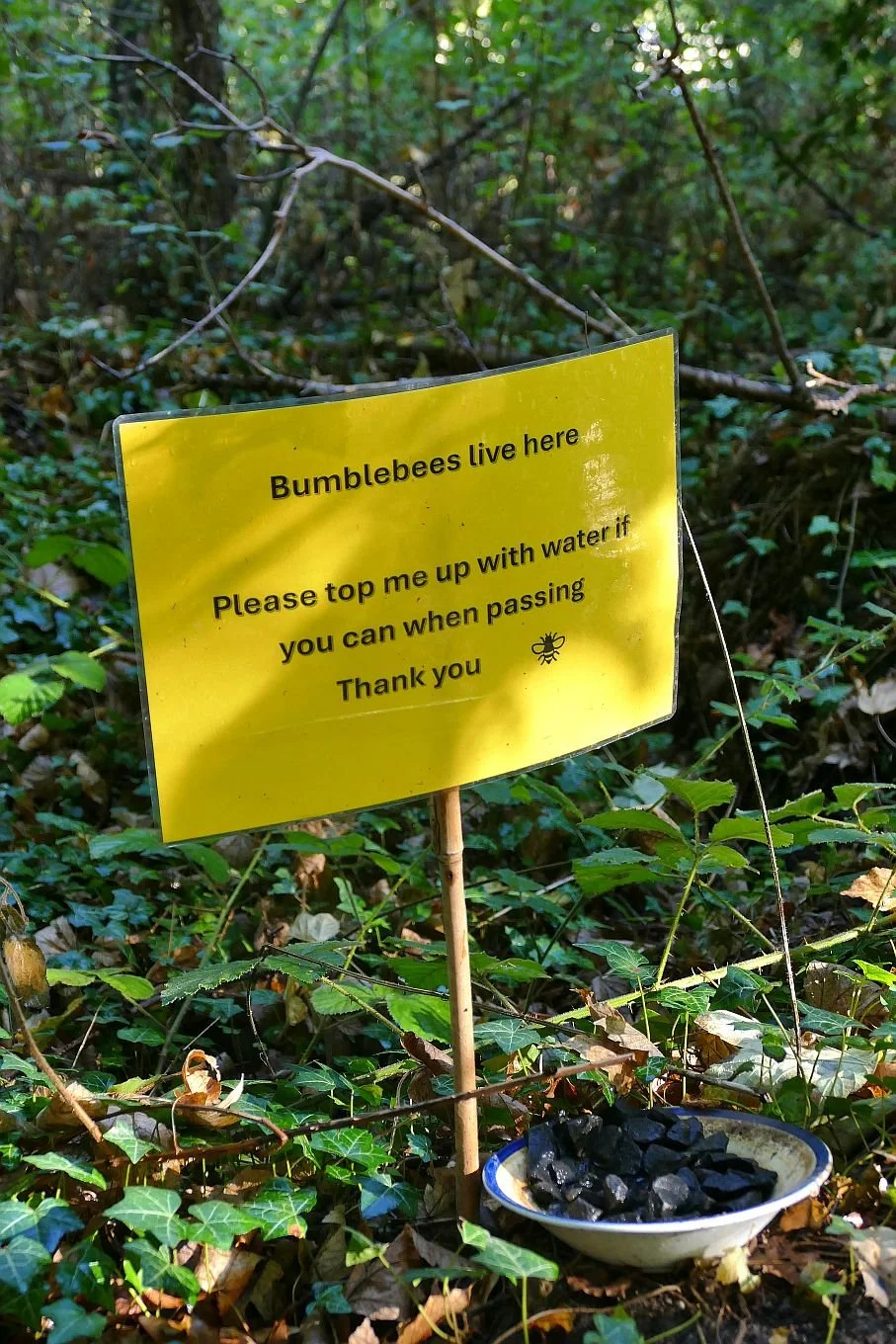
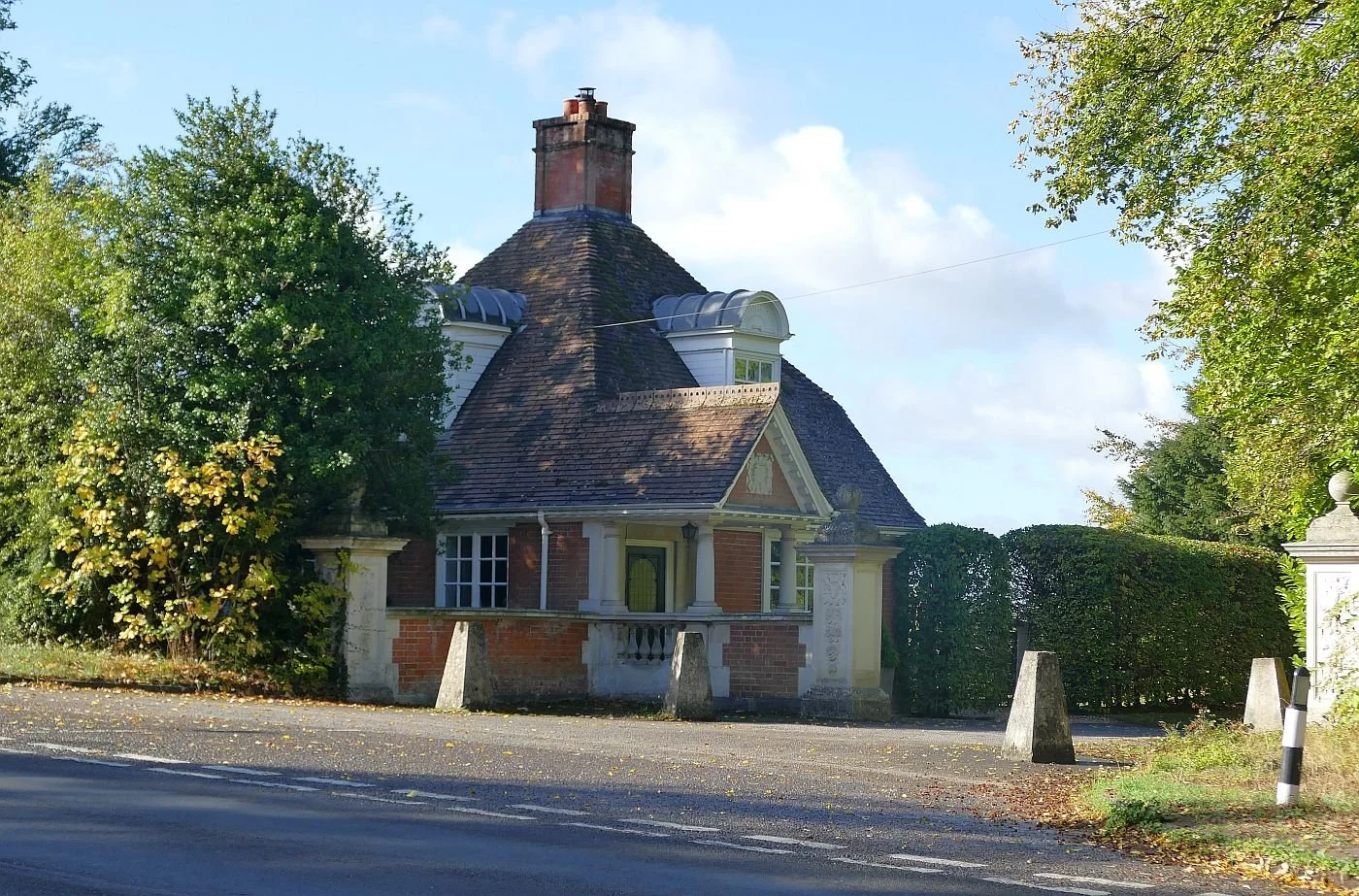
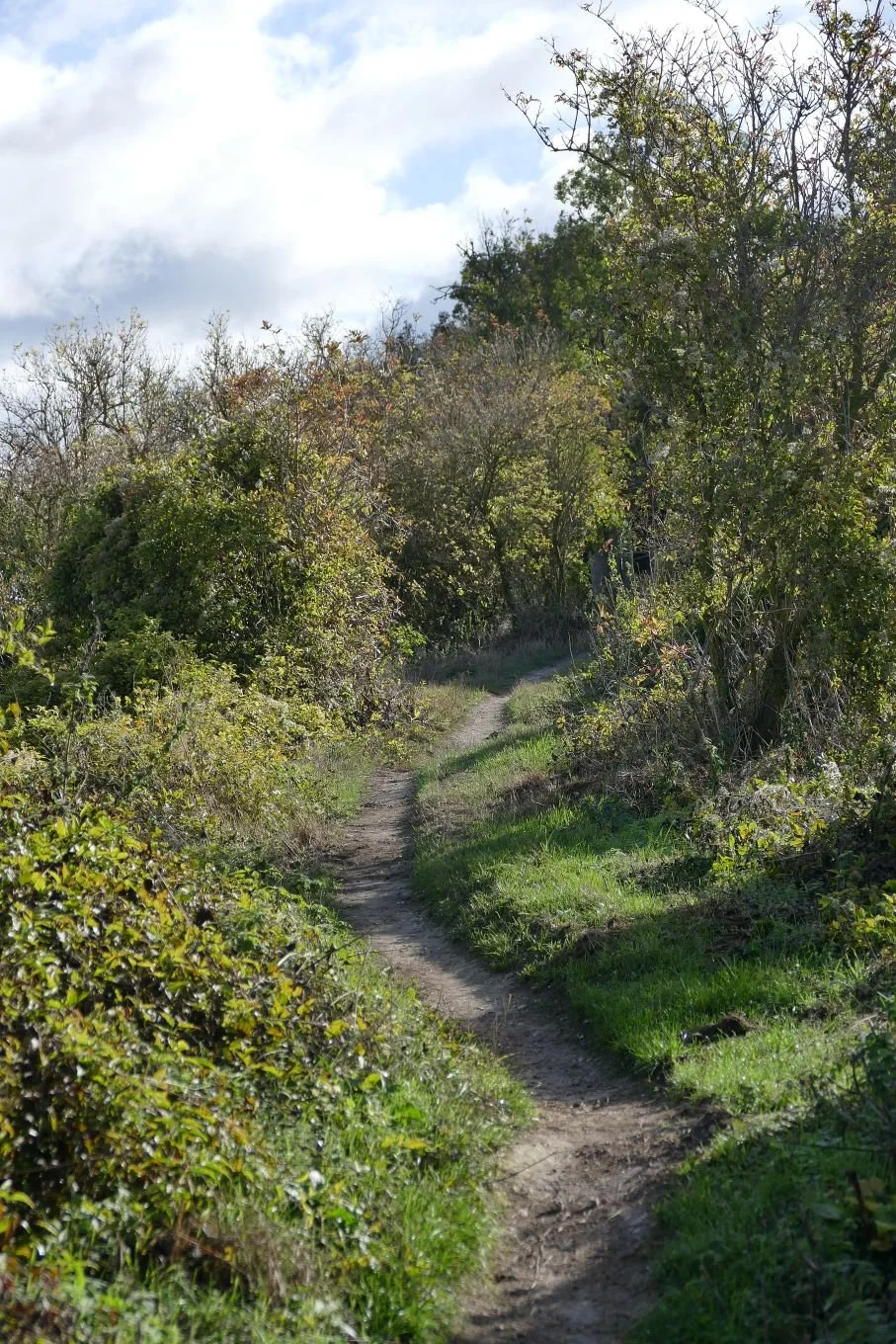
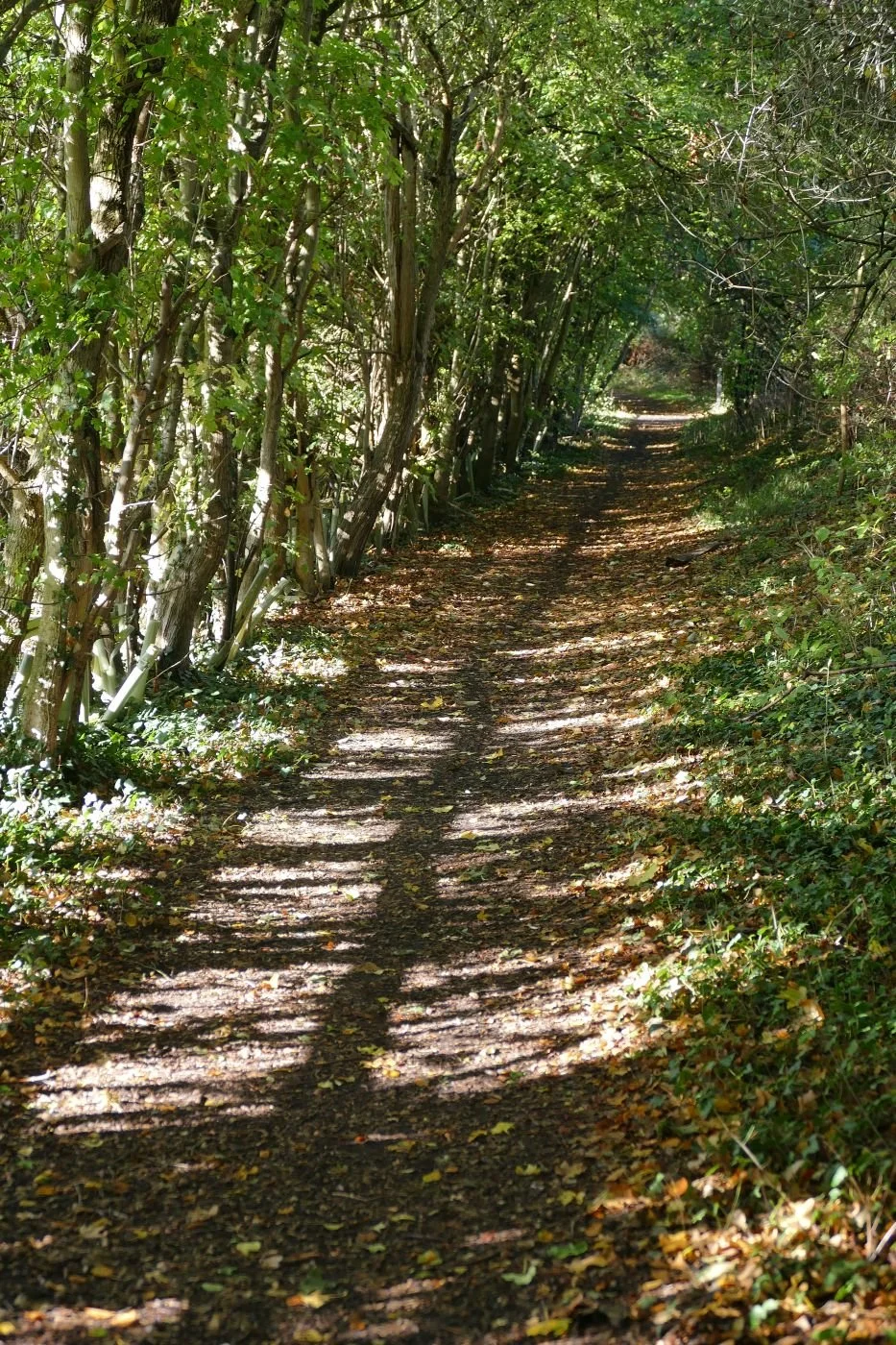
Slowly, gently, the path rises and begins to hint at the views to come. But first it tricks us: those of us born and bred on southern chalk downland begin to feel too comfortable, too much at home. Here is Elder, Hawthorn, Blackthorn, Dogwood, Ash, mounds of Old Man’s Beard and tangles of Black Bryony. What? A Walnut? This is, obviously, a wild card, just to wake us up, but from then on, we know we are in the Chilterns, not the Downs if only by the proliferation of Purging Buckthorn which is far more Chiltern than North or South Downs.
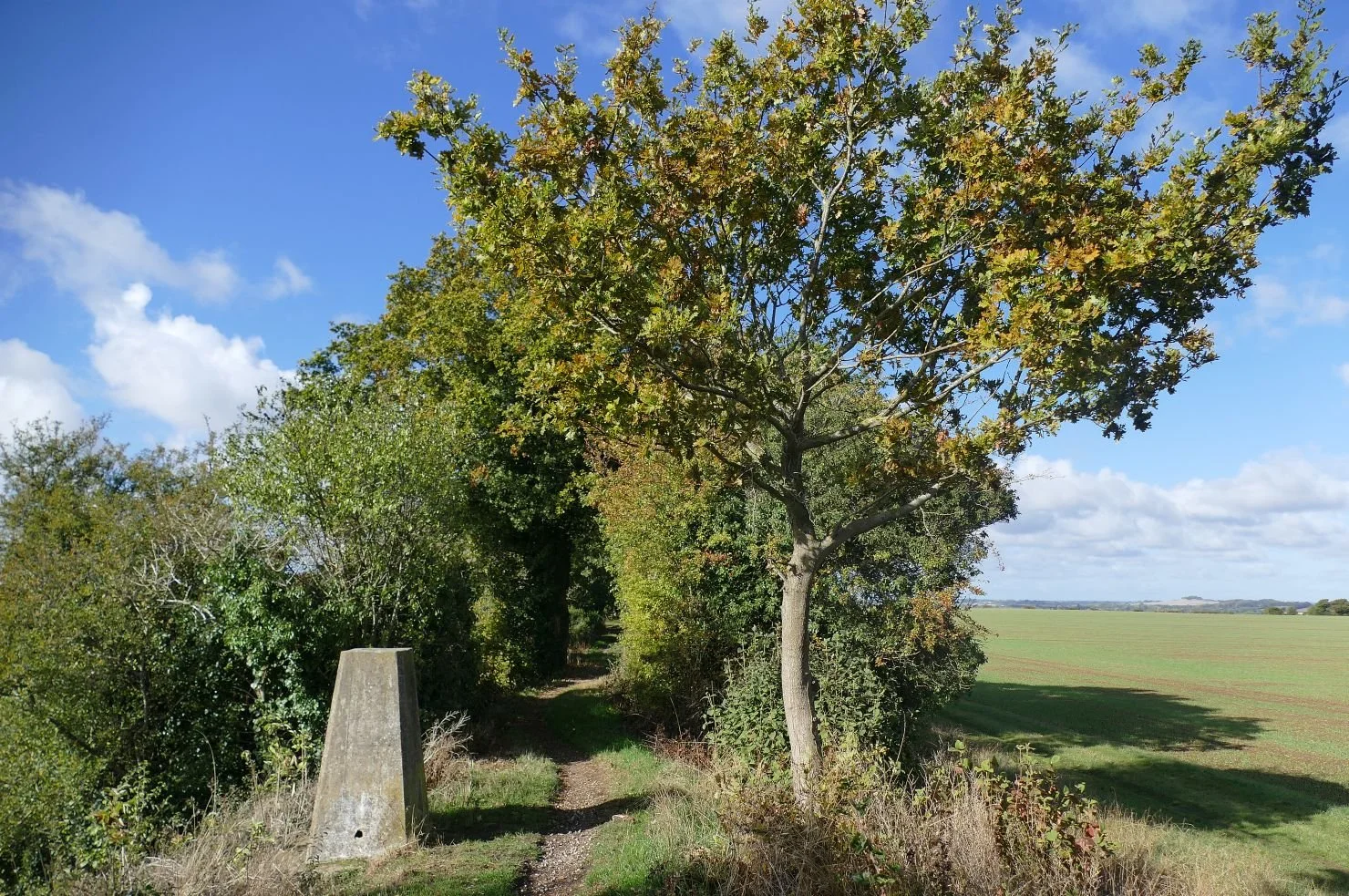
Even the trig point is clearly working on a different perception of geology and gradient. We’ve hardly broken a sweat and yet both the map and trail guide indicate that this is a local high point.
At around a very modest 98 m it is indeed some 4 m higher than nearby Wicks Hill and Coblers Hill (both of which overlook Drunken Bottom and Pigtrough Bottom – clearly the locals had a well-defined sense of local character).
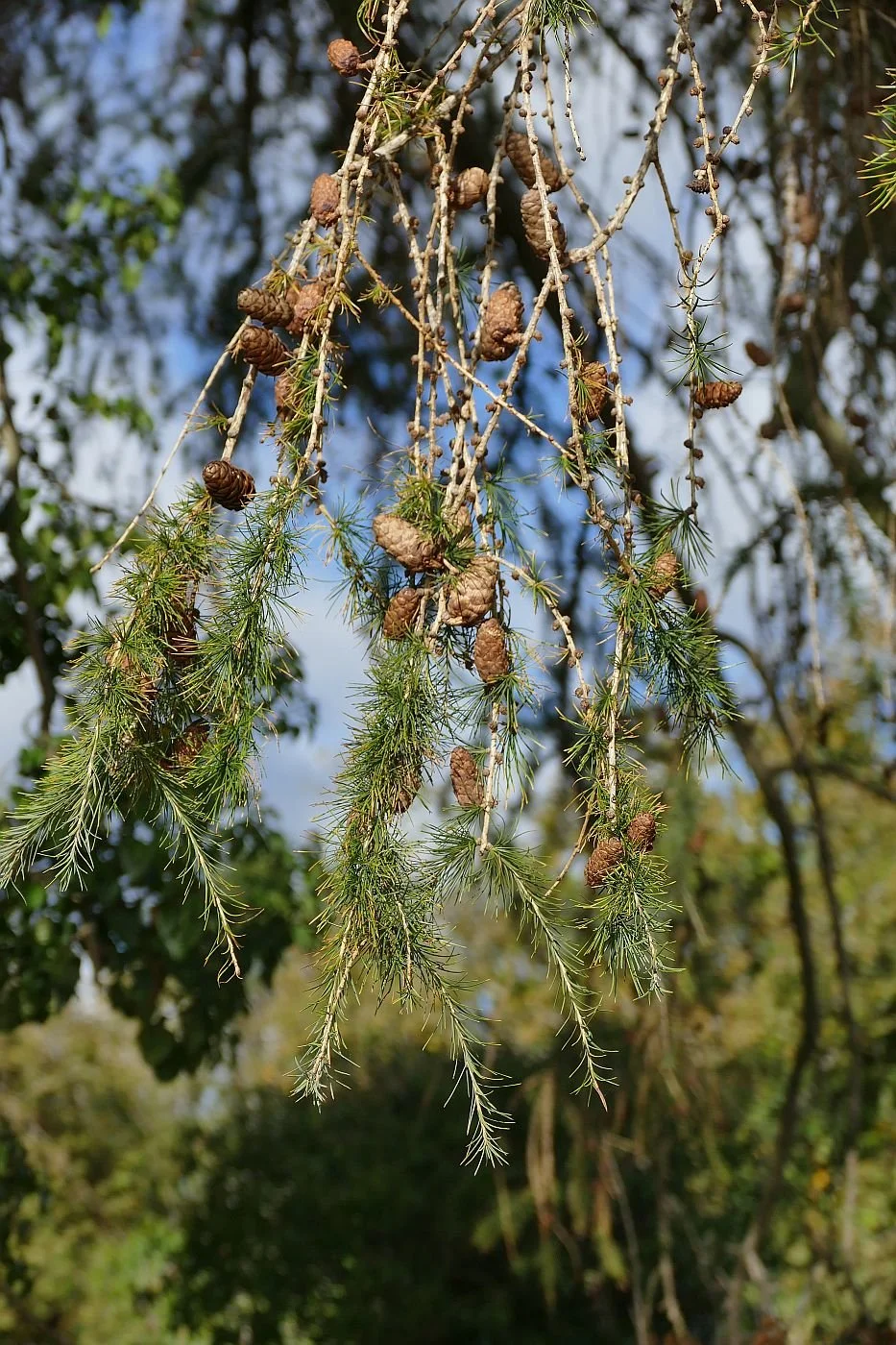
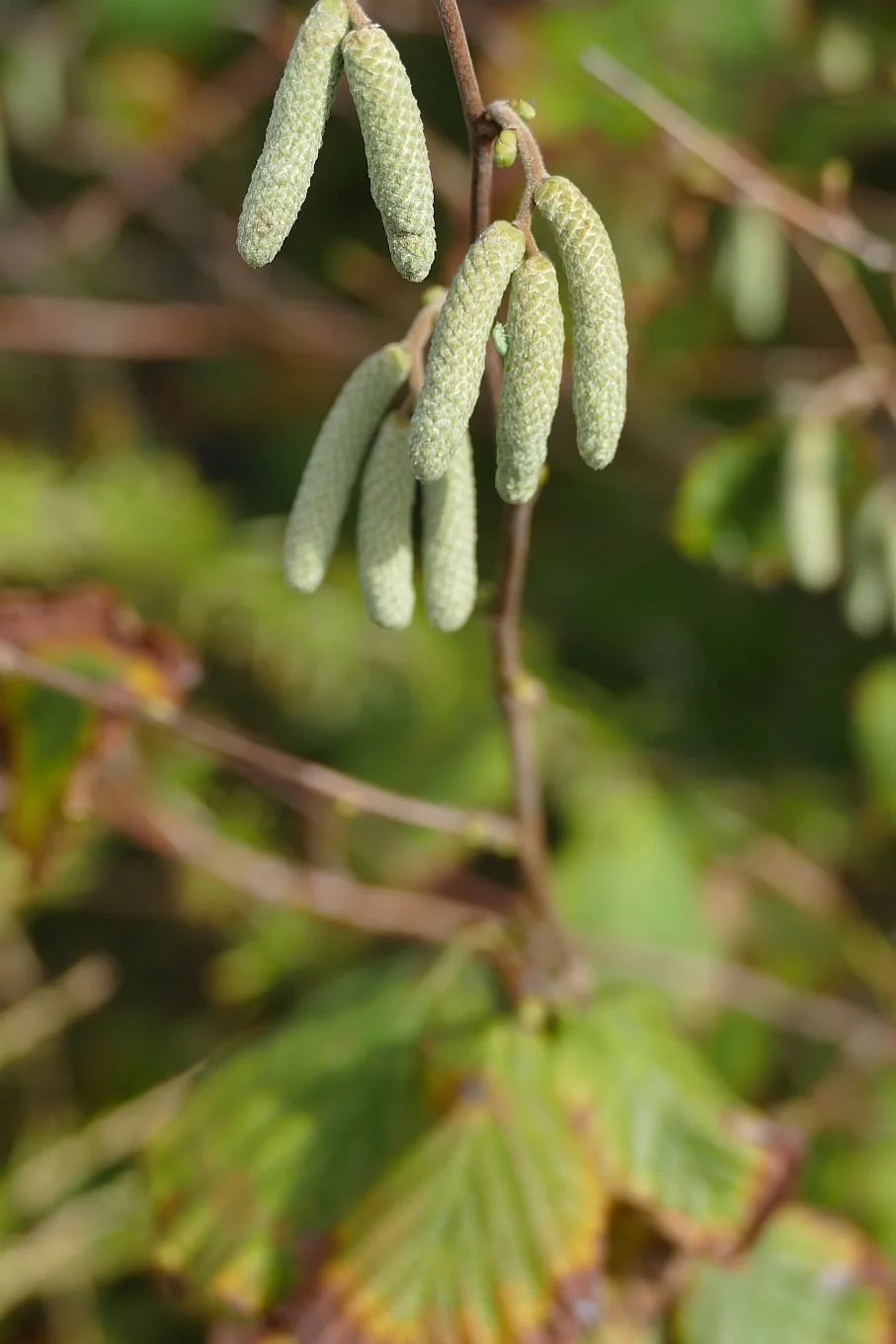
These Larch trees (below) provide a minor diversion. They come and they go but the stalwarts such as the hazel stay on for the long haul. Like so many trees this year, the hazel’s thoughts are turning early to the matter of reproduction.
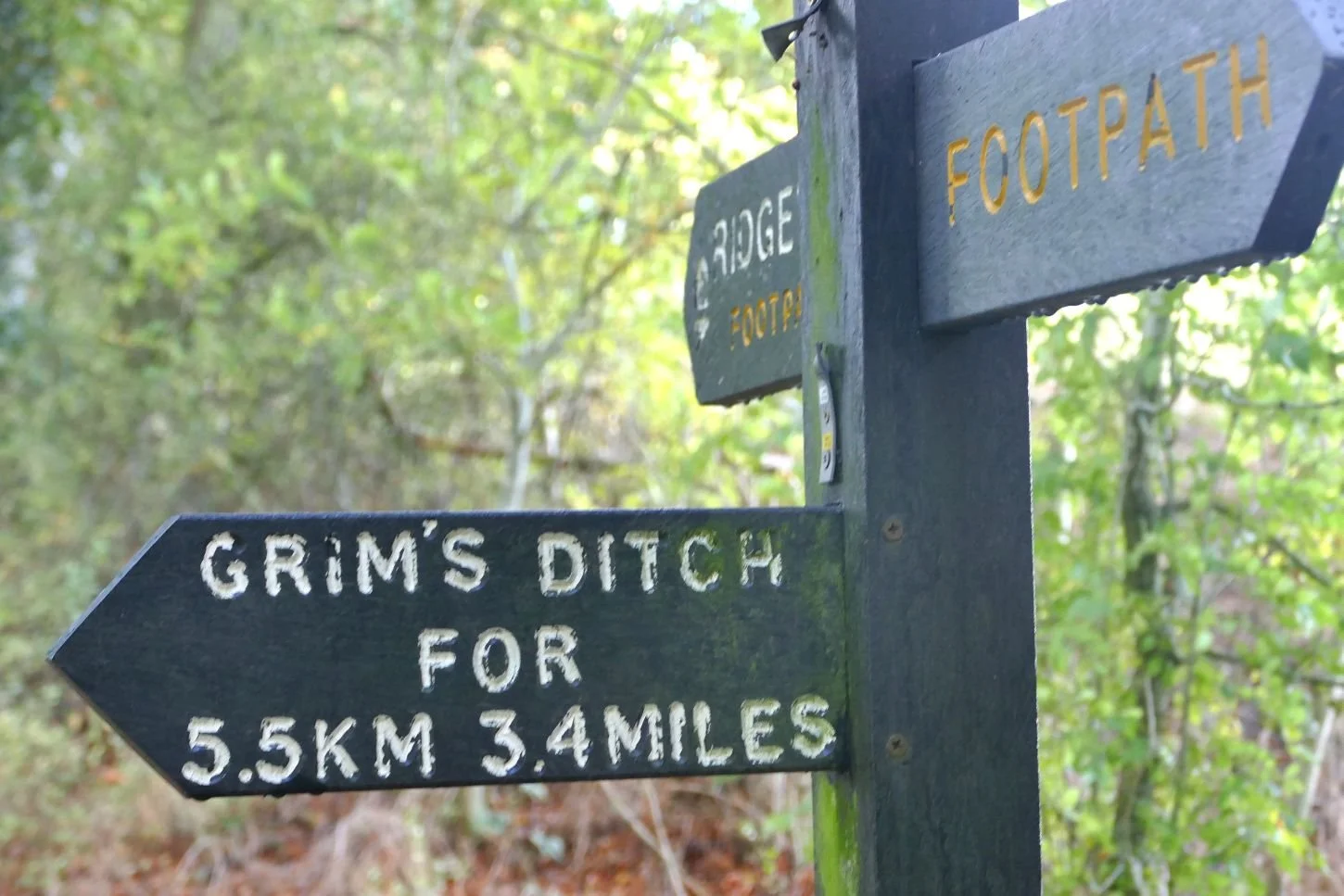
As the path starts to climb more seriously we are joined by other, older travellers. The ditch/dyke system which someone attributes to ‘Grim’ (name or attitude?) is now clearly visible evidence for the importance of this Ridgeway route. Is it a defence or a boundary marker? Sources seem to seem agree only on its being a ‘Mystery’.
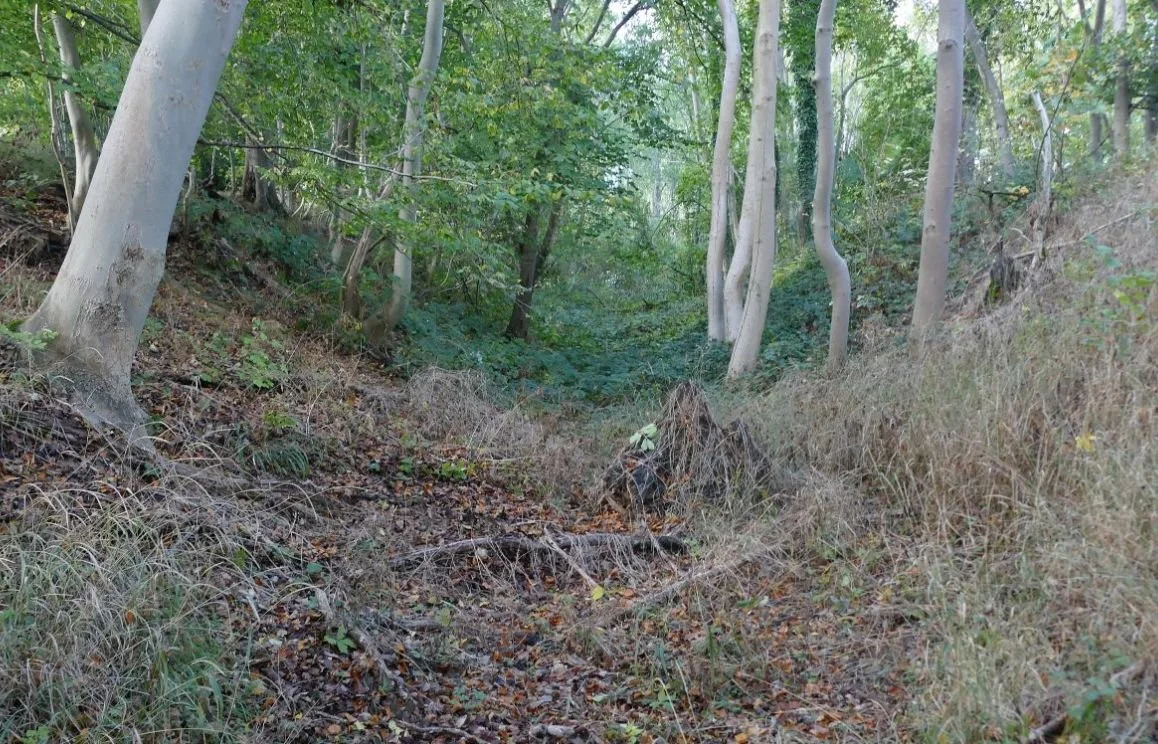
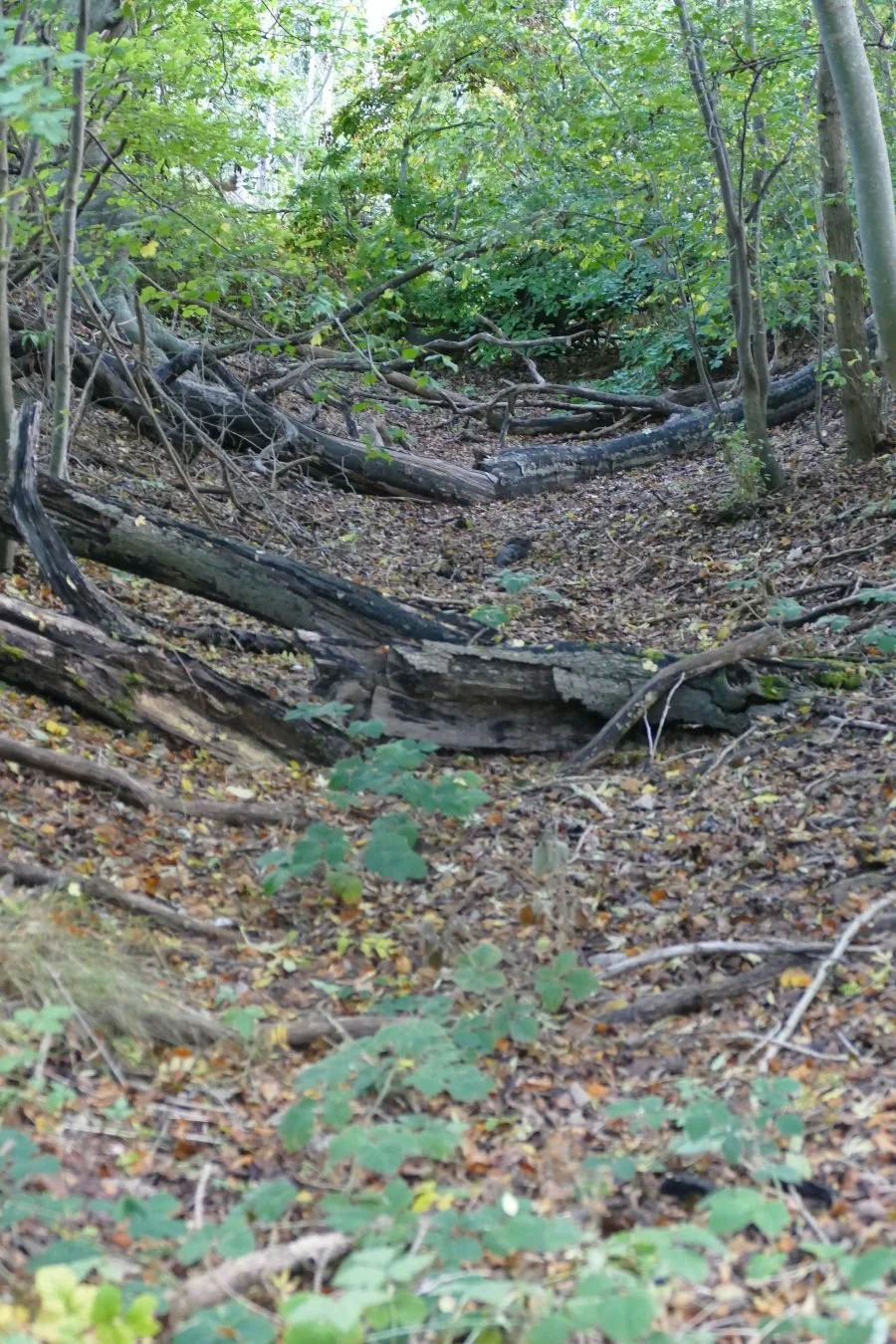
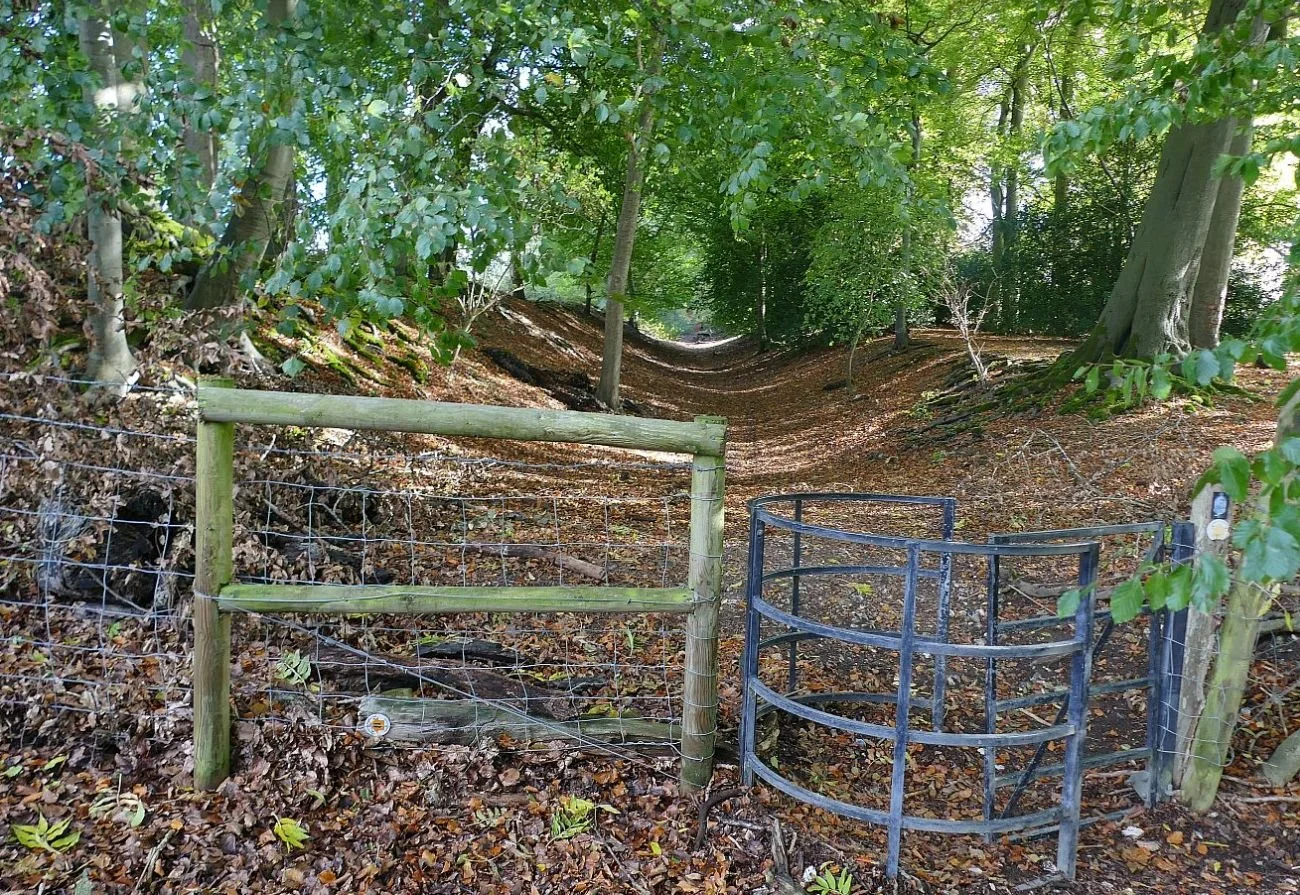
The Icknield way is less visible as a structure but clearly identified by its direct approach to getting from A to B and by its adoption by post-Grim, Saxon and Roman travellers, including ourselves.
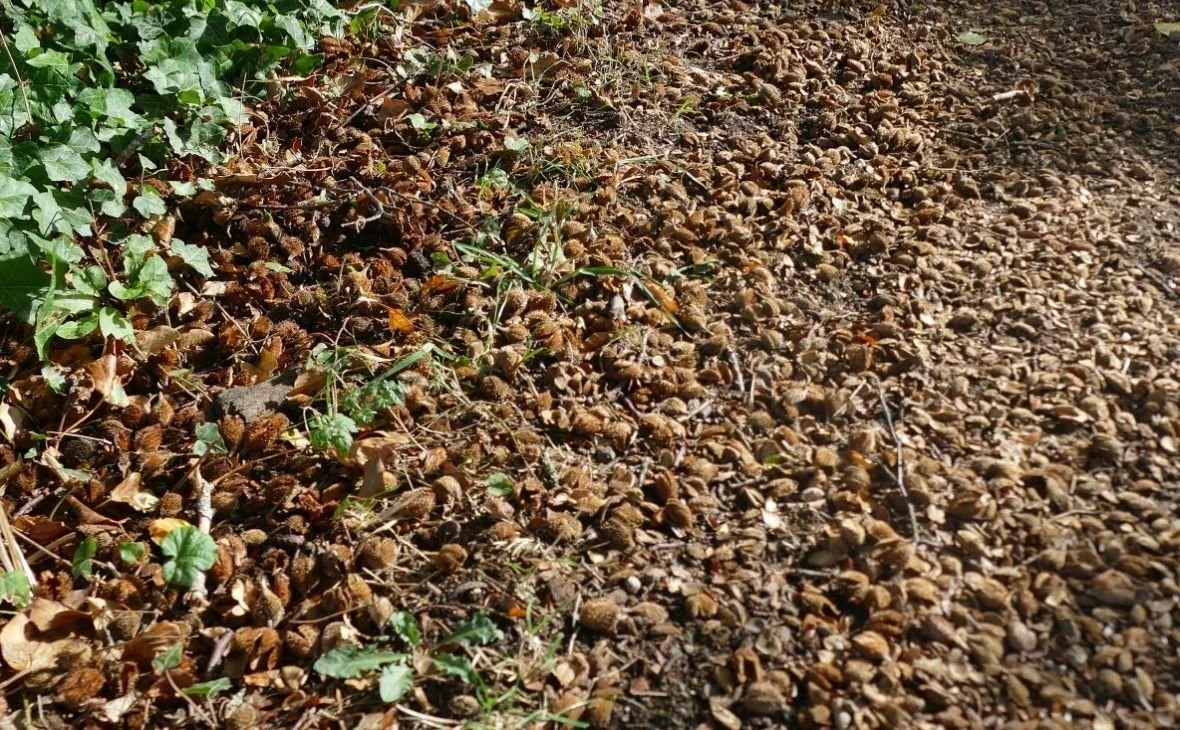
But the big, landscape reveal for the modern Ridgeway is still to come: the tree for which the area is famous is the Beech. It’s a good mast year and photographs like this clearly say CHILTERNS.
This story isn’t about the occasional majestic Beech, however, clinging to a precipitous edge or taking a modest role in a mixed woodland, as we might find on the North Downs. This is story is about serious and majestic stands of Beech.
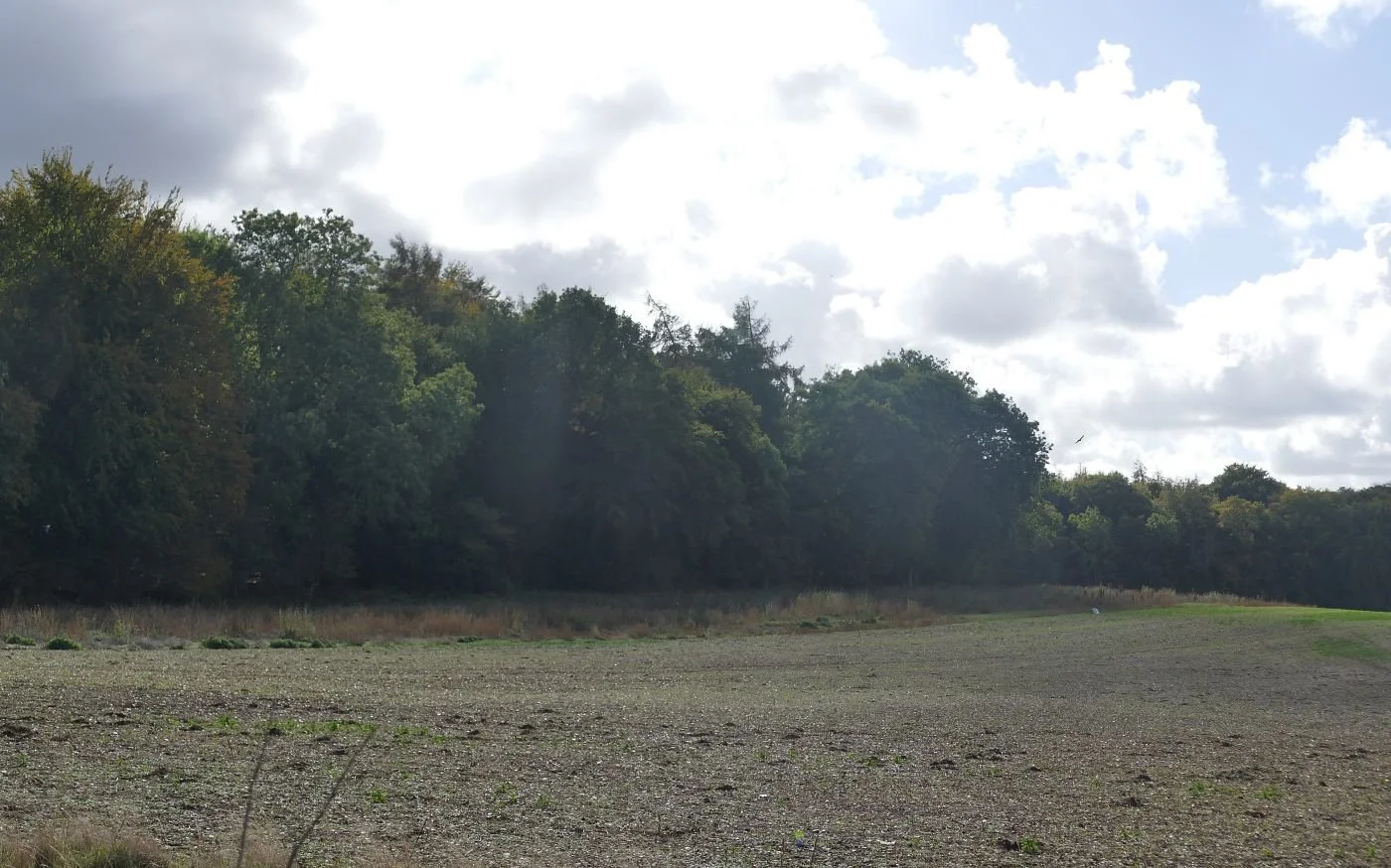
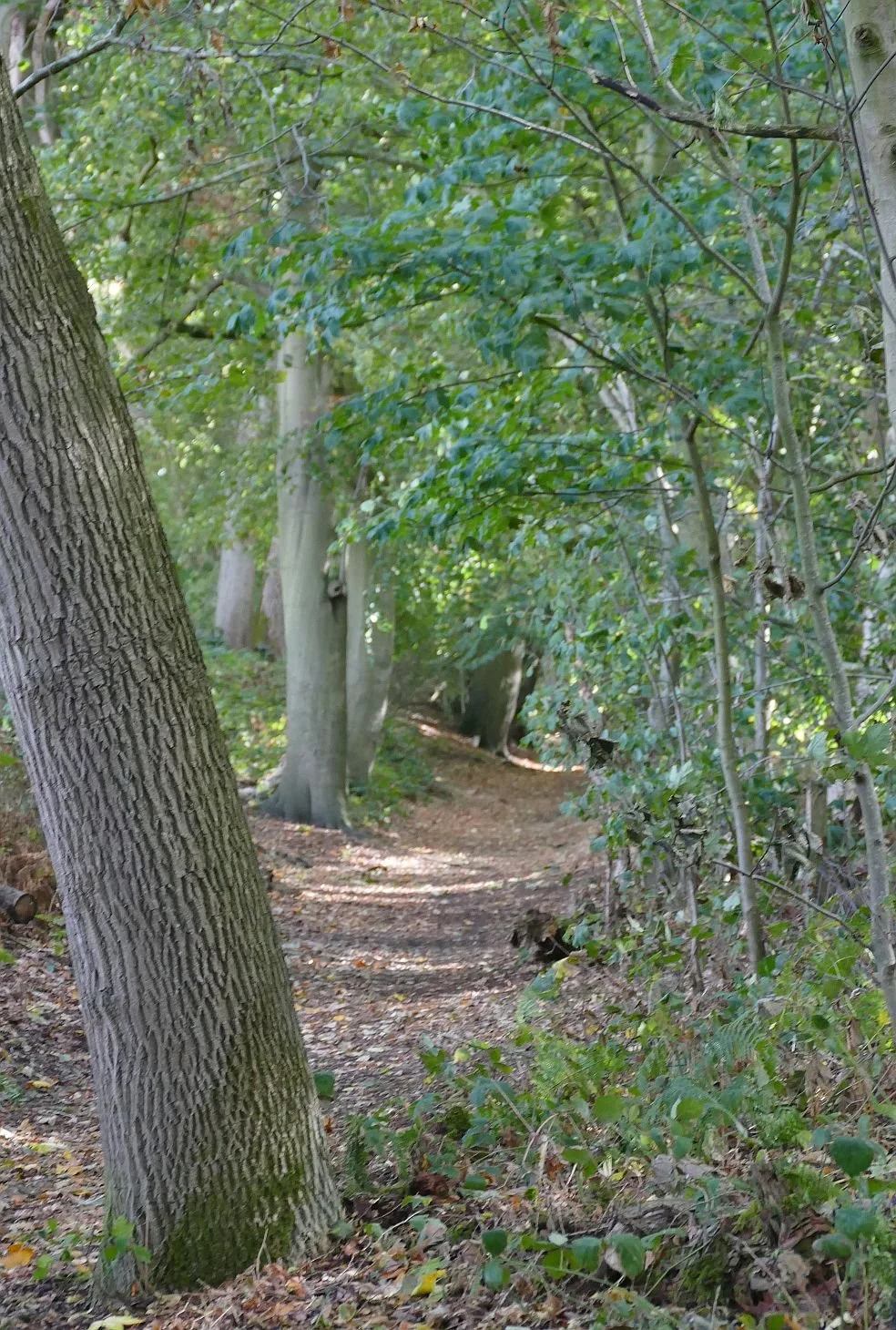
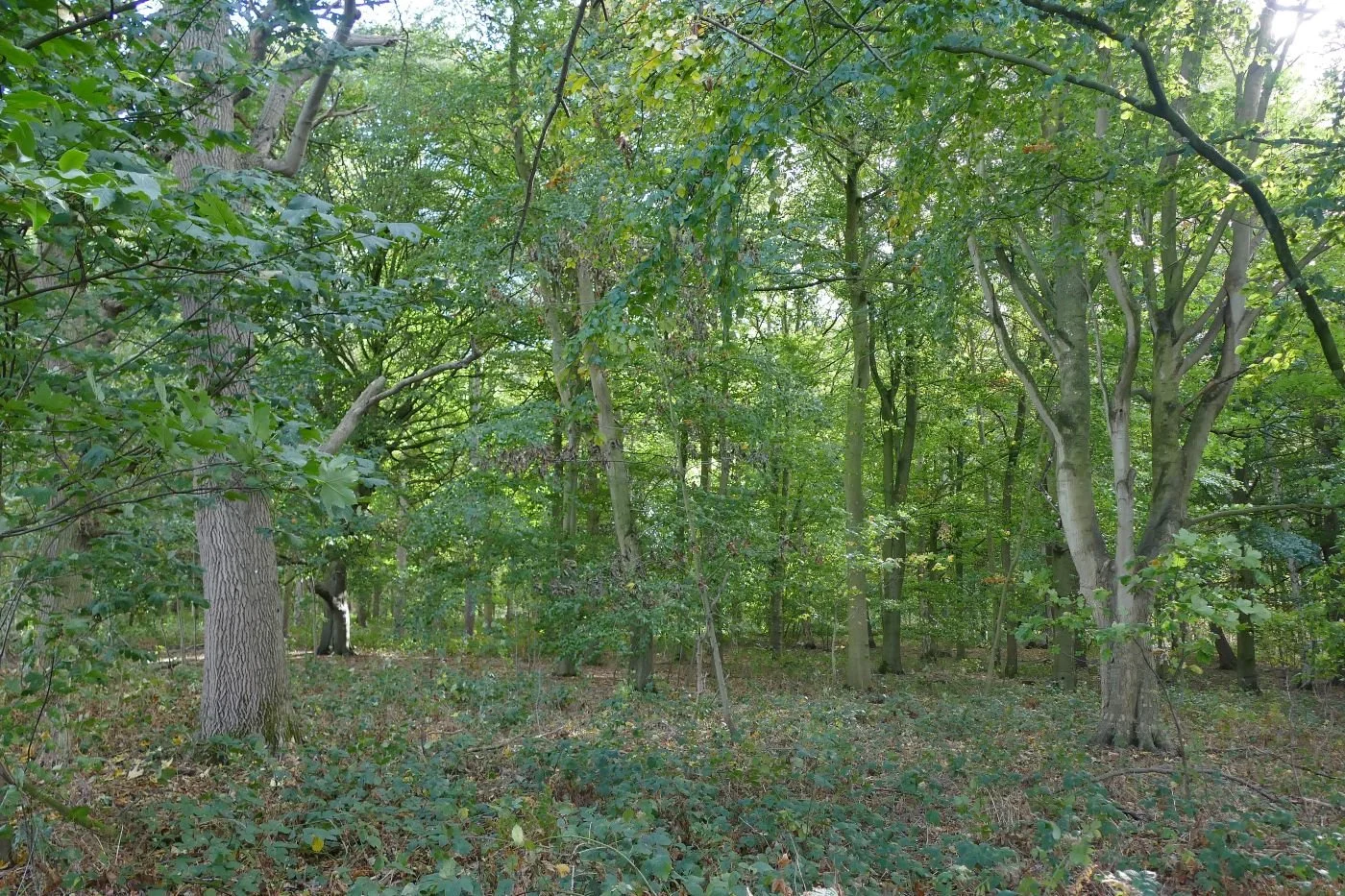
With similar geology, why are the Downs so different from the Chilterns? Speculating wildly, is it because the Downs run east/west while the Chilterns run north east/south west? Or because the Chilterns are marginally further north – closer to the ice caps in chillier times? Or is it due to the lack of coast line, major seaports and big cities which could change the human geography - available markets or other economic forces? One clearly visible difference is, however, the more extensive deposits of clay with flints found in the Chiltern hillsides, compared with the Downs. These deposits can be slightly more acidic than chalk and the beech is a tolerant tree which can cope with these conditions.
“…in the 1600s, Woodland industries such as furniture making developed, the Chiltern beech trees being well suited to growing on poor chalky soil and having straight trunks ideal for making furniture. By 1680 chairs were being made in High Wycombe and the Windsor chair was so named from the 1730s.” https://www.coam.org.uk/blogs/chalk-cherries-and-chairs-the-history-of-the-chilterns
The old charcoal and firewood thing was no longer appropriate. Beech woodland was managed for tall straight timber ideal for building and for making furniture. Add in local ash (steamed to make curved items) and cherry (for smaller decorative work) and the woodlands took on their new, Chiltern specific, characteristics.
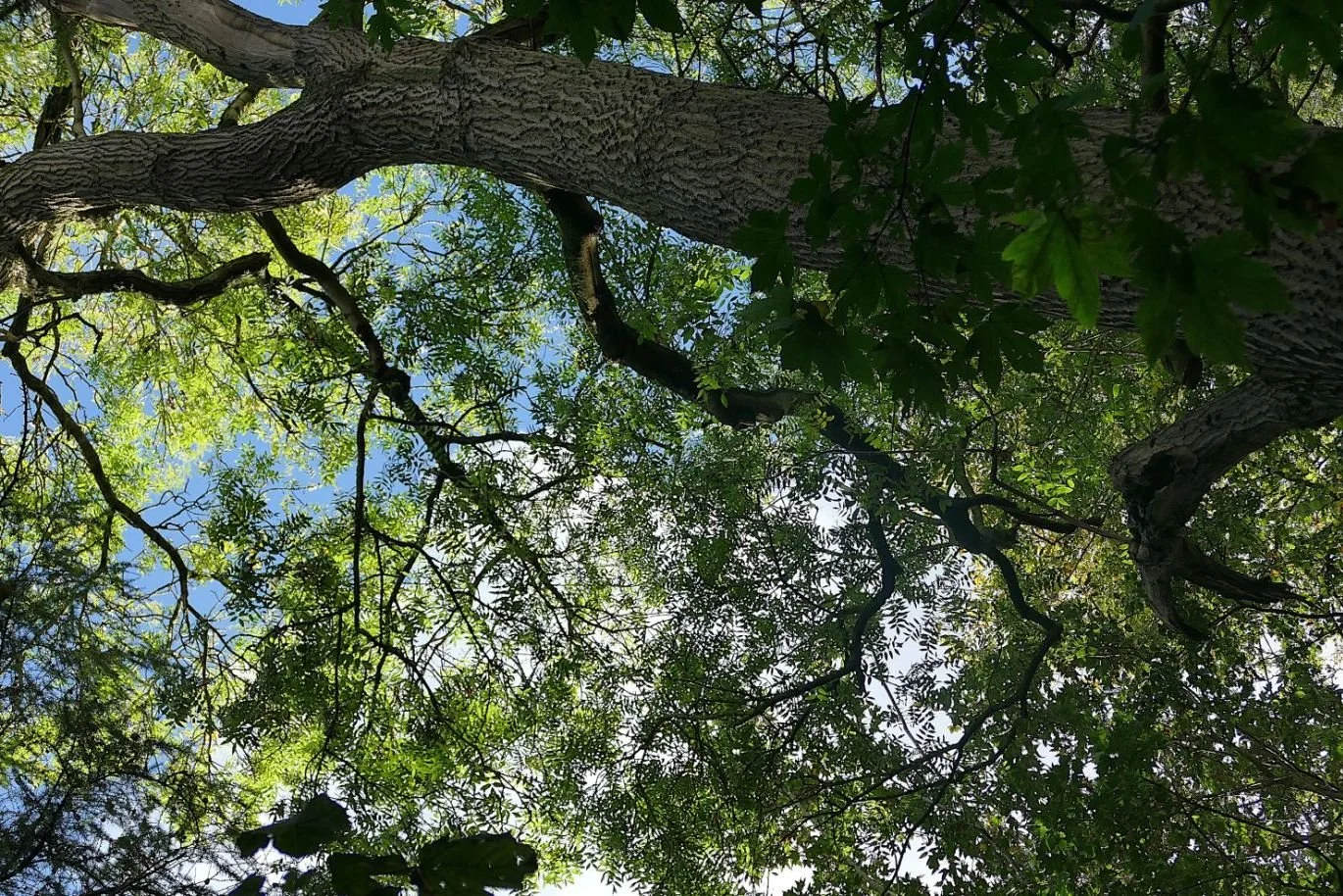
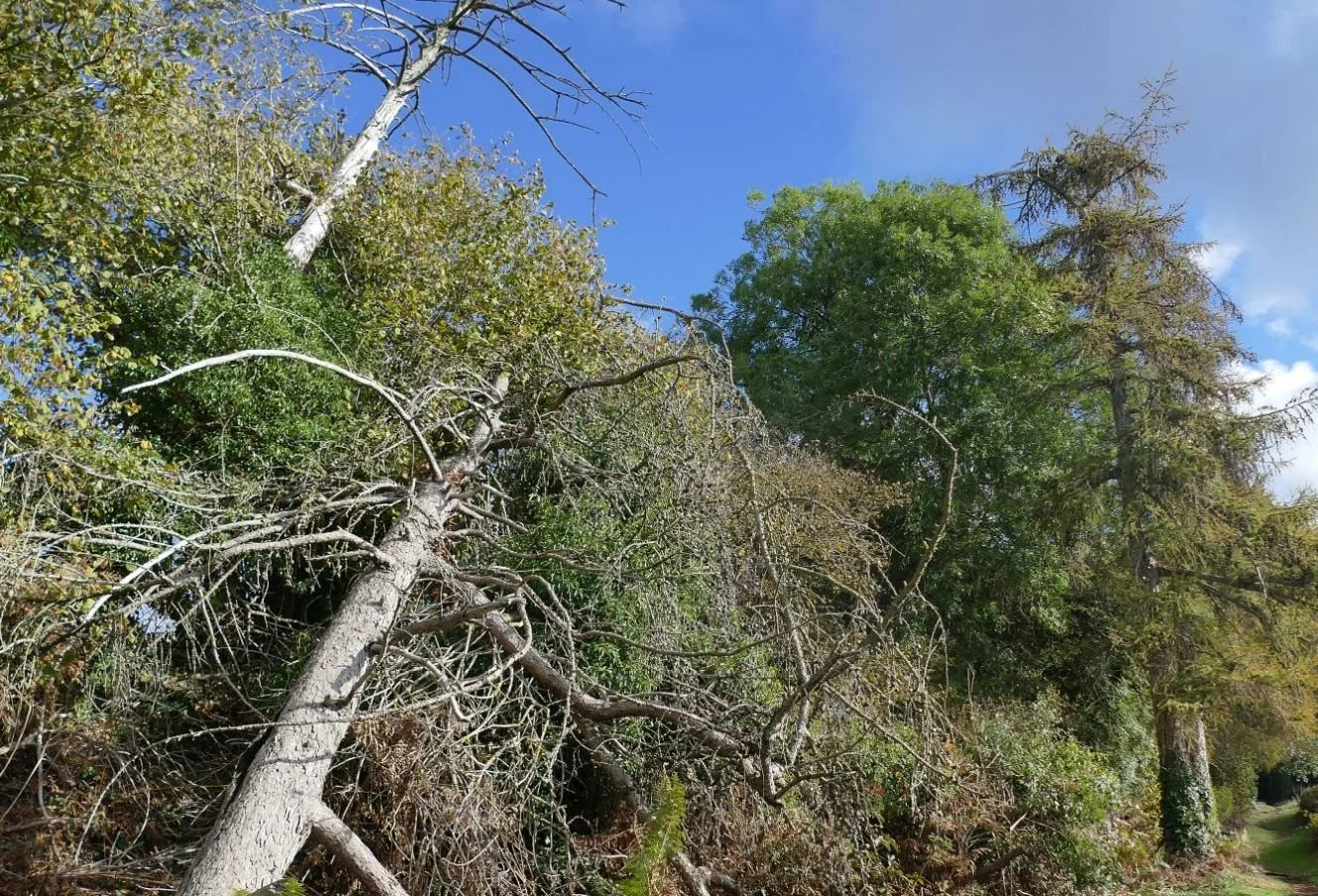
We saw acres of splendid beech trees and, in places, the Ash were also magnificent, with massive trunks and heads of delicate foliage like wild carrot on steroids, contrasting with the Beech’s more leathery and austere canopy. Other places, however, had become Ash Dieback graveyards, with silver grey trunks and branches strewn, higgledy piggledy across the hillsides.
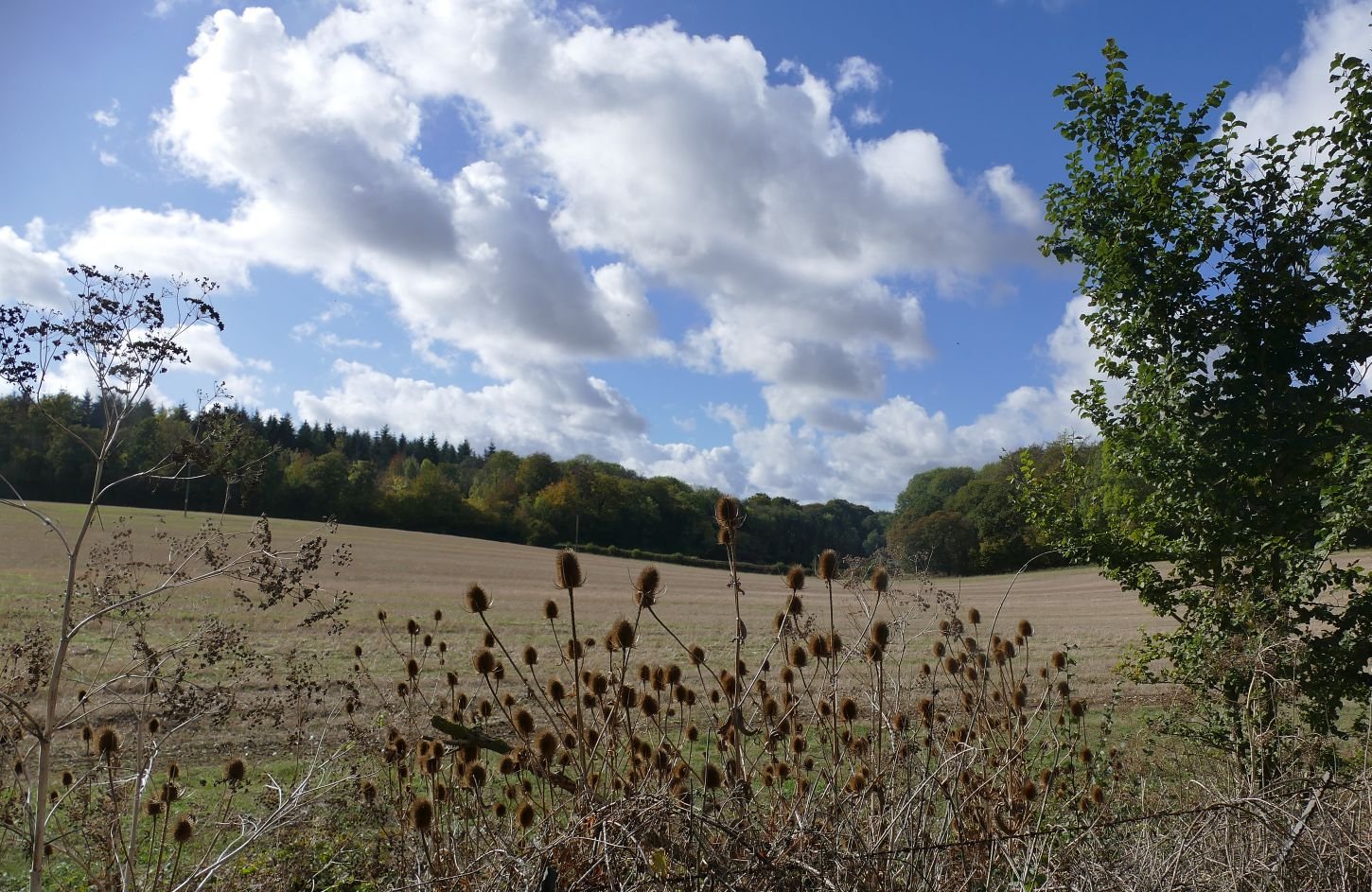
But it’s not woodland all the way. Frequent views opened out onto the uncluttered, sweeping curves of arable farmland.
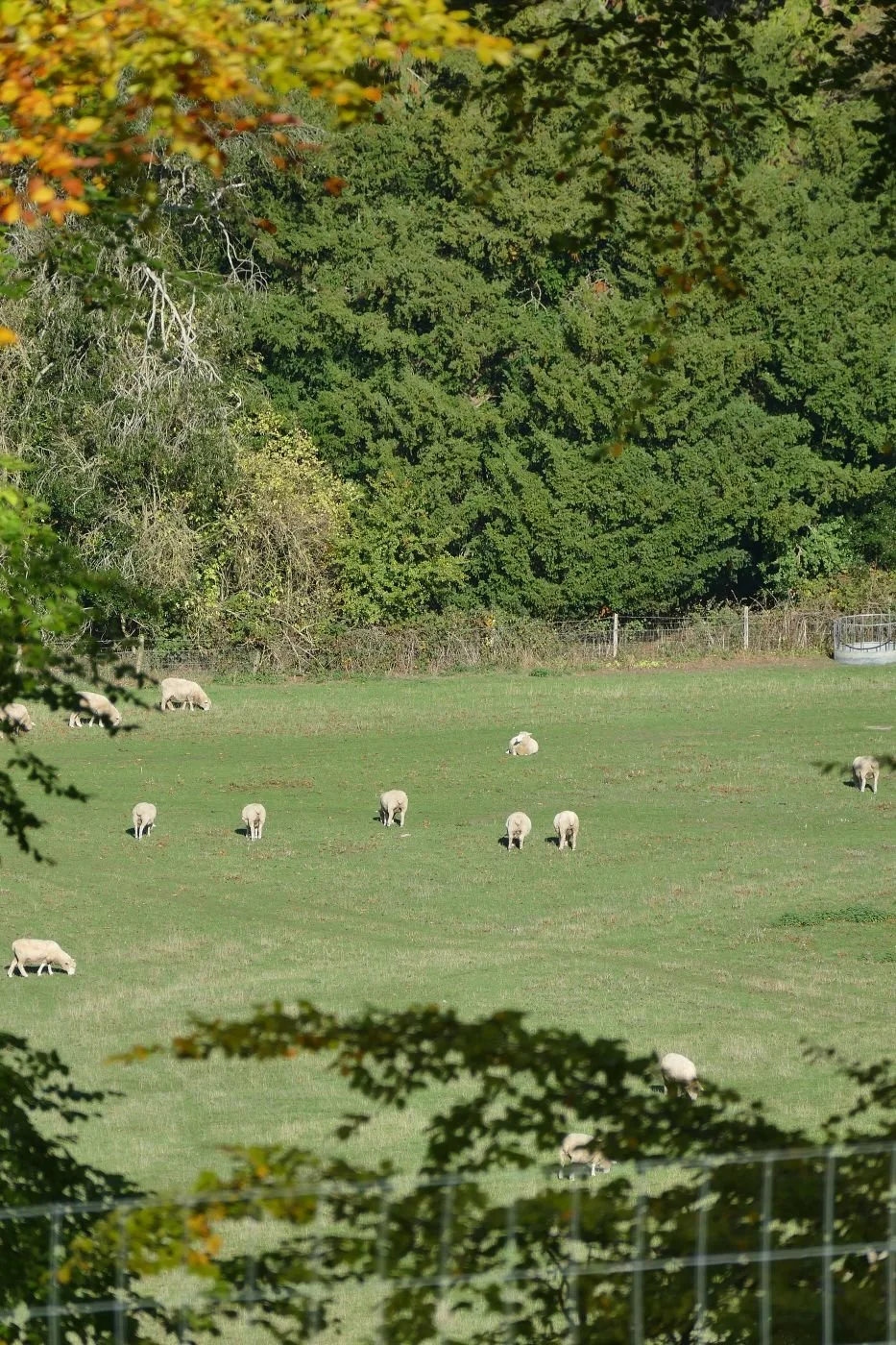
Stock farming no longer appears to be a major player. We saw pig arks but no pigs. We encountered a few small herds of cattle. We saw some sheep, but not in the numbers which once maintained the wild flower strewn, biodiverse chalk grassland.
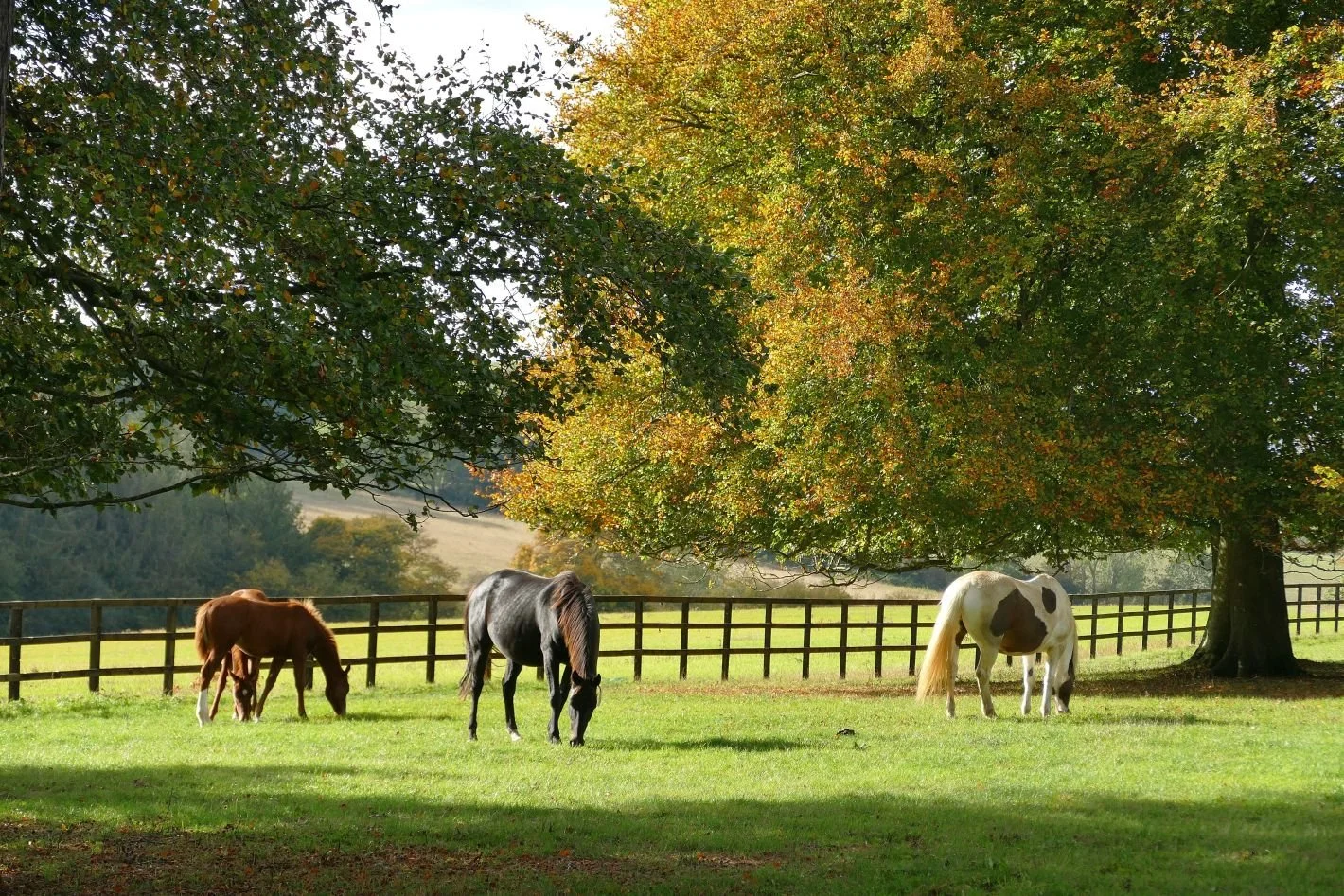
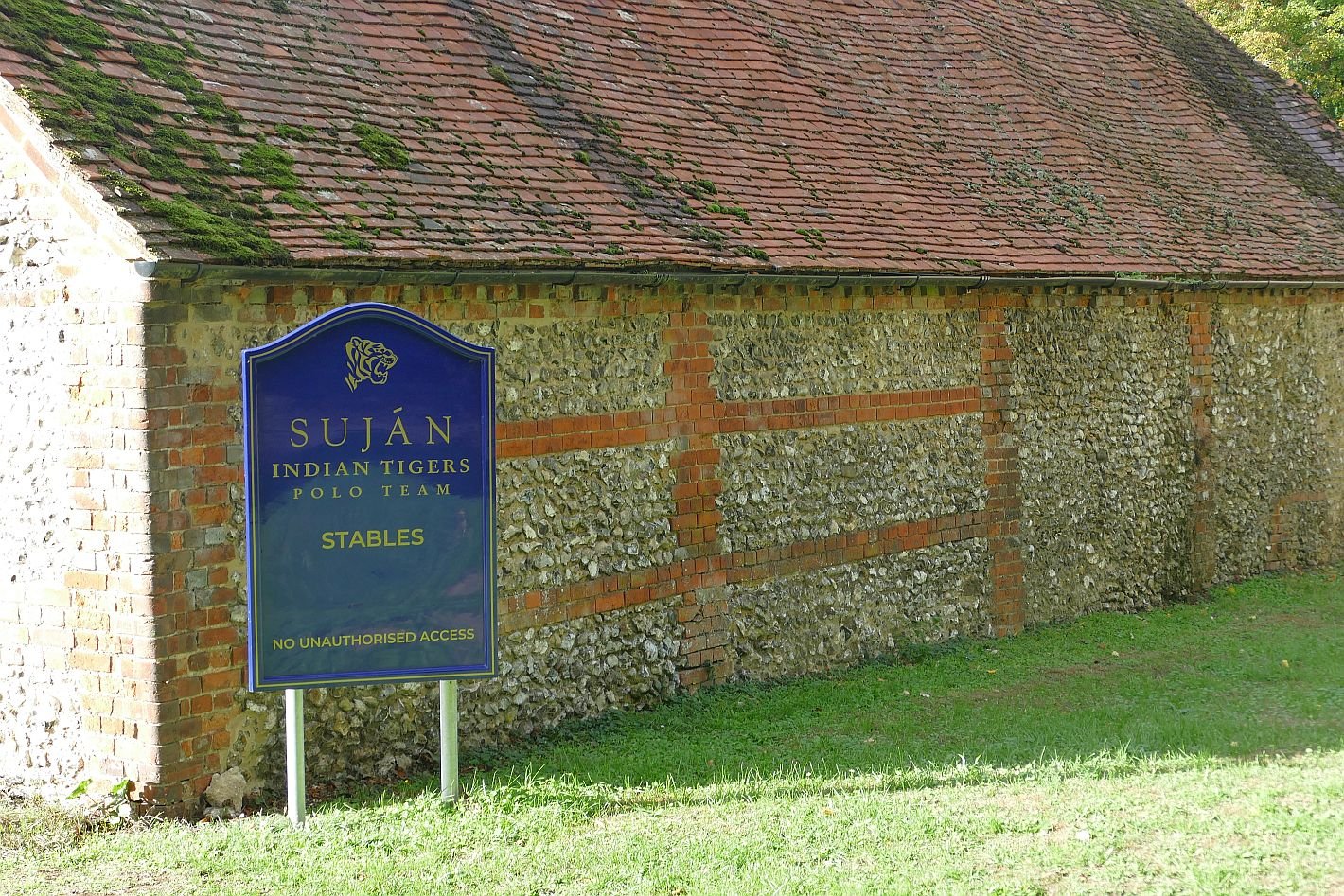
We did, however, see some rather fine horsey-culture!

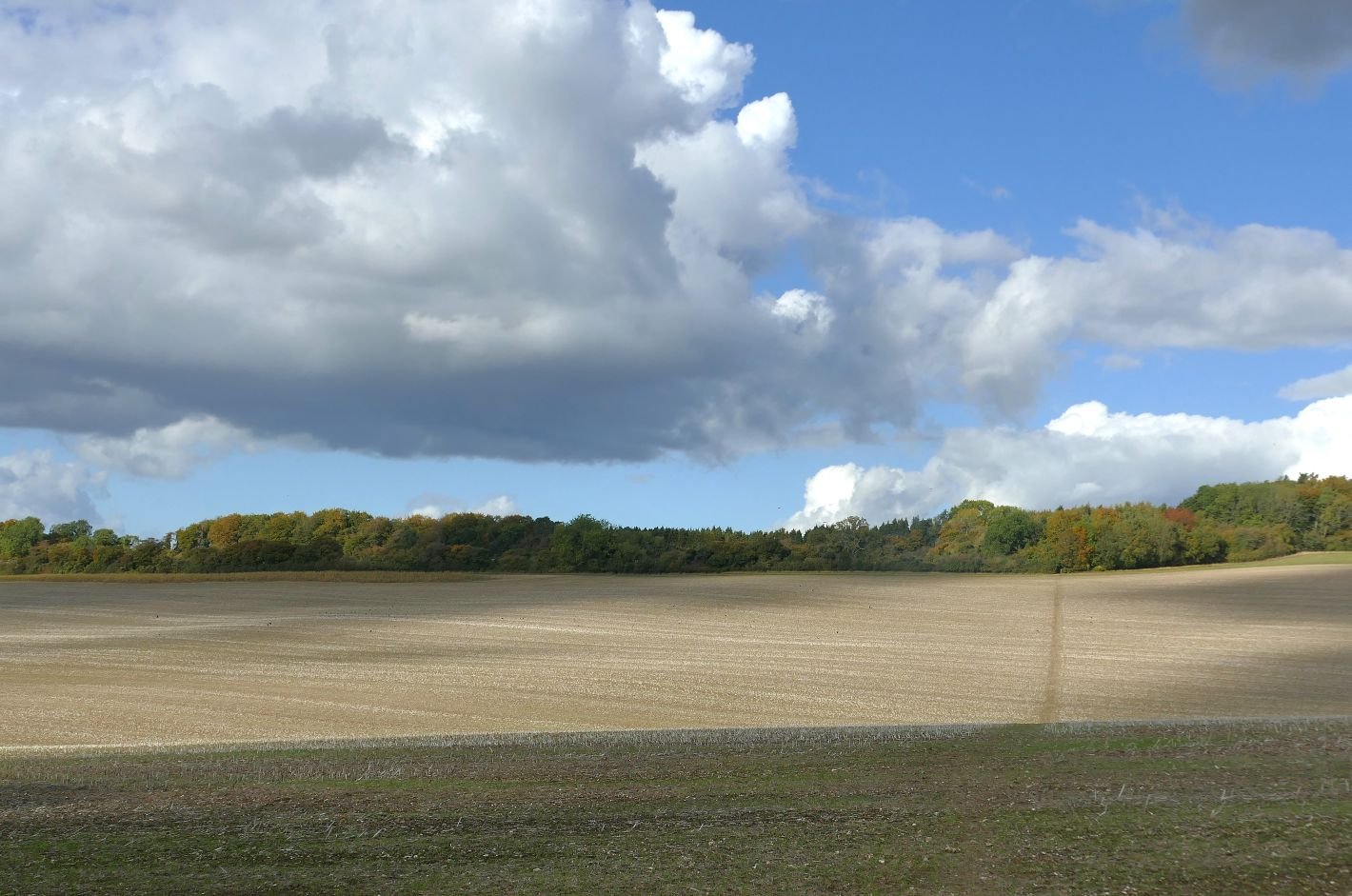
Instead of livestock, we observed and admired acres of arable land, uninterrupted by anything so old fashioned or quaint as a hedgerow, and which revealed, on a fine October day, the very anatomy and muscle of the Chiltern hills. No matter what you think of the agricultural changes which created this display, one cannot help but admire the beauty that is revealed.
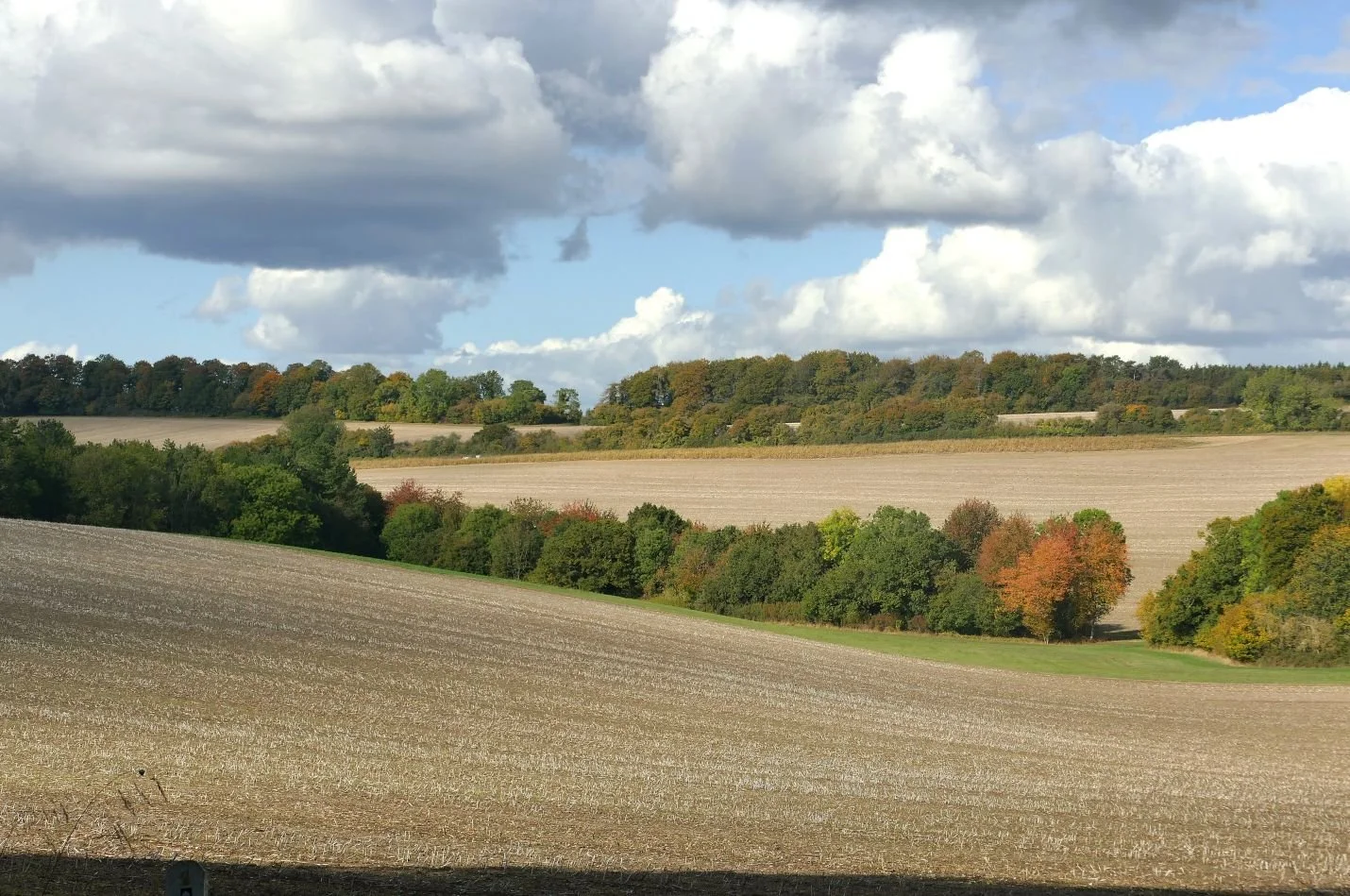
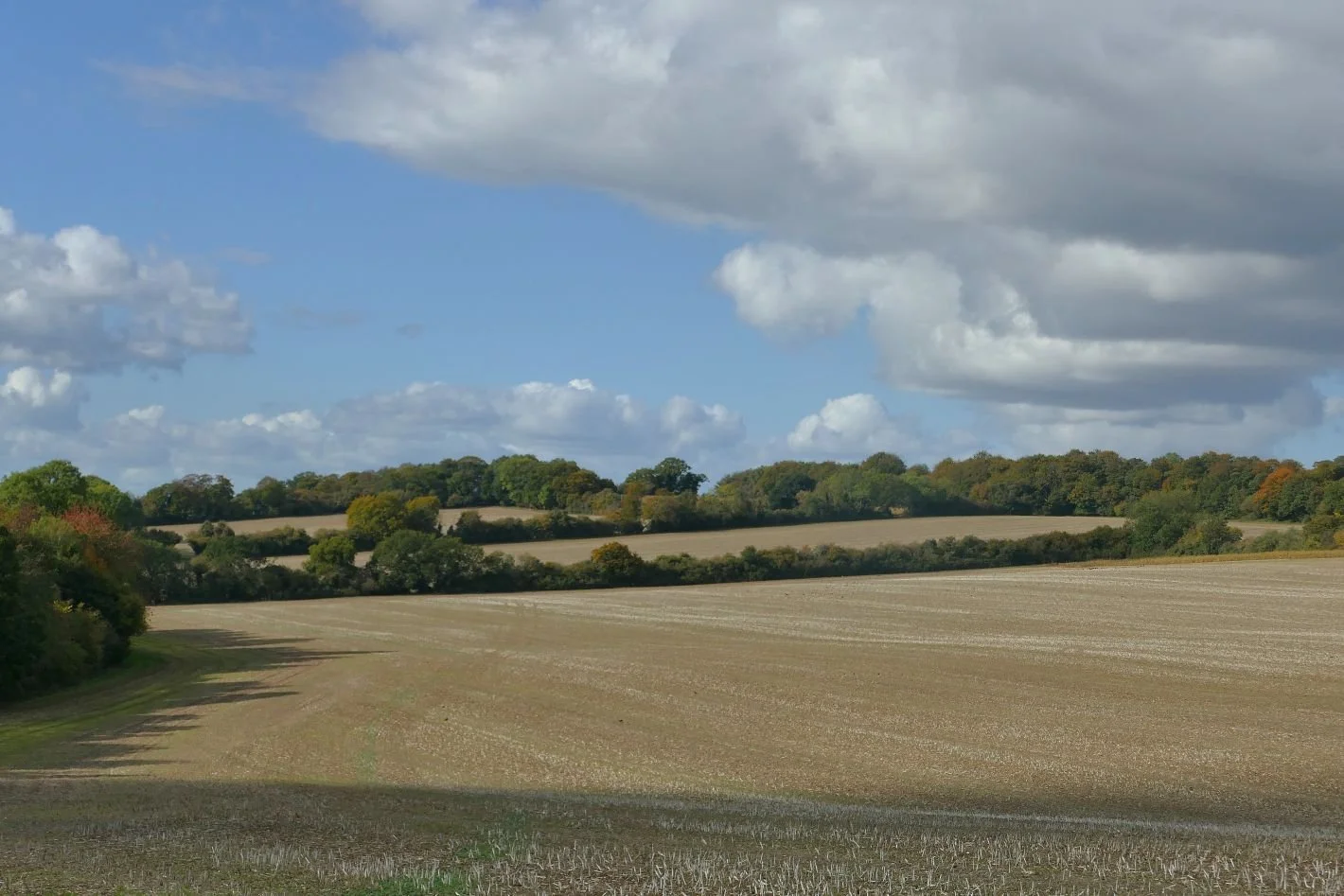
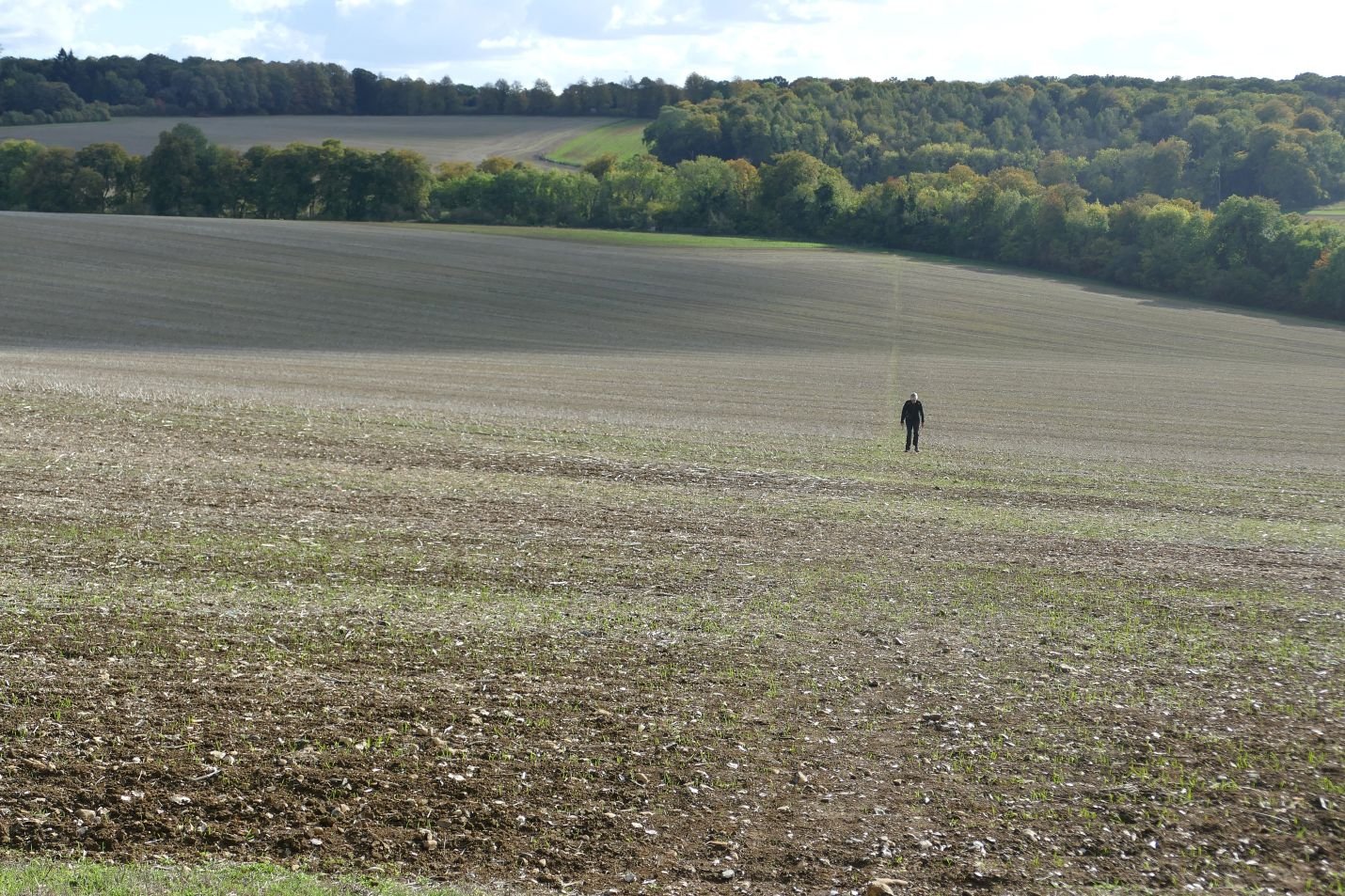
Part of this enjoyment was due to the pattern, texture and colour of these widespread vistas. Recently tilled and seeded, clay with flints reminded us of corduroy, of Georgian wall paper, of a cup of white coffee and of cakes, spread with milky coffee icing, finely combed by a narrow pronged fork and scattered with white chocolate chips.