Richard III - A Landscape
Hands up those of you who think you have never read, or seen a performance of, Shakespeare’s Richard III. Yeah, Terroir too.
Or have we? Like Hamlet, it’s full of quotes, including ‘Now is the winter of our discontent”, and "A horse, a horse, my kingdom for a horse!". It has been performed on stage and screen by a plethora of famous actors, including Laurence Olivier and Ian McKellen, and lampooned by many more including Peter Cook, Peter Sellers and the Blackadder team. In fact, I think we all probably know it pretty well.
Shakespeare’s “Tragedy of Richard III” was probably written in the late 1590s, a smidge over 100 years after Richard died in battle. Although a fictionalised account, this tragi-history play (or is it a historical tragedy?) is probably a more entertaining way of getting a feel for King Richard’s last days than ploughing through history books or original documents. Certainly Shakespeare’s perspective displays a horrific number of parallels with the 21st Century. Perhaps there are rather fewer murders these days but the political infighting, metaphorical backstabbing and leadership battles are very familiar and, of course, the House of York features with many inappropriate alliances and misdemeanours. But to be fair, so does the House of Lancaster.
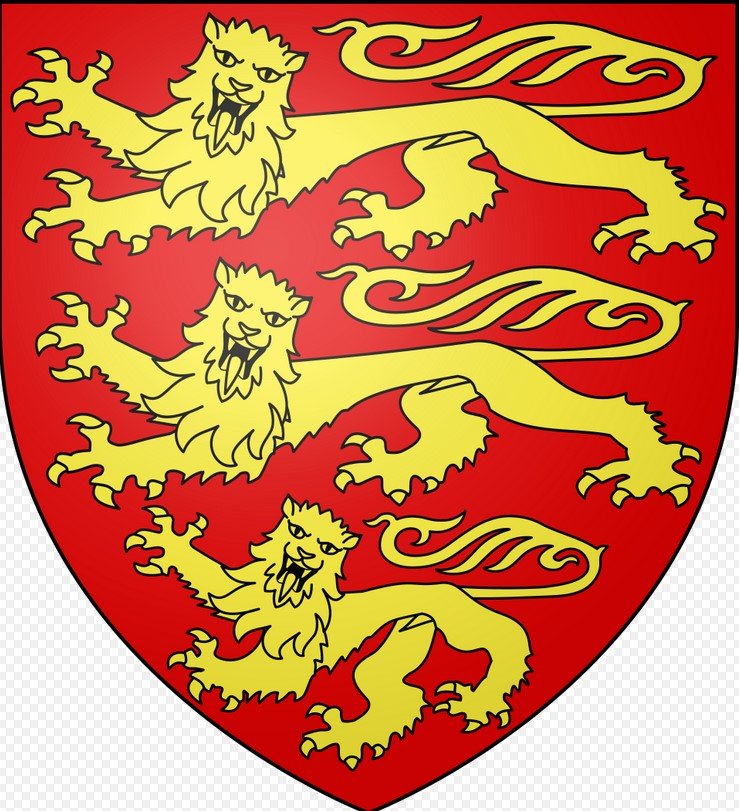
The play also represents an account of the last stage of the Wars of the Roses and the end of a Royal dynasty. The house of Plantagenet, although formed in France, had held the English throne from 1154 until 1485 but its downfall came via the warring rivalries of two cadet branches, the House of York and House of Lancaster.
The Plantagenet arms (right) were based on heraldic lions which symbolise courage, nobility, royalty, strength, stateliness and valour’ (thank you Wiki https://en.wikipedia.org/wiki/Lion_(heraldry)), as well as, of course, being the ‘king of the beasts’.
But flowers also seem to have been important to the Plantagenet clan. The planta genista, (Genêt to the French, Broom in English) is, of course, intimately linked with the family identity. The cadet houses adopted roses as their symbol. Unlike lions, roses and Broom must have been part of the everyday life of nobles and peasants alike. One theory for the choice of the rose suggests that the rose image could be turned into simple and colourful badges, easily recognised during battle; probably cheaper and easier to make and to secure onto your clothing, than three lions in various elongated postures. It gives a whole new meaning to the phrase ‘a bed of roses’.

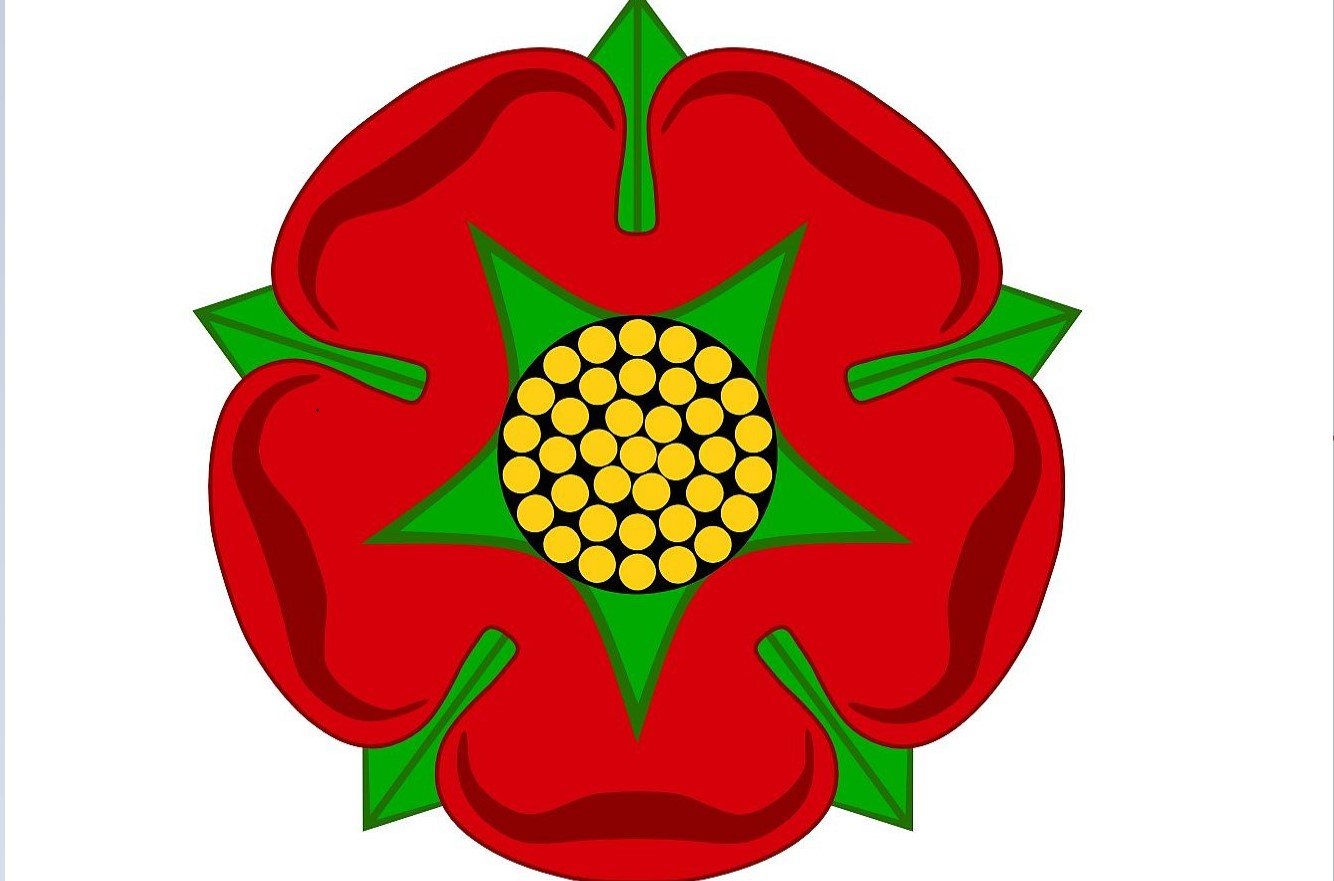

Yorkist King Richard III was killed at the battle of Bosworth Field (some 15 miles west of Leicester), and Lancastrian (and Welsh) Henry Tudor became the first king of a new dynasty, securing his power base by marrying the heiress Elizabeth of York. The symbolic Tudor rose (right) was an amalgam of the two Plantagenet roses.
It’s neat and diplomatic but I do think that the central ring, highlighted by the red petals, does look ridiculously like a poached egg.
After his death at Bosworth Field, Richard III went on to become famous for being the only member of the English/British royal family to have been exhumed from under a Council carpark.
As Terroir was passing through Leicester, we decided to start a journey – calling it a pilgrimage would be far too consequential – to get a feel of Richard’s landscape heritage from defeat to final resting place in Leicester Cathedral. Due to unavoidable circumstances, including a reluctance to visit a battle field in early March, we will be telling this story backwards. So, here is the landscape of Richard Plantagenet, Part III.
Our journey started at Leicester Cathedral. The religious history of Leicester is pretty varied. According to Wikipedia and the Cathedral website, the original church of St Martin was built on Roman ruins. In 689 St Martin’s had a bishop but with the arrival of the Danes, Bishop Ceolred fled to Dorchester and the dioceses were merged (the result must have covered an enormous area). In 1086, the Norman Domesday Book lists six churches in the town, and St Martin’s was replaced by a Norman building in the same year. In the early 13th century The Grey Friars built a Monastery opposite St Martin’s and the church itself seems to have been enlarged in both the 13th and 15th centuries, becoming the town’s civic church with strong links to the local Guilds. The Reformation stripped out its insides but building continued over the centuries, with a major restoration by – guess who – the Victorians. In 1927 the diocese of Leicester was re-established and the parish church returned to cathedral status. St Martin’s is one of over a dozen English parish churches which were converted to cathedrals in the 20th century.
Consdering its history, the interior of the cathedral is unsurprisingly varied, and happy to display its architecture and civic history. Thomas Denny’s windows (row 2 below) “use scenes inspired by the life of Richard III to depict key themes and verses of the Bible, enabling us to reflect upon the stories of our own lives and universal themes” (https://leicestercathedral.org/redemption-windows-denny).
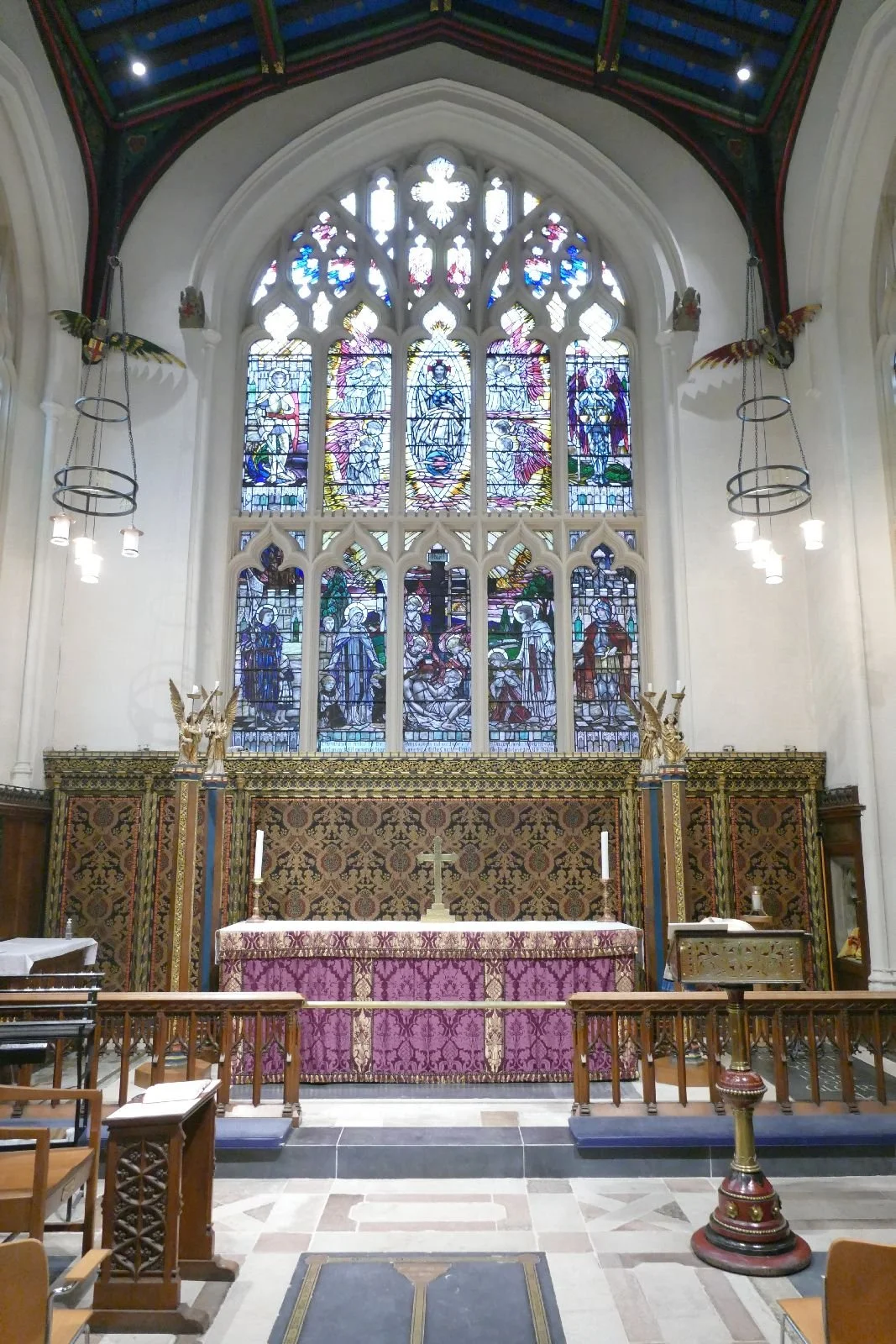
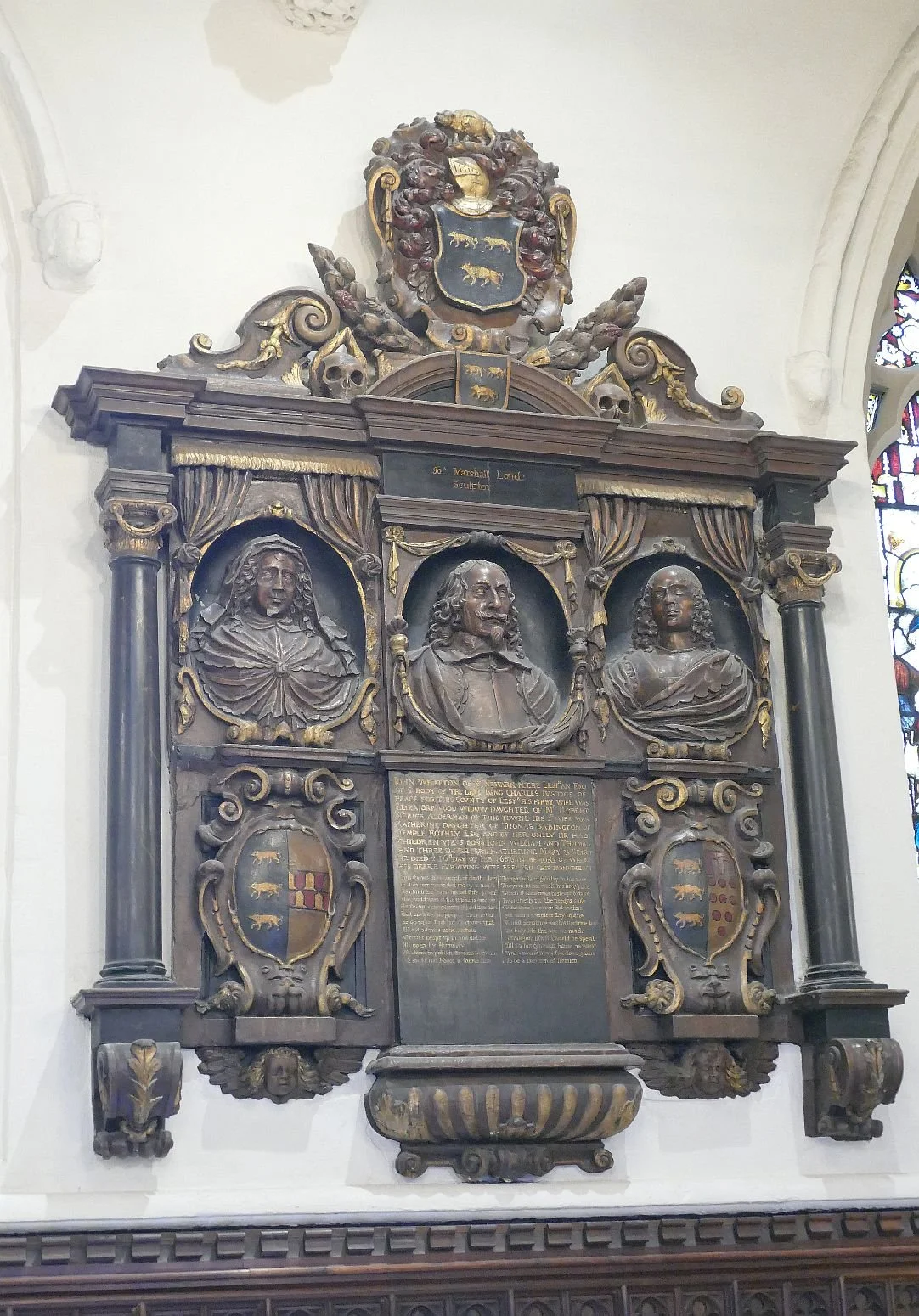
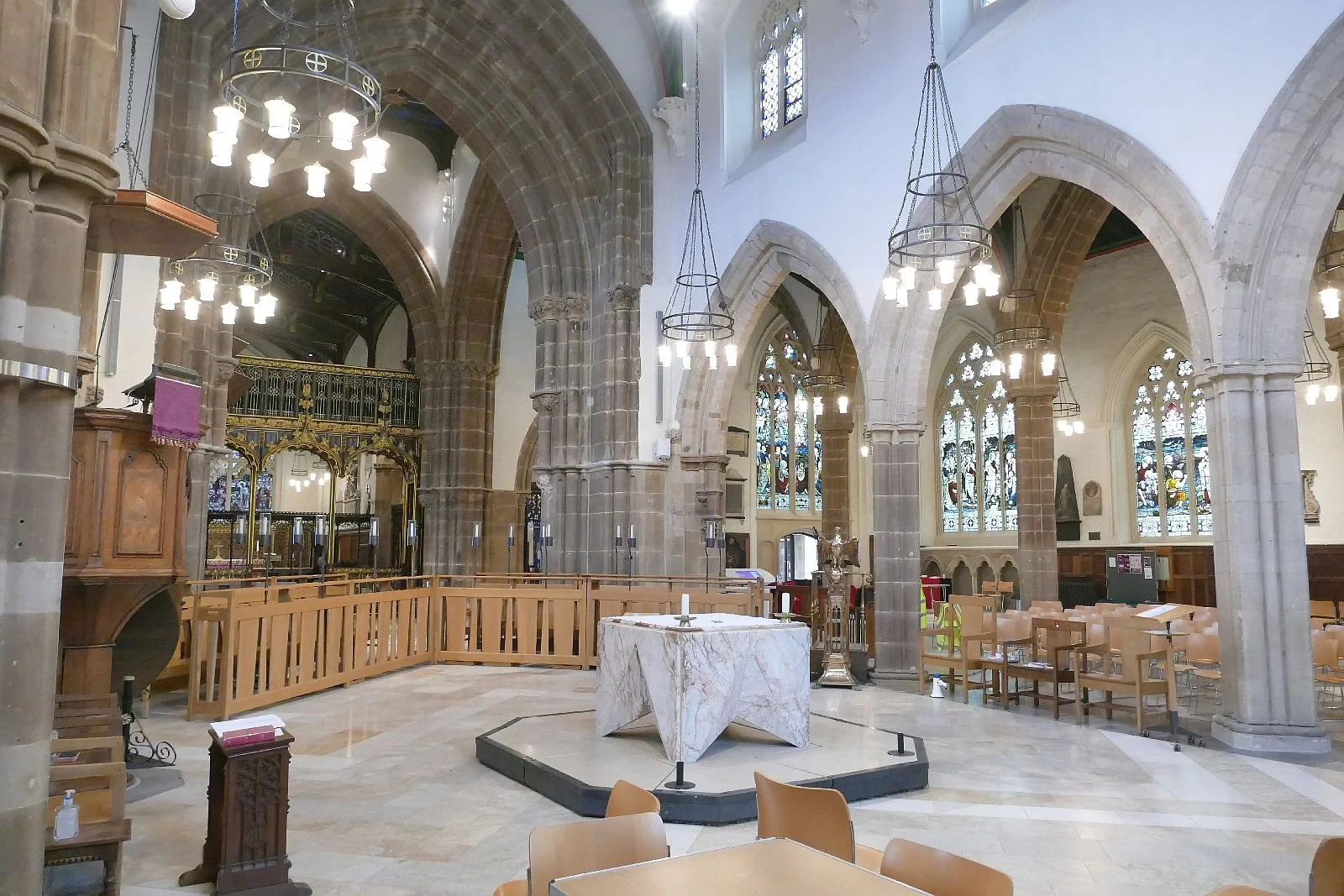
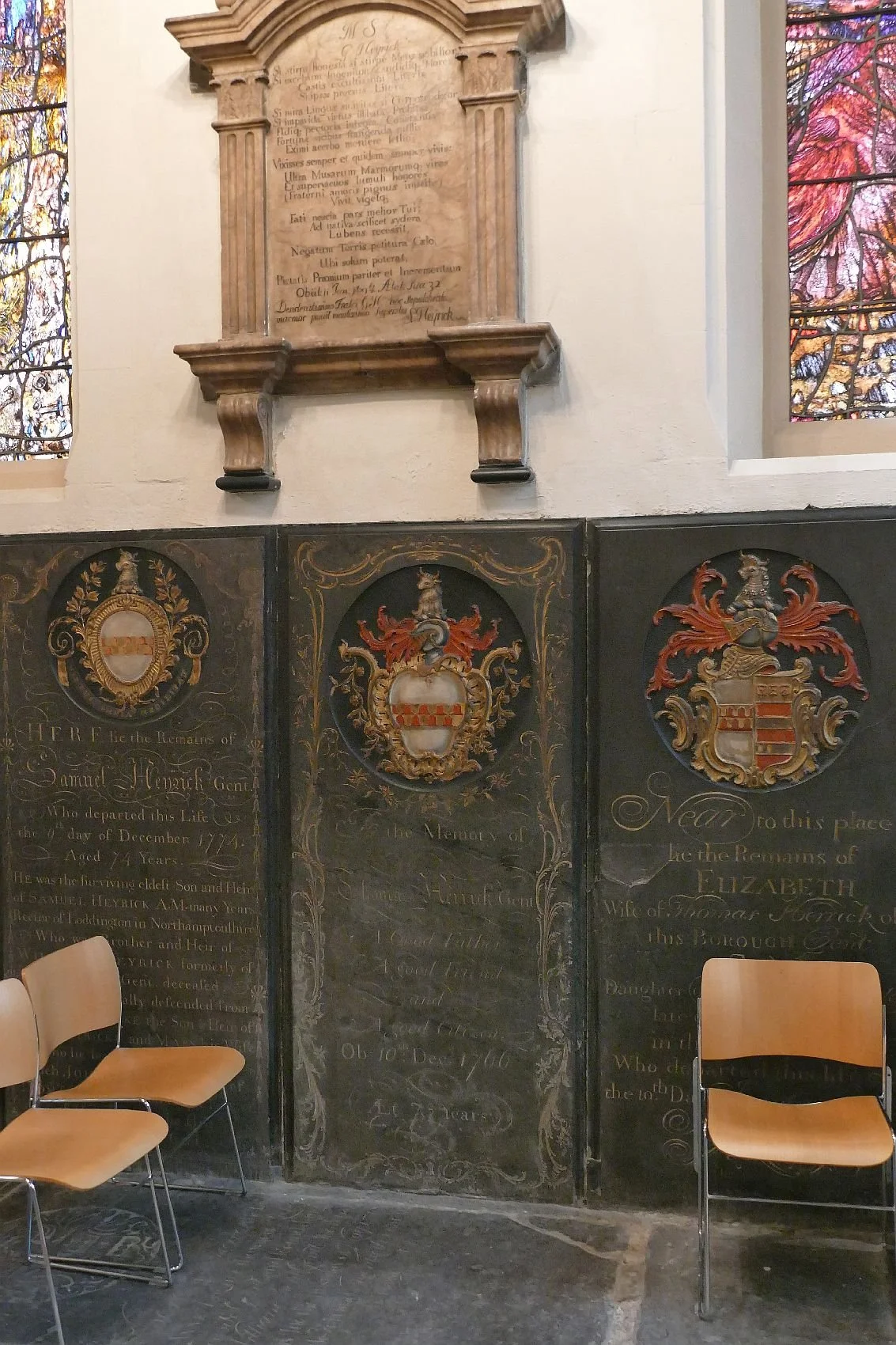
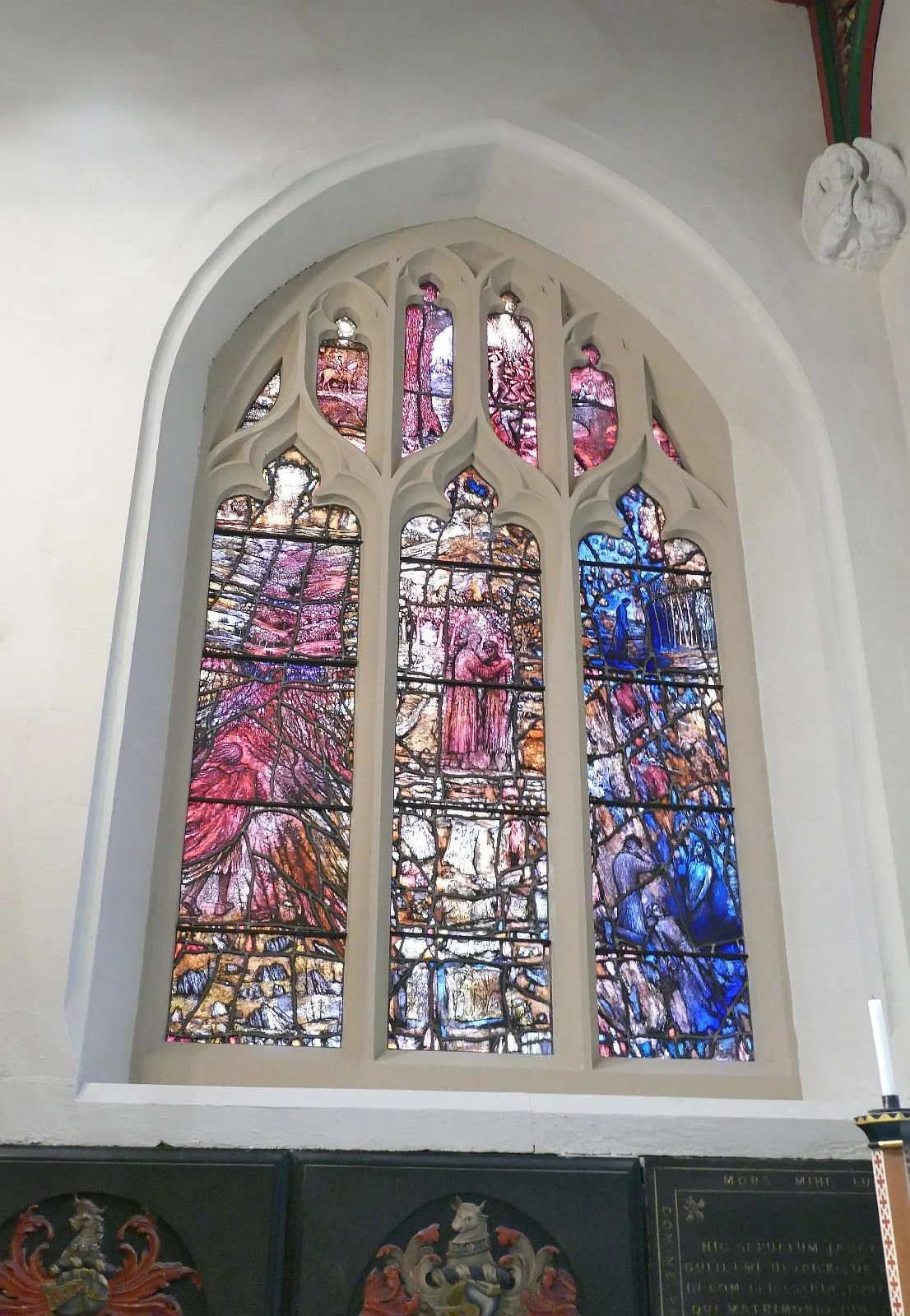
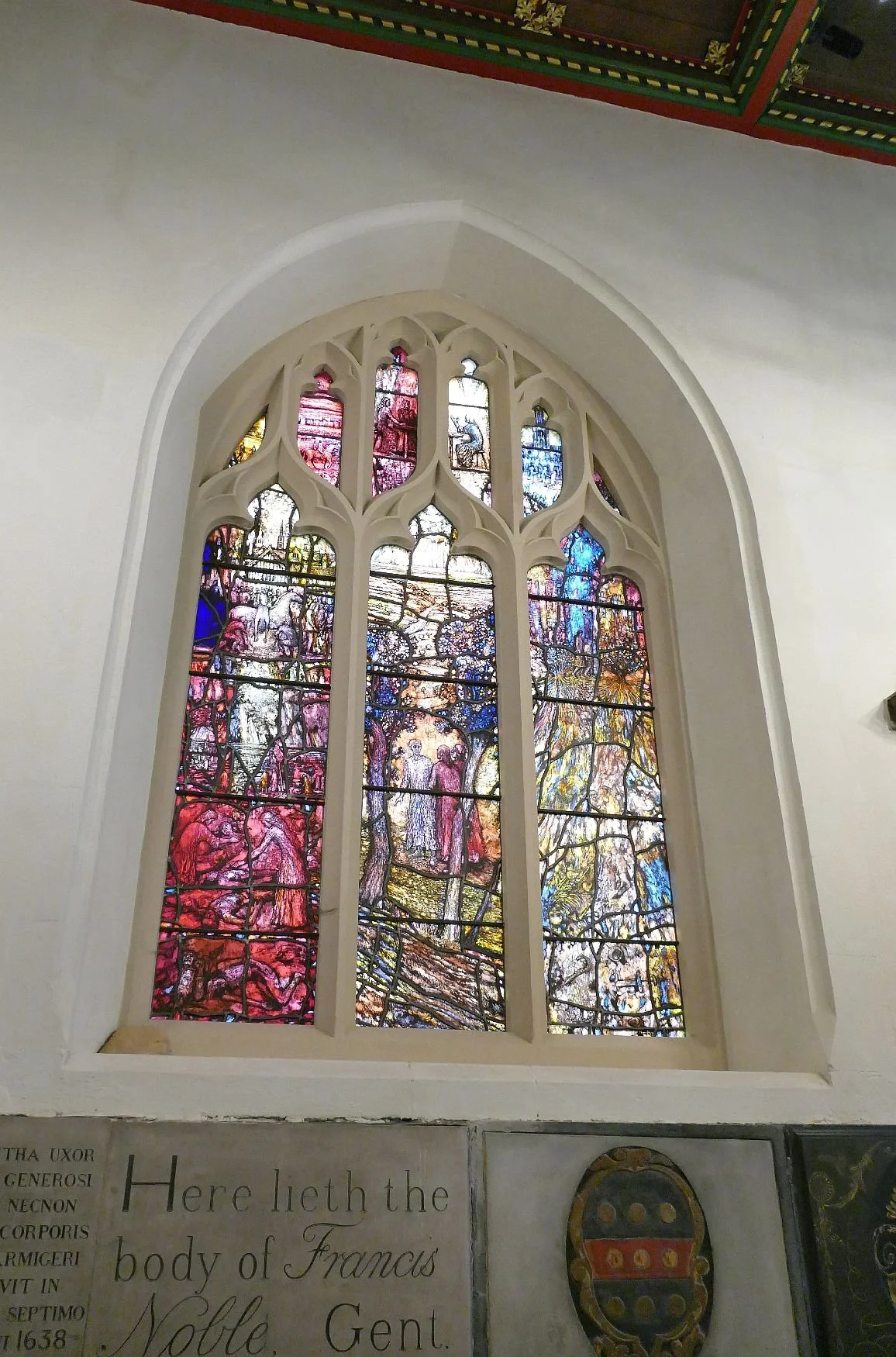
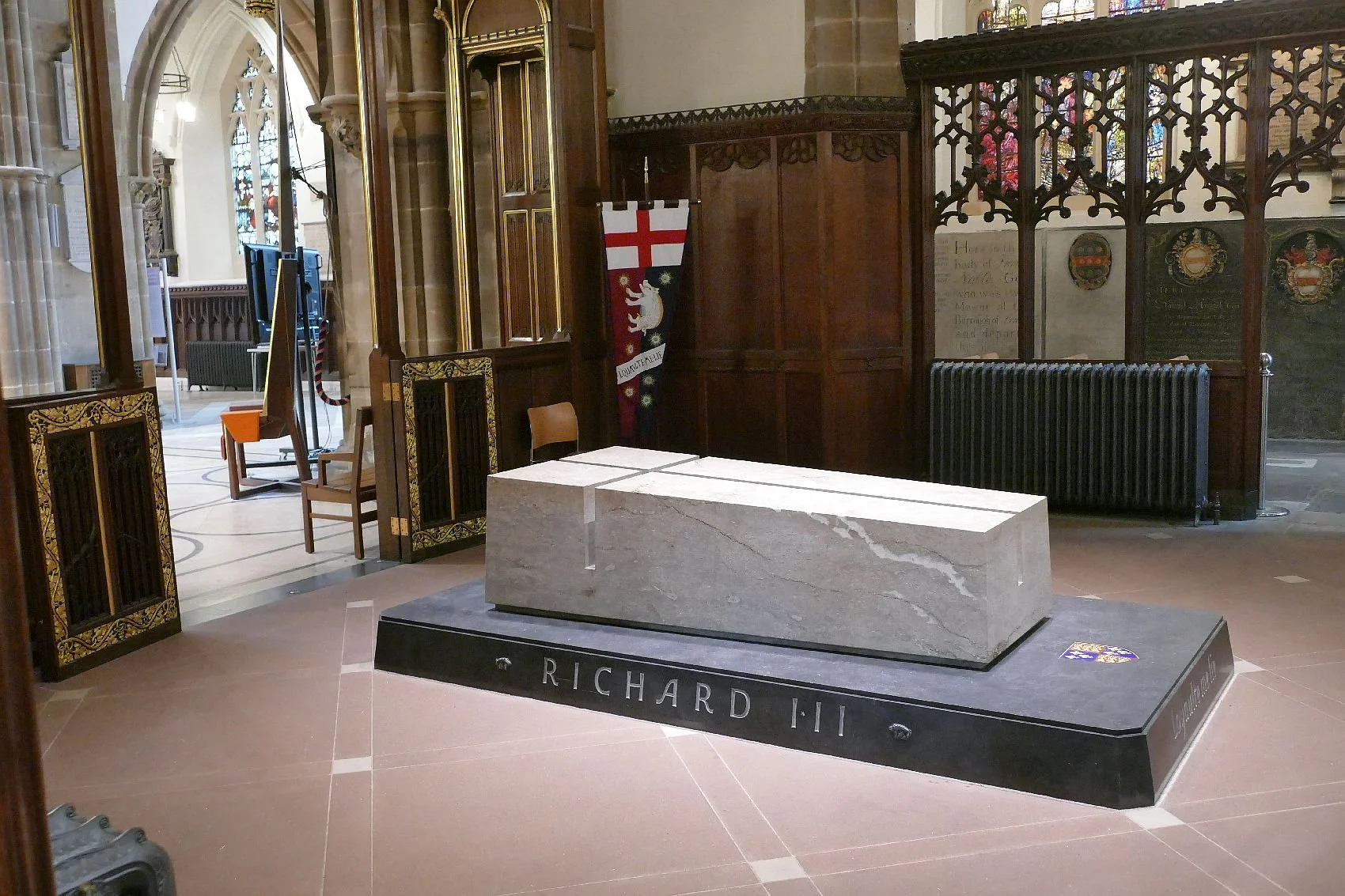
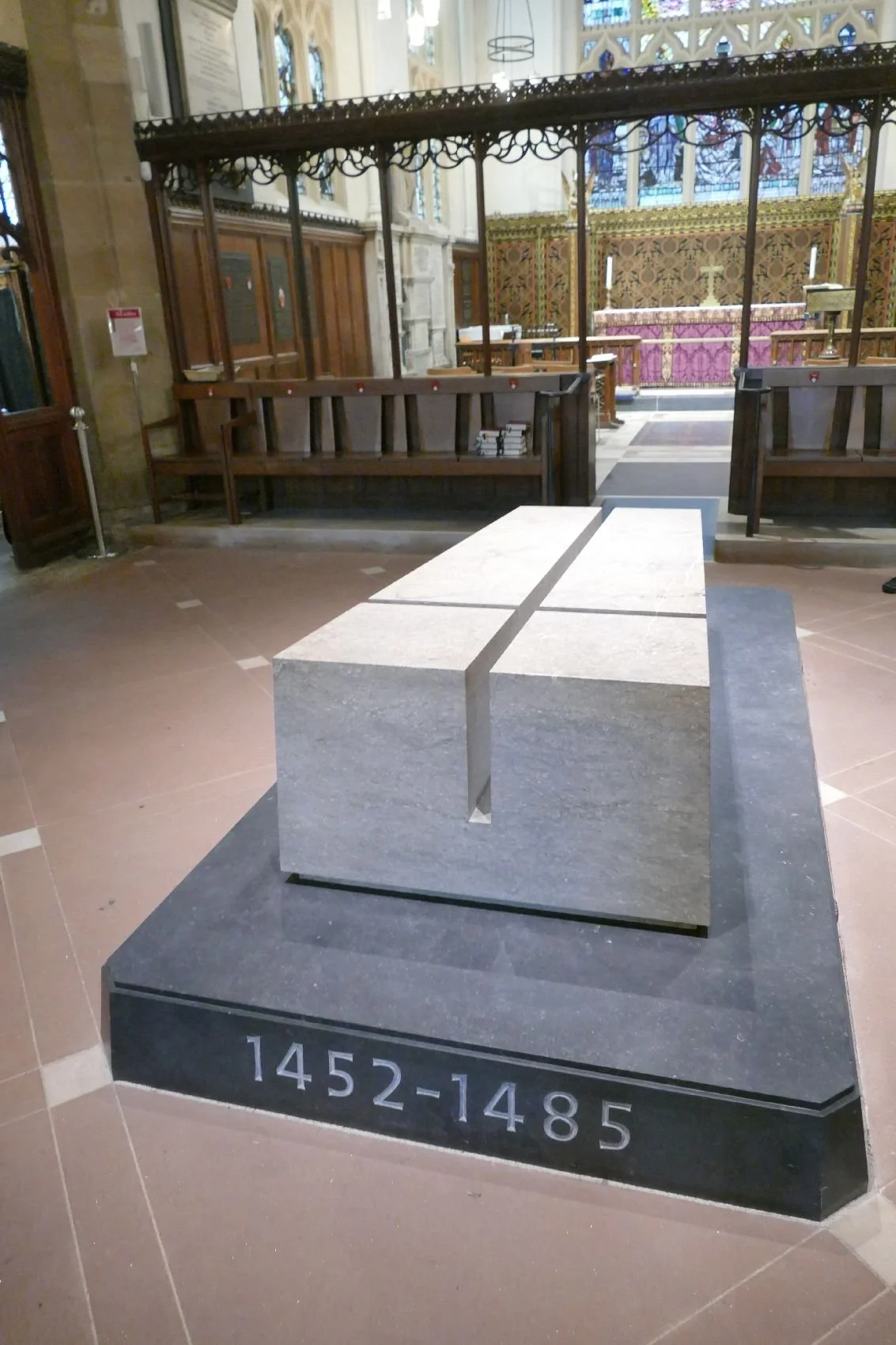
Of course the cathedral is immensely proud of its part in the final laying to rest of Richard III. Cathedral visitor numbers have risen dramatically since the interment of the new-found monarch and the cathedral authorities have developed some excellent information videos located within the body of the cathedral, as well as within its own mini museum. The guides are well briefed and, when Terroir visited, more than happy to answer a strange diversity of questions or share anecdotes relating to a joint love of English gardens! The tomb marker is an immaculately carved 6 tonne cuboid of Swaledale limestone, sculpted by James Elliott, and displaying its innate identity as a piece of sednimentary rock, full of fossils.
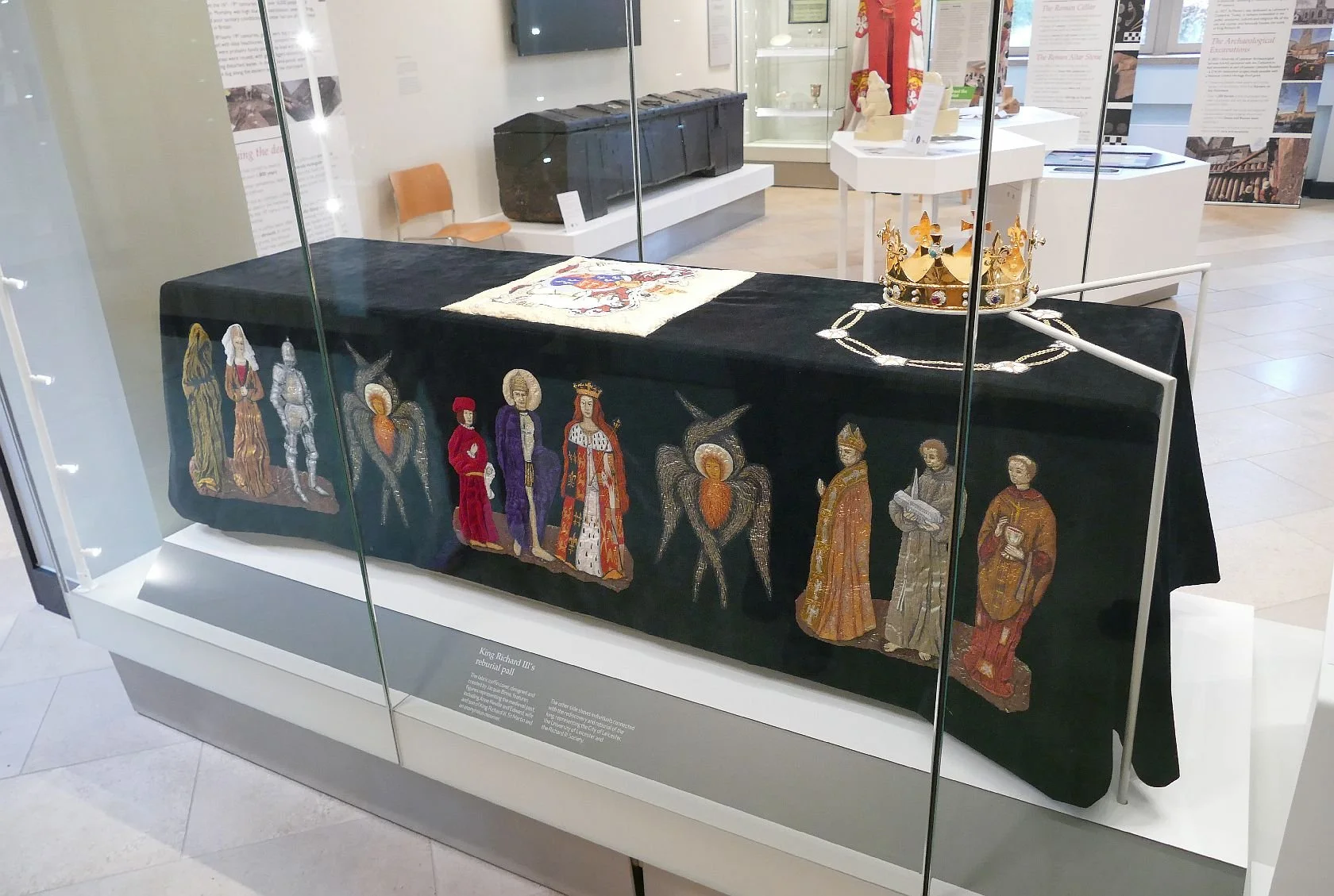
utside the Cathedral lies a strong contrast between old and new and the cathedral/church/cathedral was always an important feature of Leicester town. In the middle ages Greyfriars snuggled up to its walls and it was there that King Richard was taken in 1485, to be buried. The models below show the relationship between the Greyfriars monastery and St Martin’s church.
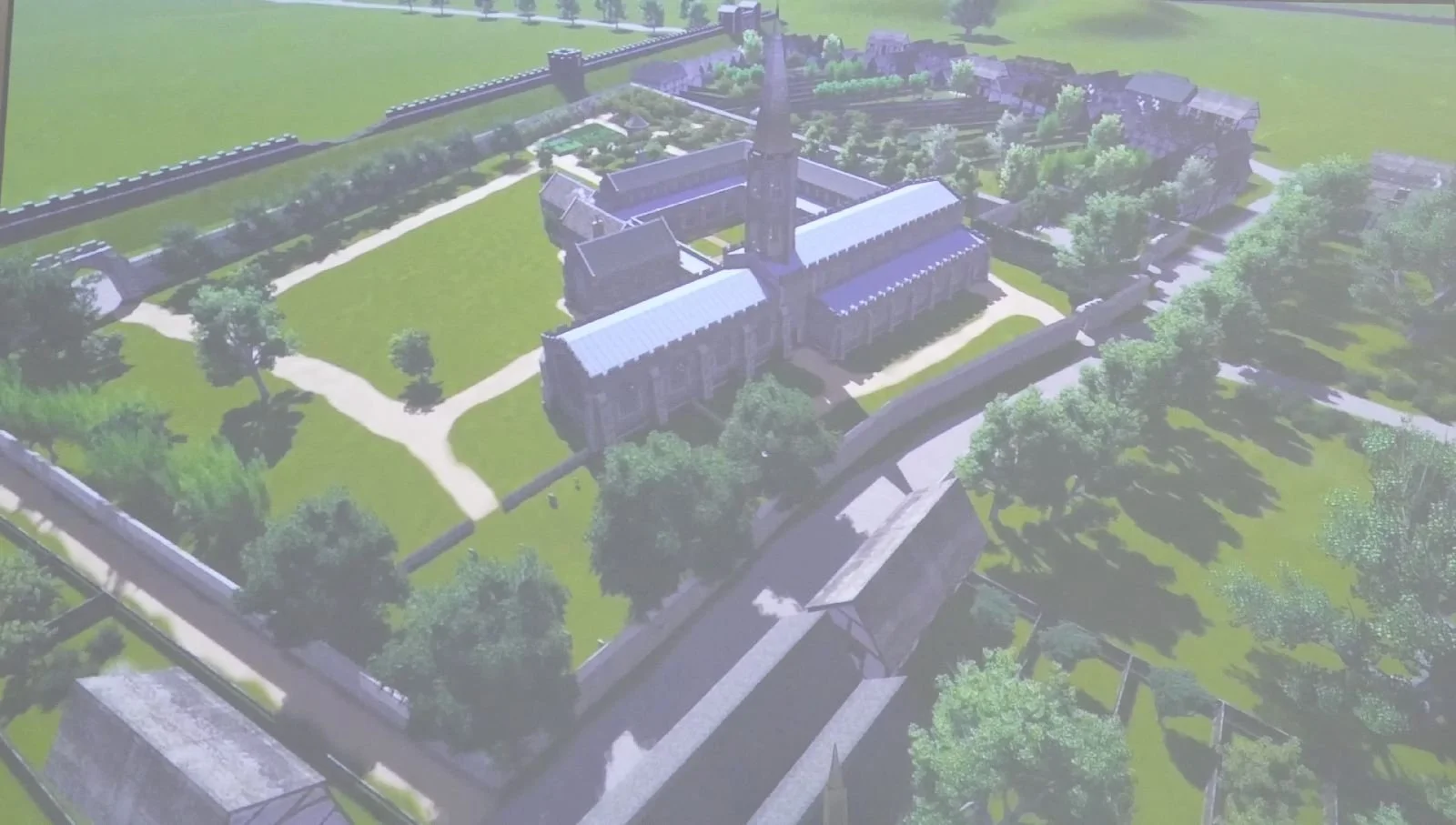
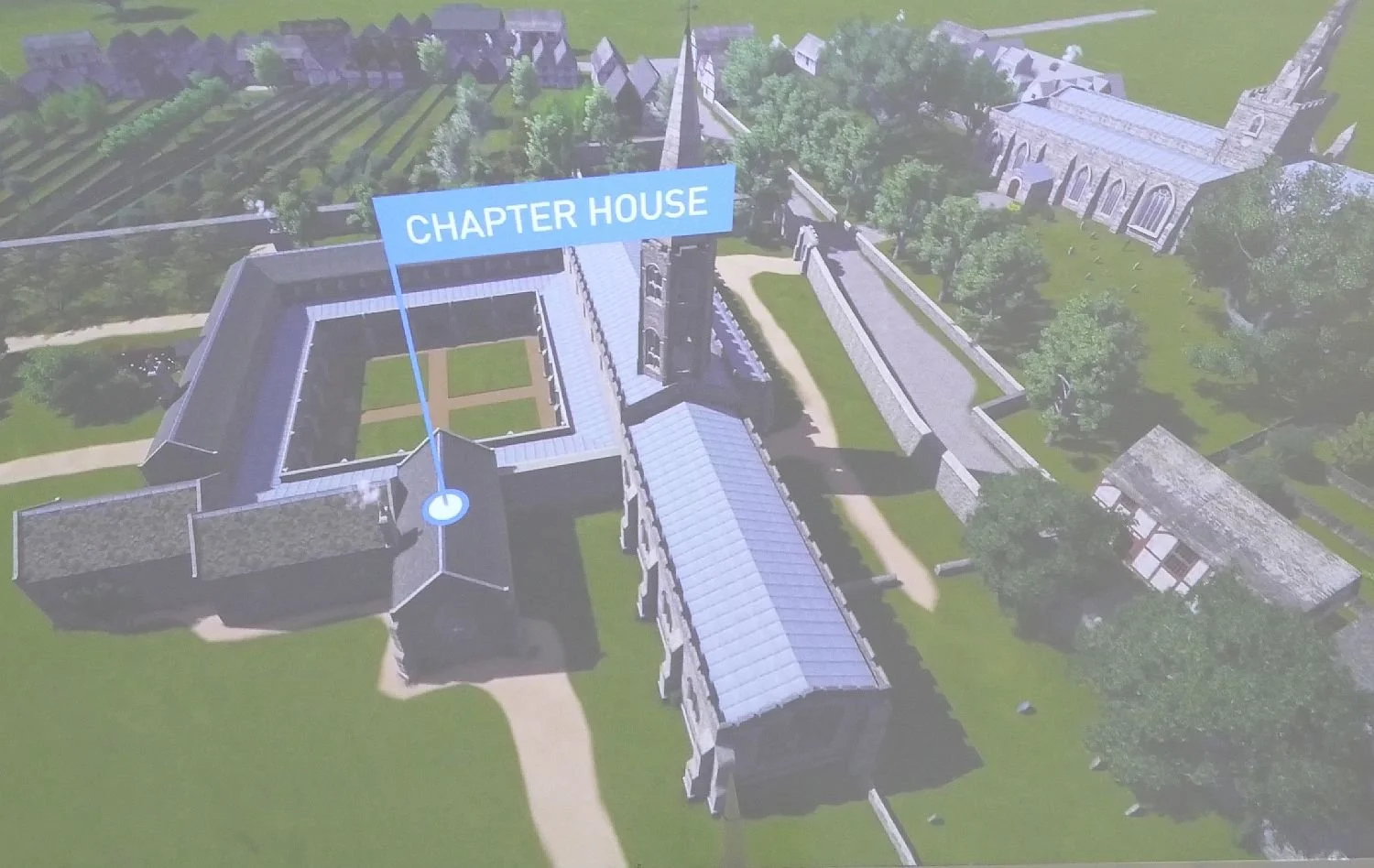
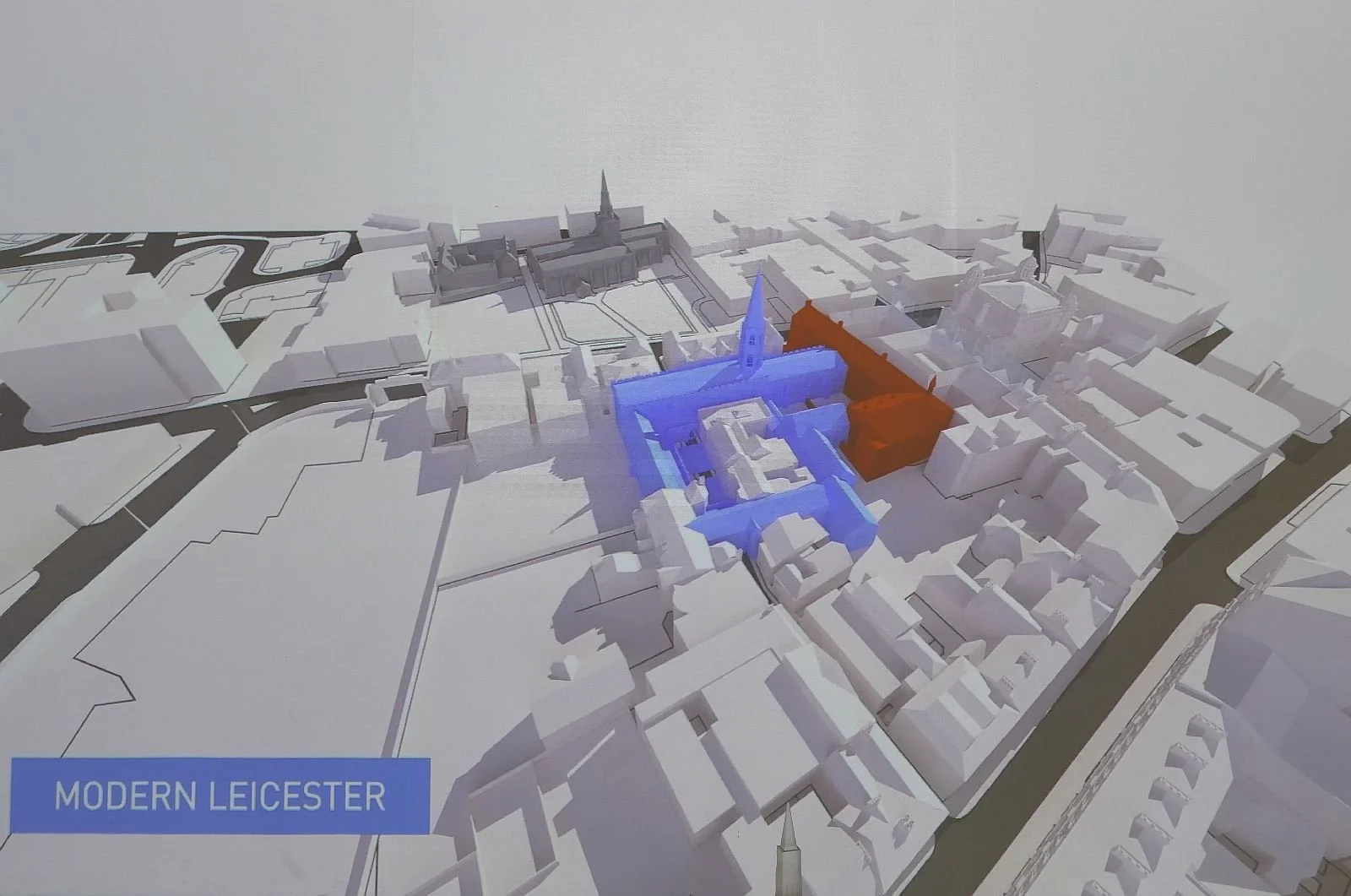
Models of Greyfriars in its prime (above left and centre) and its relationship to the Cathedral (above right)
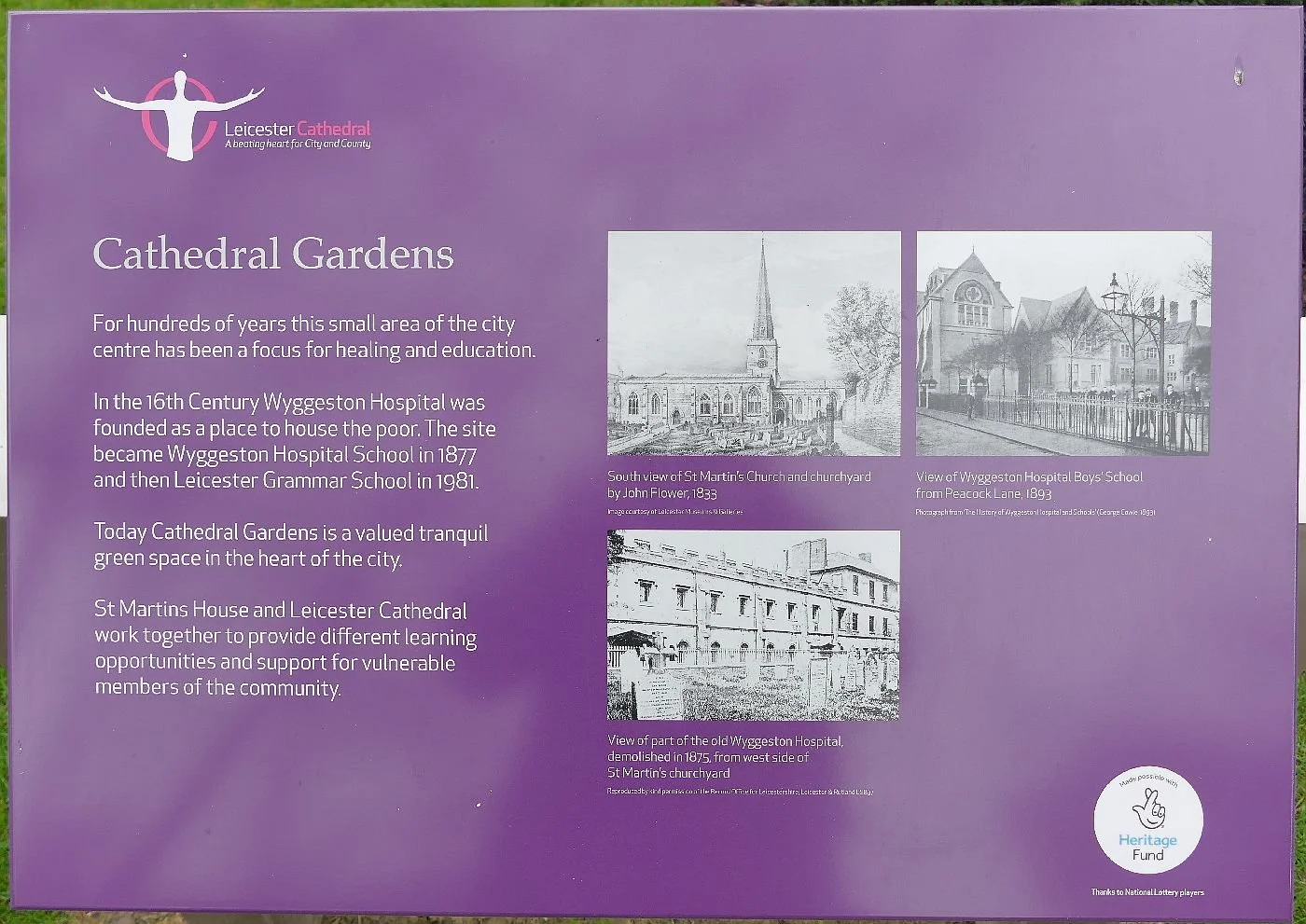
Of course Henry VIII saw to it that the monastery was destroyed, an action which must have released a prime piece of real estate as well as other forms of Franciscan wealth. No one knew that the Parish Church might one day need another Cathedral Close, and it seems that no-one either knew nor cared where King Richard’s body lay. This part of the City needs some parking spaces? That’ll do nicely.
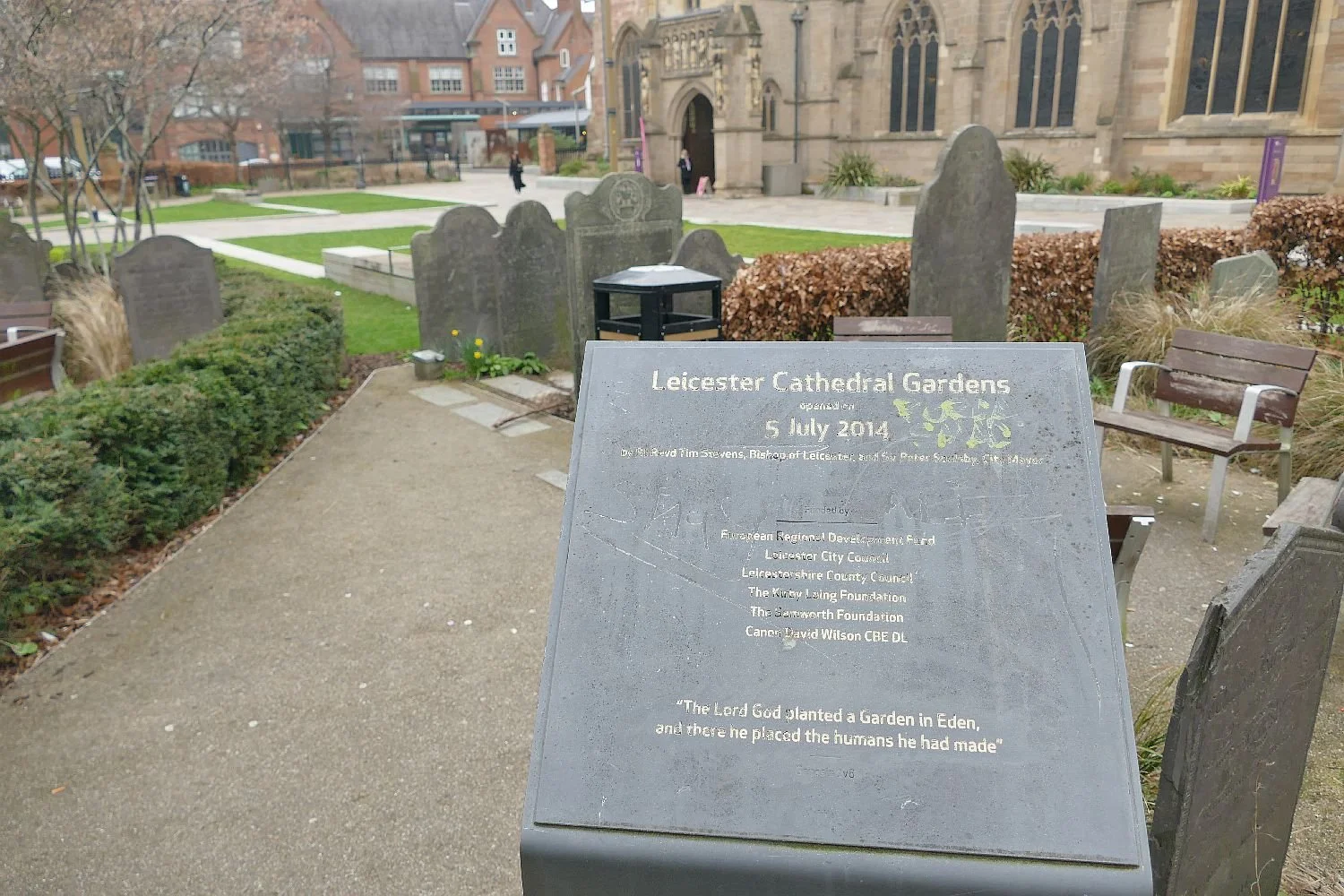
But of course parameters changed drastically once the will, finance, skills and partners were assembled to search for and, finally, to exhume the body of Richard III. Leicester Cathedral was intimately involved in making the exhumation posible, and now has a new garden worthy of the number of visitors who pass through this space.
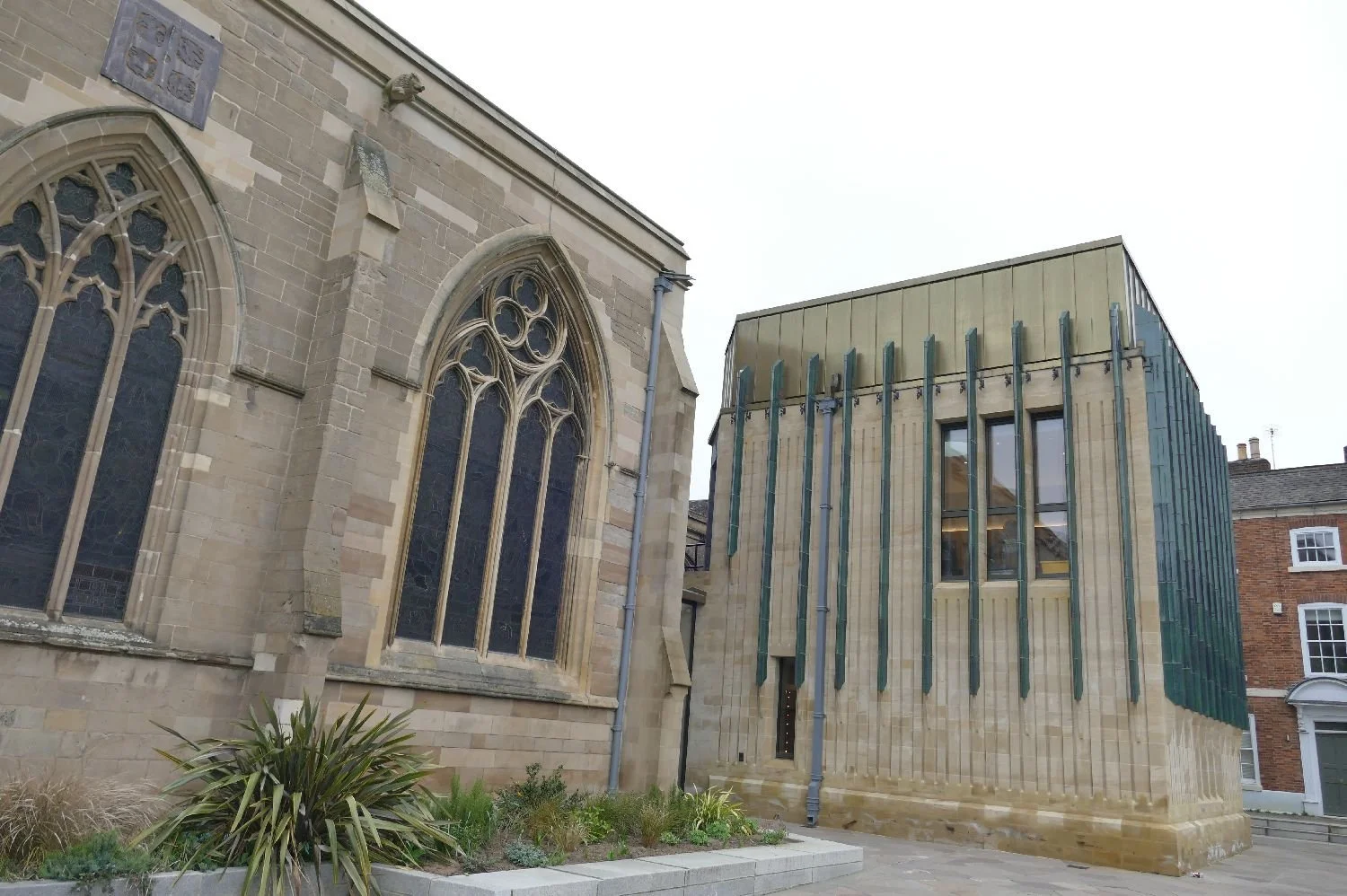
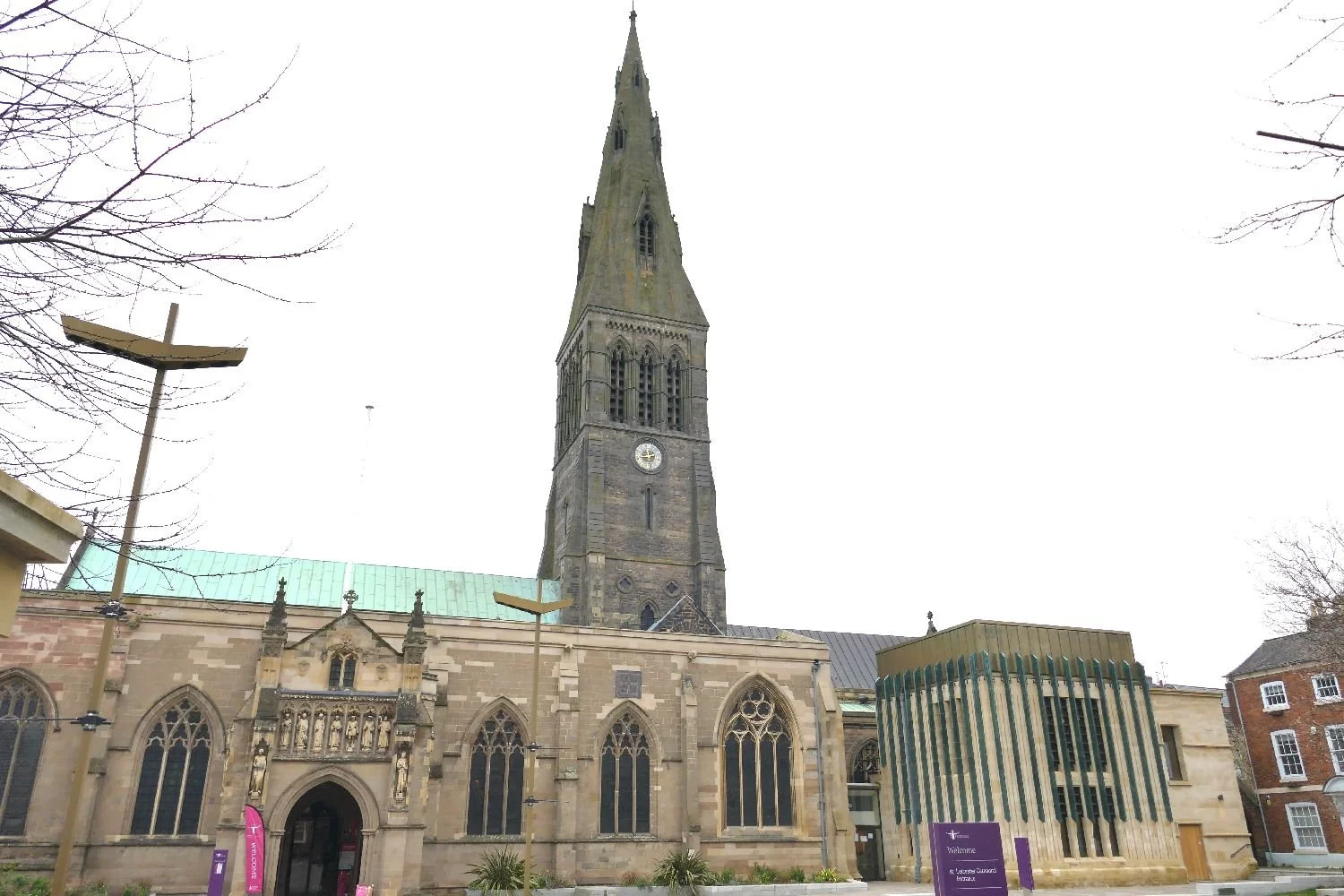
The Cathedral’s new Visitor Centre has avoided a pastiche extension and blends well in terms of materials. We can’t make up our minds whether it reminds us of an upturned medieval bucket or an oversized square pie, but it’s fine. Let it do what is has to do.
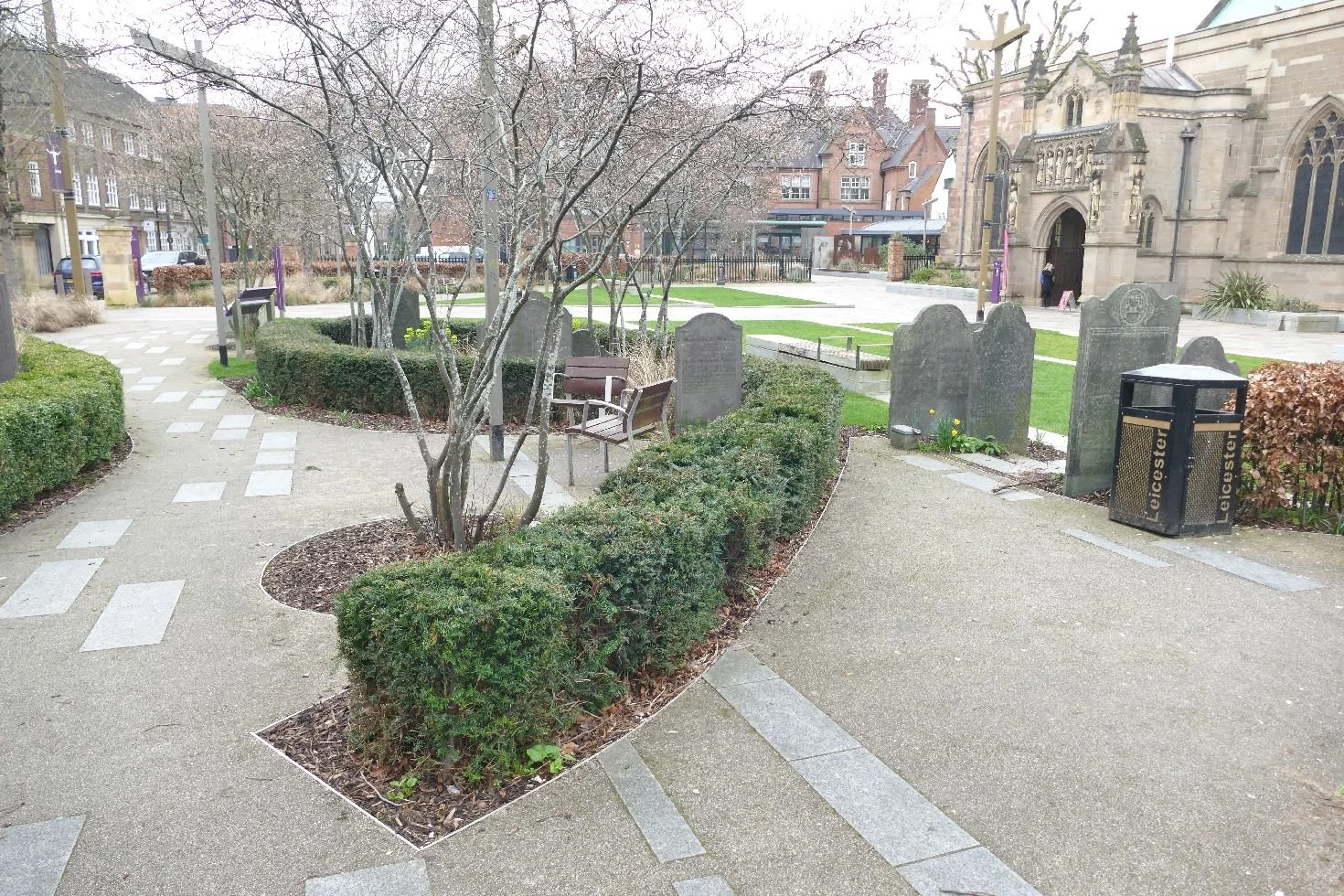
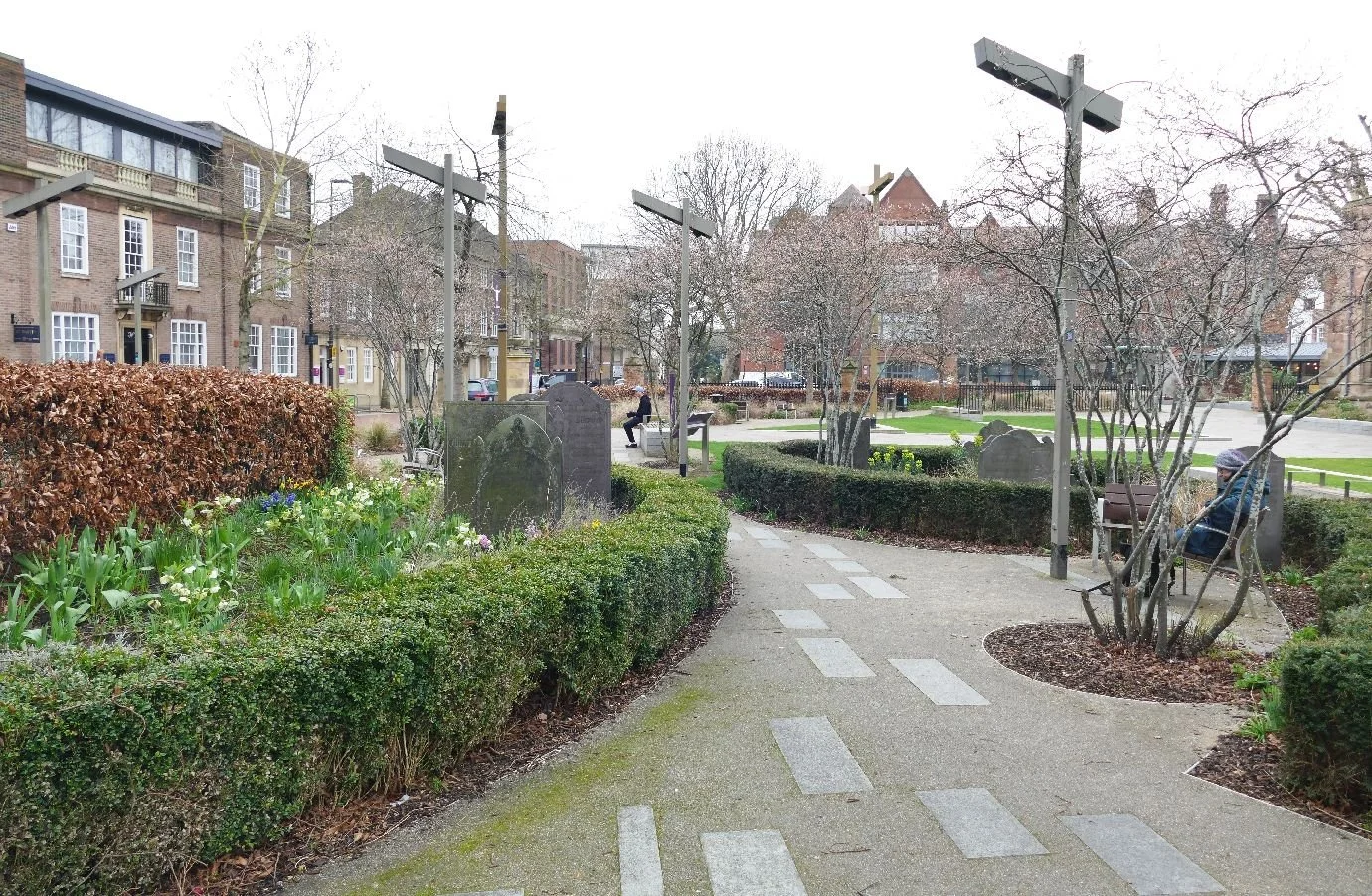
The garden seems to just keep its balance between an uncluttered welcome to the Cathedral and provision of interest and space to rest. Remember - this was early March and a chilly, rain-bearing wind was blowing over Leicestershire. Despite the conditions, people are passing through, taking a rest and appreciating the spring bulbs and the tracery of bare trunks and branches. But it did take one of us a few minutes to work out that the asymetrical ‘signposts’ were not modern scultures, representing medieval archers, but light standards!
We’ll be back in warmer weather. The Richard III Visitor Centre requires a longer visit and there is always Bosworth Field to visit - even if it is now the Bosworth Field Heritage Centre. Do we mind? We’ll let you know.