Metal Man
If you read our last blog – no, no, there was nothing to read. Try again: if you looked at the pictures in our last blog, did you guess where we’d been? No? Then this time we offer you clues in writing. We’re on our way to our destination, but we’ve stopped over in Nice. An IronMan competition is about to start and the city is full of safety barriers, bike stands and terrifyingly fit men and women. We decide to take a trip out of town.
Nice has many claims to fame. Perched on the south eastern face of the French hexagone, and capital of the Départment des Alpes Maritimes, the city combines Mediterranean beaches, easy access to Monaco, Italy and (hint) our final destination, and the splendid landscape of the Maritime Alps.
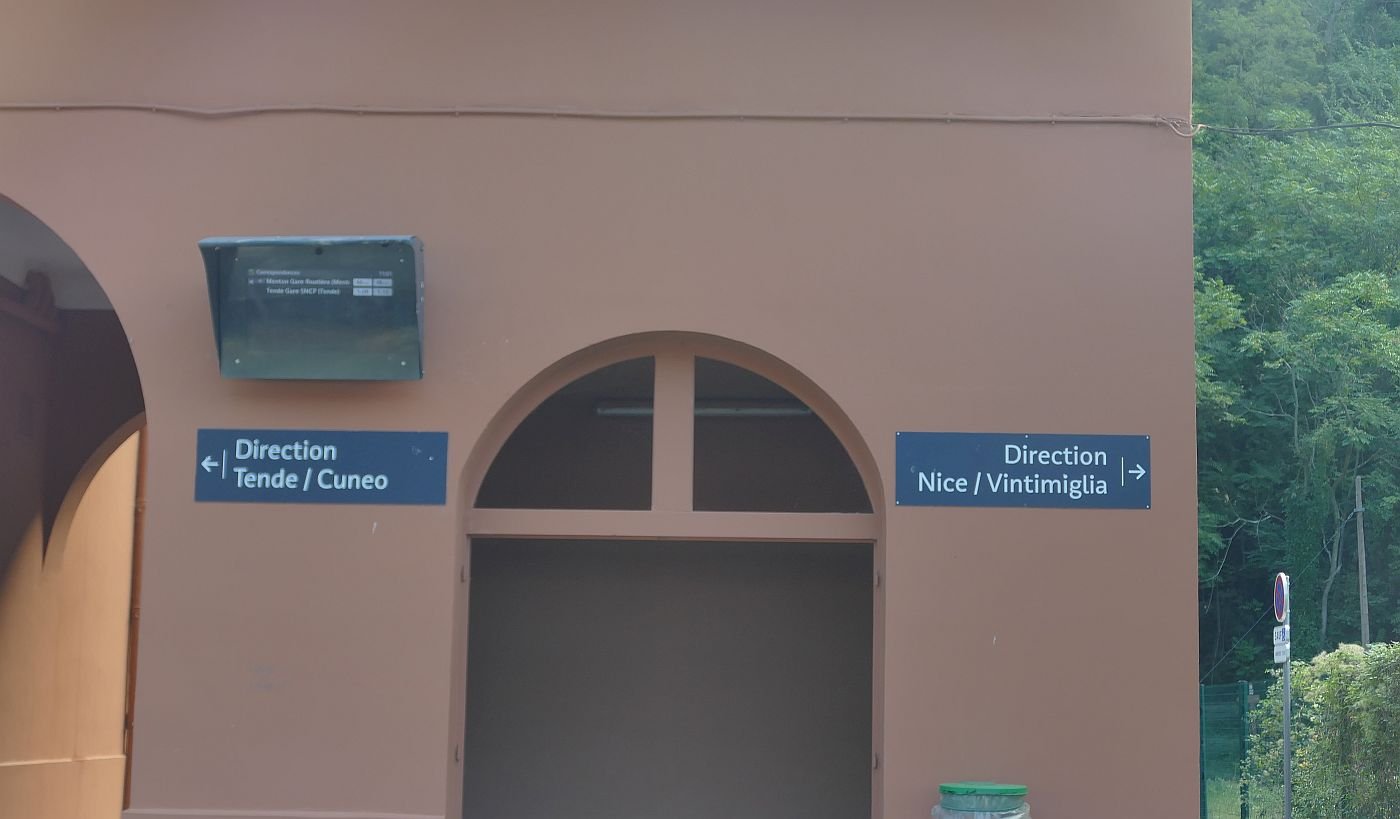
It is also terminus to a railway line, famous for its engineering, which links Nice to Turin via the mountain settlements of Tende (in France) and Cuneo, on the other side, in Italy.
The views from the train are so spectacular that SNCF has an English speaking guide on board to provide a commentary on the splendours of the Roya valley through and up which the train must pass to reach the Italian Piemonte.
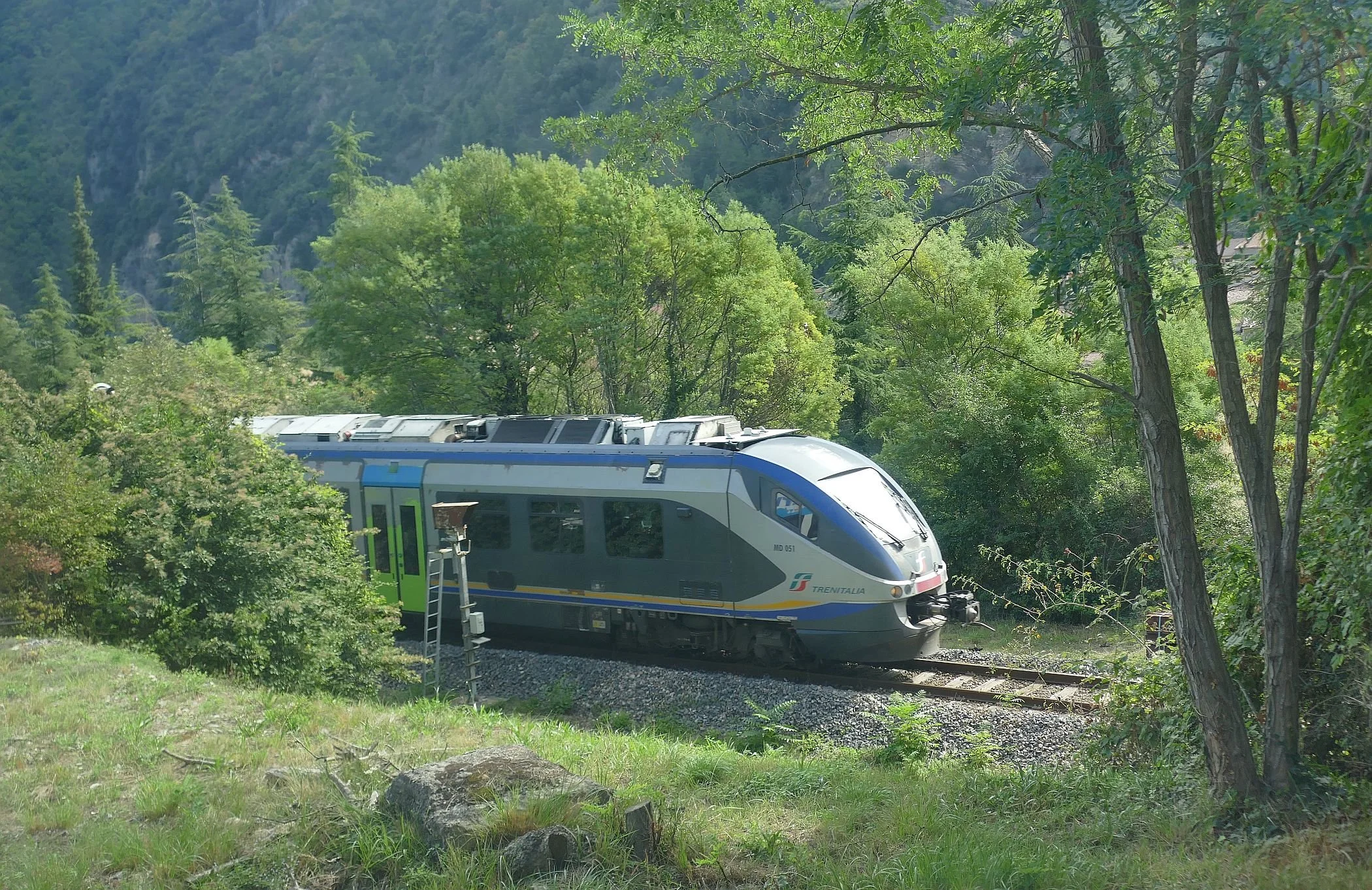
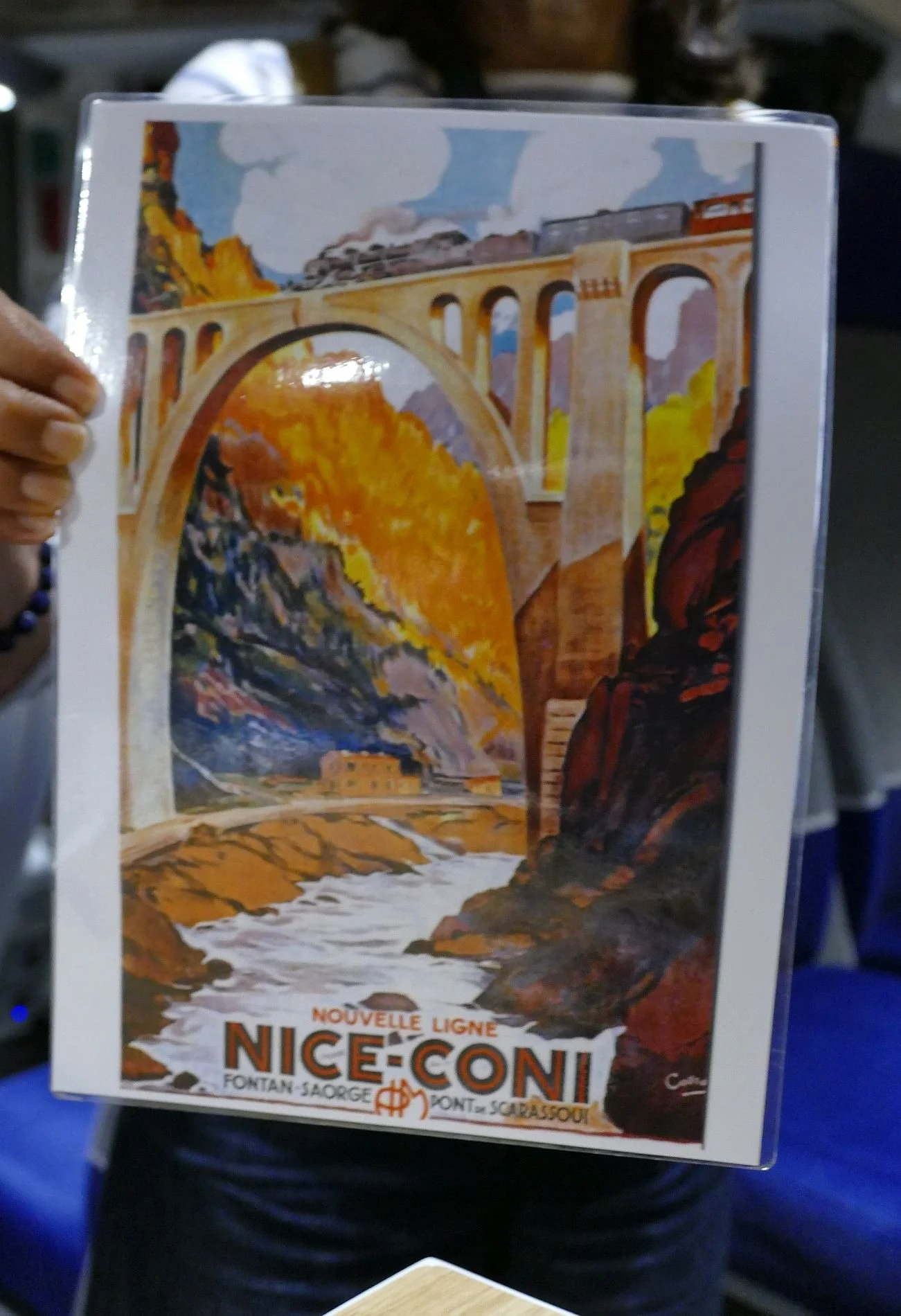
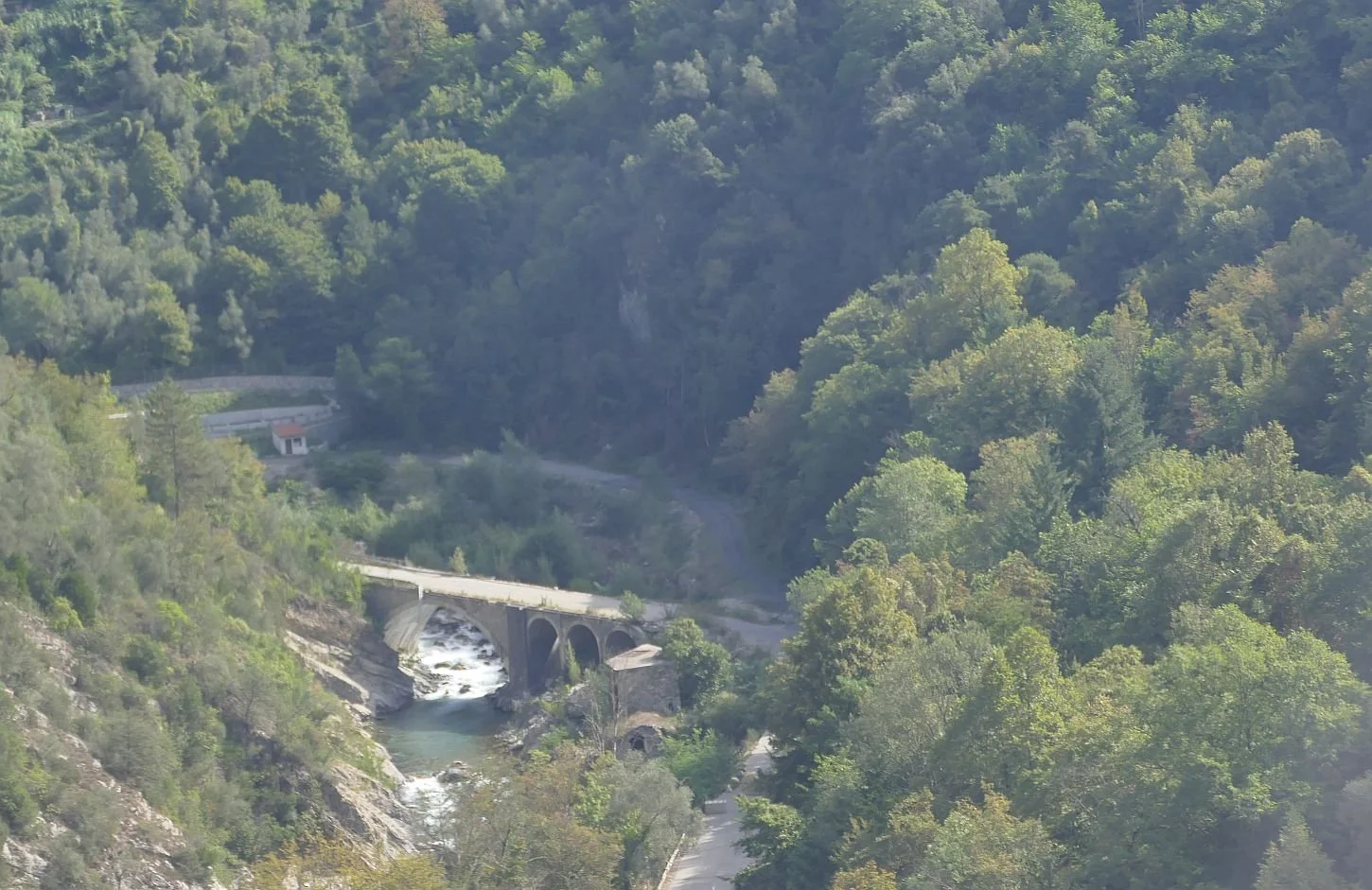
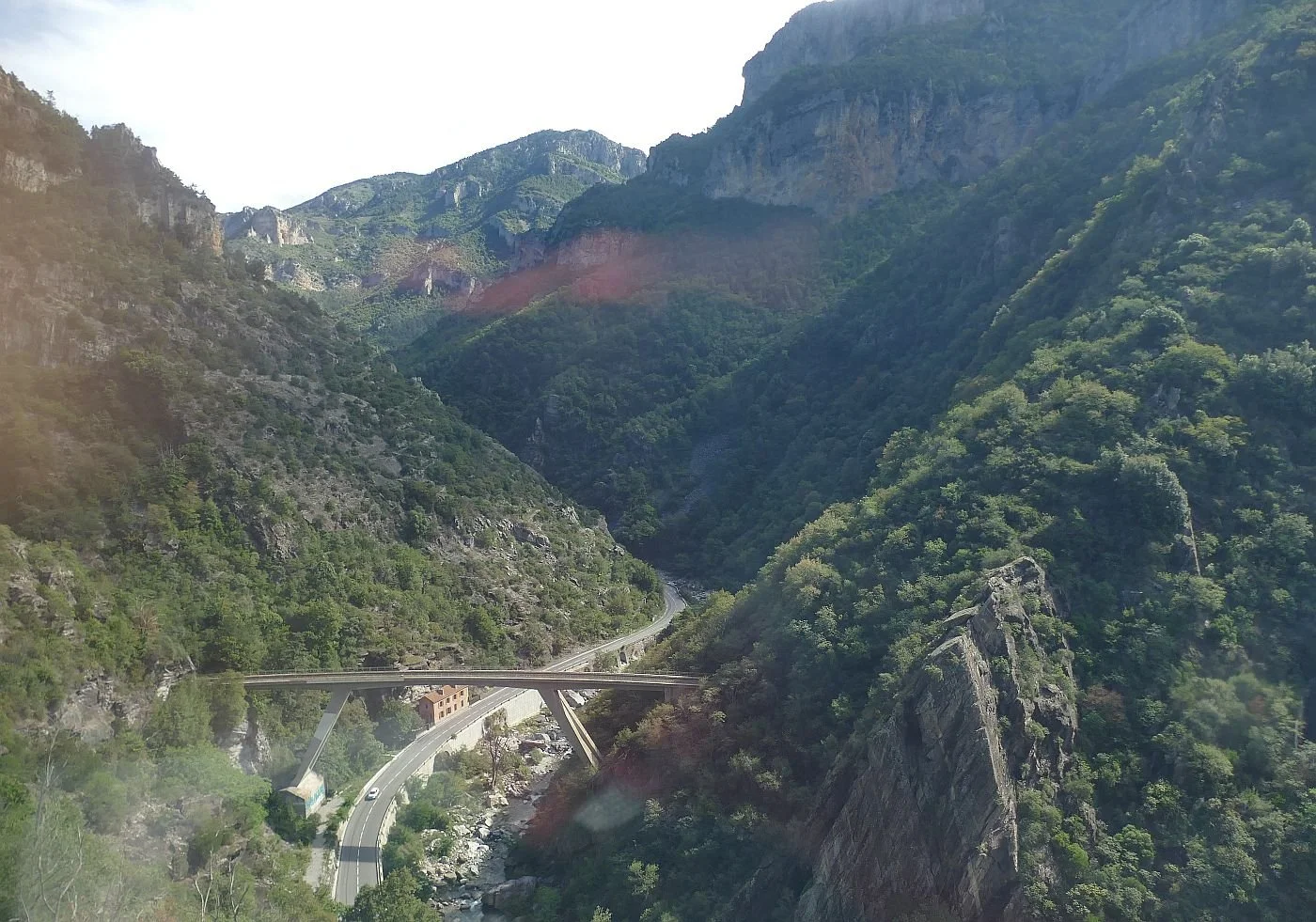
We do not use the words ‘through … the valley’ lightly, and those engineering challenges which we mentioned earlier required imaginative solutions. These are hard to appreciate if you’re actually on the train, but if you are watching carefully and are on the appropriate side of your carriage, you do get some fine views of both road and railway bridges and viaducts.
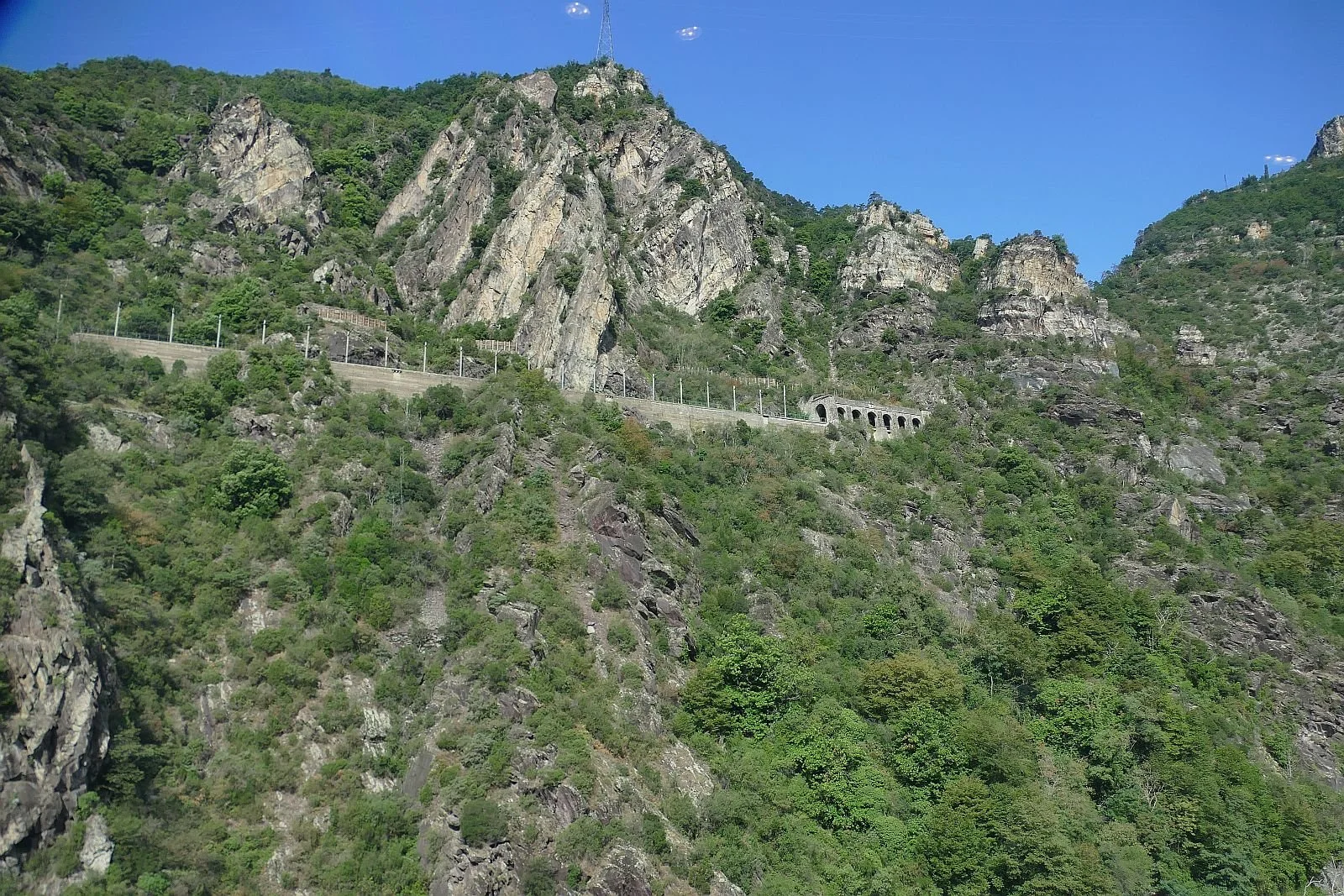
The parts you can’t comprehend so easily are the railway tunnels. These masterpieces are four spirals set within the mountain. Berghe Helical Tunnel gains as much as 90 m in height over a track length 1,881 m (https://structurae.net/en/structures/berghe-helical-tunnel) while the ‘as the crow flies’ horizontal distance between the portals is only 250 m.
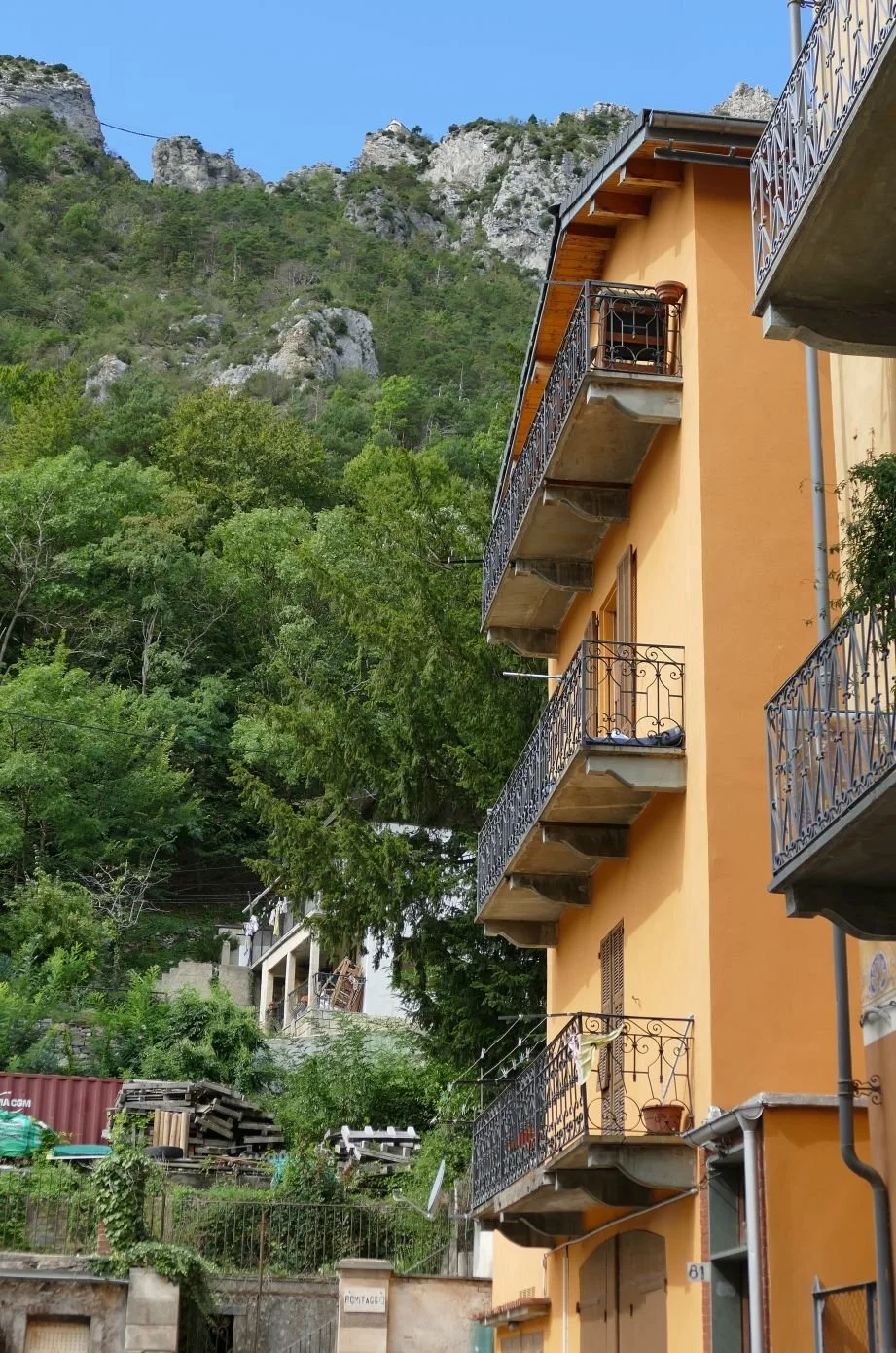
The local geology which, as you will no doubt have already observed, is limestone, a relatively soft material which the River Roya and its tributaries have carved into magnificent cliffs and gorges and the local stonemasons have used it to create the characteristic architecture of the valley’s villages.
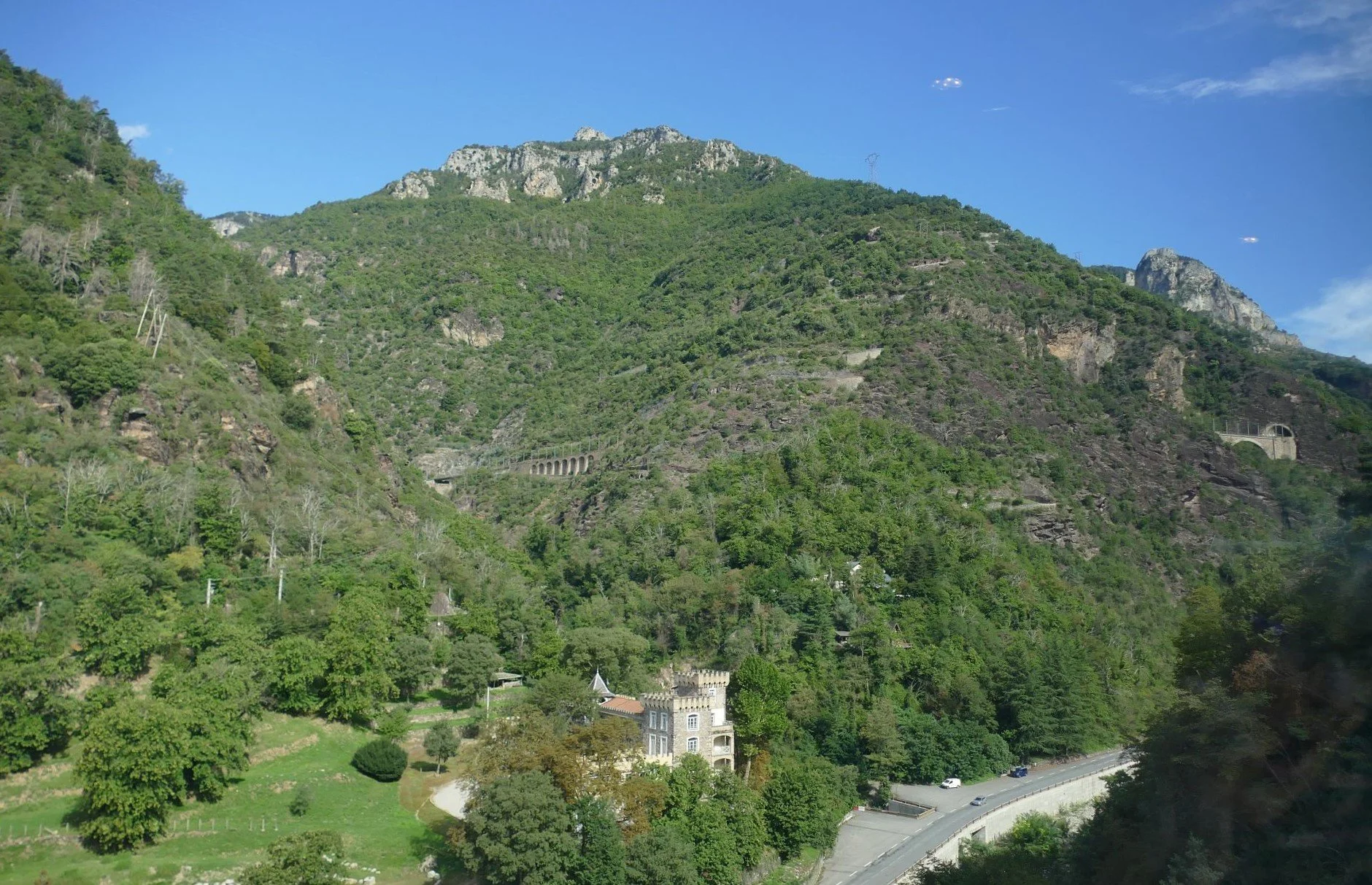
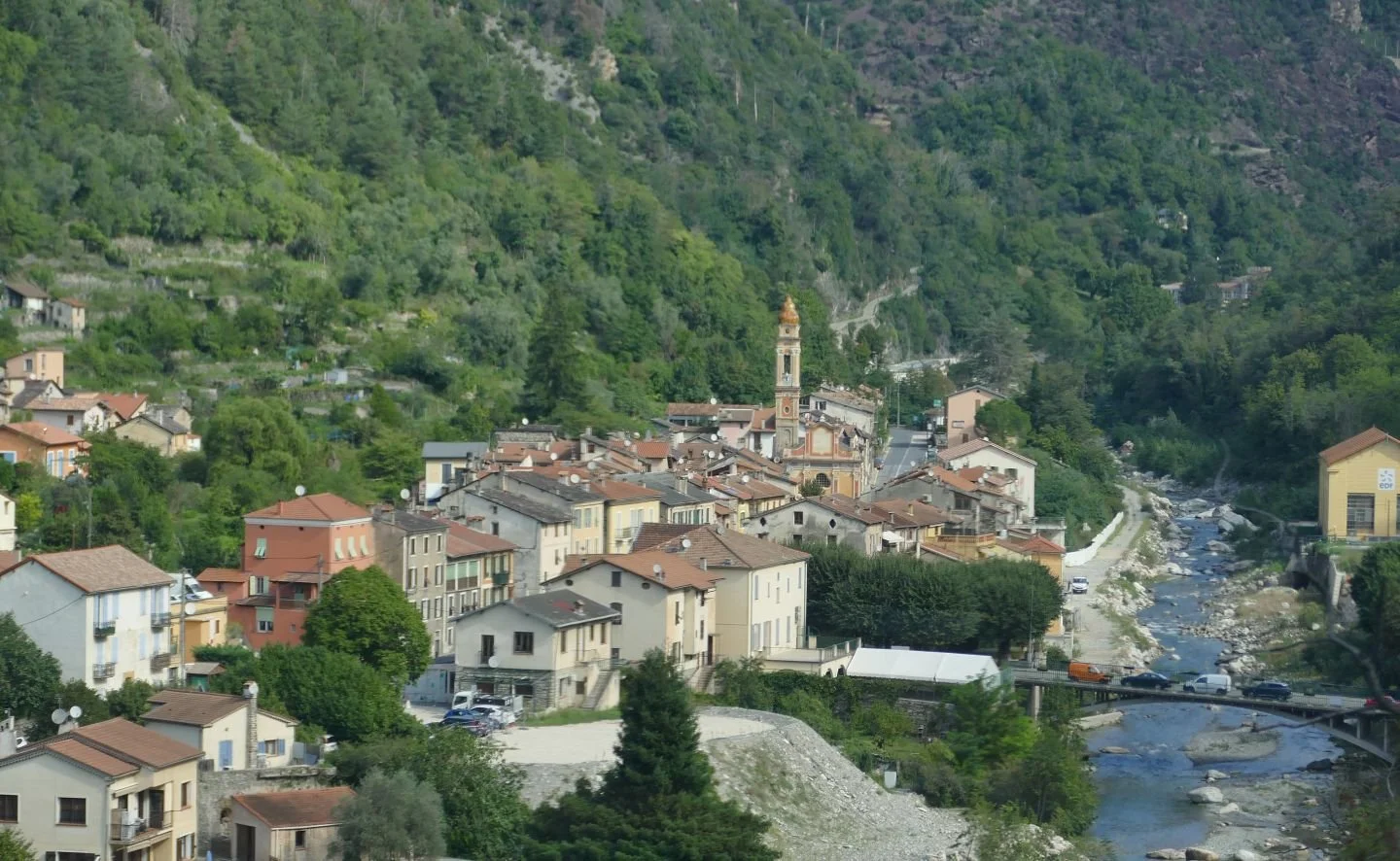
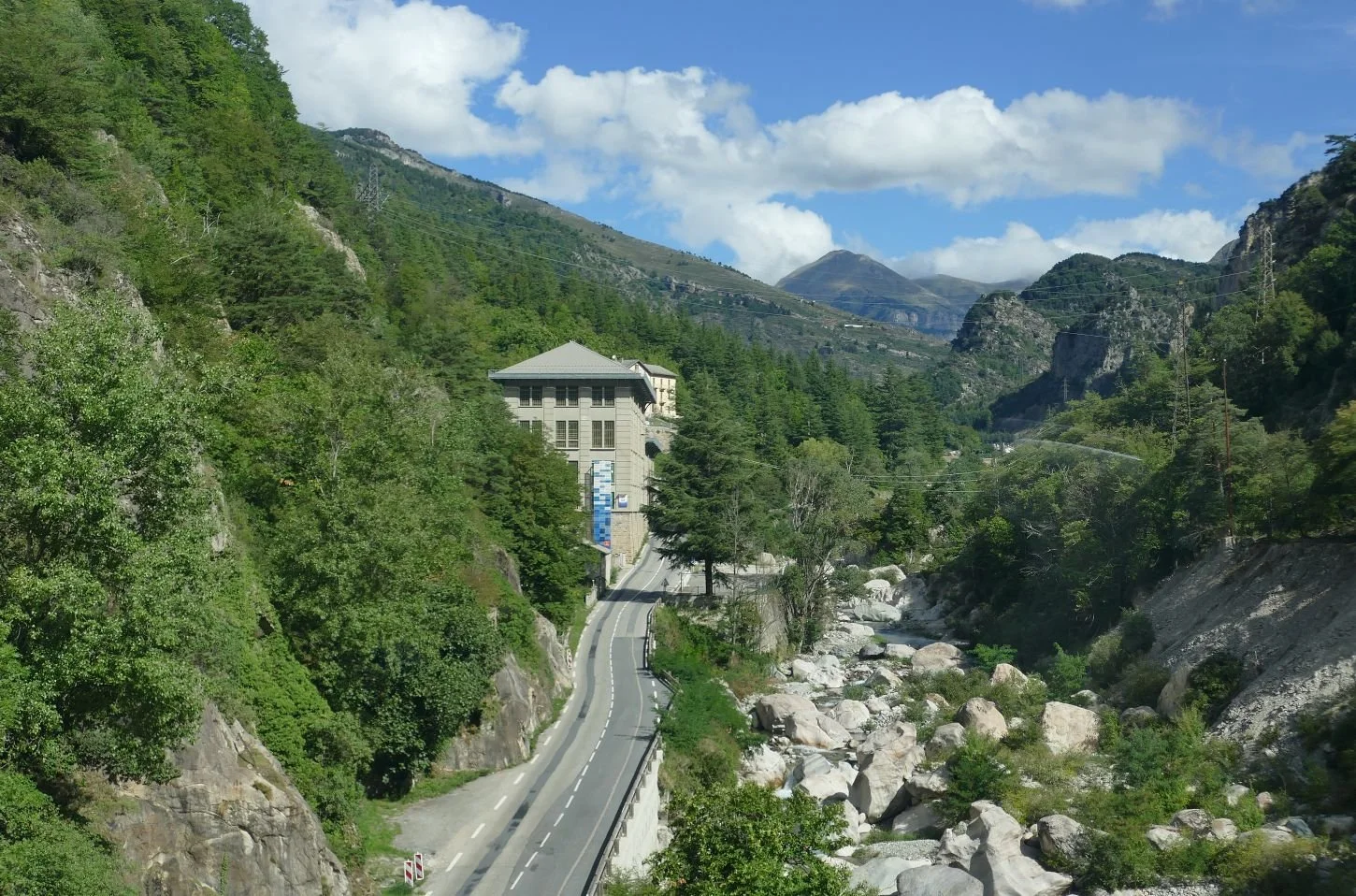
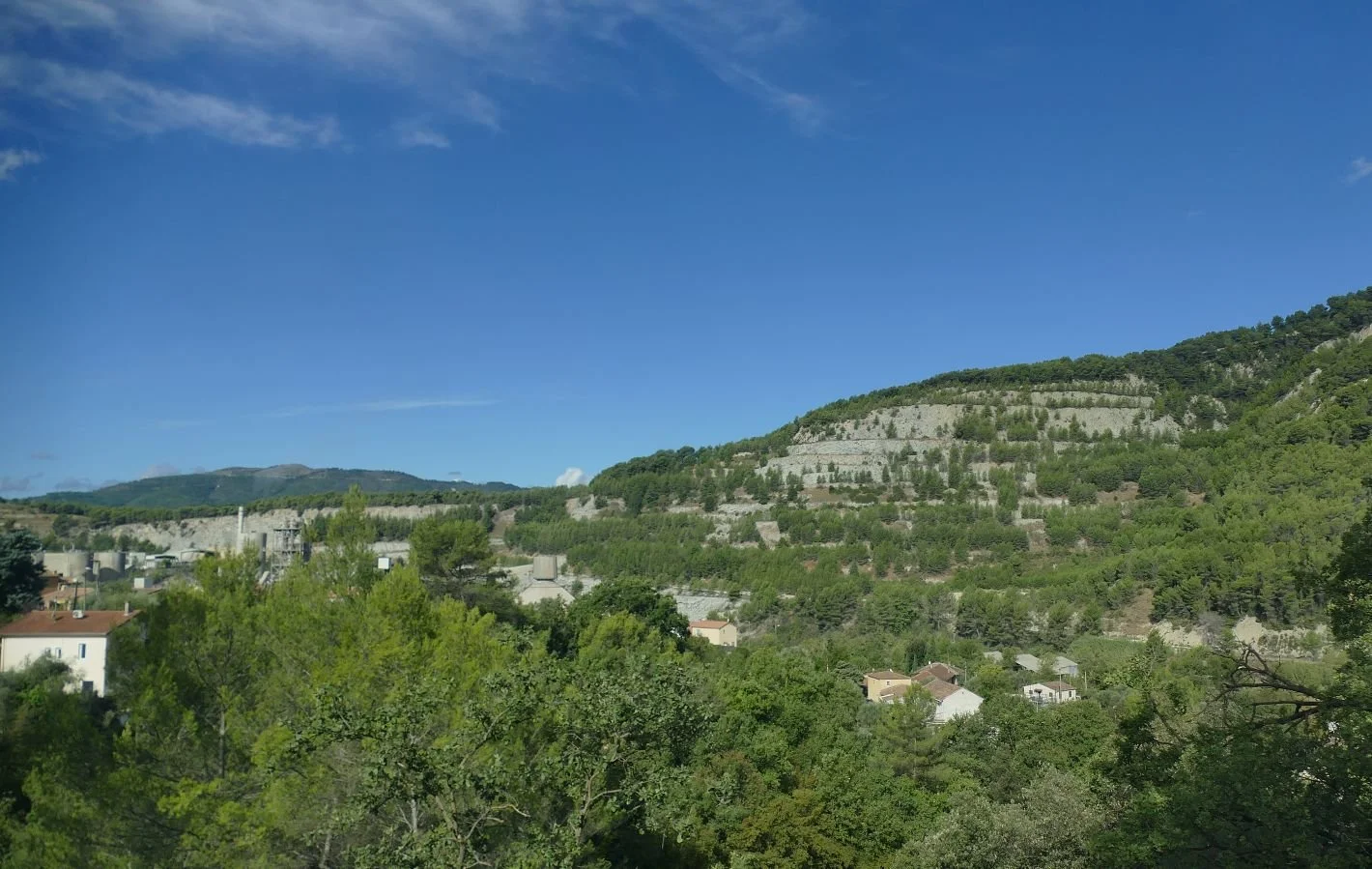
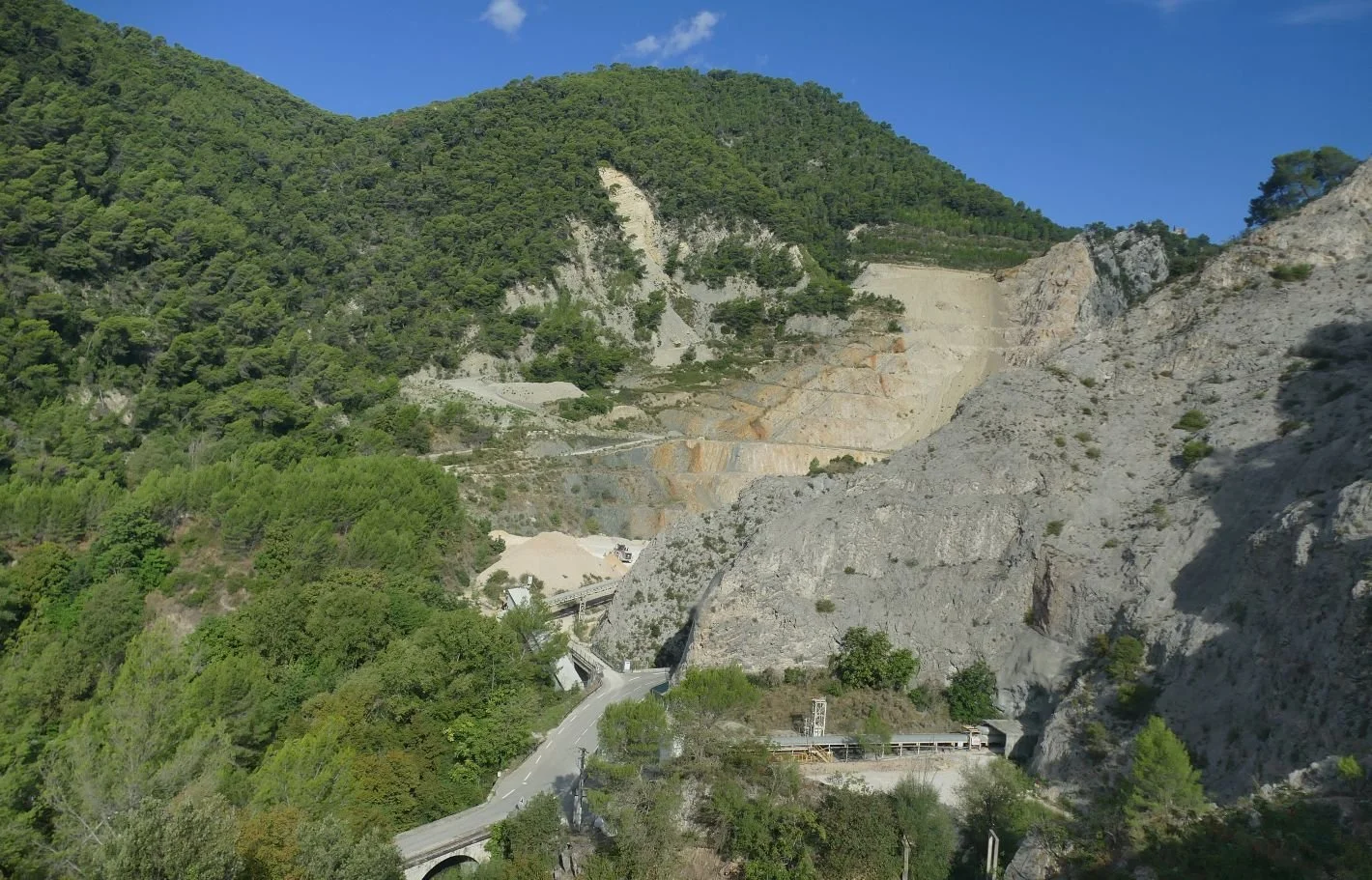
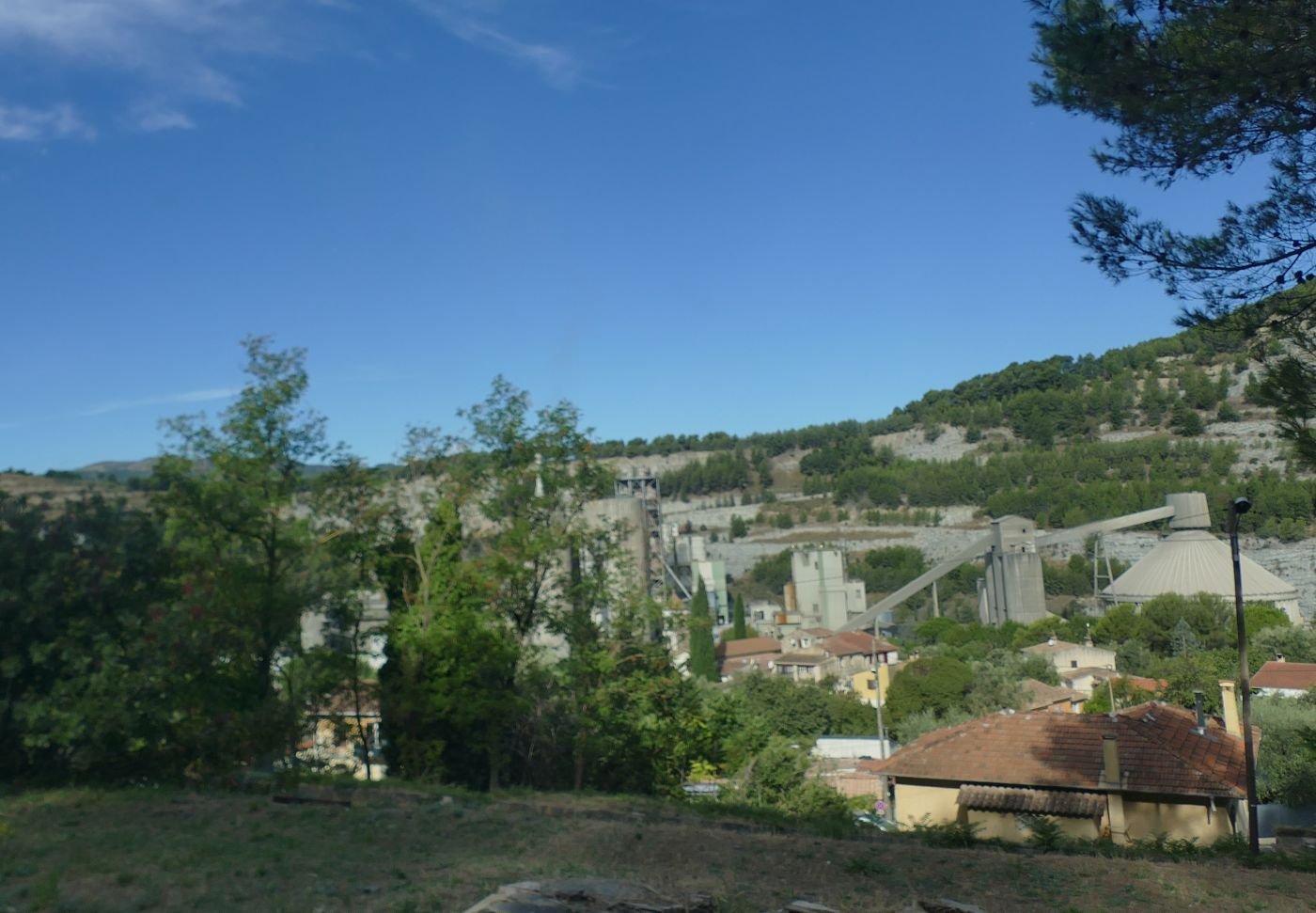
But limestone has many other uses and the banks of the Roya are also home to a more industrial landscape which cannot be ignored. Things could be much worse, however. The scale of the valley can absorb a great deal of the impact but, we would suggest, only because the industrial colour palette is almost entirely down to the geology. Limestone processing in a limestone valley provides a great deal of, if not camouflage, then blending of intrusive forms and shapes. This may work well from an elevated railway line; the impact at ground level may not be quite so sympathetic.
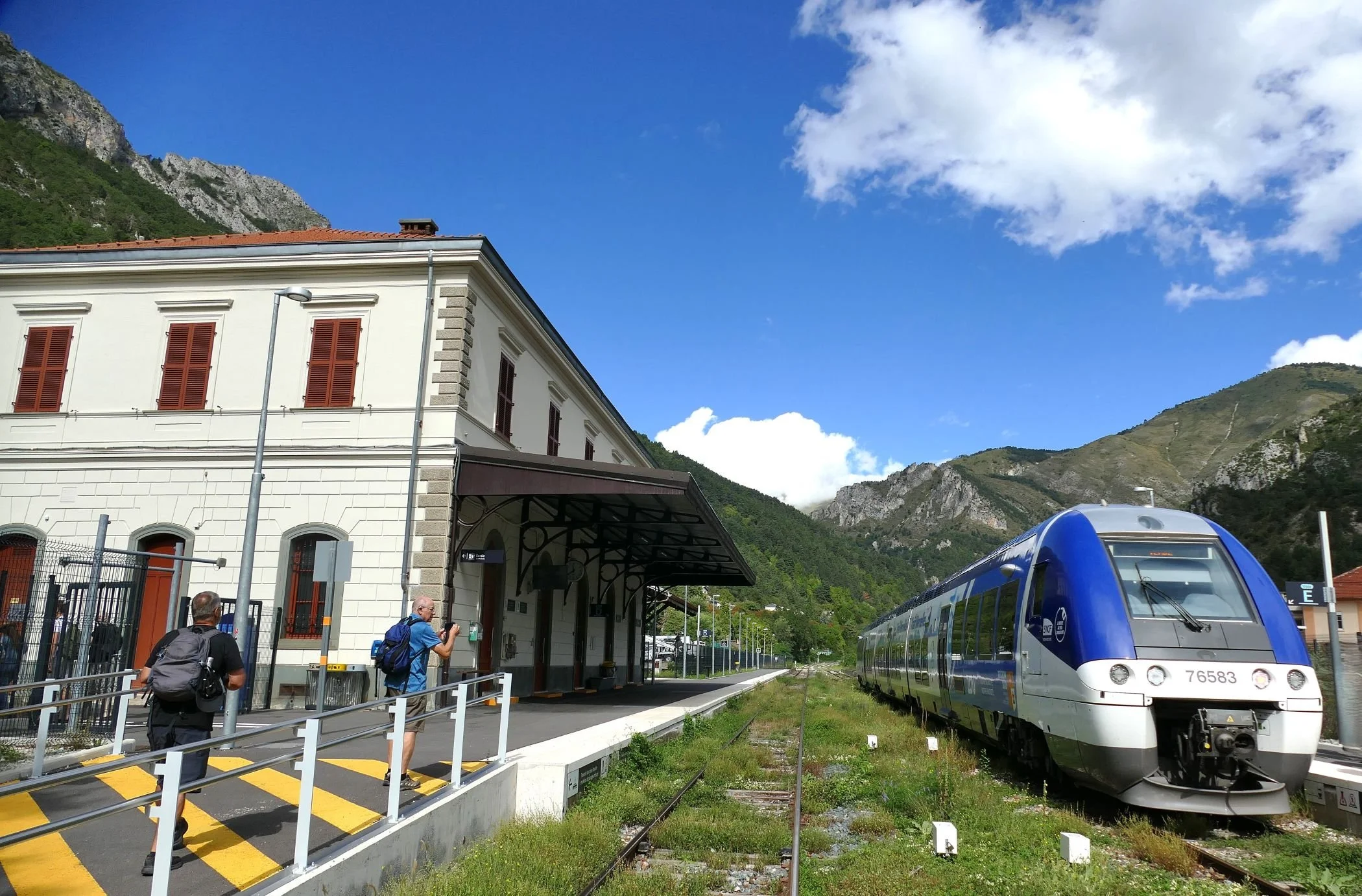
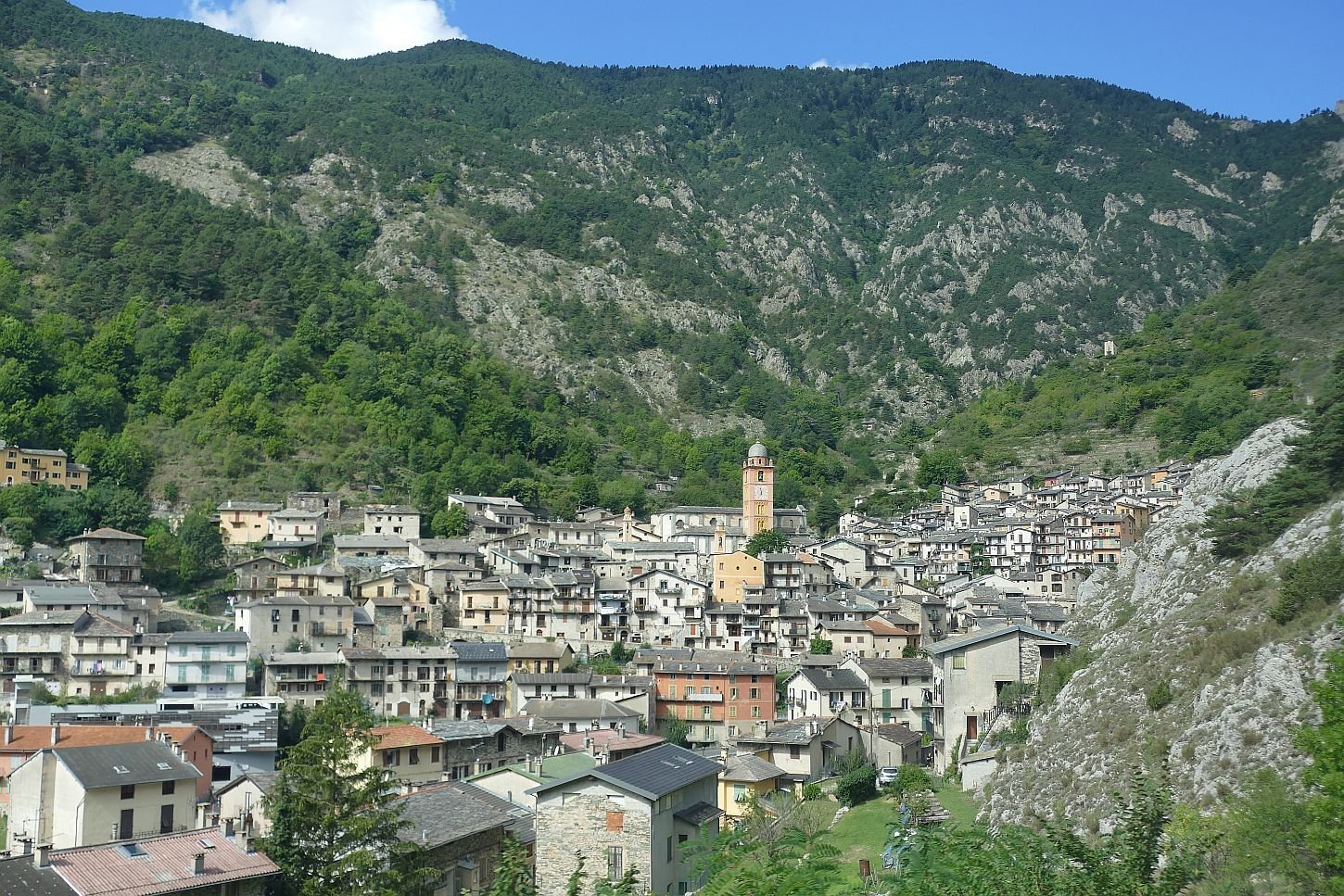
We disembark at the village of Tende ready for a coffee and some serious site seeing.
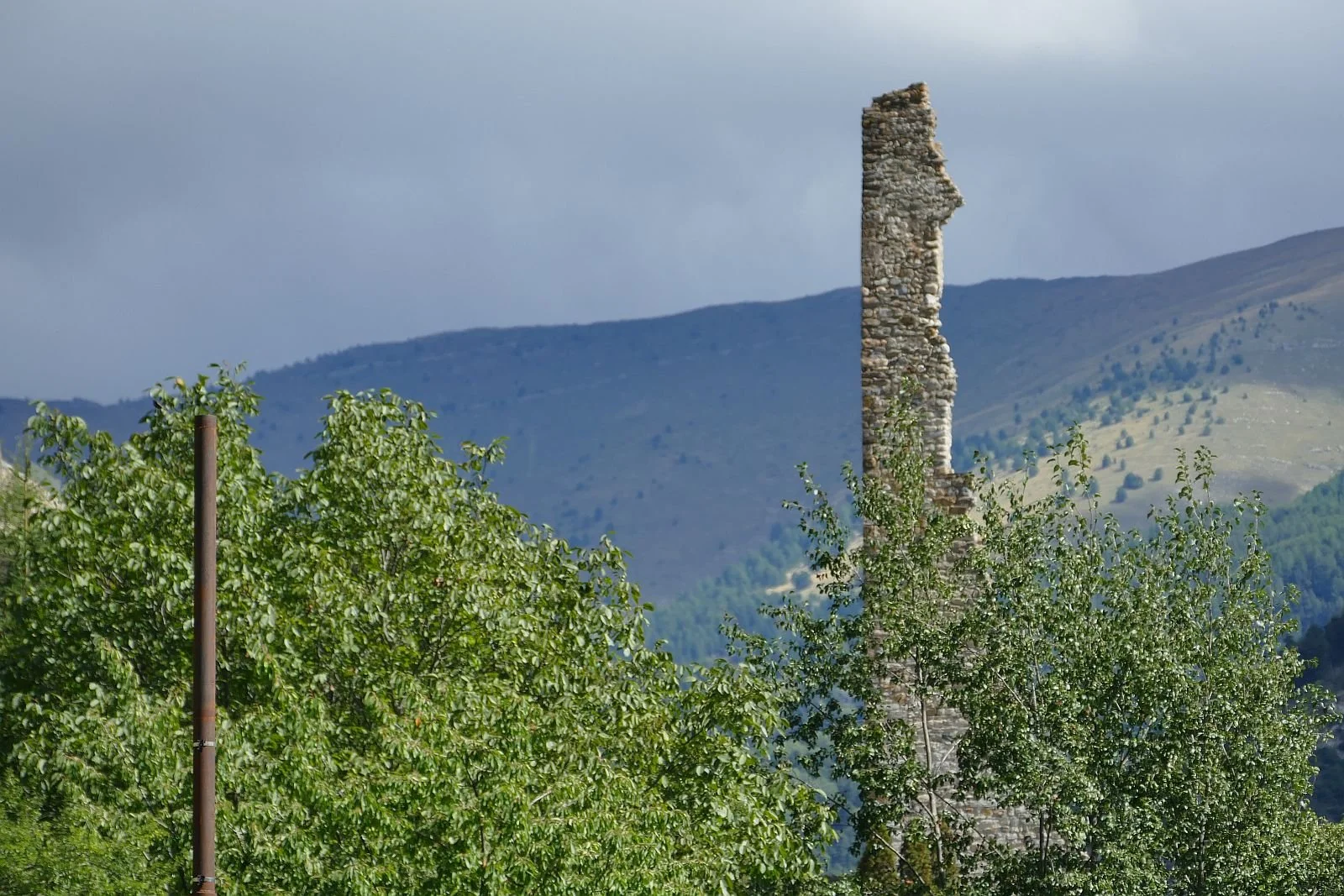
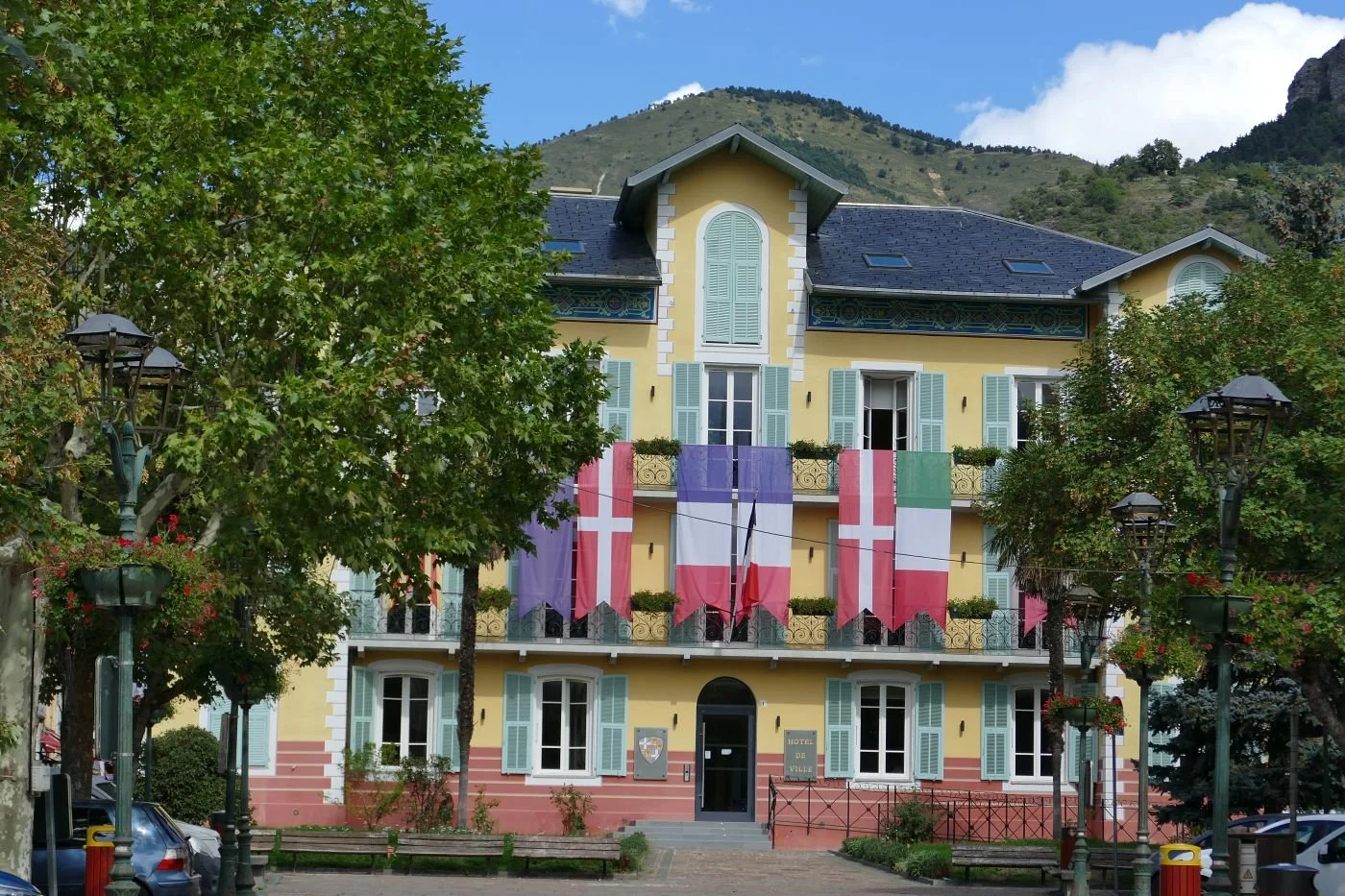
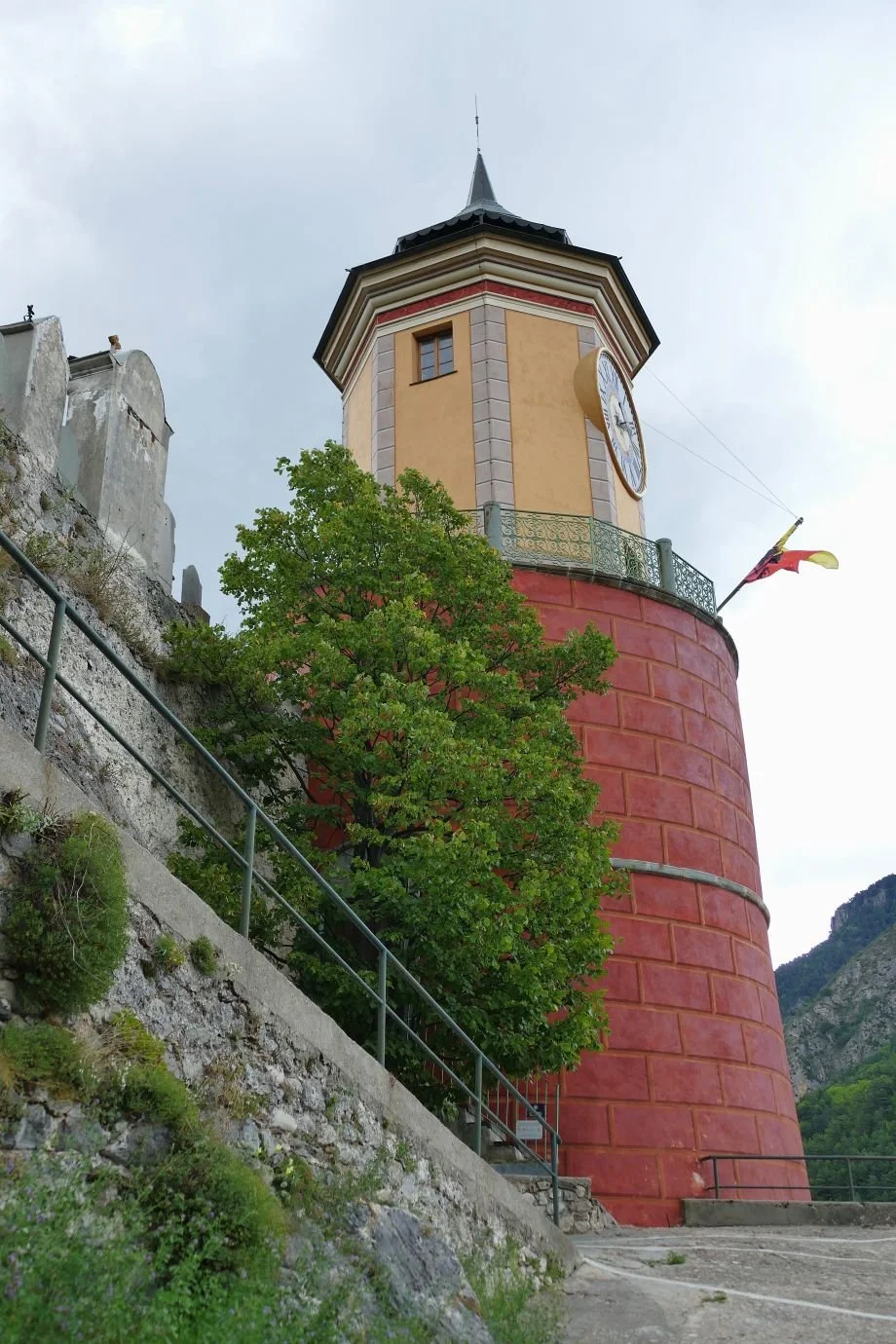
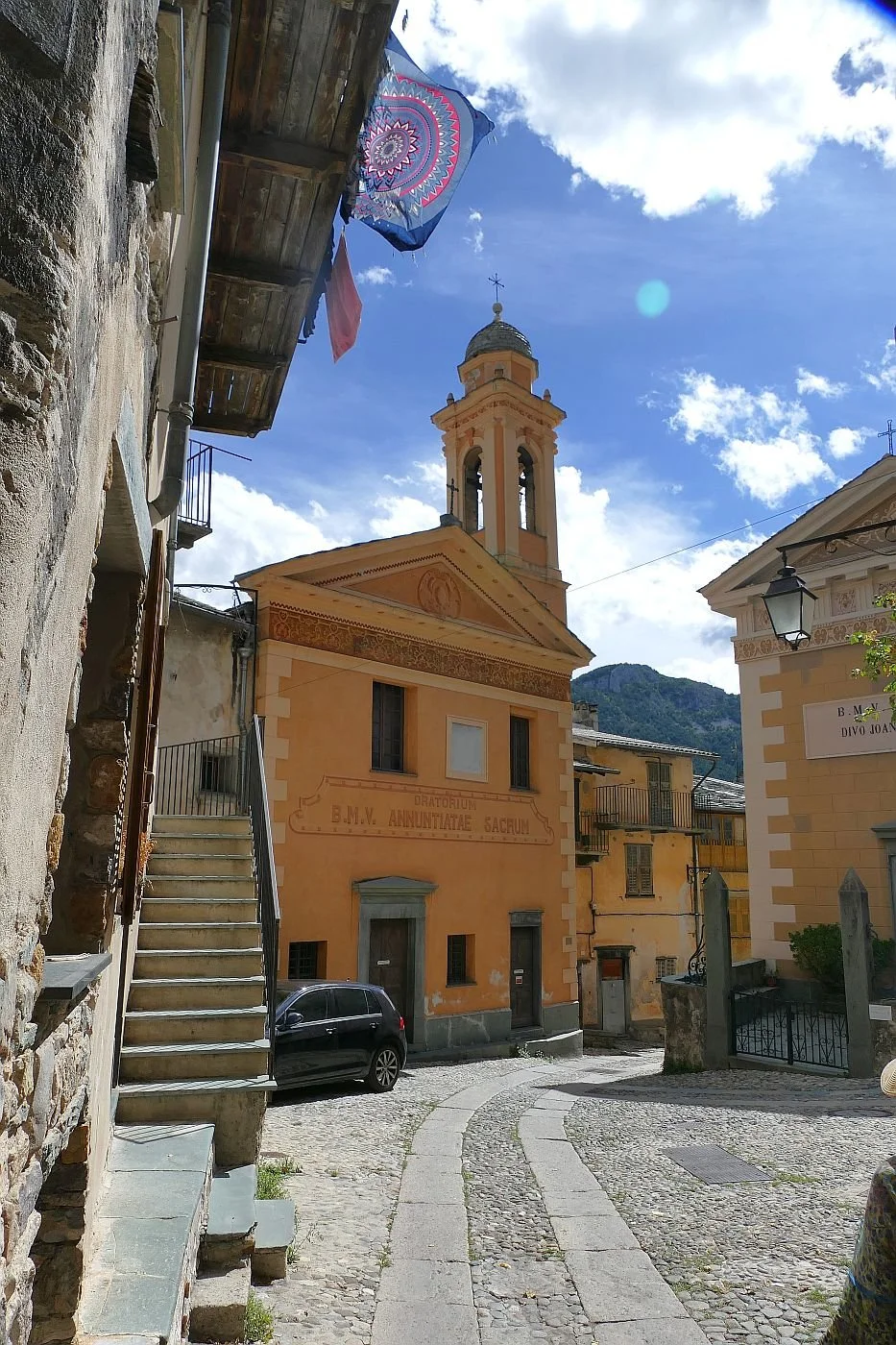
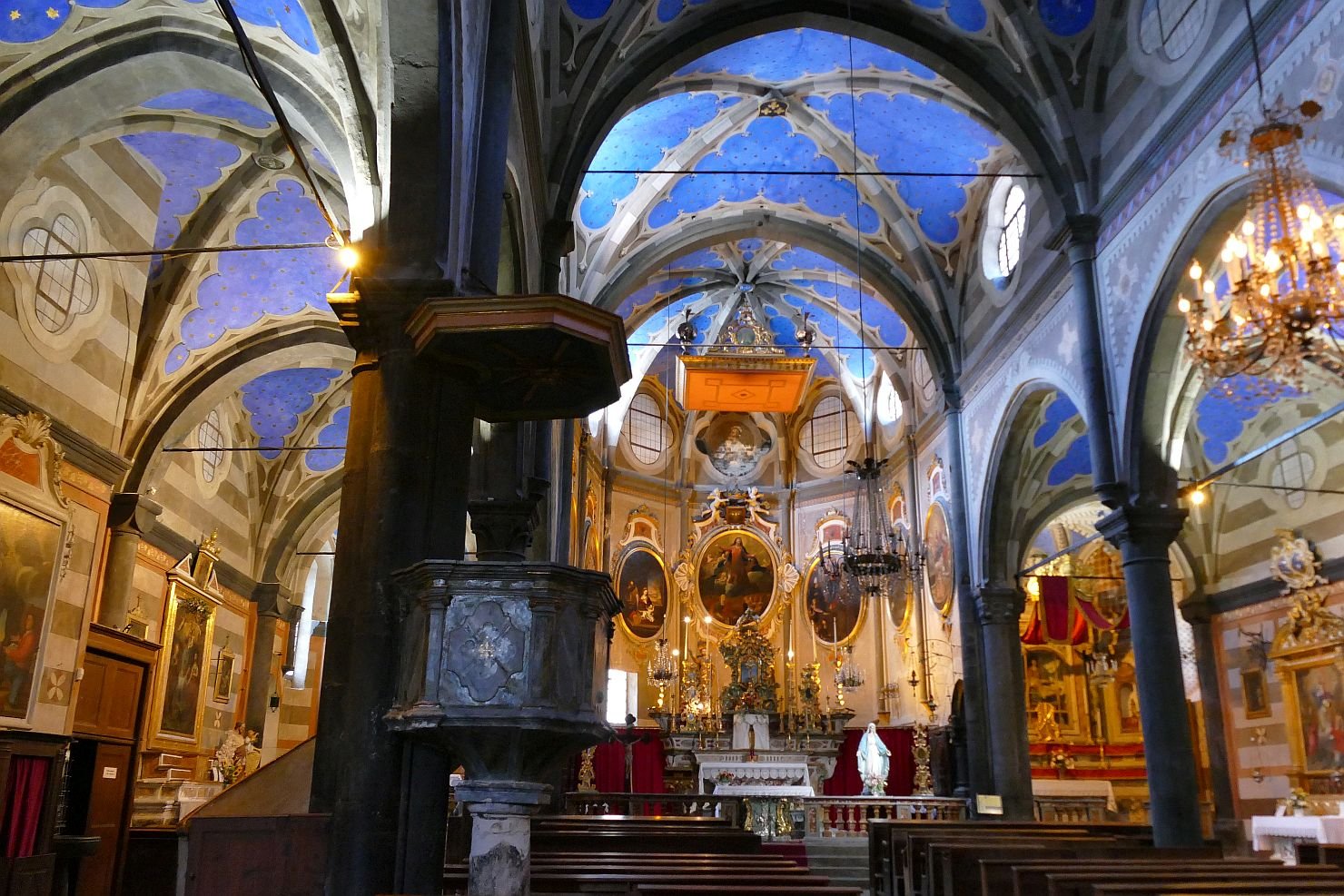
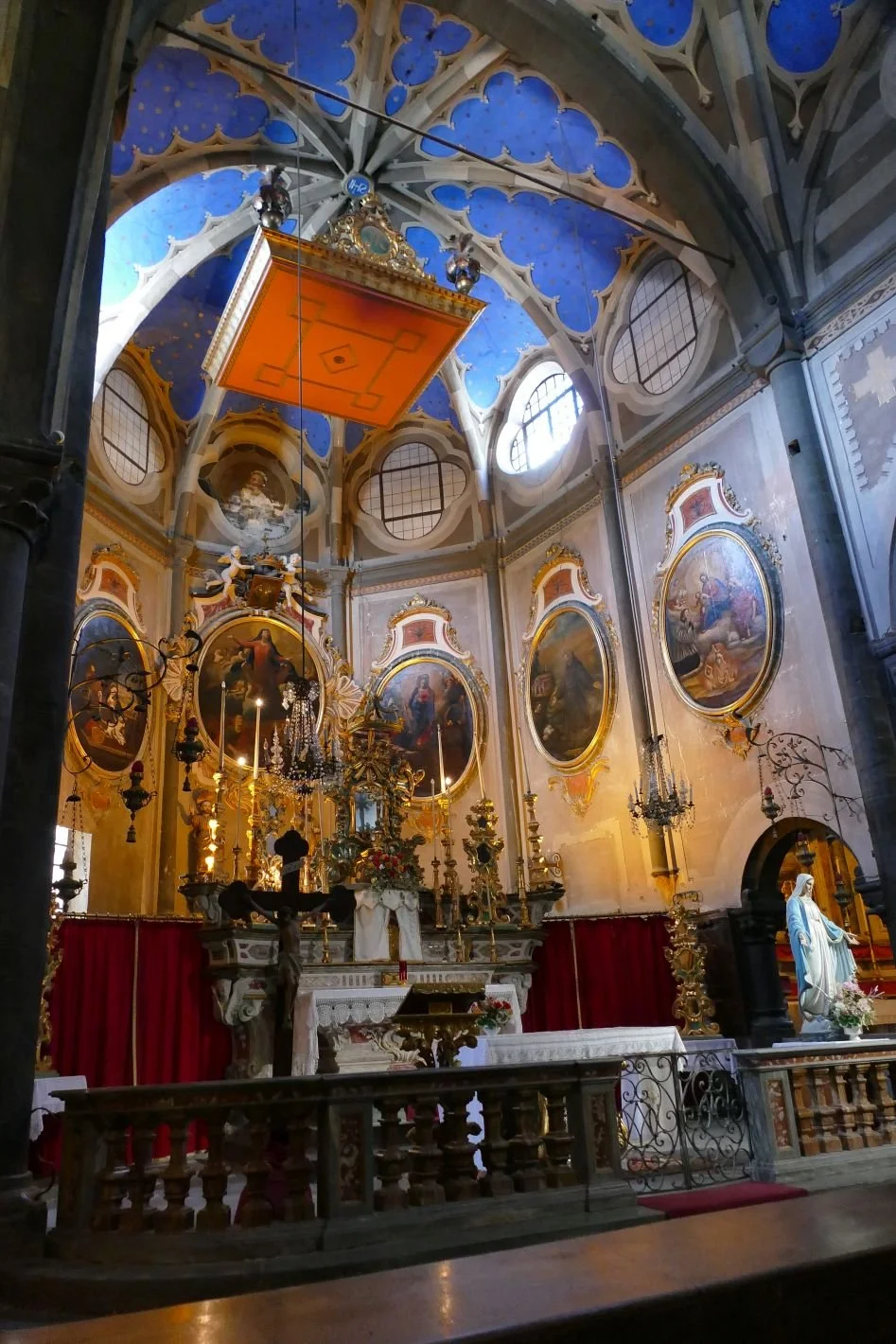
Apparently, Tende is built of a green schist but the impact is universally grey and, perhaps because of this, the town demonstrates a love for colour in its key buildings. The remnants of the castle (left) are unornamented but other structures overcome this geological monotony with the use of – yes - paint.
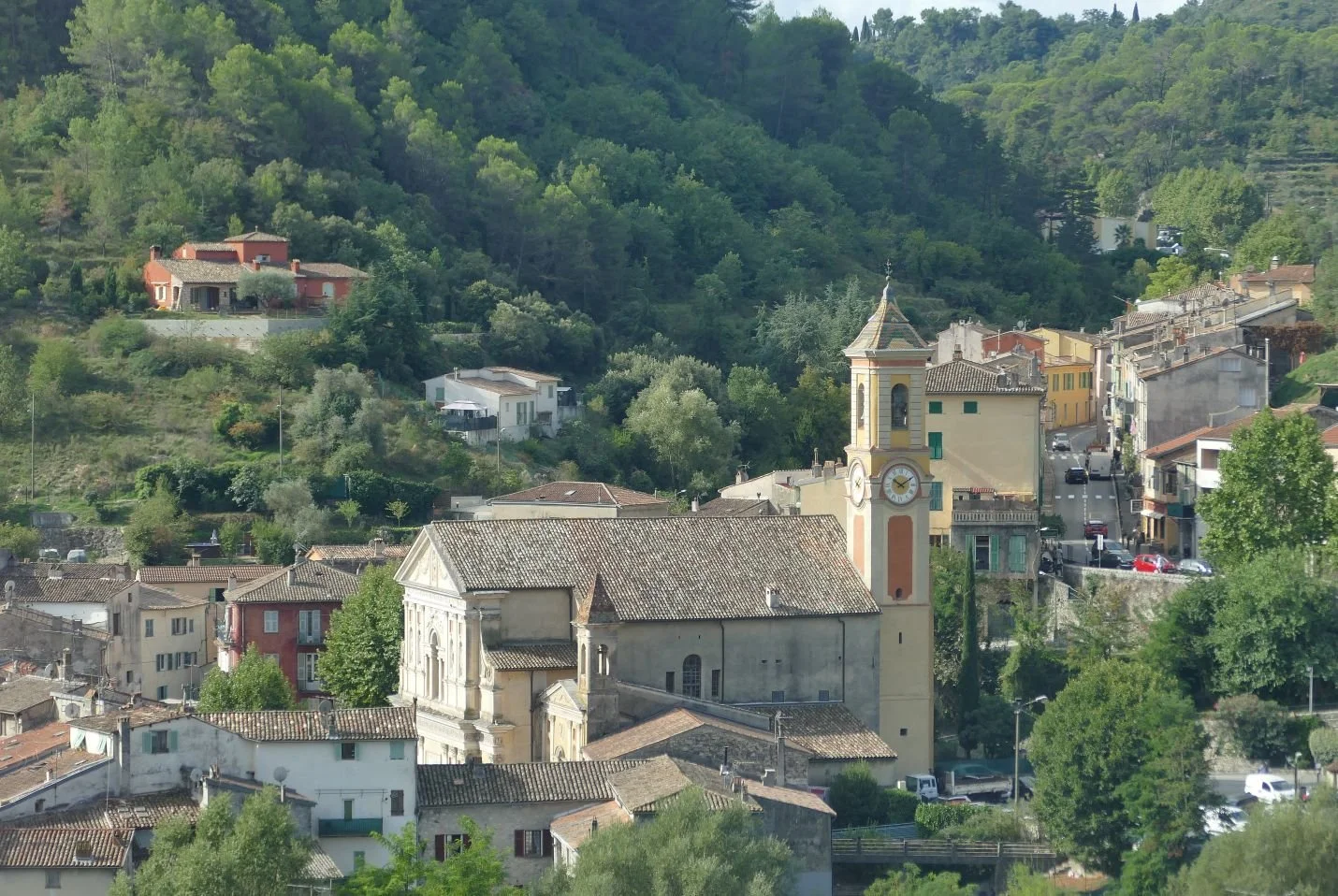
The church provides both interior and exterior colour therapy.
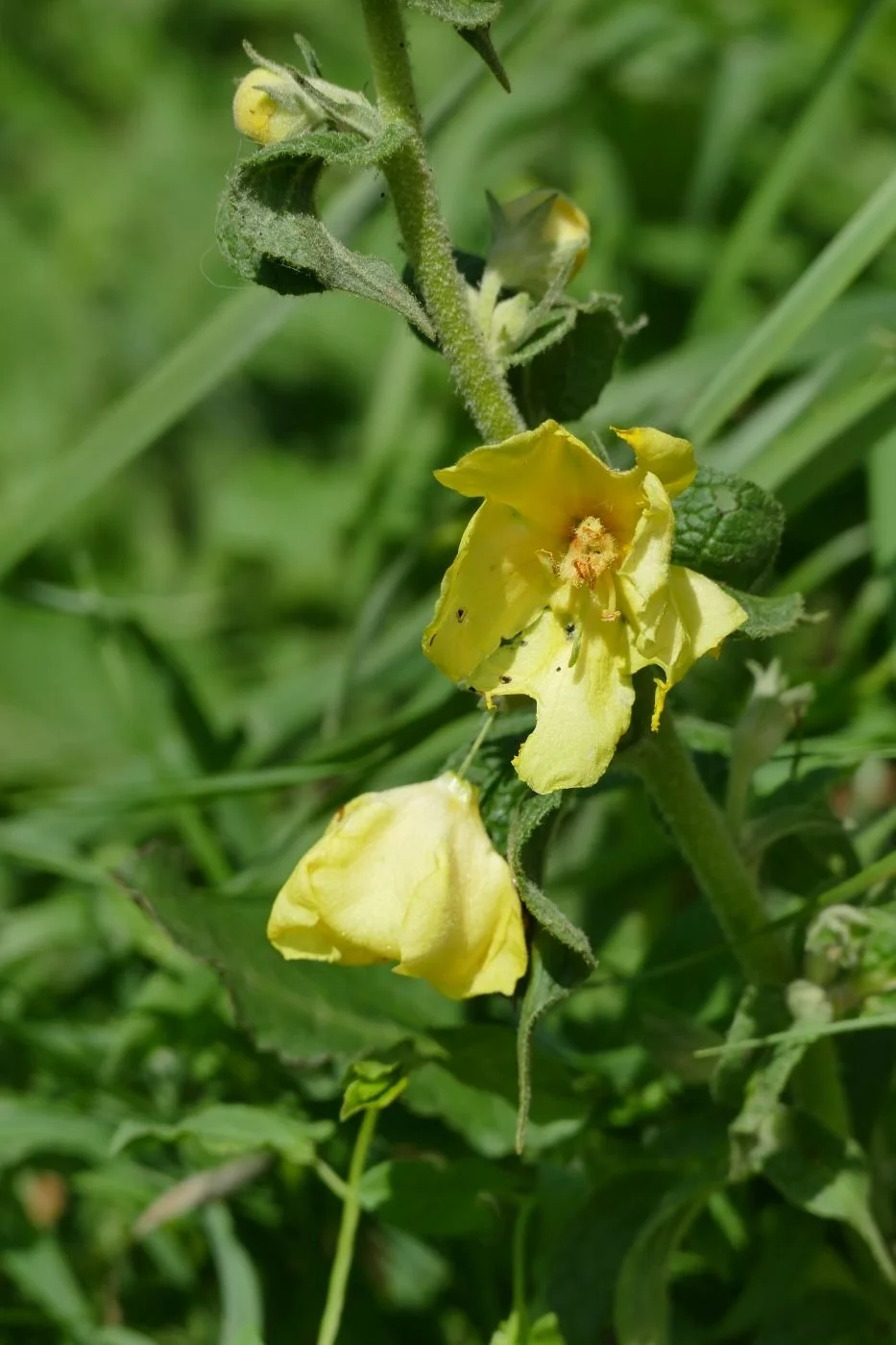
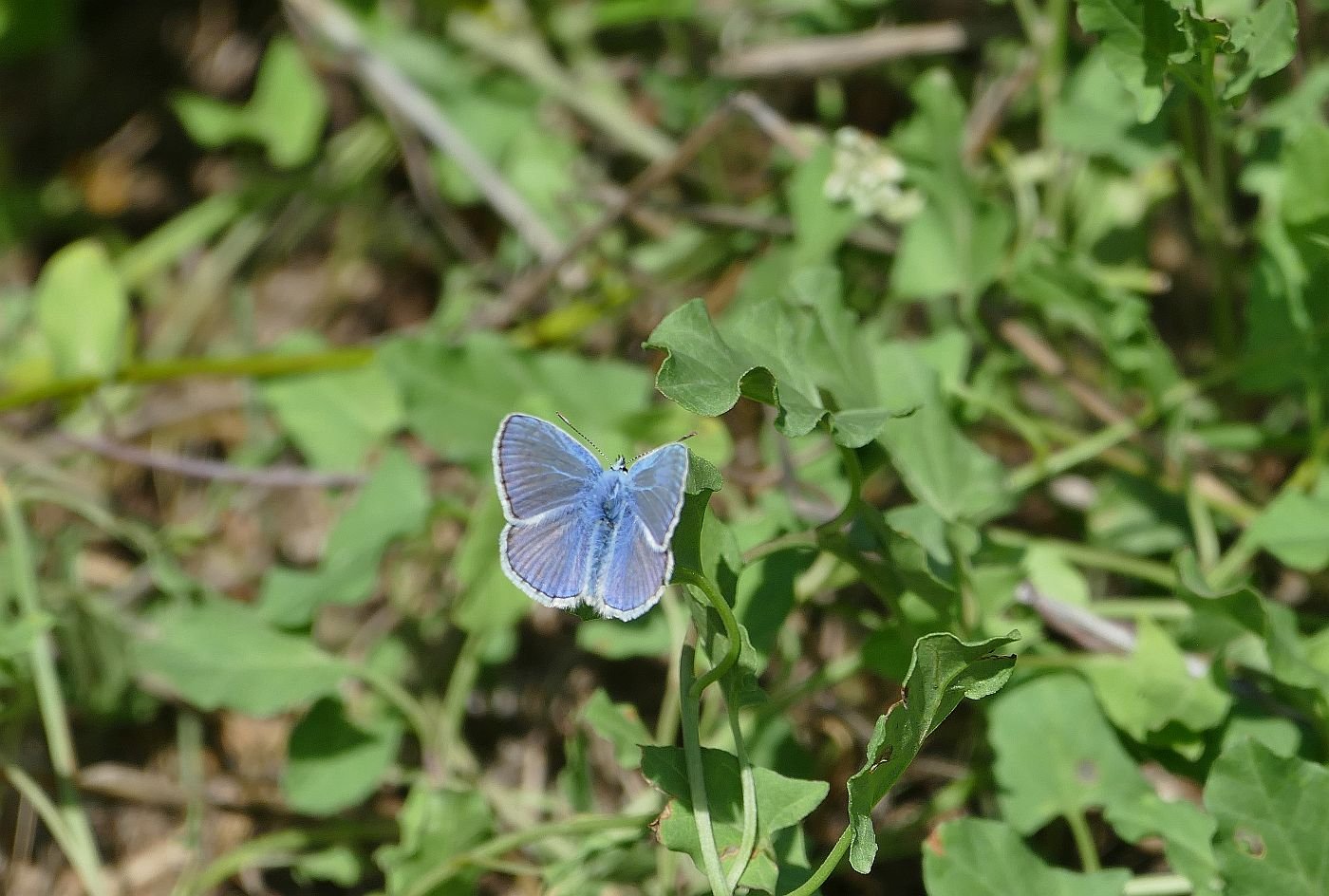
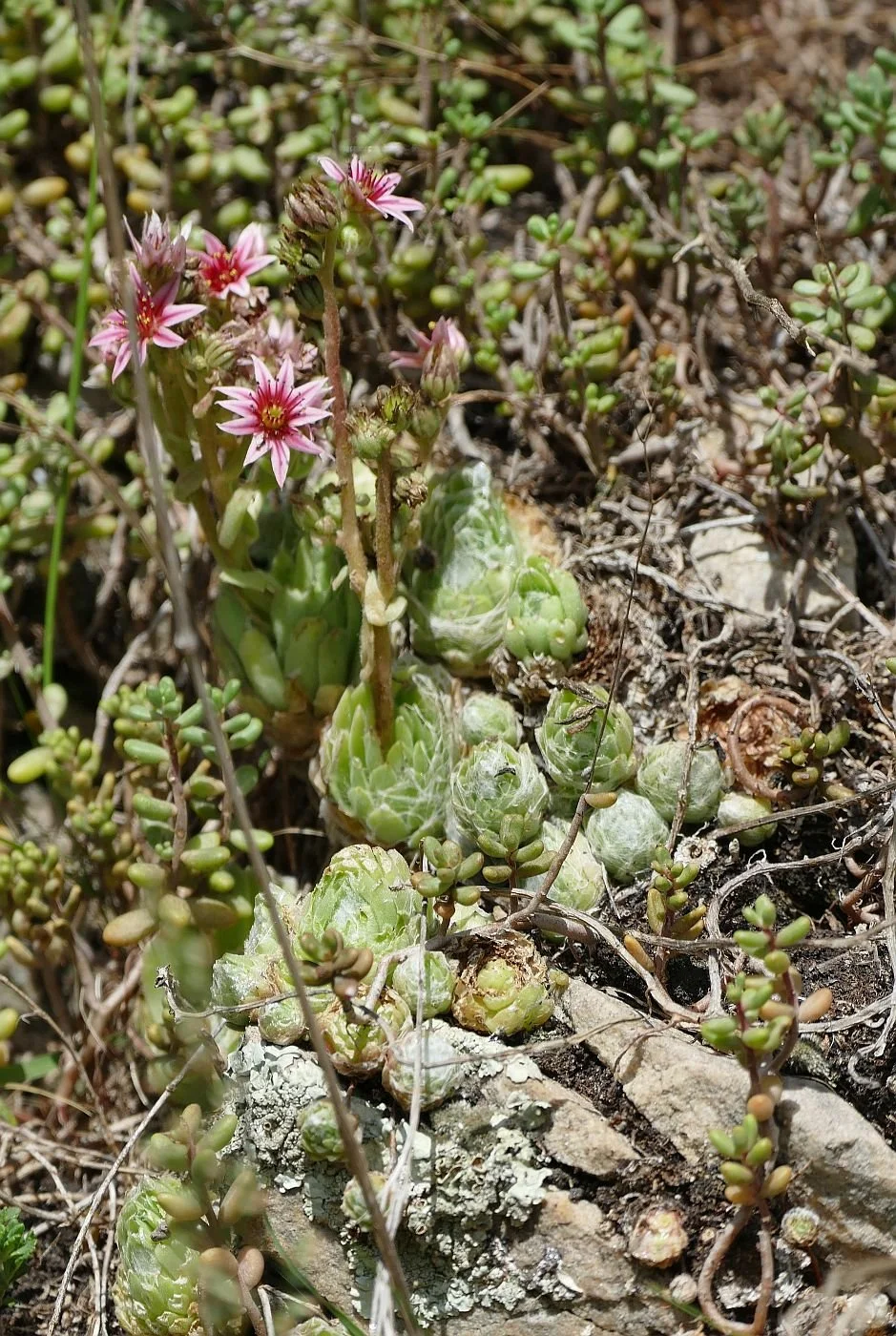
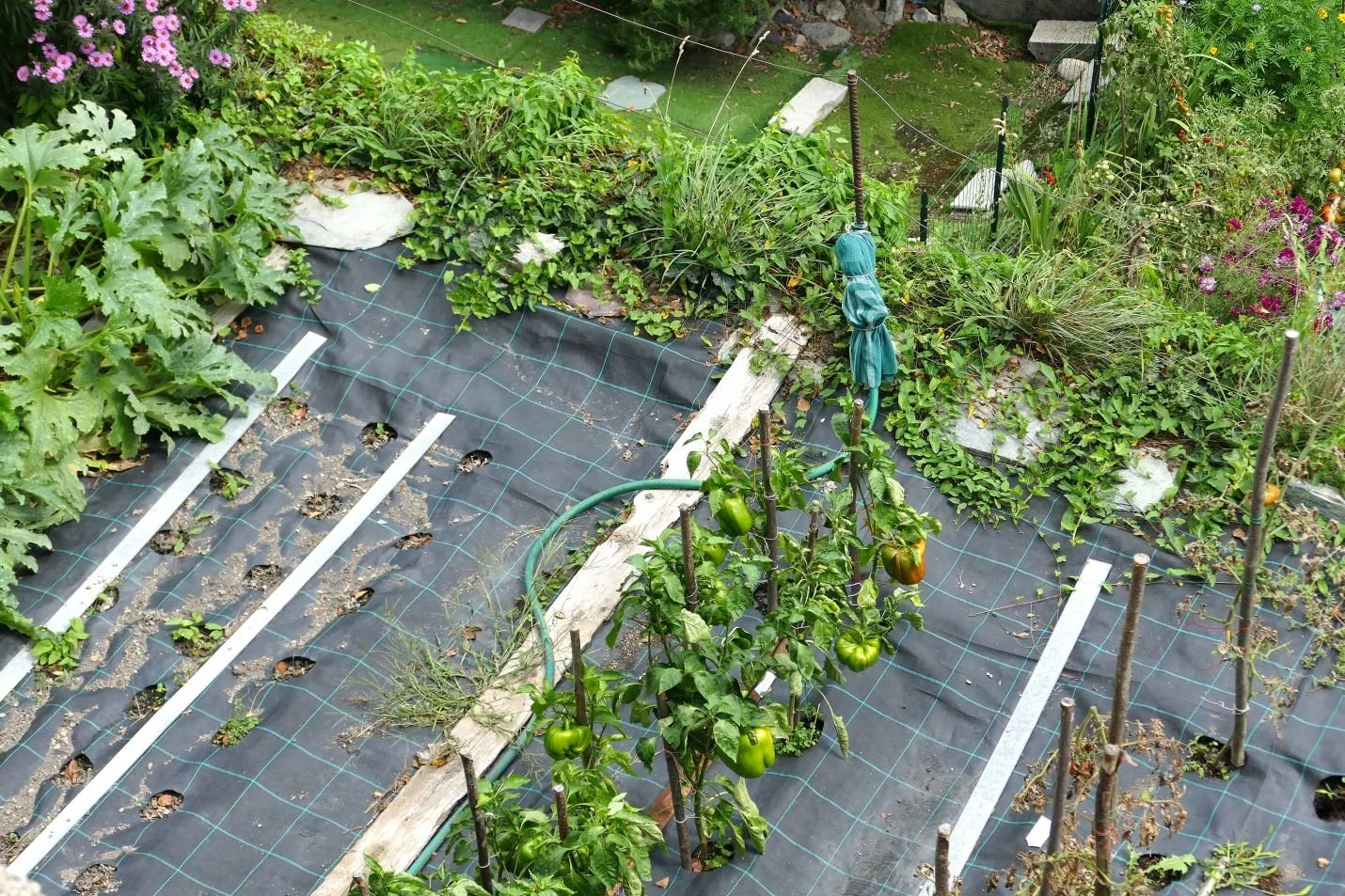
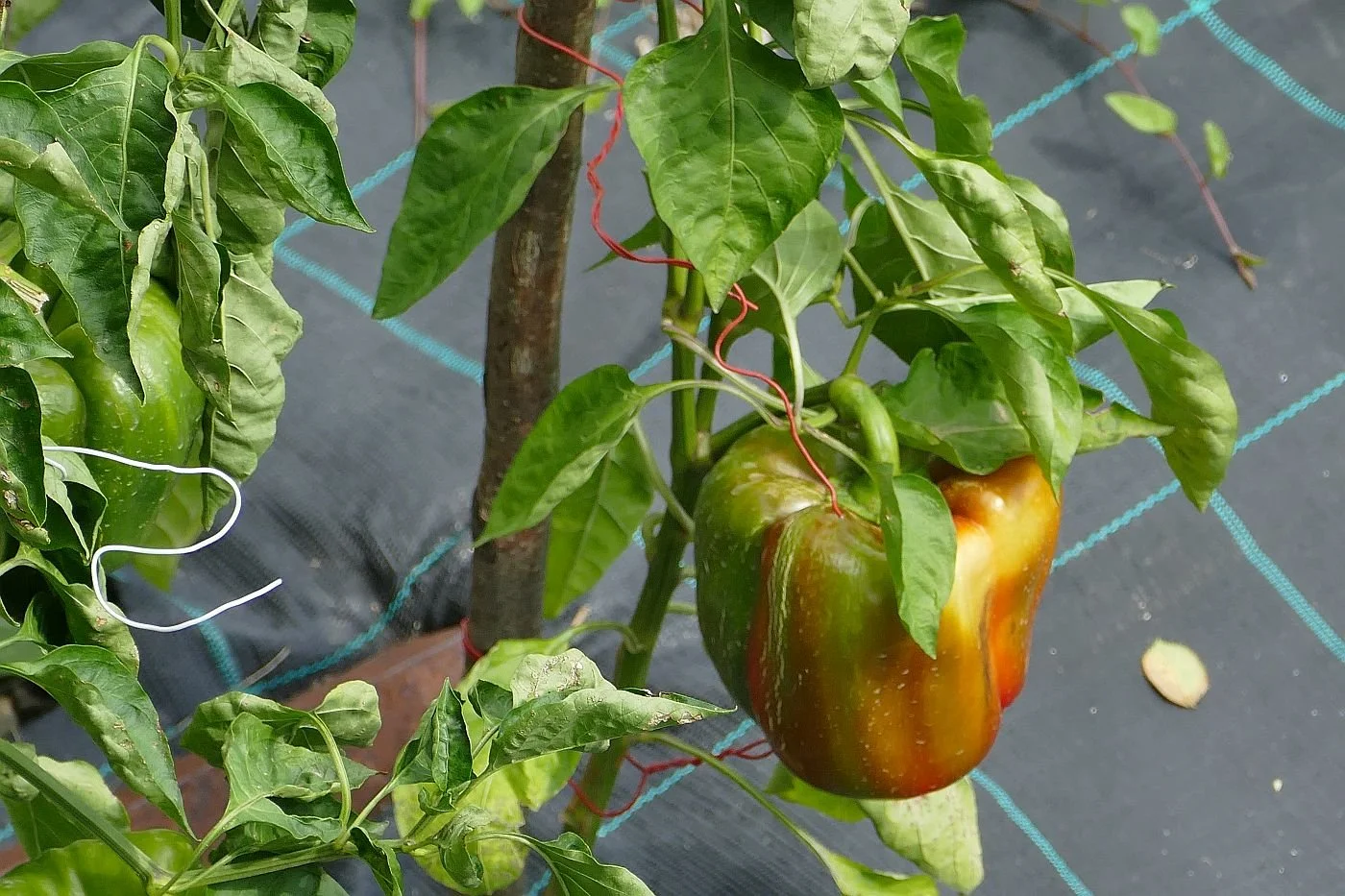
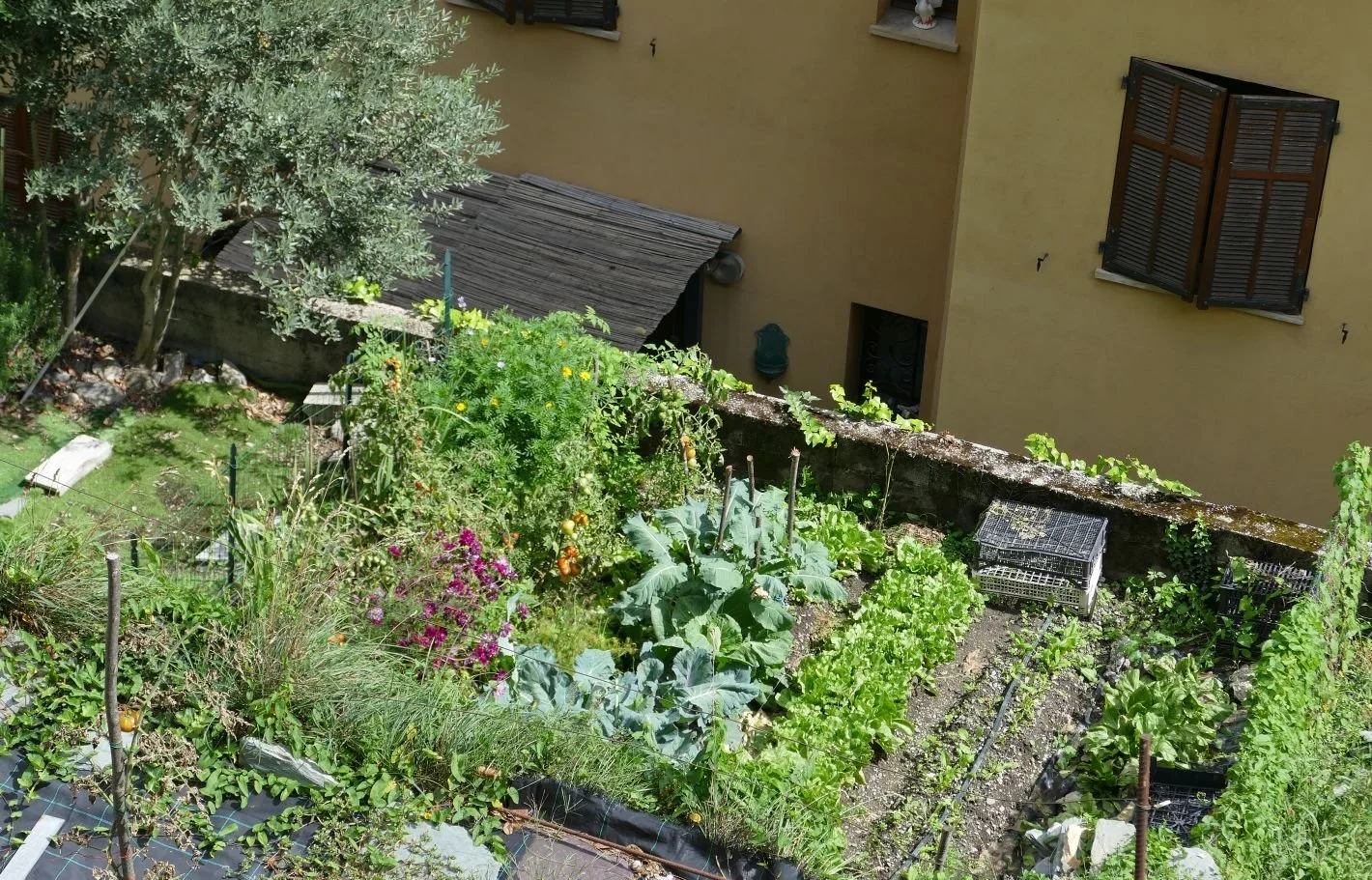
Terraced gardens and neglected spaces also bring summer food, colour and wildlife into the urban area.
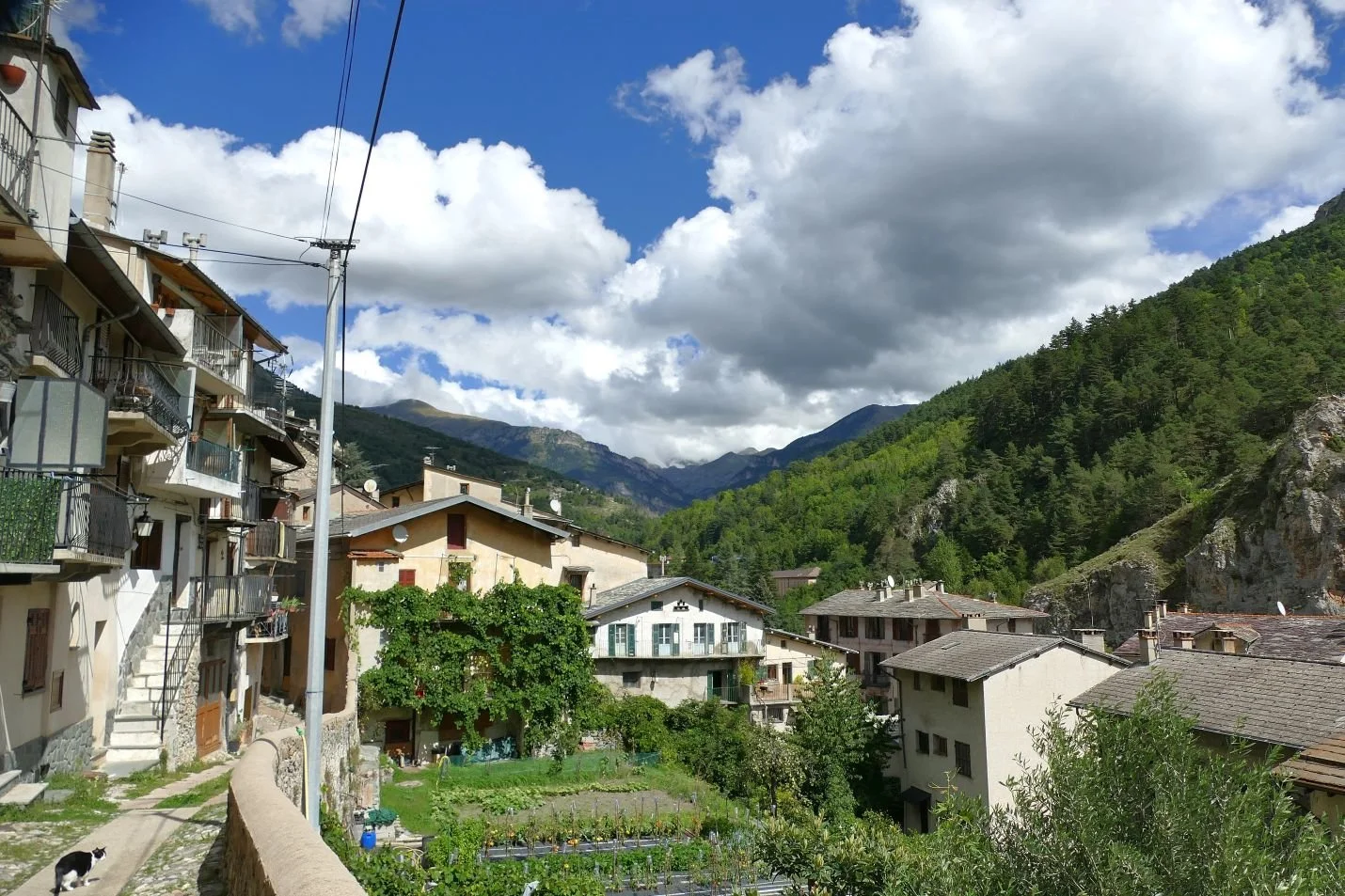
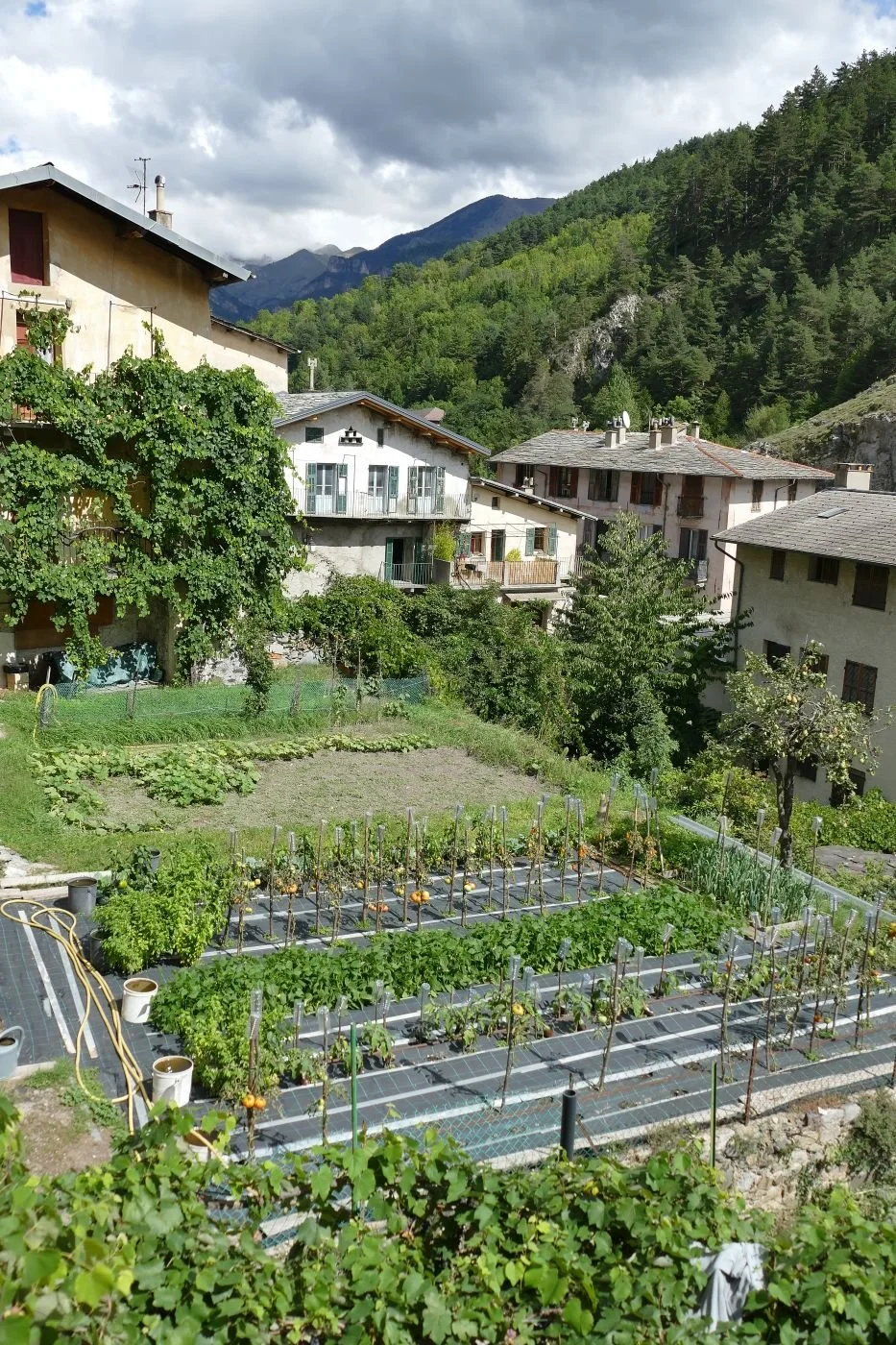
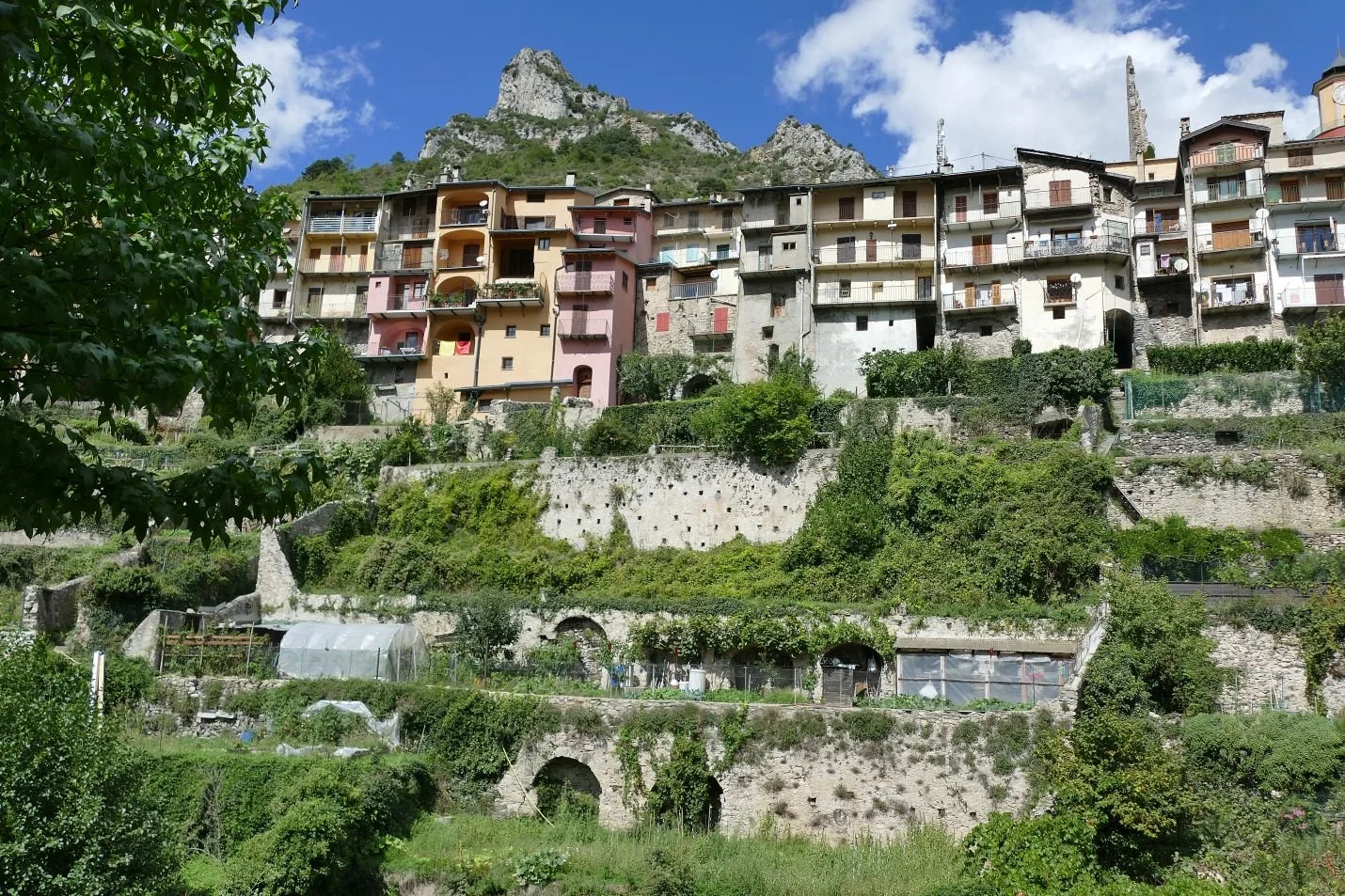
Our trip to Tende had been refreshingly free of those bike stands and terrifyingly fit men and women in ‘IRONMAN Finisher’ tee shirts, which we had been dodging in Nice. But, unbeknownst to us, we were about to connect with another type of Iron Man.
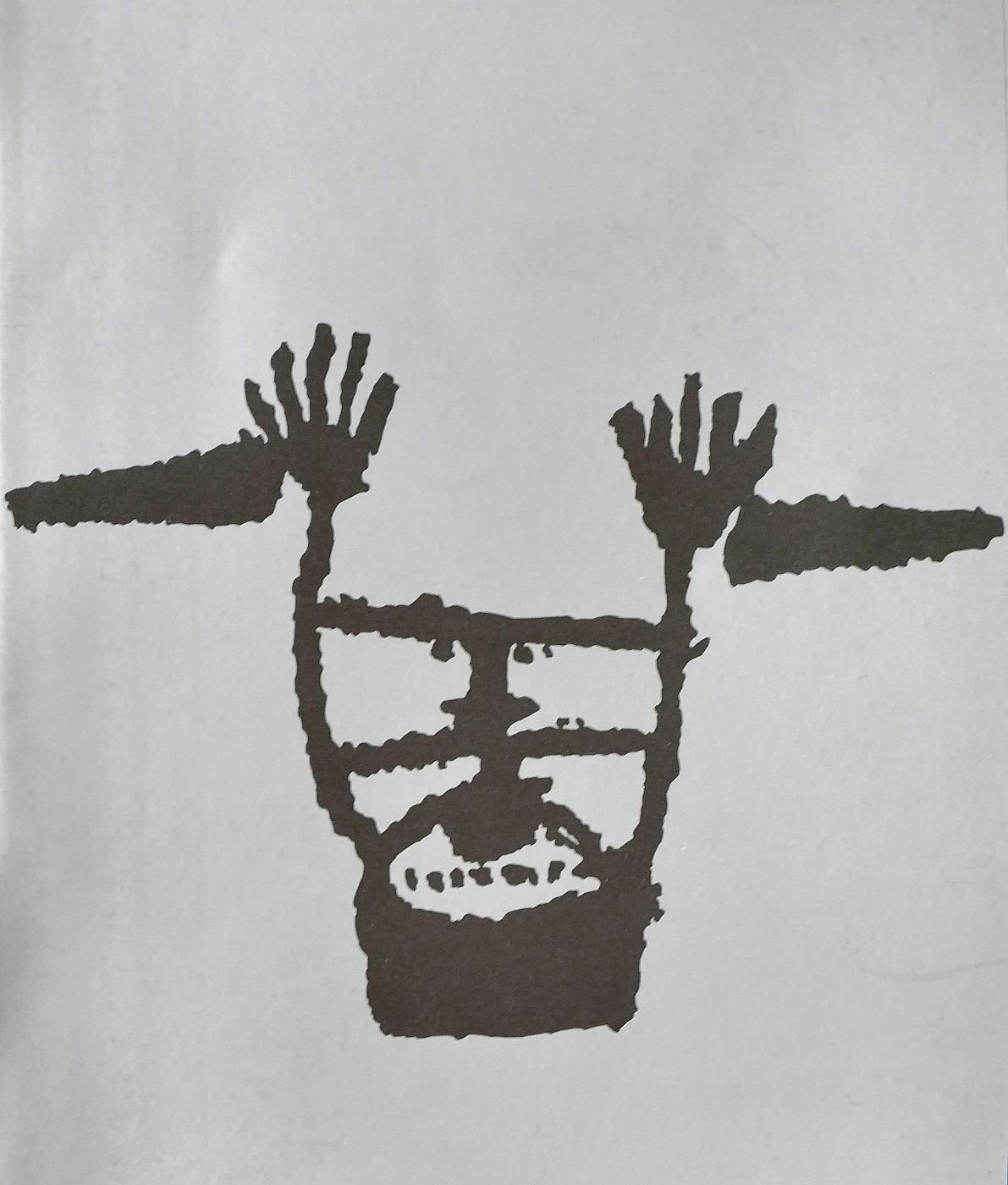
Meet ‘Le Sorcier’. Sadly, he is more likely a stone age or bronze age creation, but it seems his descendants did live in an age of iron tools which, combined with the that fact that he looks like an iron man and is portrayed waving what is obviously a pair of shoes, convinced one of us that he came from a later period of human society.
His design is so modern, so captivating, so immediate and so universal that we were gutted when told that he was actually toting a pair of daggers. Where is he from?
We discovered that Tende and the Roya Valley act as an access point to The Mount Bego region, at the heart of the Mercantour-Argentera Massif (not an area which featured in Terroir’s geographical education). With neighbouring Merveilles and Fontanalbe Valleys (like the Roya valley, nice soft geology), this area became home to generations of shepherds and artists, leaving behind them a treasure trove of rock art, and a selection of tools and cultural artefacts. Nice, Monaco, Ventimiglia are all within relatively easy reach. But we’d never heard of it until we met poster boy Le Sorcier in Tende.
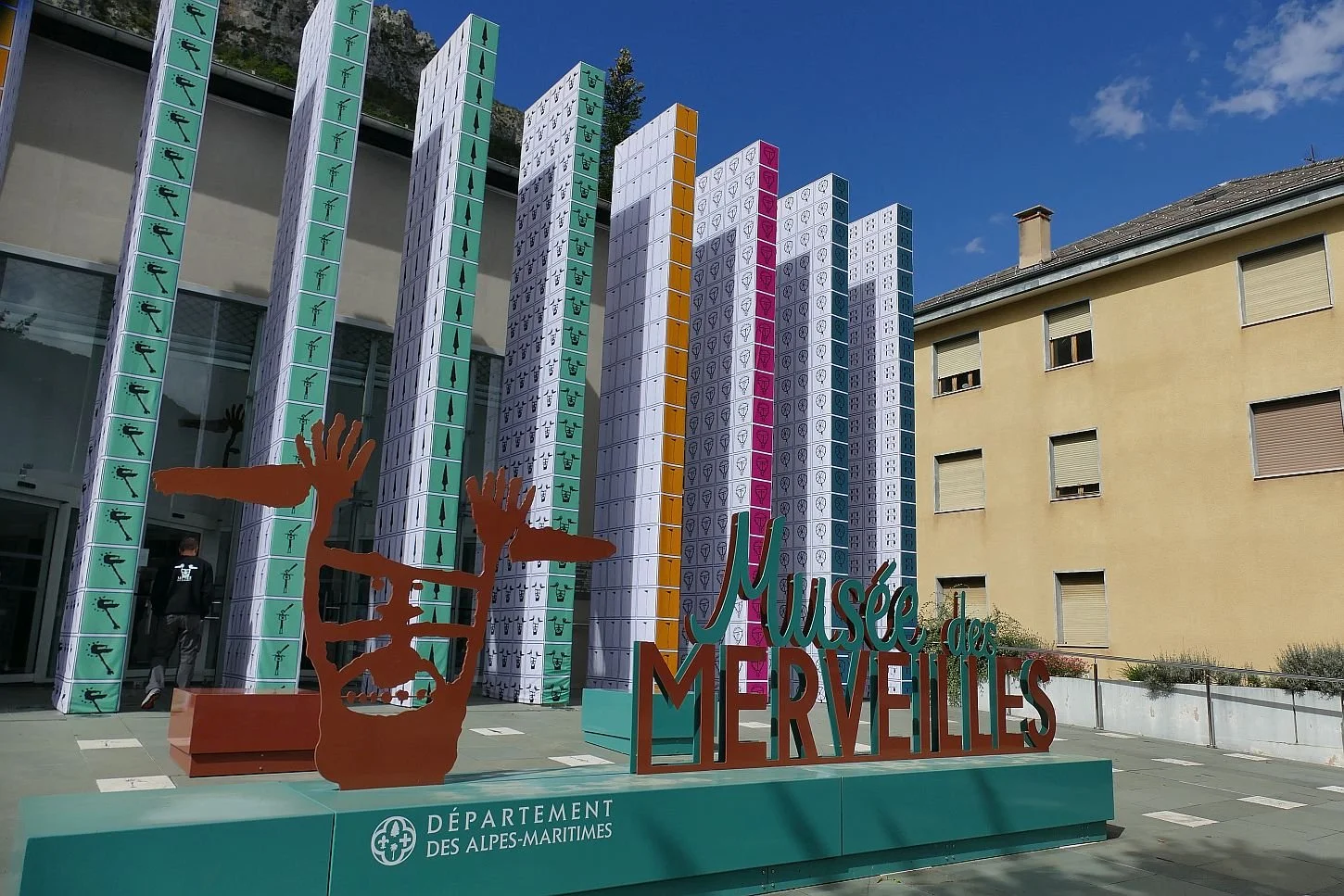
The Museé des Merveilles in Tende is essential visiting. Don’t be put off by the child friendly atmosphere in the general section; even adults will find it much more interesting than you think!
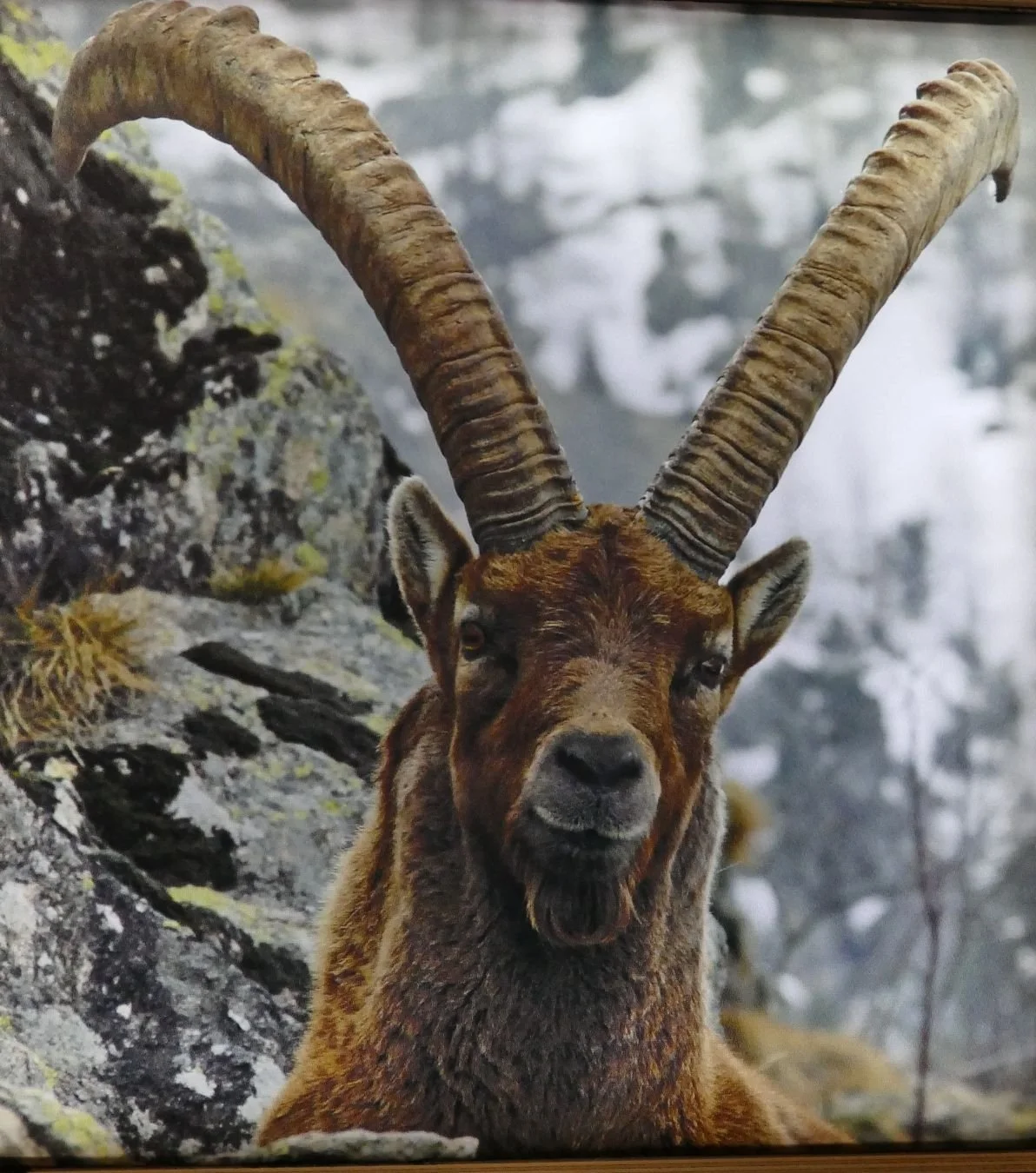
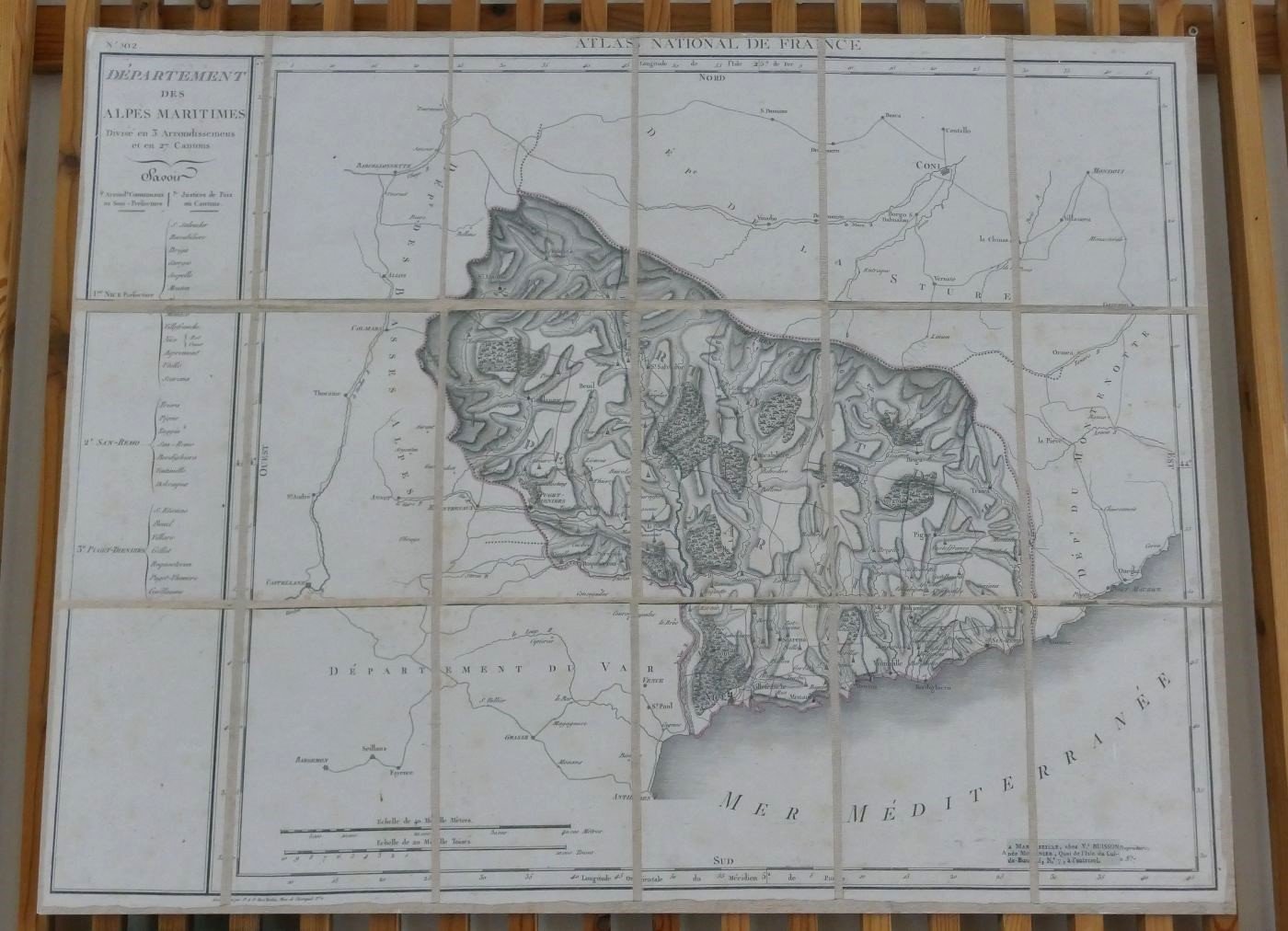
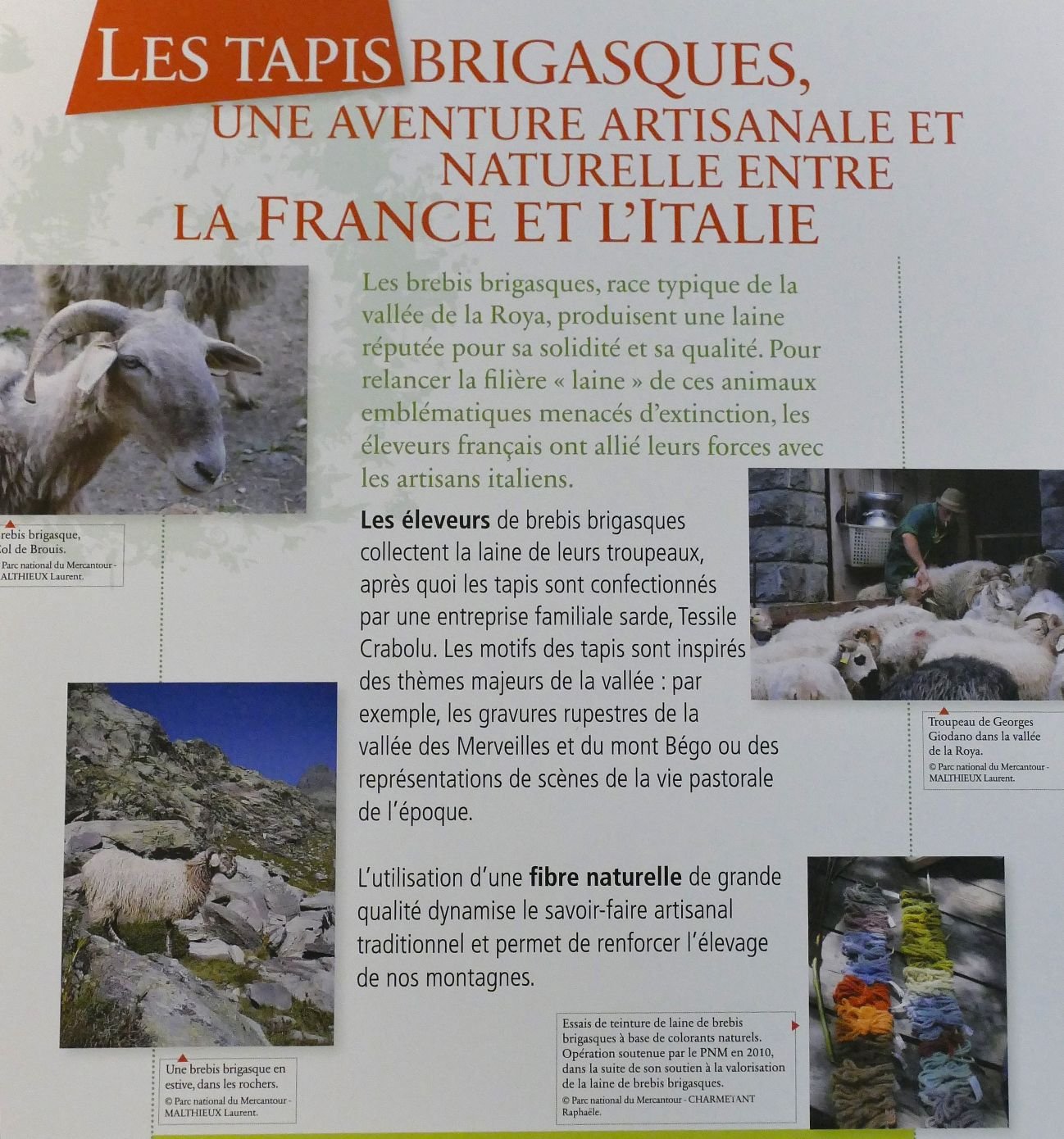
And the exhibition on Mount Bego and the Land of the Sorcerer is a must. It makes Nice seem thousands of miles as well as thousands of years away.
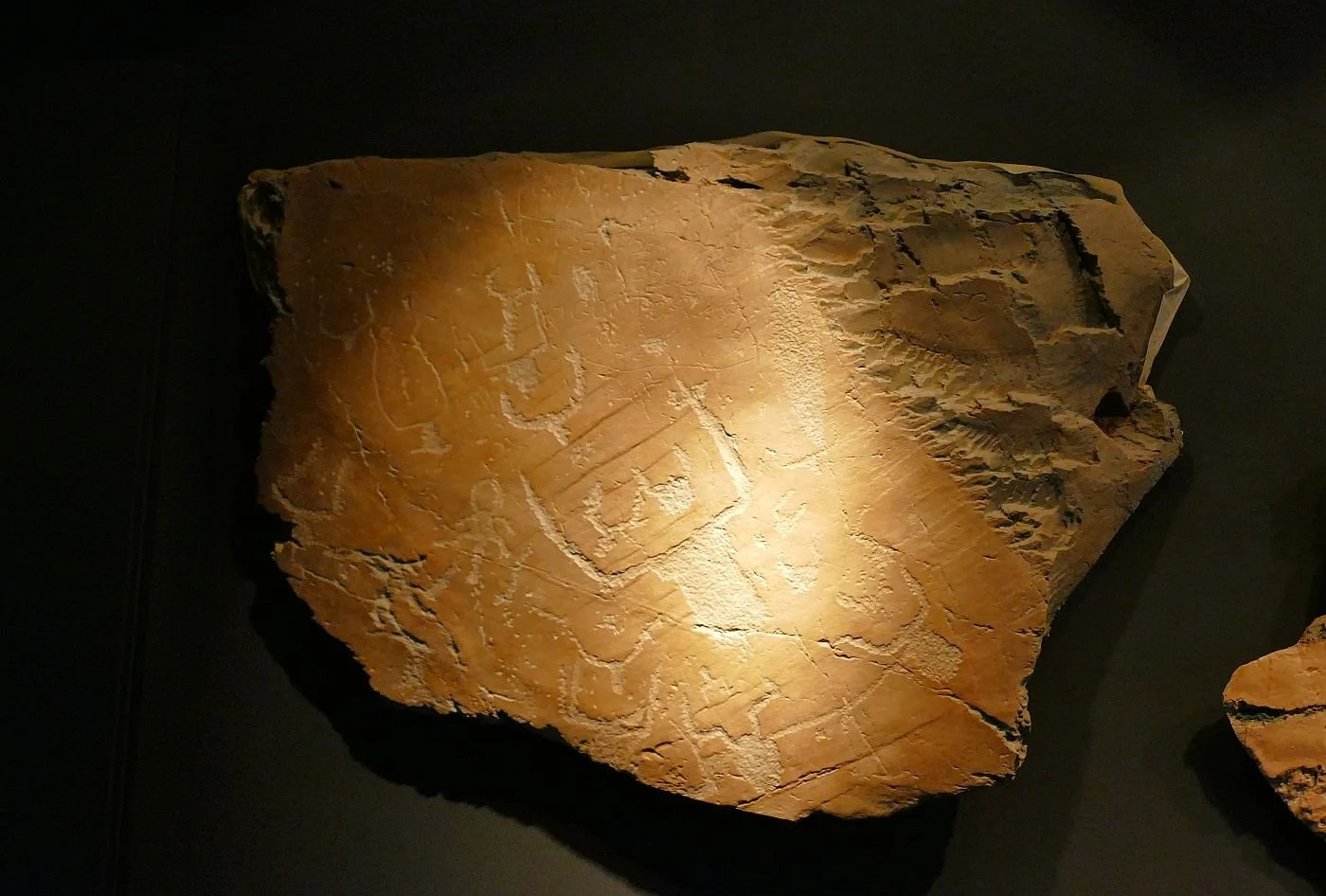
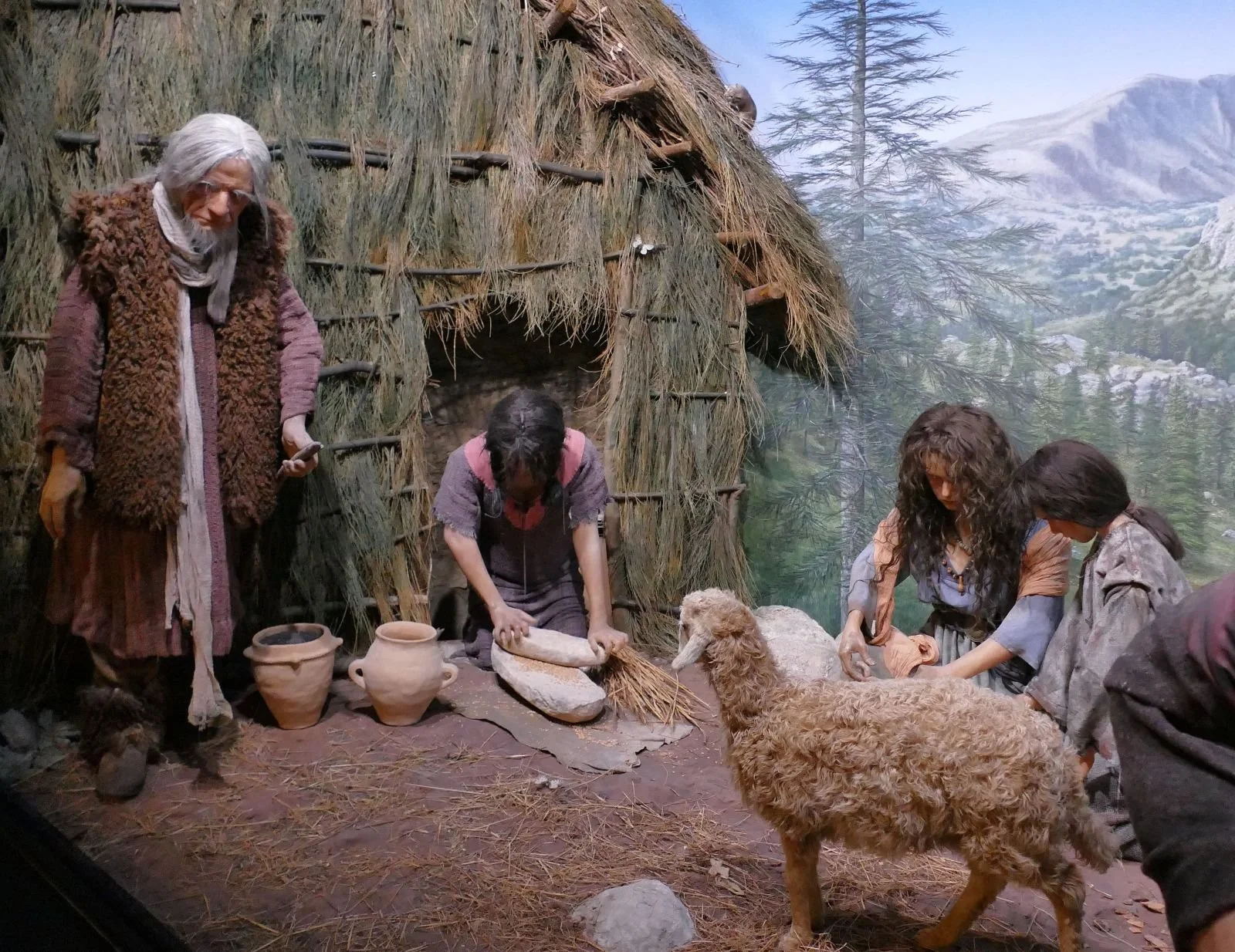
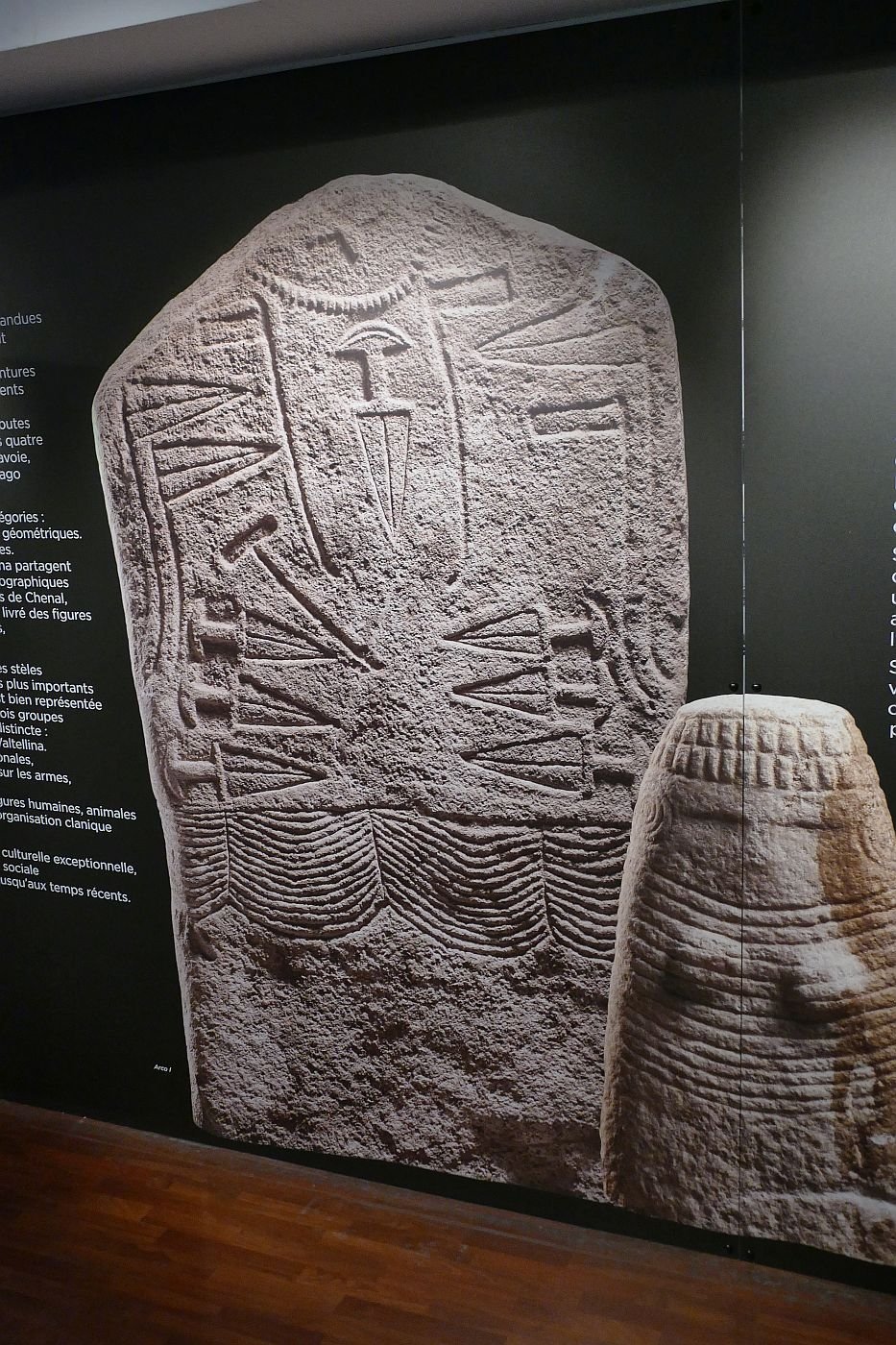
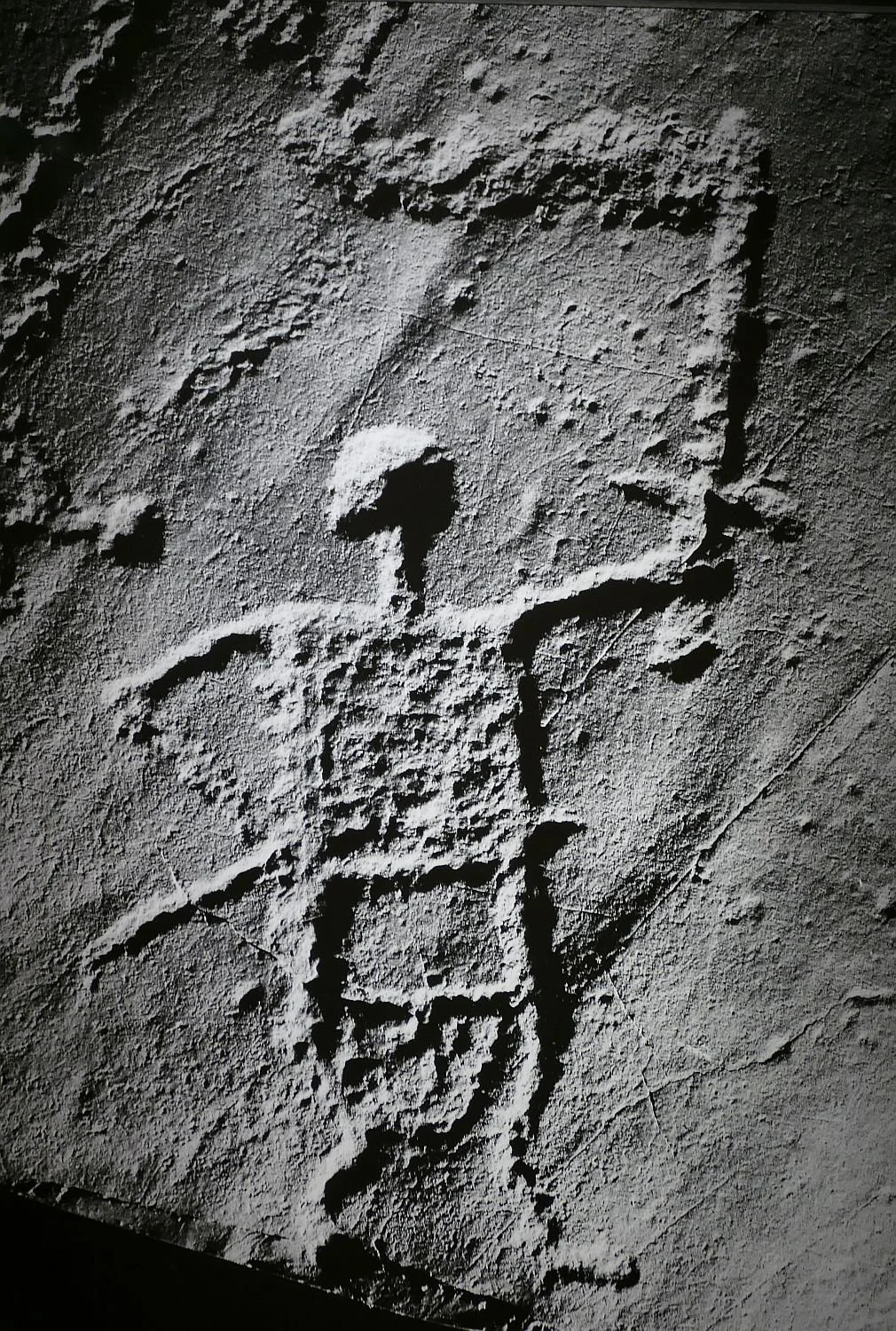
Welcome to the first iron men.