‘January, February’
‘January, February, I don’t understand’
The lyrics of Barbara Dickson’s song, ‘January, February’, pretty much sum up Terroir’s attitude to January.
This year we’ve had a pepper pot shaking of snow and now, as the rain falls in showers, sheets, stair rods, storms, drizzle, cats and dogs, buckets, torrents and deluges, the mud deepens and Seasonal Effective Disorder (SAD) is rampant.
Dickson’s song begins
‘You just say the things you want to hear
And like a fool I believed everything was clear
But now I feel so distant, I don't know what to say
The things I thought important are just another day’
These lyrics are, obviously, about a relationship with a person but today they remind Terroir of our reaction to Climate Change. In 1980 we, ‘like a fool … believed that everything was clear’. These days we recognise the threat of climate change but still ‘don’t understand’ or take enough action: ‘the things I thought are just another day’. No wonder a rainy, climate changed, January in 2026 is tough.
We’ve taken a look at what other pre-climate change poets thought of this first month of the year. Apparently Dante Gabriel Rossetti thought of ‘mighty fires in hall, and torches lit; / Chambers and happy beds with all things fit‘. https://interestingliterature.com calls this ‘shamelessly idealistic’ and Terroir is absolutely in agreement. Obviously Christina and Gabriel Rossetti did not suffer from SAD.
In the same website, we find that others were, like Terroir, less enthusiastic about January. Hilaire Belloc refers to the ‘undefeated enemy’, William Carlos Williams to the wind ‘running chromatic fifths of derision outside my window’, and I will spare you most of R S Thomas’ uber distressing poem on a wounded fox, save this passage: ‘…the snow that feels no pity, Whose white hands can give no healing’. Well, with climate change, maybe that horror may actually diminish.
It’s time to cheer up. Terroir has been travelling despite the weather, the gloom and the short days.
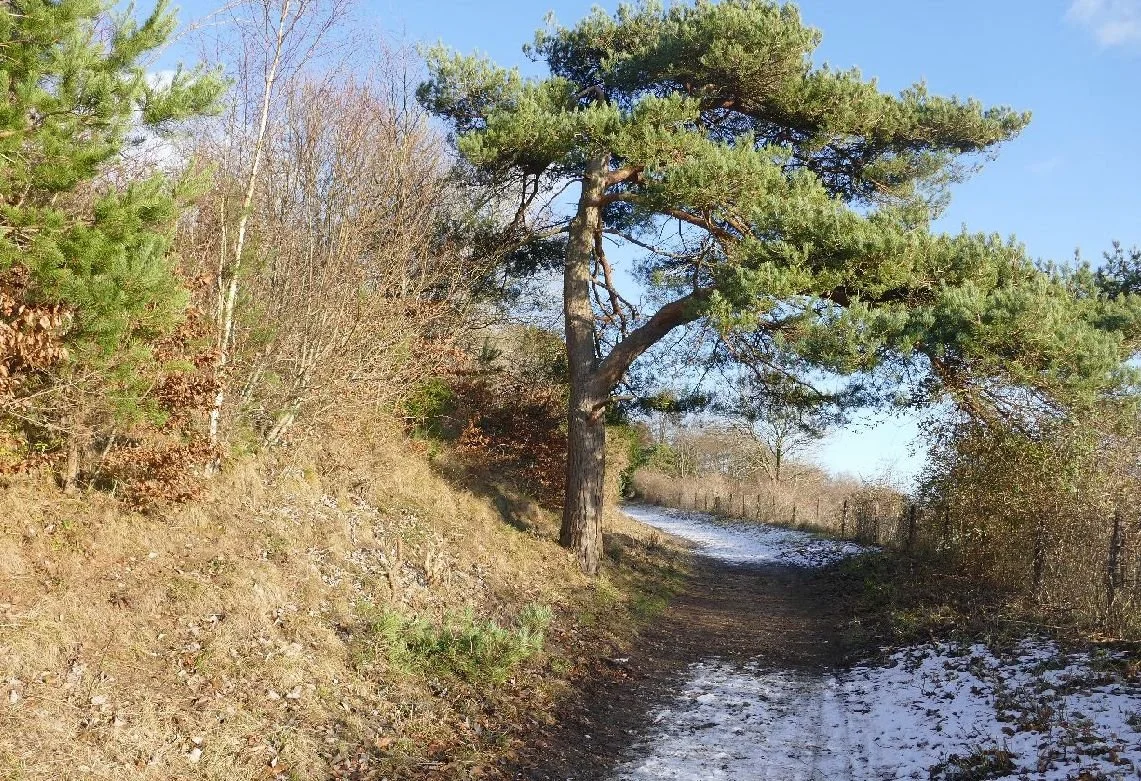
To start with, we’re on a SAD reducing walk along the North Downs, with snow, sun and a lone pine. Lone pines seem to inspire American poets more than British writers so here is Emily Dickinson on ‘The Pine Tree-:
‘It is alive, strong, and free,
Yet it never weeps nor sighs.
No matter how fierce the storm,
It stands tall against the skies.’
You can tell that Ms Dickinson was a stranger to the stunted growth of a southern English pine, grimly routed into the scarp slope of the North Downs.
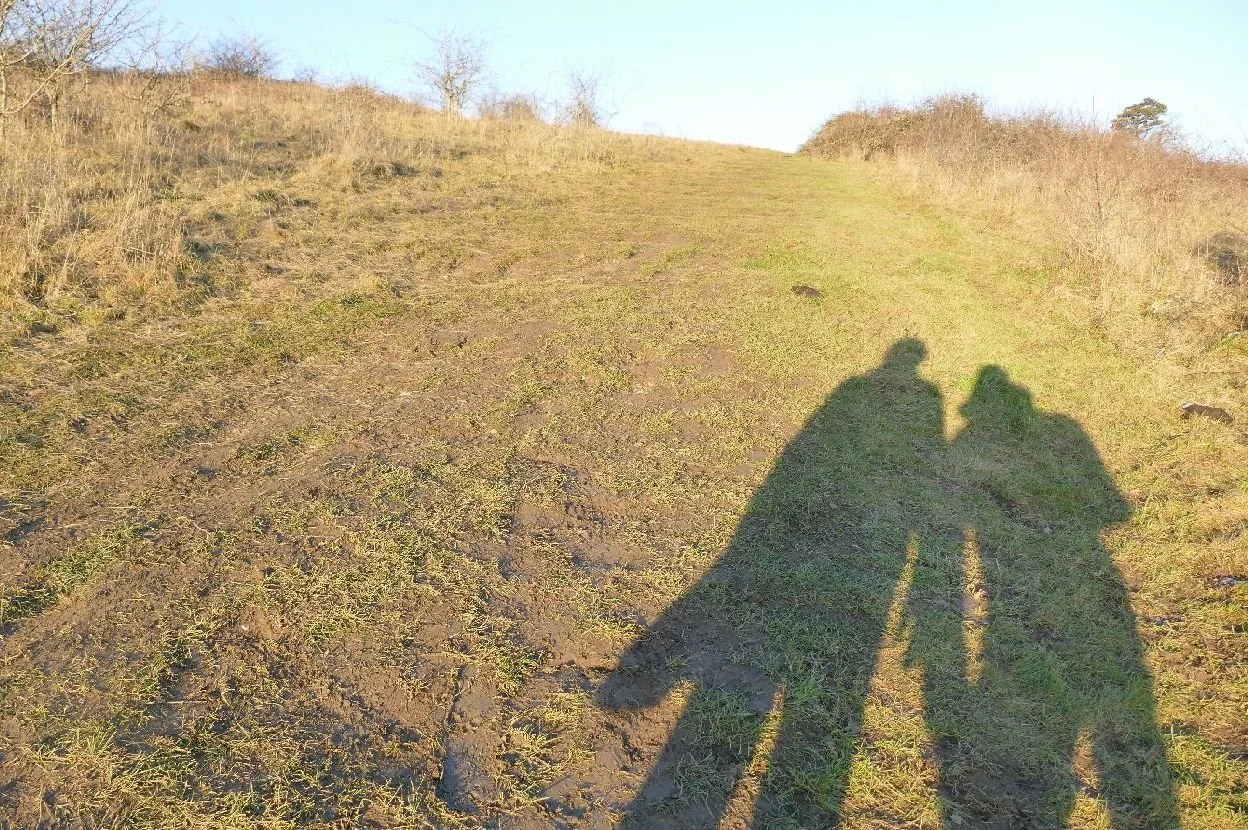
The low, wintry sun casting low, wintry shadows brings on a melancholy piece of Shakespeare’s Macbeth, perhaps a premonition of the seemingly endless days of rain to come.
‘Life’s but a walking shadow, a poor player,
That struts and frets his hour upon the stage’
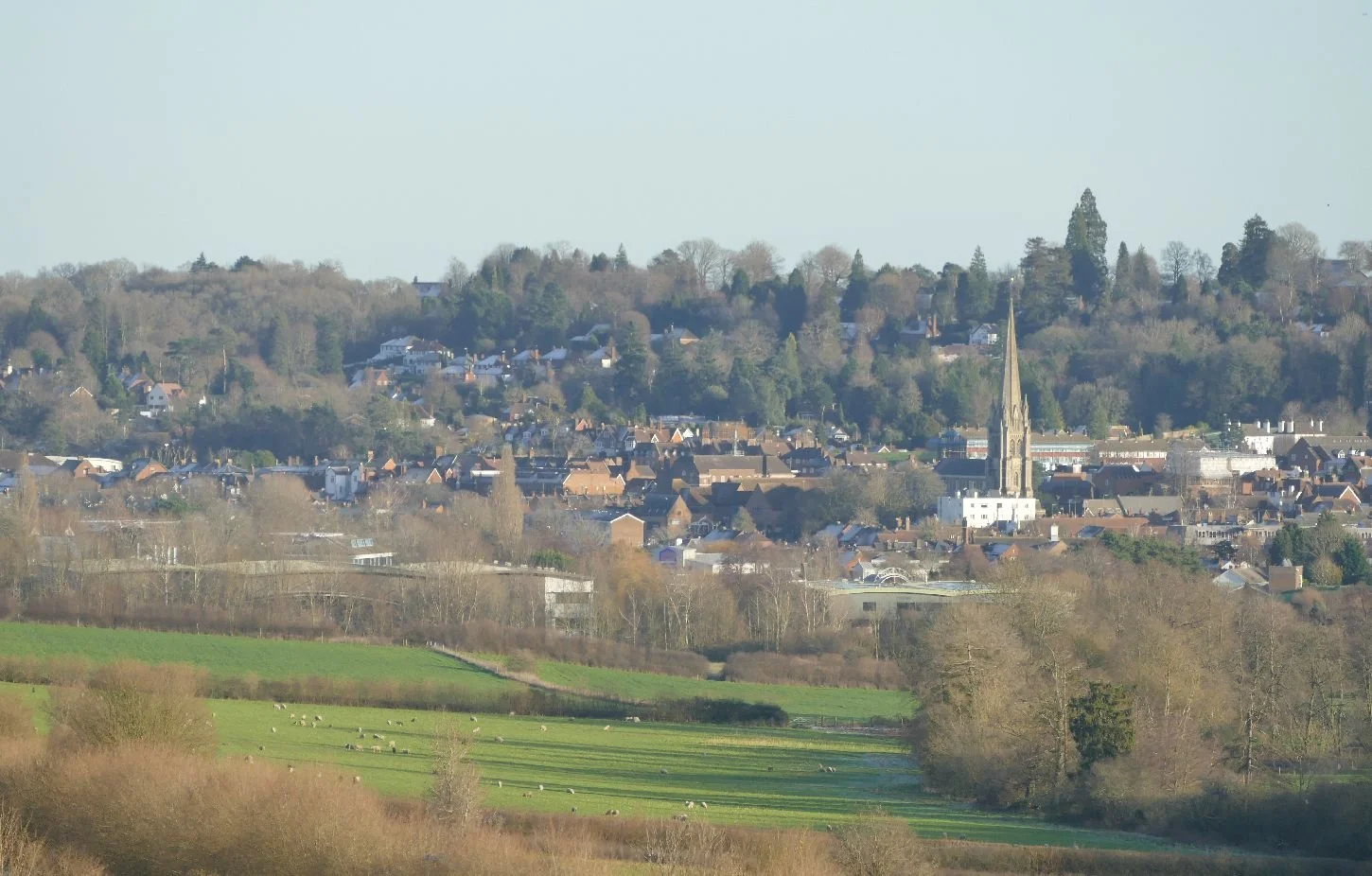
Below us is the market town of Dorking with the decorated gothic spire of St Martin’s providing a landmark for miles around. Jane Austn’s heroine, Emma, would not have seen this spire from the picnic grounds of Box Hill, but might have spied a much older medieval church which is said to have been demolished around 1830.
We discovered this, somewhat quaint, ode to Dorking, written by the Victorian poet William Cox Bennett and entitled ‘An Emigrant Song’:
O, Dorking is pleasant, and Dorking is green,
And sweet are the woods and the walks of Deepdene,
But for Dorking’s sweet meadows in vain I must sigh,
And Deepdene’s green woods will no more meet my eye;
But the green woods of Surrey, the sweet woods of Surrey,
The dear woods of Surrey, I’ll love till I die.
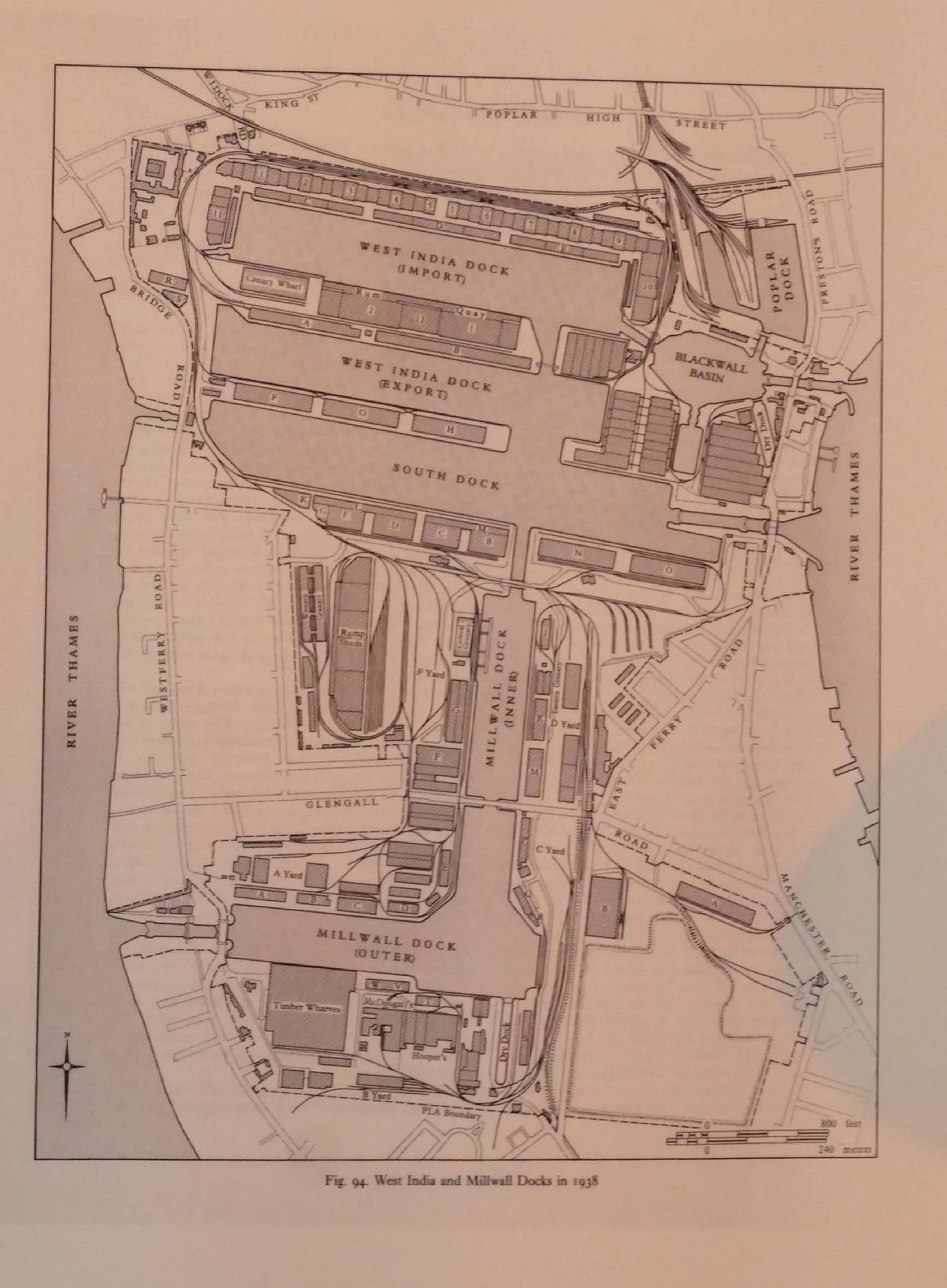
A trip to London: the snow has gone and the rain has arrived but we dress for the occasion and sign in for an open day at the pumping station which controlled the early 19th century equivalent of the M6 toll motorway.
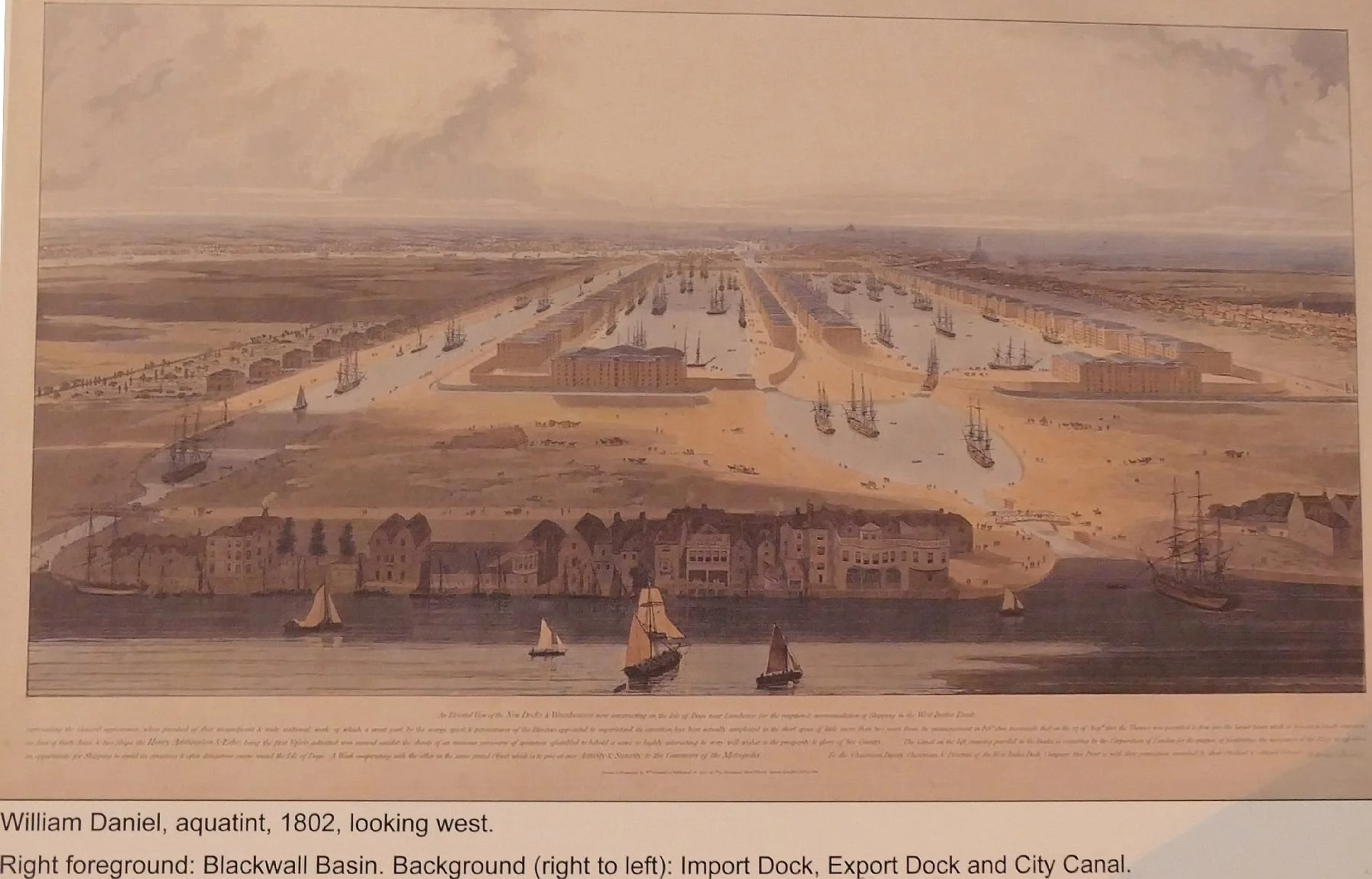
What is now called ‘South Dock’ was originally constructed as a speculative canal to save shipping from the long haul around the Isle of Dogs on its way to and from the Pool of London and the increasing acreage of new docks to the east. Sadly the canal was an economic failure. Shipping chose the longer route rather than pay the canal toll and have the hassle of passing through the locks at either end.
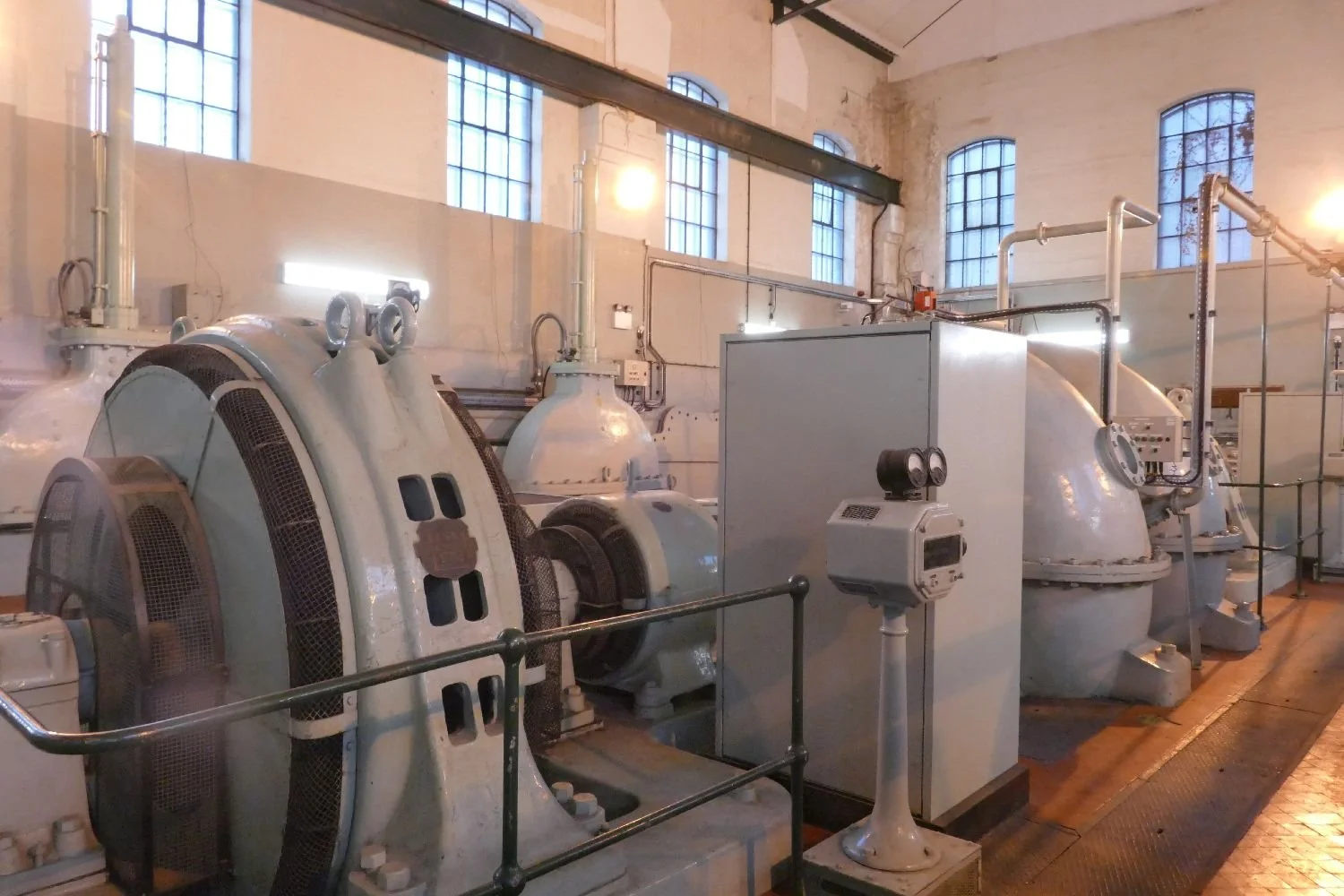
Locks were required to allow passage through the canal at all times as, of course, the Thames is tidal. As well as the huge lock gates a phalanx of pumping engines was also required to control City Canal’s water level. The machinery is stunning and still runs as required (its managed by the Canals and River Trust), although the engine hall did remind us of something created by and for cinematic yellow ‘Minions’.
Most poets sing the praises of the Thames (although Henley and Westminster Bridge seem to feature more often than Docklands). We feel that the following excerpt from William Blake’s poem entitled ‘London’ is more suited to our January theme: .
I wander thro' each charter'd street,
Near where the charter'd Thames does flow.
And mark in every face I meet
Marks of weakness, marks of woe.
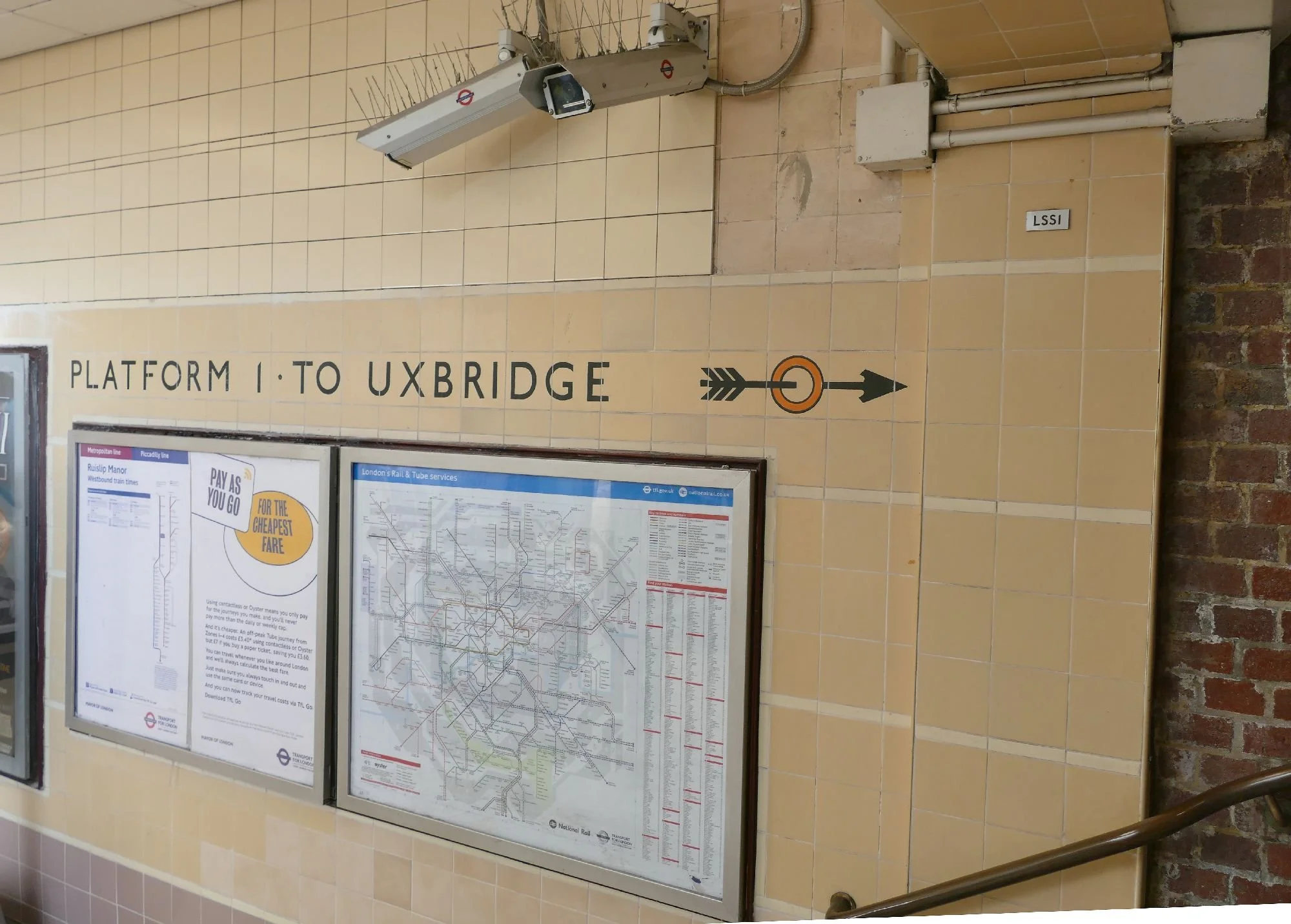
Of coure no trip to London is complete without a visit to Uxbridge.
We couldn’t resist a photograph of this elegant and now historic signage, or the inclusion of the following ditty. Thanks to http://www.eddiethecomputer.co.uk/history/uxpoem.htm putting this together.
“In 1976 Uxbridge was undergoing great changes. The town centre relief road had come into use. The stark concrete mass of the Pavilions shopping centre was ready, but lacked the later refinement of an over-all roof. A Labour Council, led by the left-wing John Bartlett, was in power, and had greatly increased the domestic rate. The Civic Centre was under construction, but costs were continually rising; and it became known that expensive roof tiles were being used which would add even more to the final bill. The local firm of Carsons, Brooke-Partridge & Co., planning consultants, sent a Christmas card to all the Socialist Councillors containing this poem. ("Pete" was used simply because it rhymed with "street".)”
"Come friendly bombs and fall on Slough
It isn't fit for humans now."
So wrote John Betjeman, our mate,
Who's now the poet Laureate.
I know not why the fates should frown
Upon that poor benighted town.
If it appalls the Bard, I bet
He surely ain't seen Uxbridge yet.
Now there's a place where all can view
The worst that architects can do.
Its concrete canyons where, they say,
The shop rent would turn Croesus grey.
Its car parks and its traffic schemes -
Bewildered spider's tangled dreams.
A town that had a certain pride
Now needs the service of a guide
To show the locals how to view
Familiar landmarks once they knew.”
There’s a lot more, if you care to look!
And so a trip to Scotland to celebrate Burns night on the 25th of January. As we’re sure you all know, Robert Burns was born in Alloway on the Ayrshire coast of south west Scotland, and boasts many Burns related landmarks. On a wet January weekend, Alloway’s outdoor attractions had little appeal, however, so we made our way to Rozelle Park and the Maclaurin Art gallery.
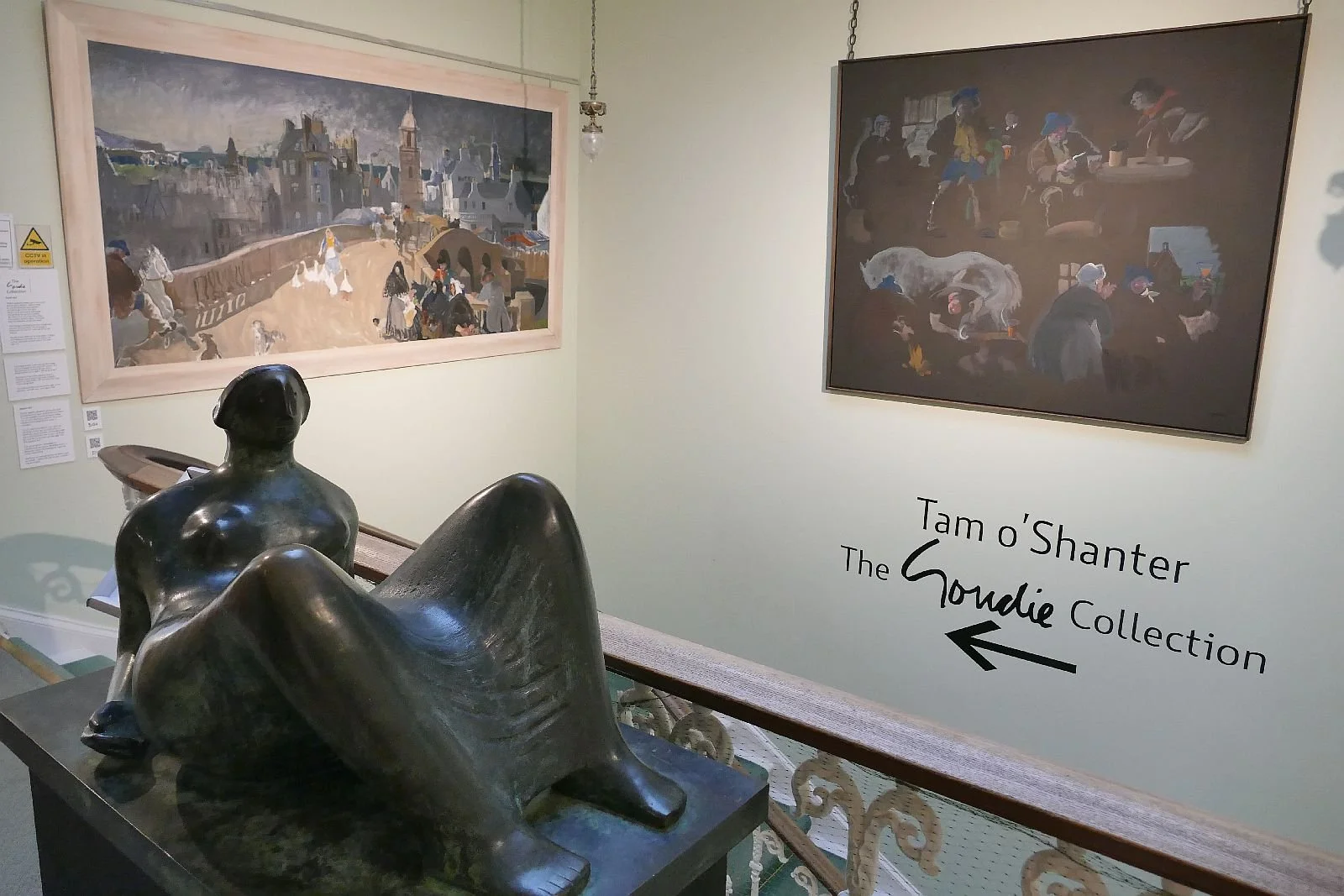
What a magnificent treat was in store for us: the complete Tam o’Shanter, fabulously illustrated by the paintings of Alexander Goudie
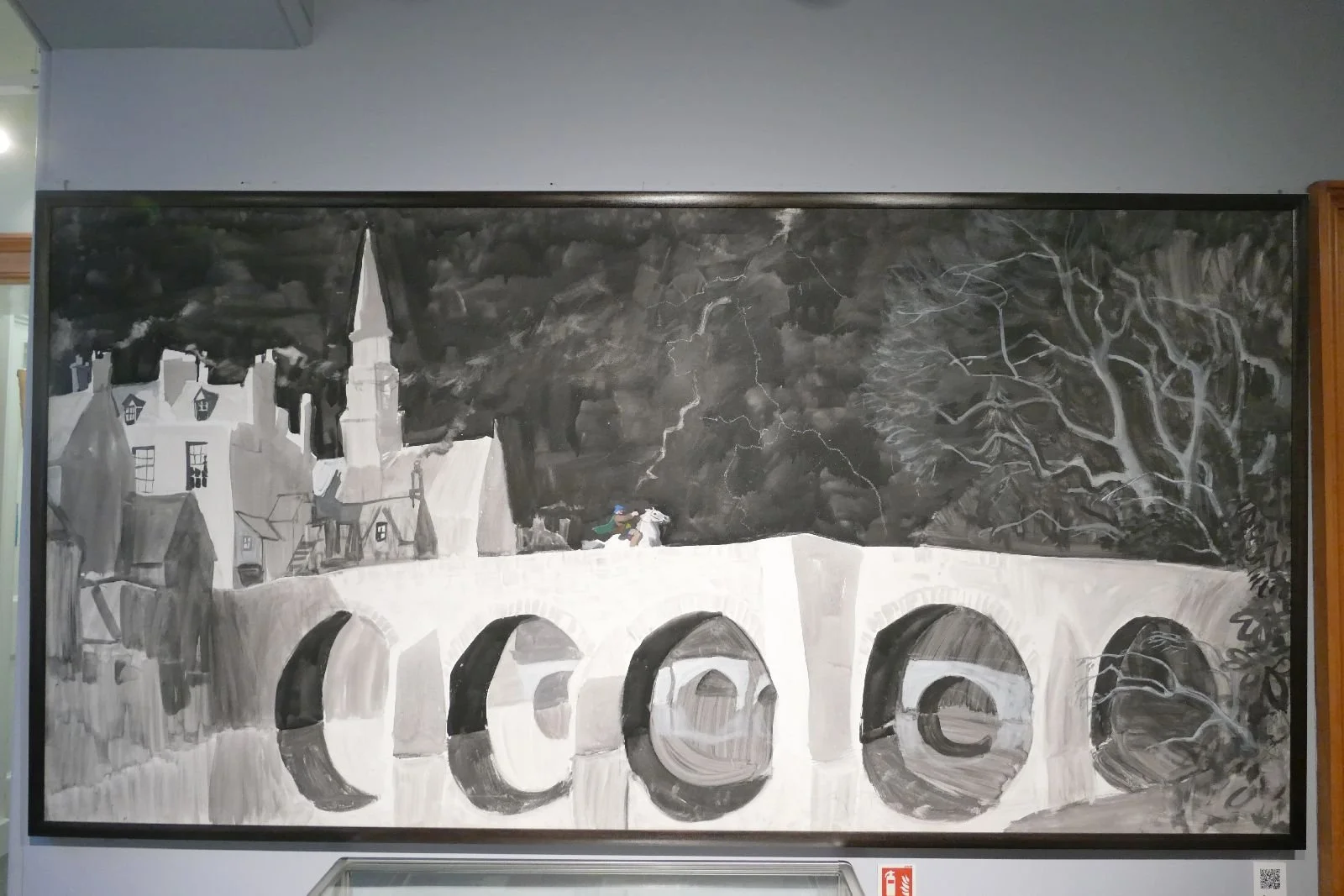
“Before him Doon pours all his floods;
The doubling storm roars thro' the woods;
The lightnings flash from pole to pole,
Near and more near the thunders roll;
When, glimmering thro' the groaning trees,
Kirk-Alloway seem'd in a bleeze”
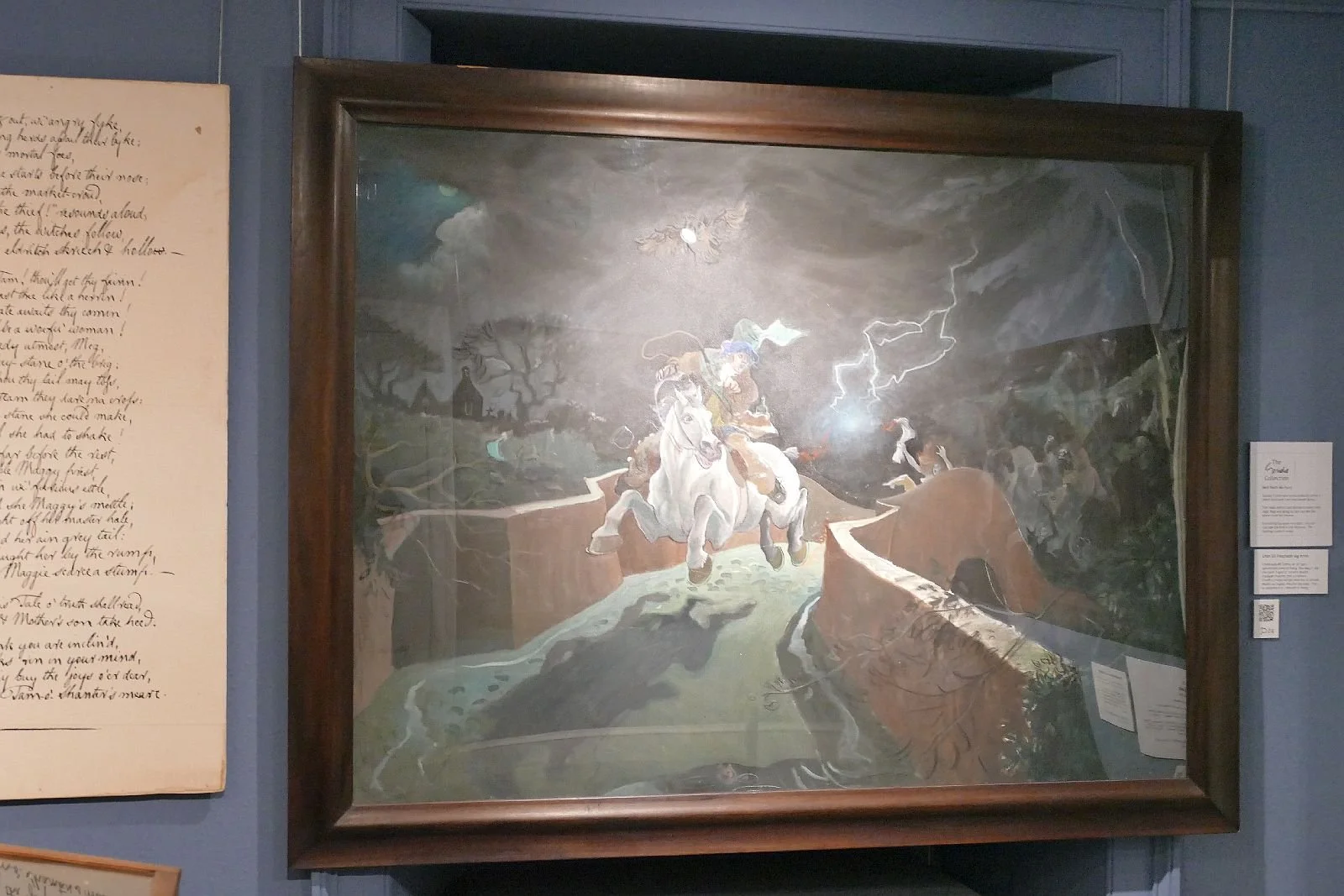
“Now, do thy speedy utmost, Meg,
And win the key-stane of the brig:
There at them thou thy tail may toss,
A running stream they dare na cross.
But ere the key-stane she could make,
The fient a tail she had to shake!
For Nannie far before the rest,
Hard upon noble Maggie prest,
And flew at Tam wi' furious ettle;
But little wist she Maggie's mettle—
Ae spring brought aff her master hale
But left behind her ain grey tail:
The carlin claught her by the rump,
And left poor Maggie scarce a stump.”
Tam’s faithful grey mare saves the day yet again.
Elswhere in the gallery, another, less enegetic, peice of art caught our landscape eye. Ian Hamilton Finlay seems to have been a complex indivdual, a writer, poet, artist and gardener. One of us was struck by the artwork below, which we do not pretend to understand but which spoke to us both visually and horticulturally.
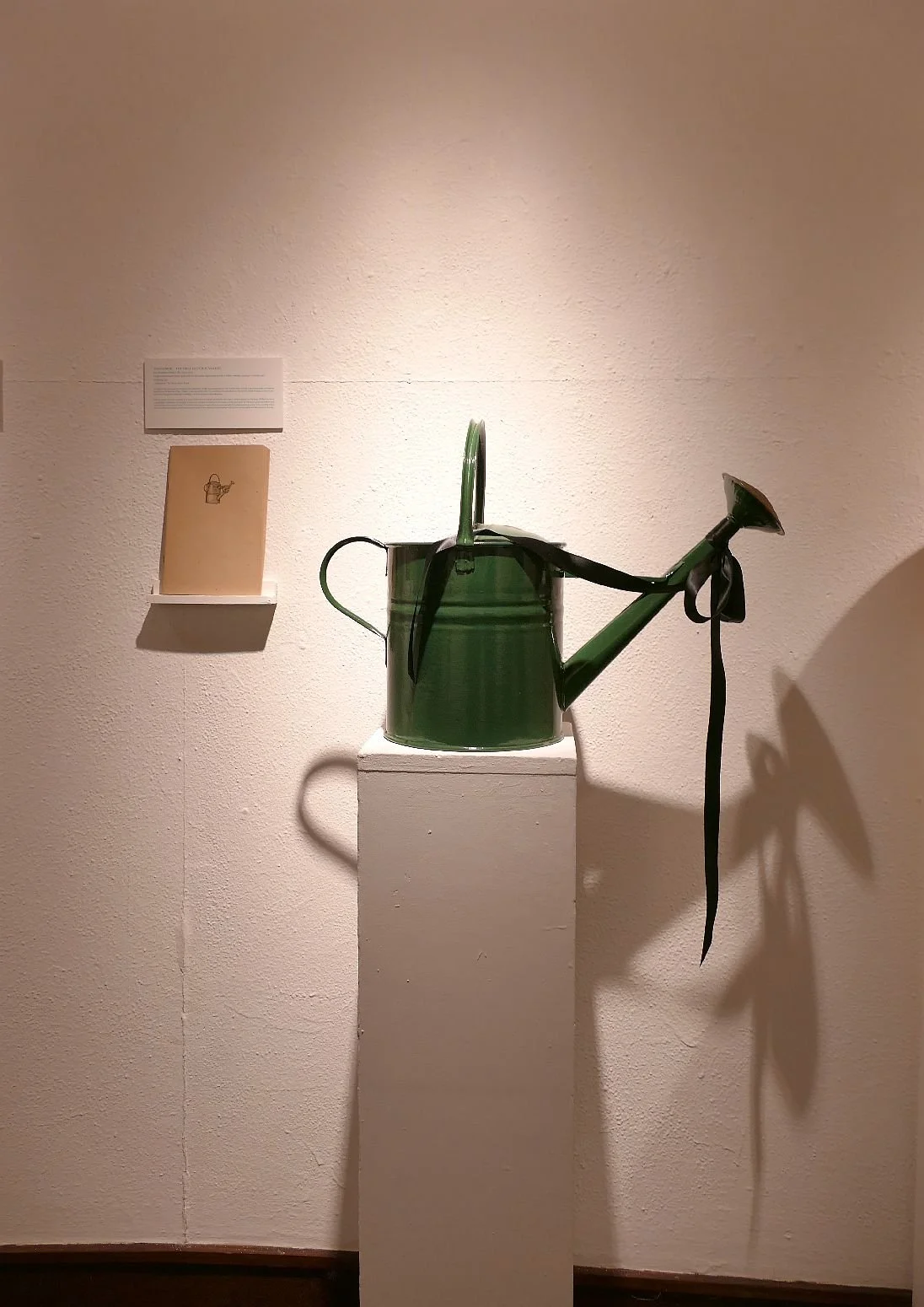
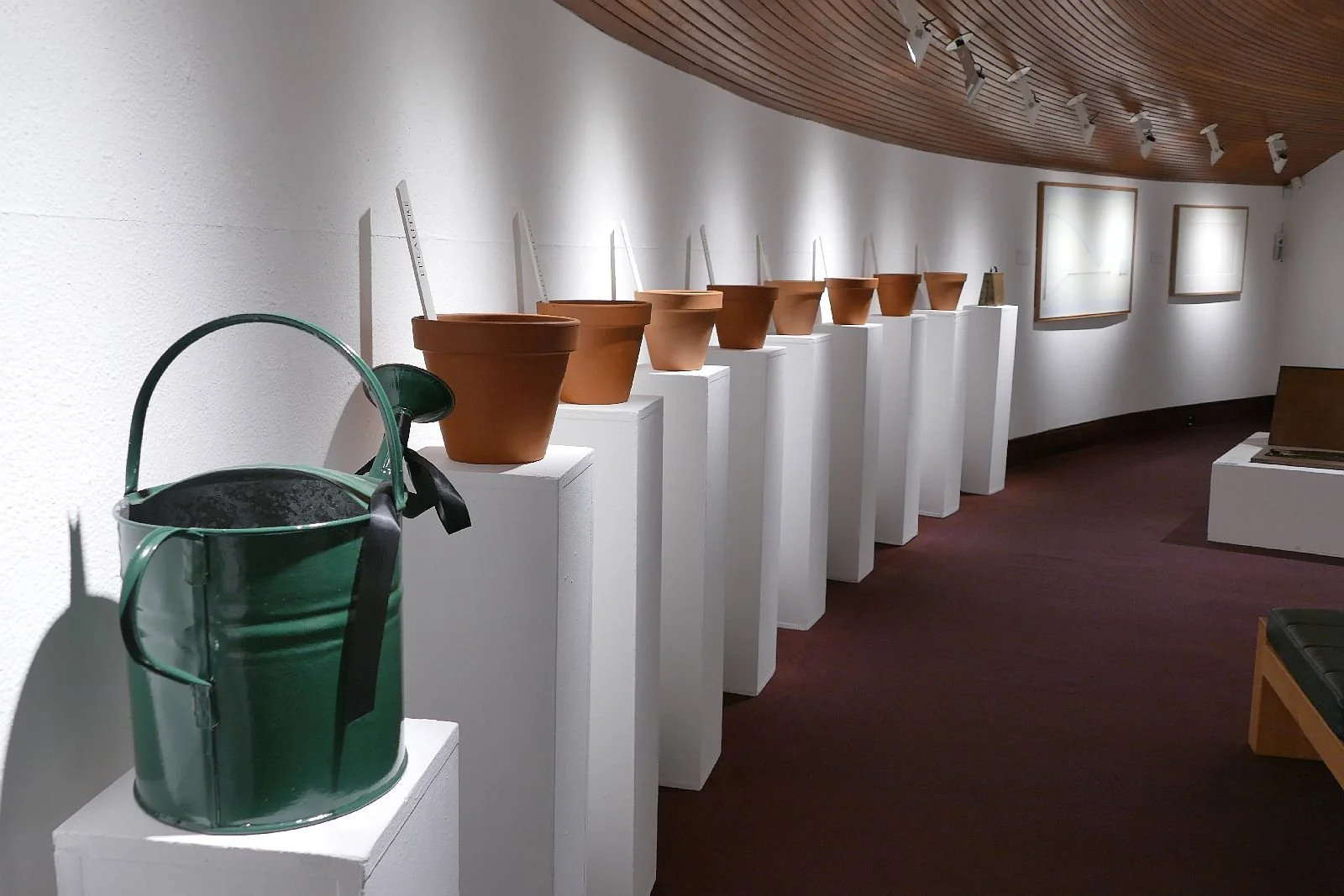
“[Finlay’s] work encapsulates a multitude of complex references born from an interest in the history of the European Revolution, occidental culture and relationship to the natural world.” Poetry in sculptural form.
As Alloway lies to the south west of Glasgow, so Helensburgh lies to the north east, on that tangle of coast and river bank created by Gare Loch, Loch Long and the Clyde Estuary. On this occasion only the ‘other one’ got to visit Helensburgh but the one left in Glasgow is grateful as it has introduced us to StAnza, Scotland’s International Poetry Festival held in St Andrews, and to the StAnza’s Poetry Map https://stanzapoetry.org/projects/poetry-map/. What an invention! The project aims ‘to cover the entire map [of Scotland] with [poem] pins, from coast to coast, highlands to borders, and covering a wide range of landscapes including cities and villages, mountains and lochs, rocks and reservoirs.’ That’s Terroir’s kind of map.
Here is Helensburgh’s Poem No. 216, ‘Waterside’ by Thomas Clark:
“The swans in twos would sail along,
Along the grimy pier;
The winds were wet; the seas were strong;
The captain smelt like beer;
The harbour-master hummed a song
And hauled a salty rope among
The passengers and gear.
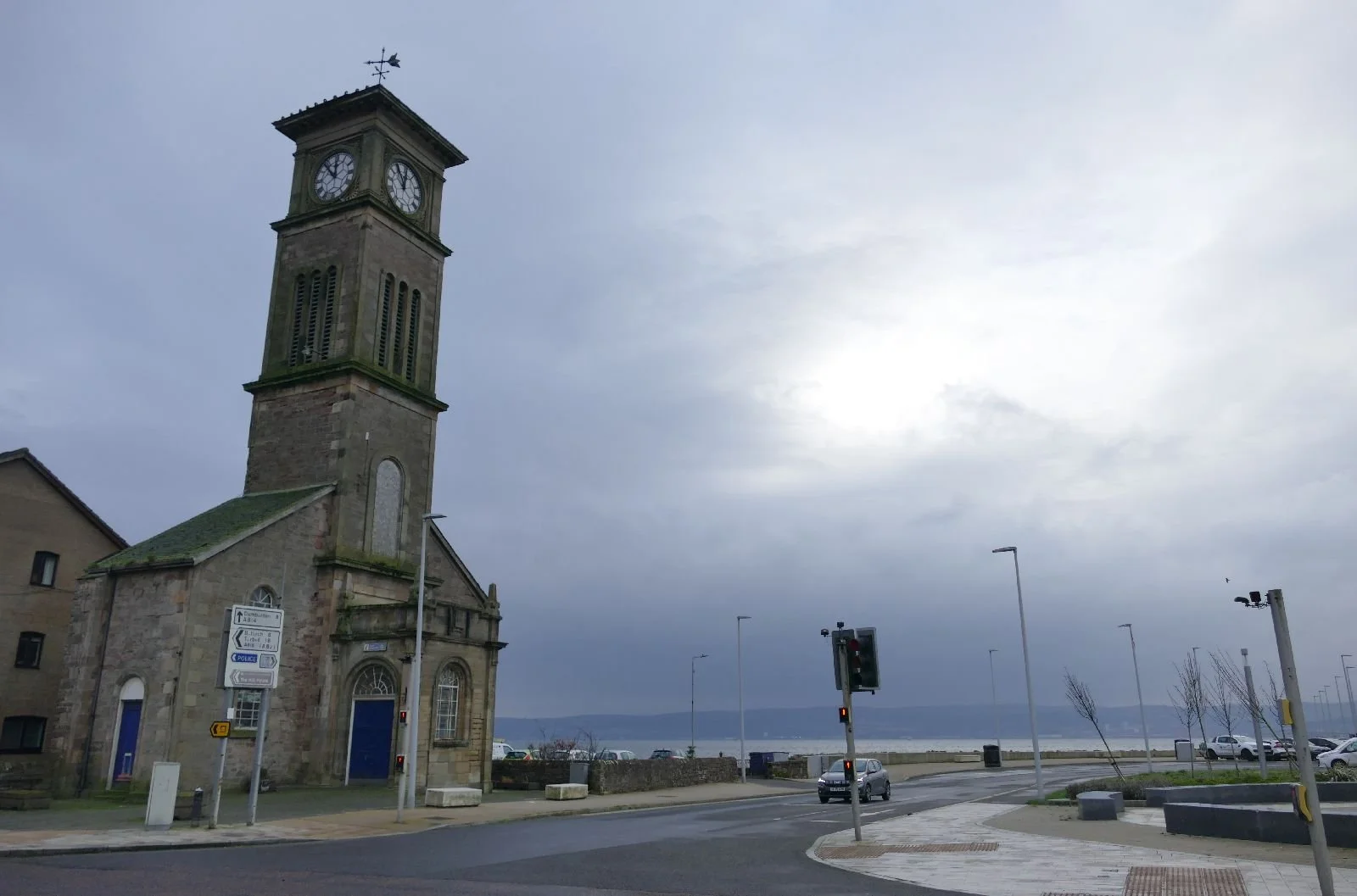
“The waters where the colours float
Did not seem very deep;
Upon the stones a fishing boat,
Its ribs were pale and steep;
A hobo crumpled in a heap,
His crinkled eyes were shut with sleep,
His head lay on his coat.
I understand it now; the way
That life has slipped aside,
While I was watching by the bay
For something great, and wide;
And waters wash up every day
We things that have been thrown away,
We articles of tide.”
It’s time to go home. We must say goodby to our eagles’ erie on the 14th floor with its of fabulous view of Glasgow Central Station, its metallic parallel lines and twinkling array of red lights. This view has led one of us to perhaps the favourite of all poems we have discovered or re-experienced on this trip. Here is an extract from ‘Letters to Glasgow’ by Imtiaz Dharker, first published by Bloodaxe Books in 2018.
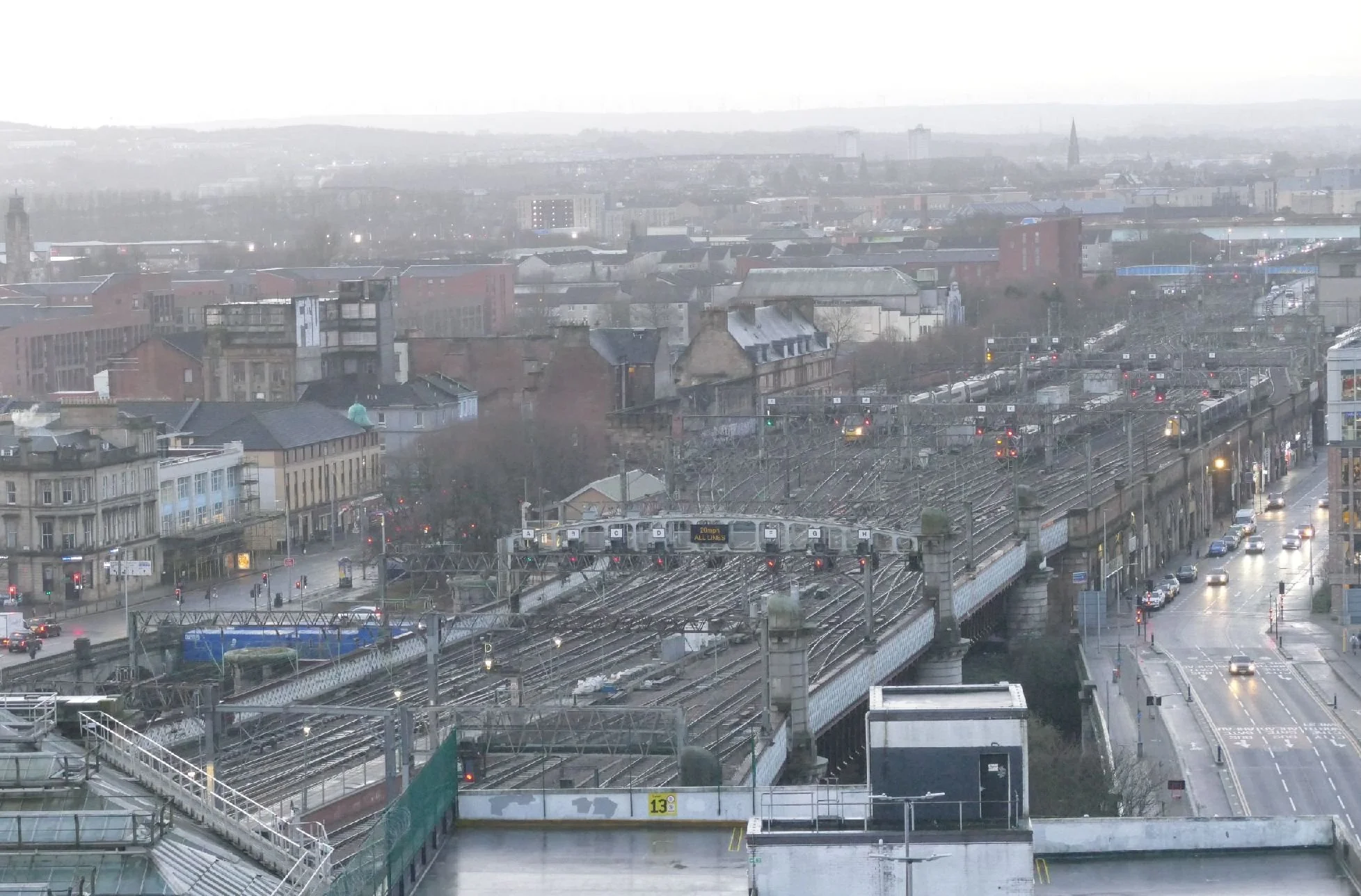
“…over the Clyde where the great ships were born,
over the water, a ghostly foghorn,
over the bridge to the city they come,
some of them visiting, some returning.
They take up their baggage and their belongings,
they take up their longings
and the train brings them in to Glasgow Central…”