Fête de la Vapeur
Towards the end of April, one half of Terroir found themselves in France at what was advertised as La Fête de la Vapeur. This was an opportunity for rail enthusiasts of all shapes and sizes [no, no, it’s not what you think – read on! Ed] to come together with their partners to savour the delights of the Baie de Somme: the culture, the food, the history and its geography. We were based at Abbeville, in the Somme Department - now part of the huge Hauts de France region which incorporates Picardie as well as Nord-Pas-de-Calais.
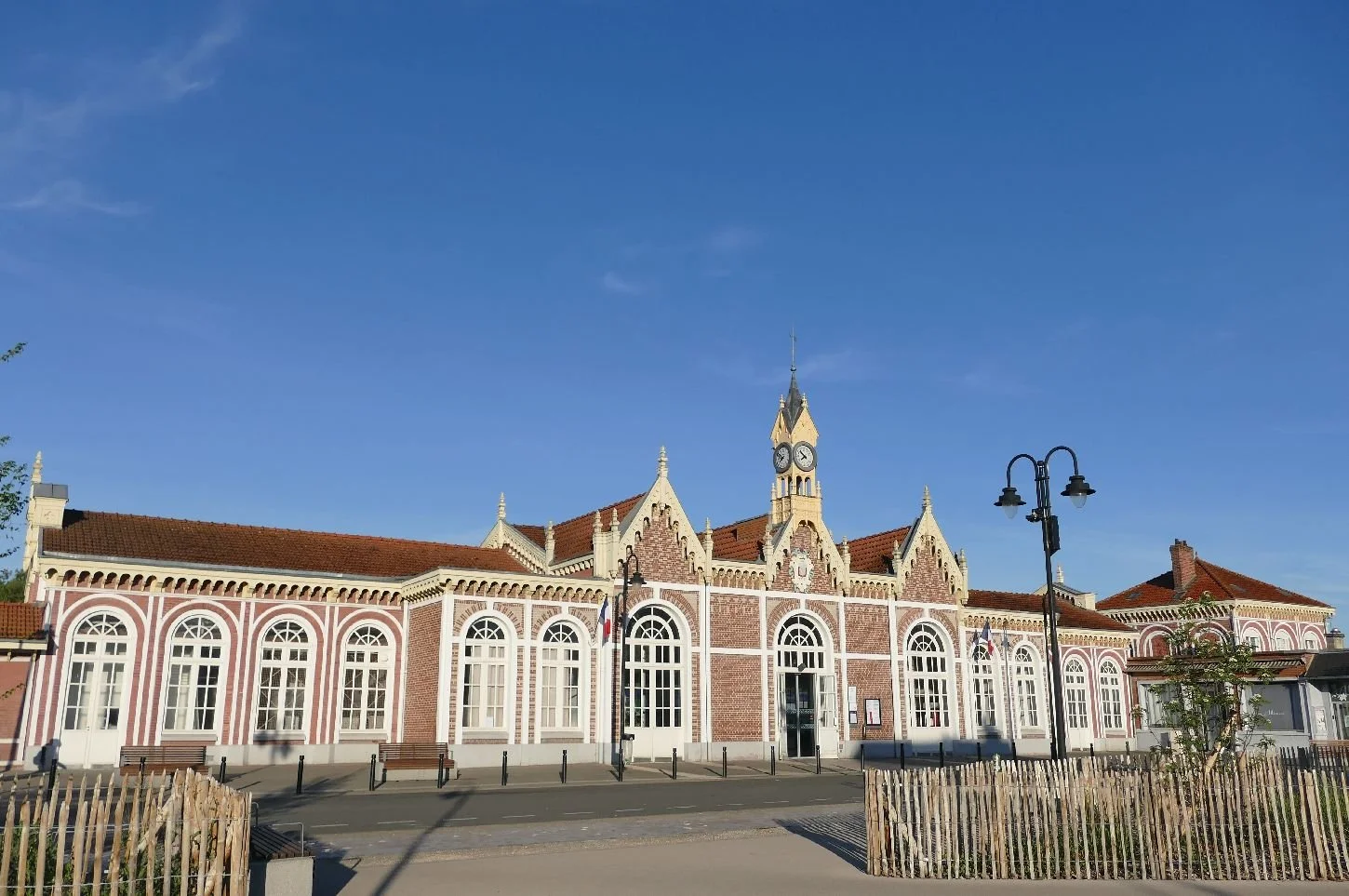
As we arrived at the glorious confection which is the station (right), we were immediately aware of the importance of water: the elevation of the town varies between just two and eight metres above sea level. There is also the Canal Maritime, and the Somme itself, crossed by several small bridges.
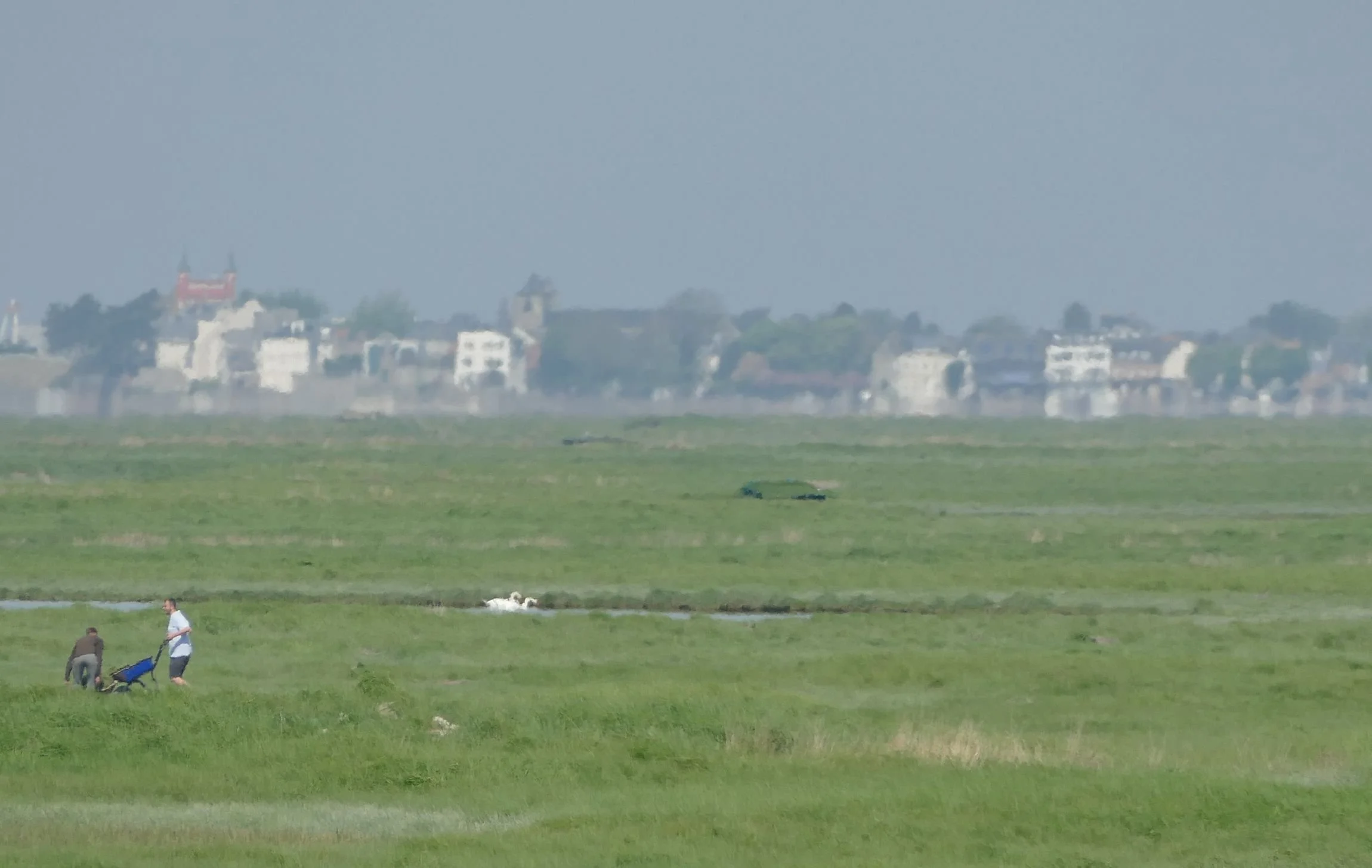
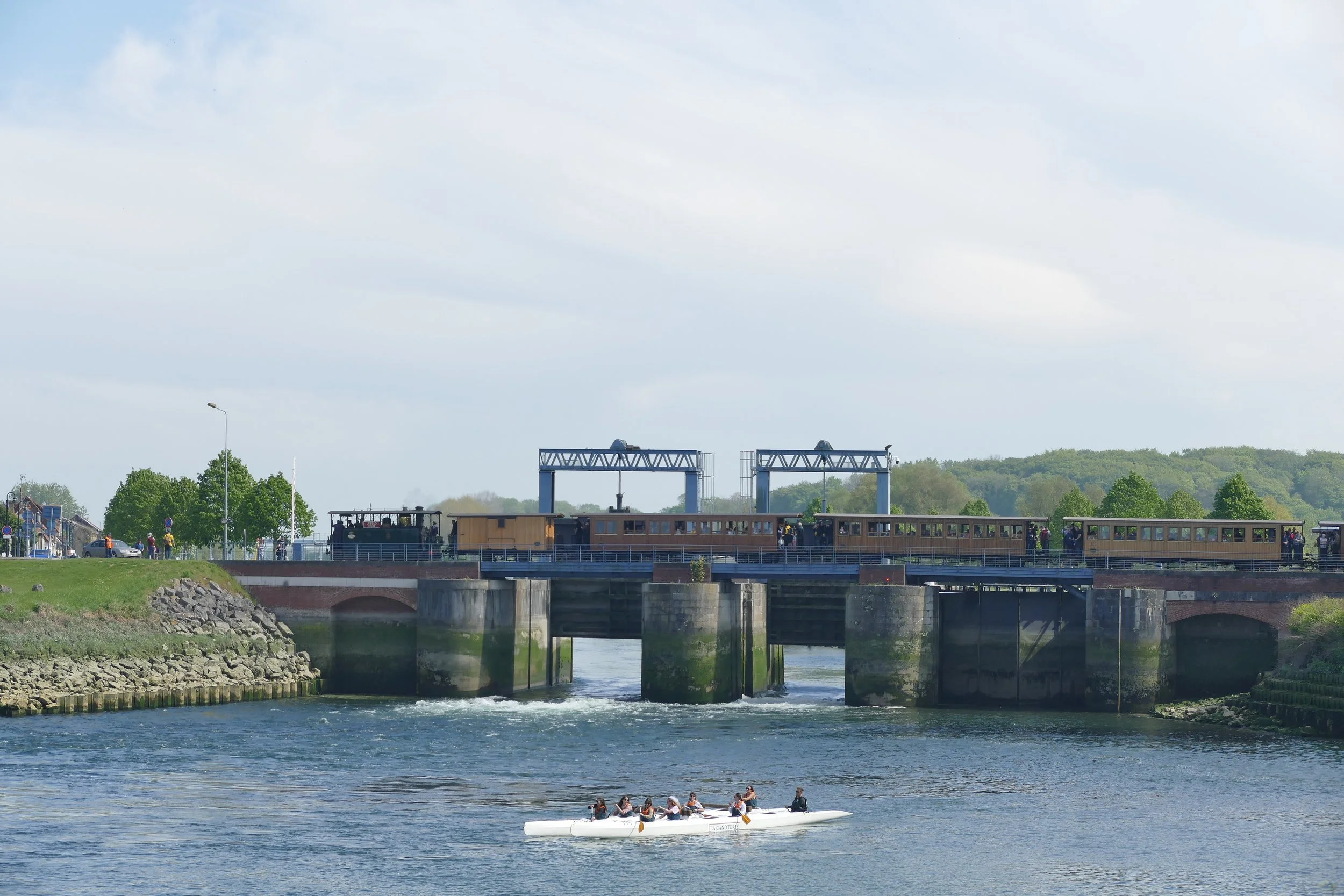
Images below: low and high tech water management
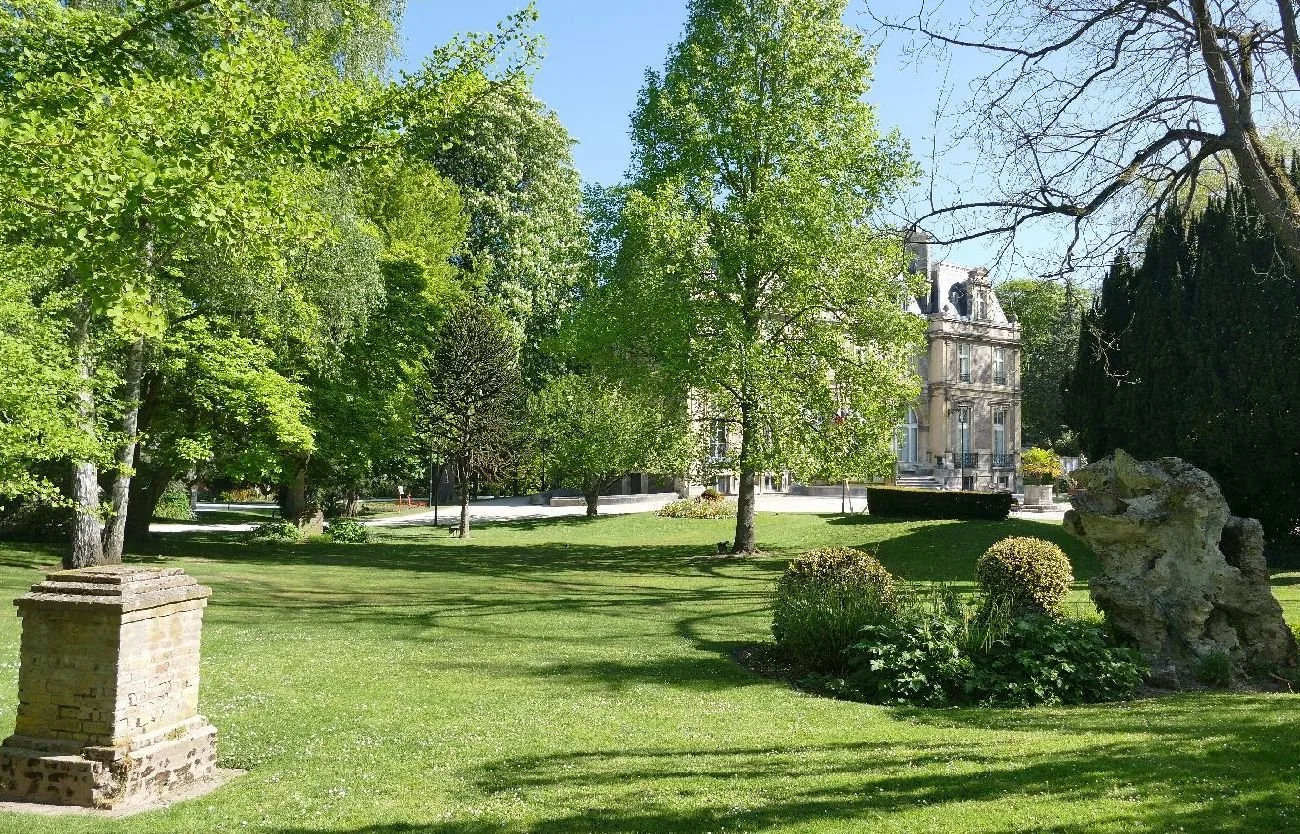
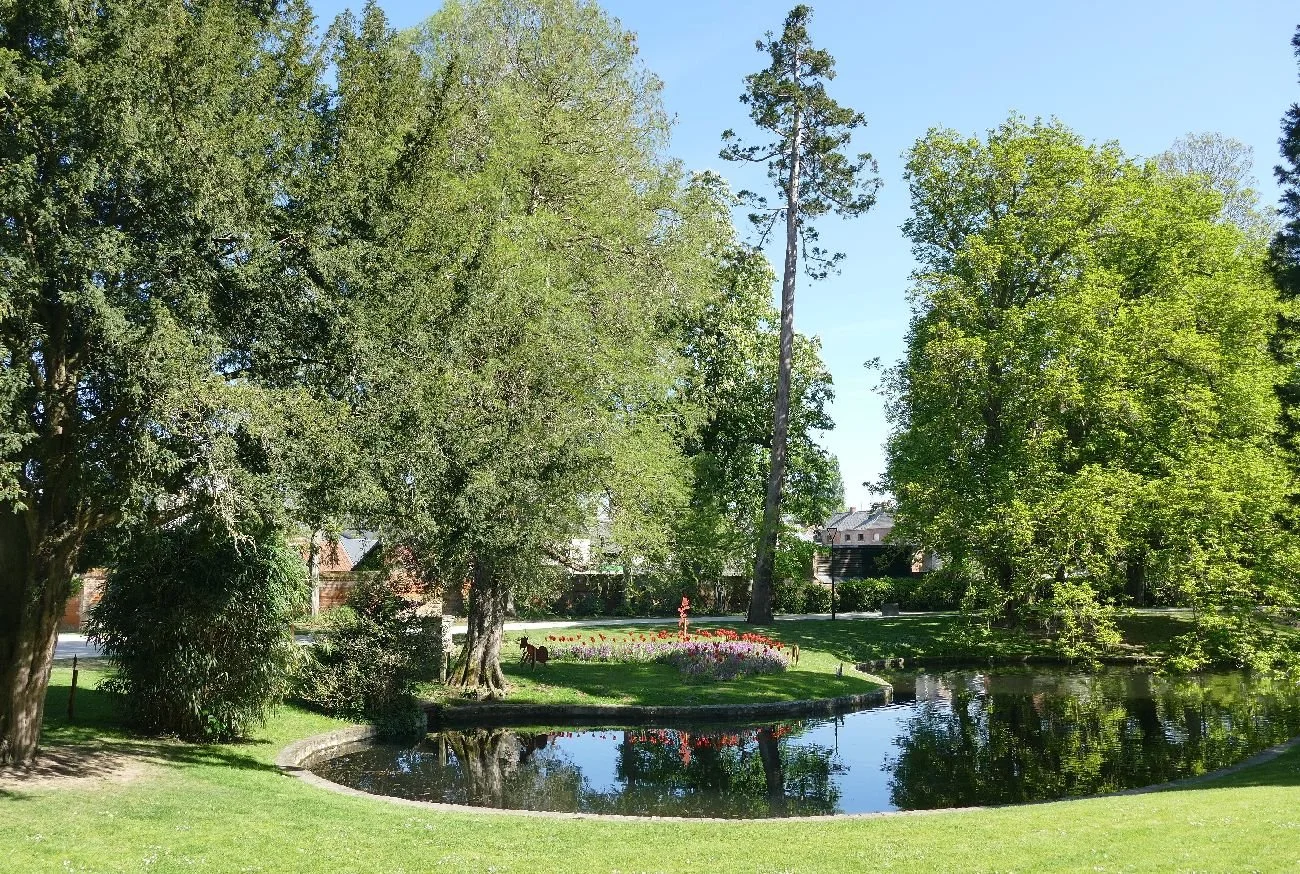
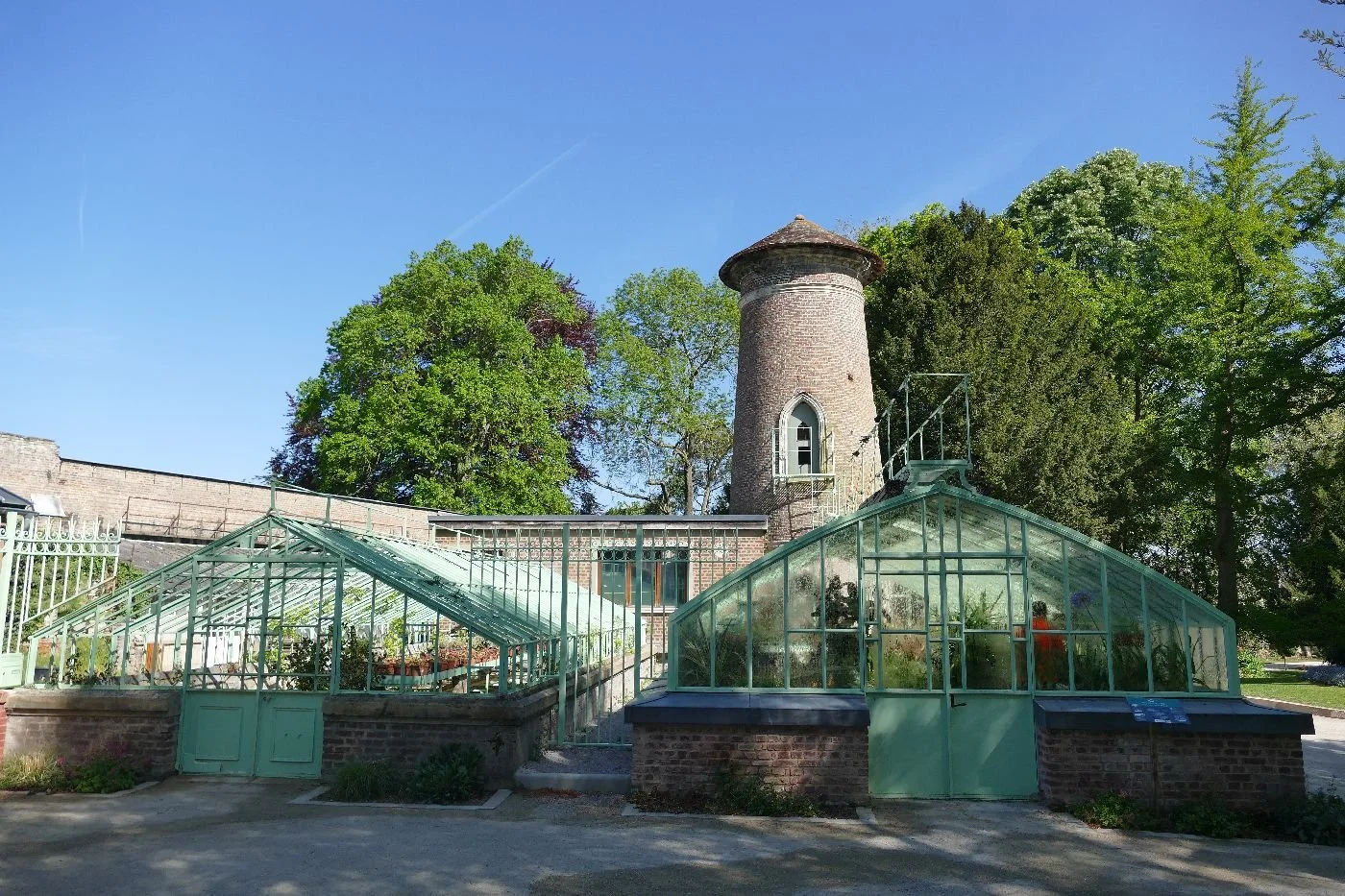
Within the town, there are parks, and reed-lined lakes and most particularly what was once the garden around the erstwhile home of 19th century botanist, Arthur Foucques d’Émonville. (Now there’s a name to conjour with for an English speaking visitor).
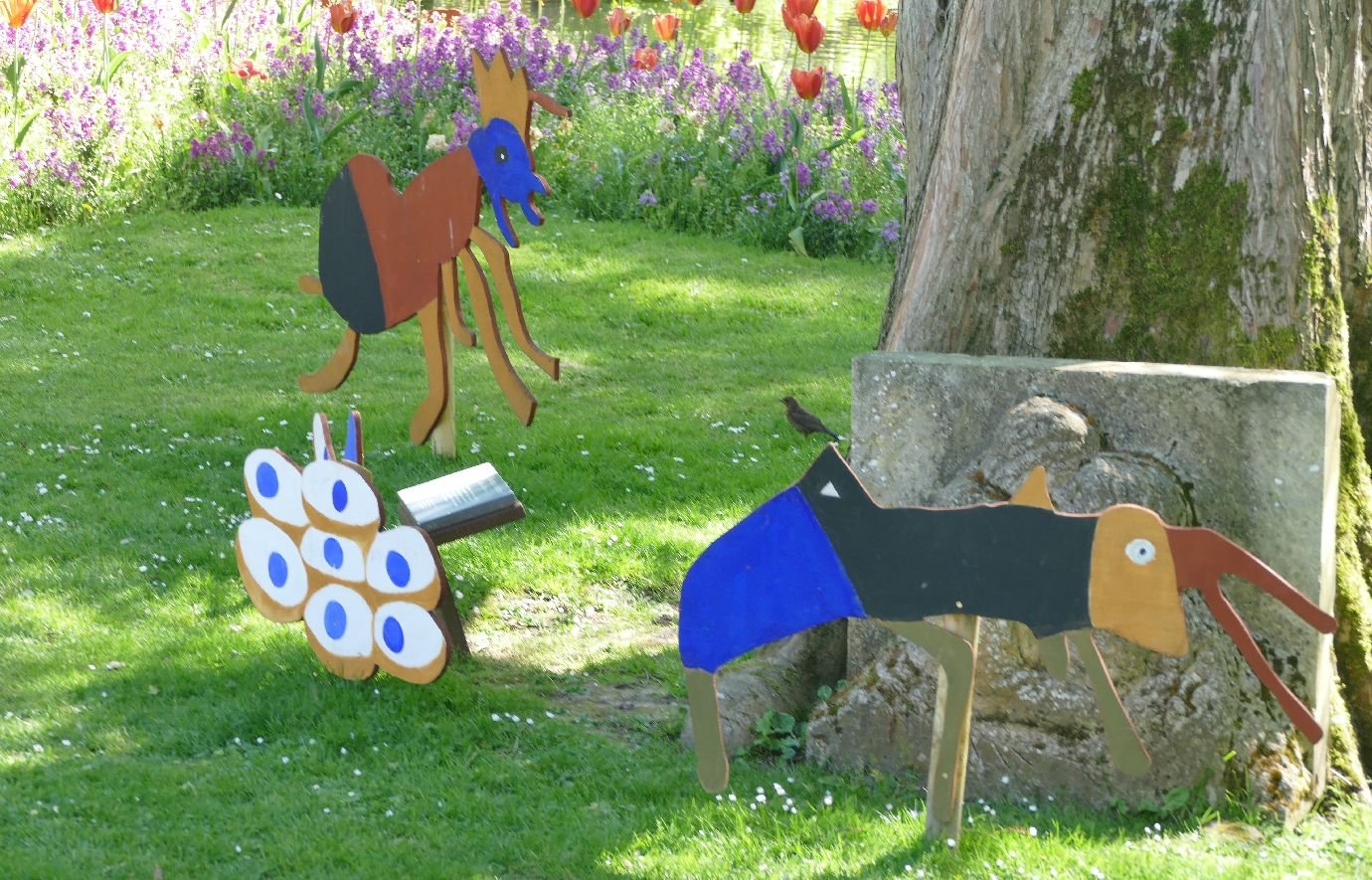
Nowadays his garden is a public space with its labelled ginkgo, monkey puzzle, giant sequoia, cedar of Lebanon, magnolia, sweet gum, and black walnut, amongst others, and of course some mallards feeling very much at home. Not quite what could be said for the model animals scattered through the bushes, part of a school project inviting responses to the theme of dark nature. They were of little concern to the lycéens enjoying a break from classes on the seats provided.
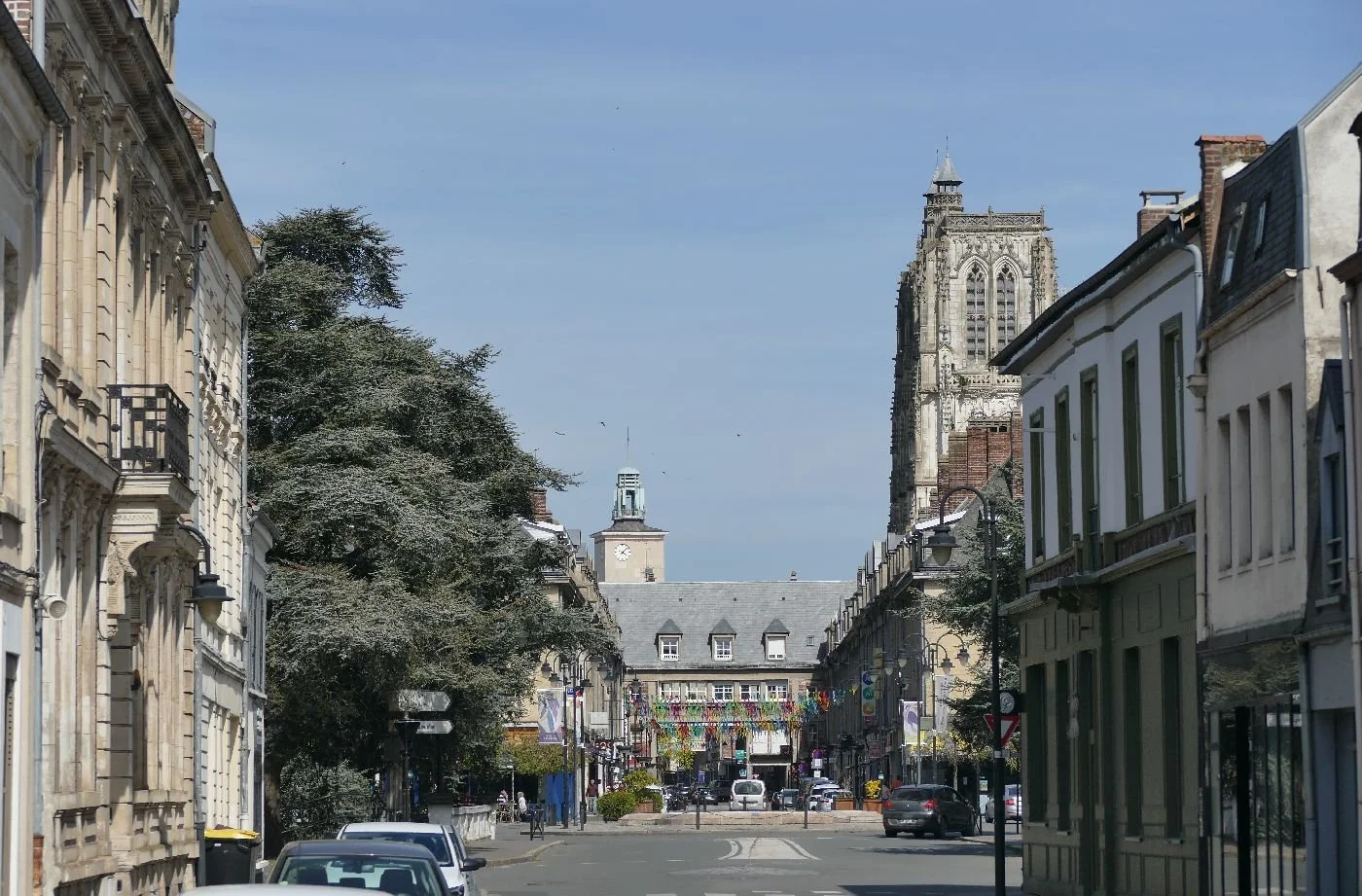
Most striking in the town is the dominating yet unfinished church of St Vulfram with its flamboyant gothic frontage and tower (right). It feels magnificent and by no means incongruous, sitting within a successful 1950s designed townscape (below), with rebuilt town hall and belfry and four storey linked blocks of housing, under which the main road passes around enclosed island spaces and pedestrian walkways.
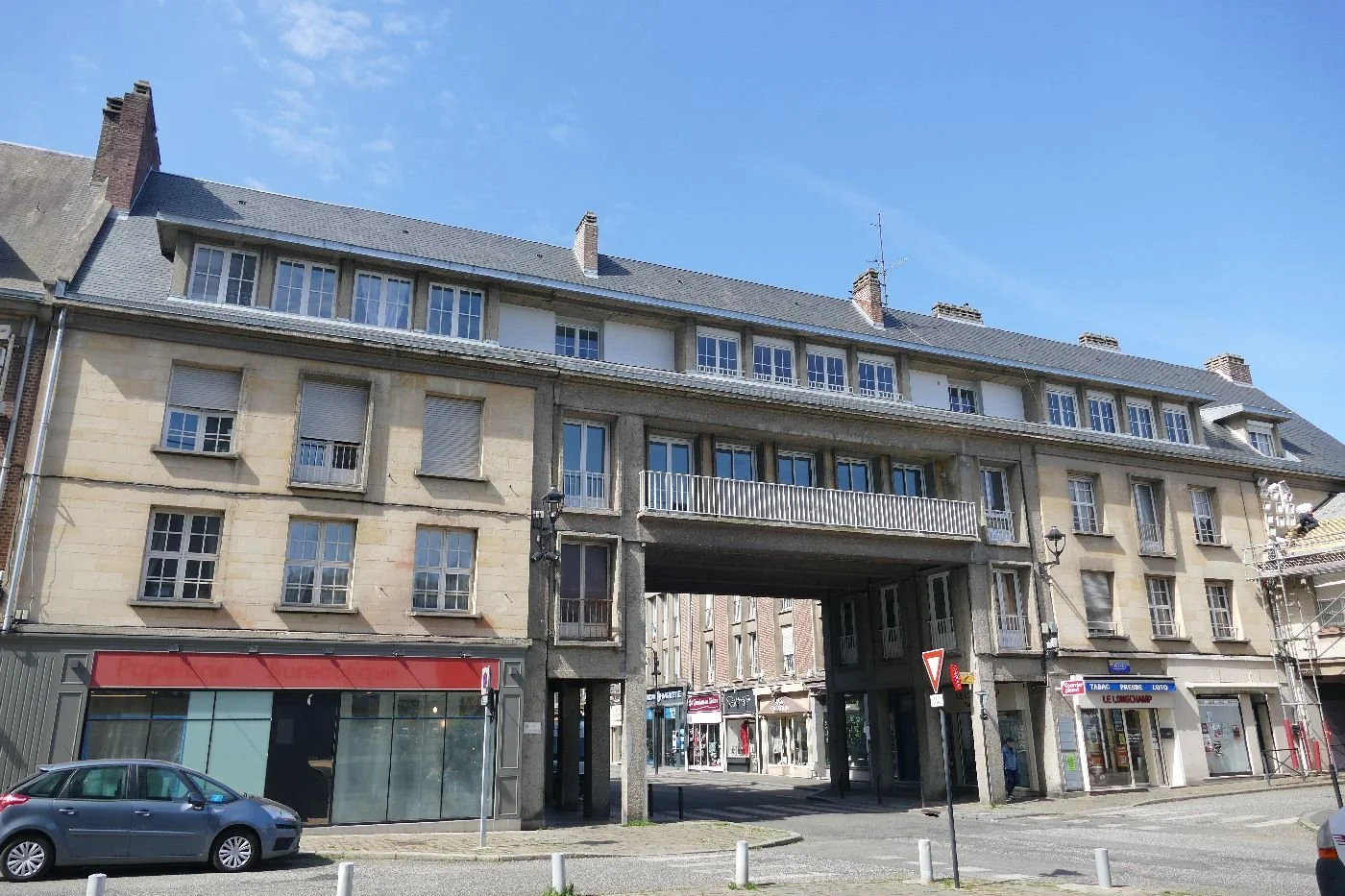
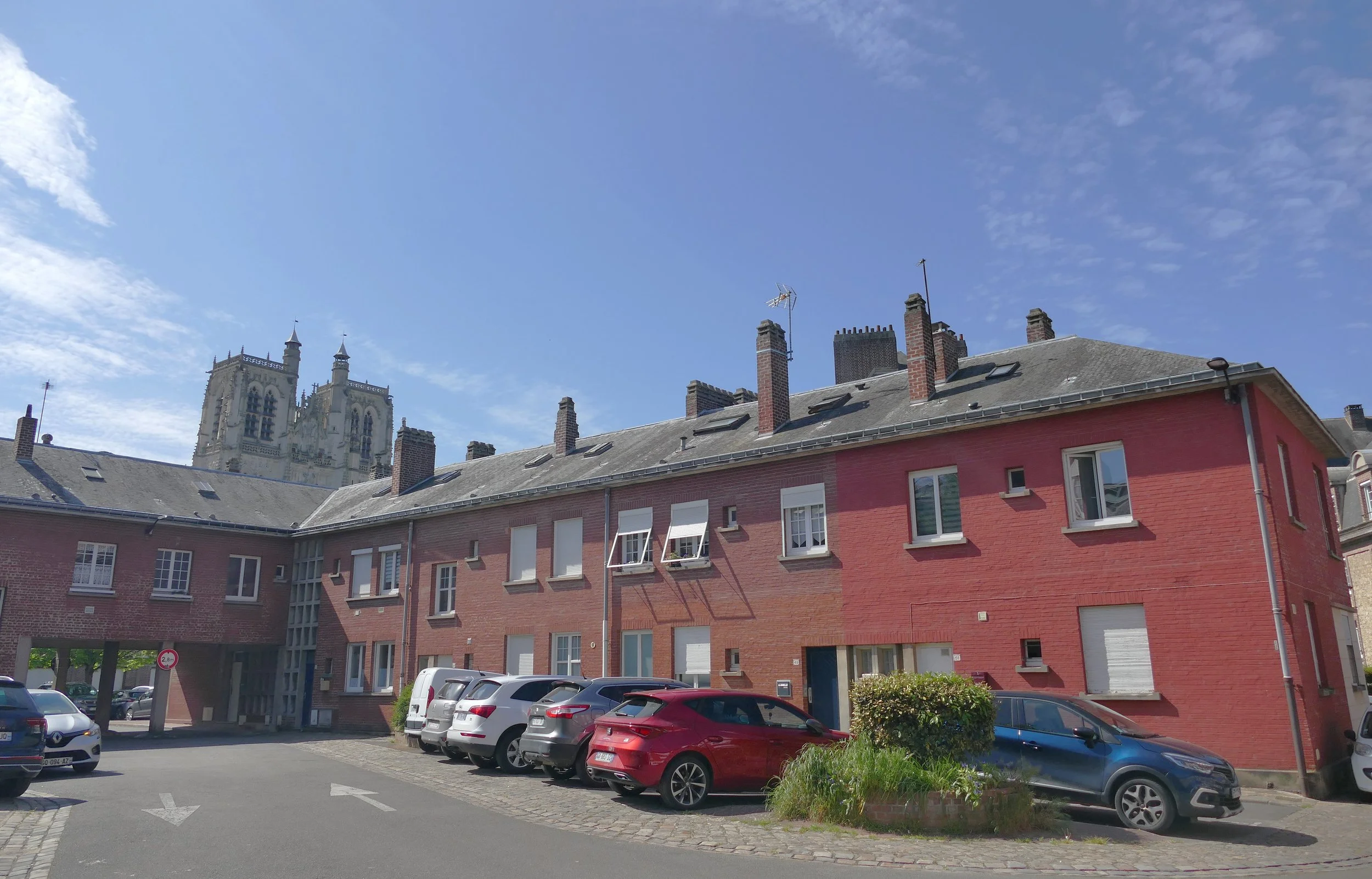
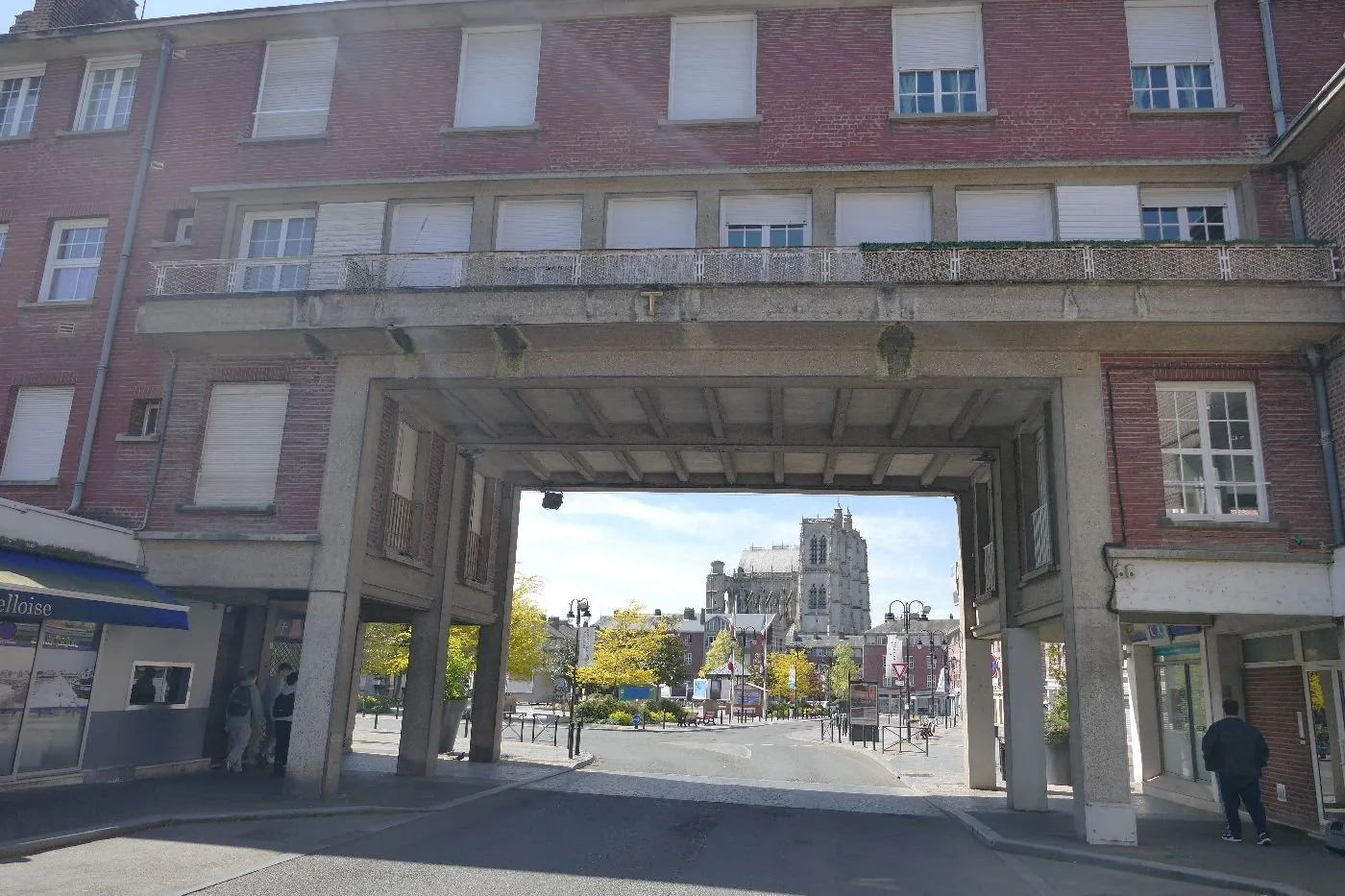
All this was the consequence of post war planning and determination to drastically improve sanitation, hygiene and the passage of people along the streets. . And why? The devastating German bombing of the town centre, during a period of over eight hours in May 1940 as part of the Blitzkrieg which successfully cut off the French armies from allied forces to the north. The town centre was flattened and only St Vulfram survived.
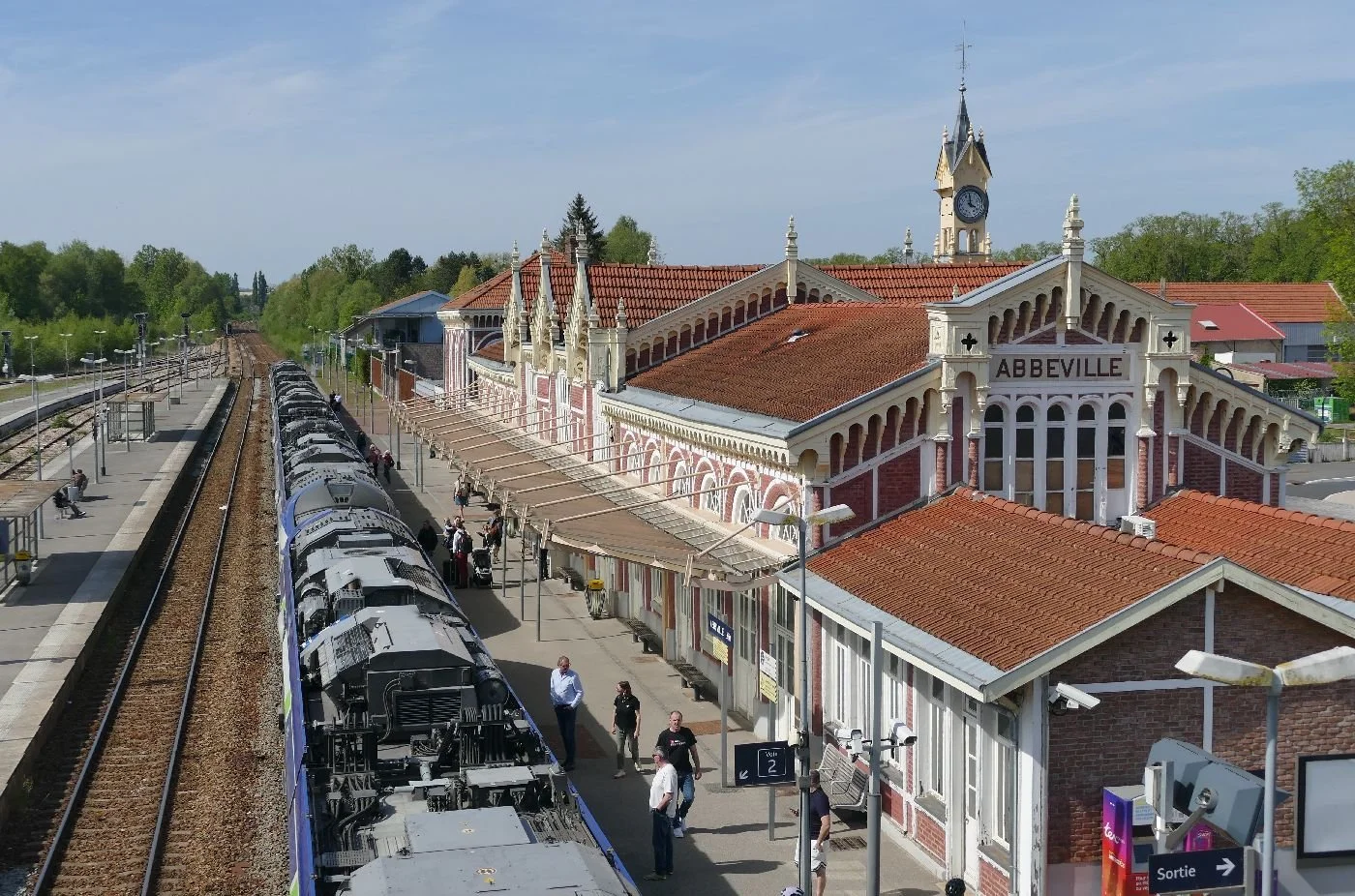
While Abbeville was our base, our main destination was the coast, the Somme estuary itself, and metre gauge heritage railways. A main line train (left) took us to Noyelles, from which the two arms of the tourist railway stretched out, one to the south, to Saint Valery and on to Cayeux sur Mer and, on the northern bank of the estuary, a branch to Le Crotoy.
Alternatively, you could hire a bicycle and cycle along the canal to reach Saint Valery, or switch from gricer to twitcher and find yourself diverted by the nature reserves.
The metre gauge railway arrived in the 1880s to service and encourage the growing tourist industry (Toulouse Lautrec chose Cayeux, Jules Verne Le Crotoy, for example). Goods carried were mainly sugar beet and flint pebbles for use in aggregate; and like so many other railways, they were on their last legs [wheels/rails? Ed] by the 1960s.
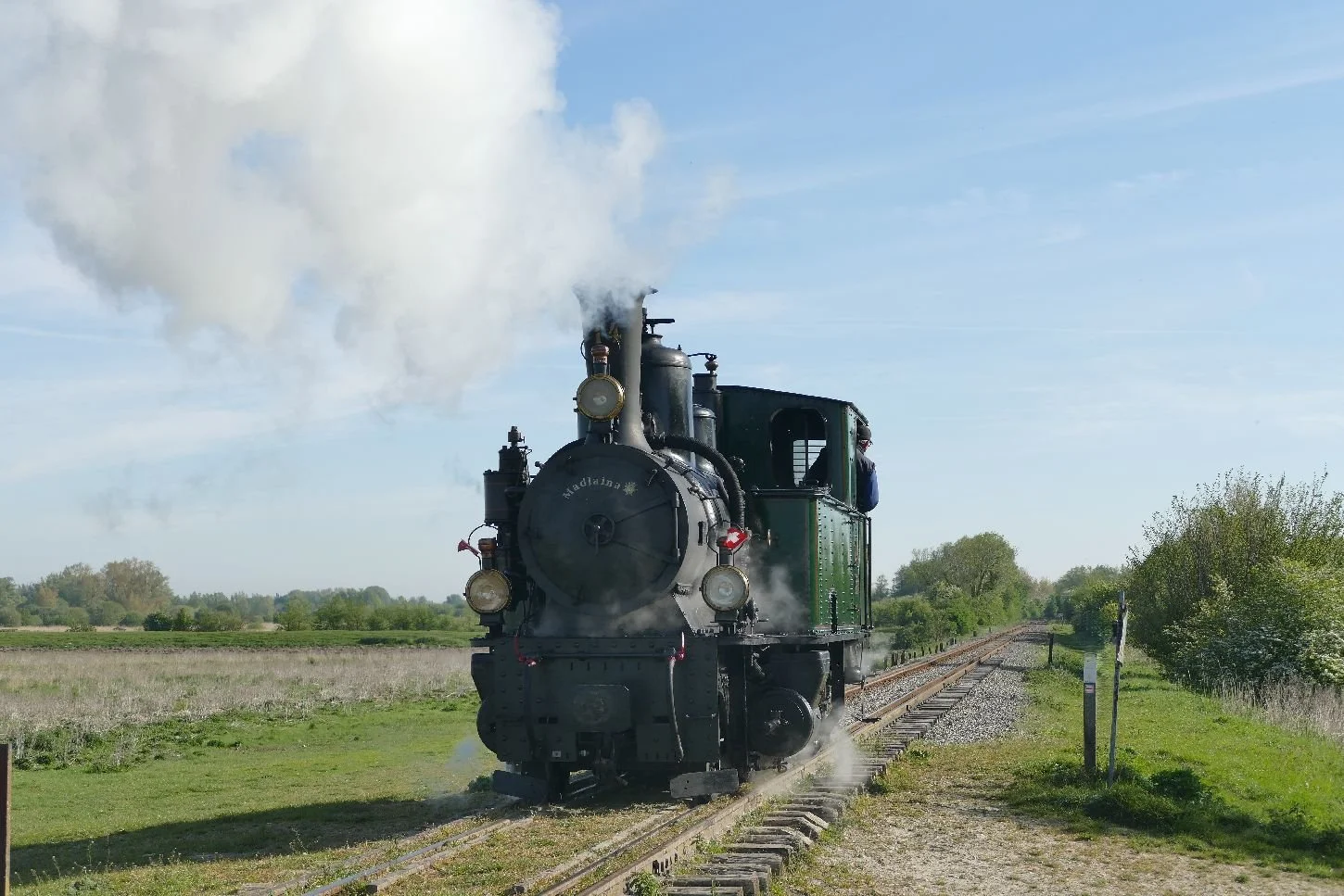
From the 1970s, there was the beginning of some hope for resurrection as a tourist railway. It helped that SNCF (the French railway company) continued very occasional use of the line for freight from Saint Valery; the tracks were dual gauge and could still take the larger, main line wagons.
This visiting Swiss locomotive (right) illustrates the system with one of
its wheels visible on the alternative, inner, metre gauge track.
The
goods traffic ceased in 1989 and the burgeoning not-for-profit organisation was able to operate the line purely as a tourist heritage railway.
Access to European and regional funding allowed a focus on a summer only tourist railway with passenger numbers increasing through the 80s and 90s. In recent years the railway has been carriing about 120,000 to 150,000 passengers a year between April and the autumn.
Our visit coincided with a gala bringing together engines from Belgium, Switzerland and Brittany. It was the first since Covid and was joined by another important local festival (le Festival de l’Oiseau) to celebrate the birds that make this area world renowned. The vast estuary provides breeding grounds for many species and habitat for thousands of migrating birds to rest and feed.
A ride on the railway through the marshes [as if excuses were needed! Ed] gives the opportunity to see all three sorts of egret, plus swans and herons. A walk into the marshes to see the steam engine haul its coaches along the flood protection embankment is altogether different. Hawthorn bushes, resplendent in white, give way to pastures and then to channelled water, before the embankment comes into view. Passing the reed beds we heard a cacophony of sounds, warblers and buntings - singing fit to bust - flitting momentarily into view. And then the two tone call of couple of cuckoos as the train arrives, white smoke drifting out across the marsh, and drowning out their sound, as it trundles past.
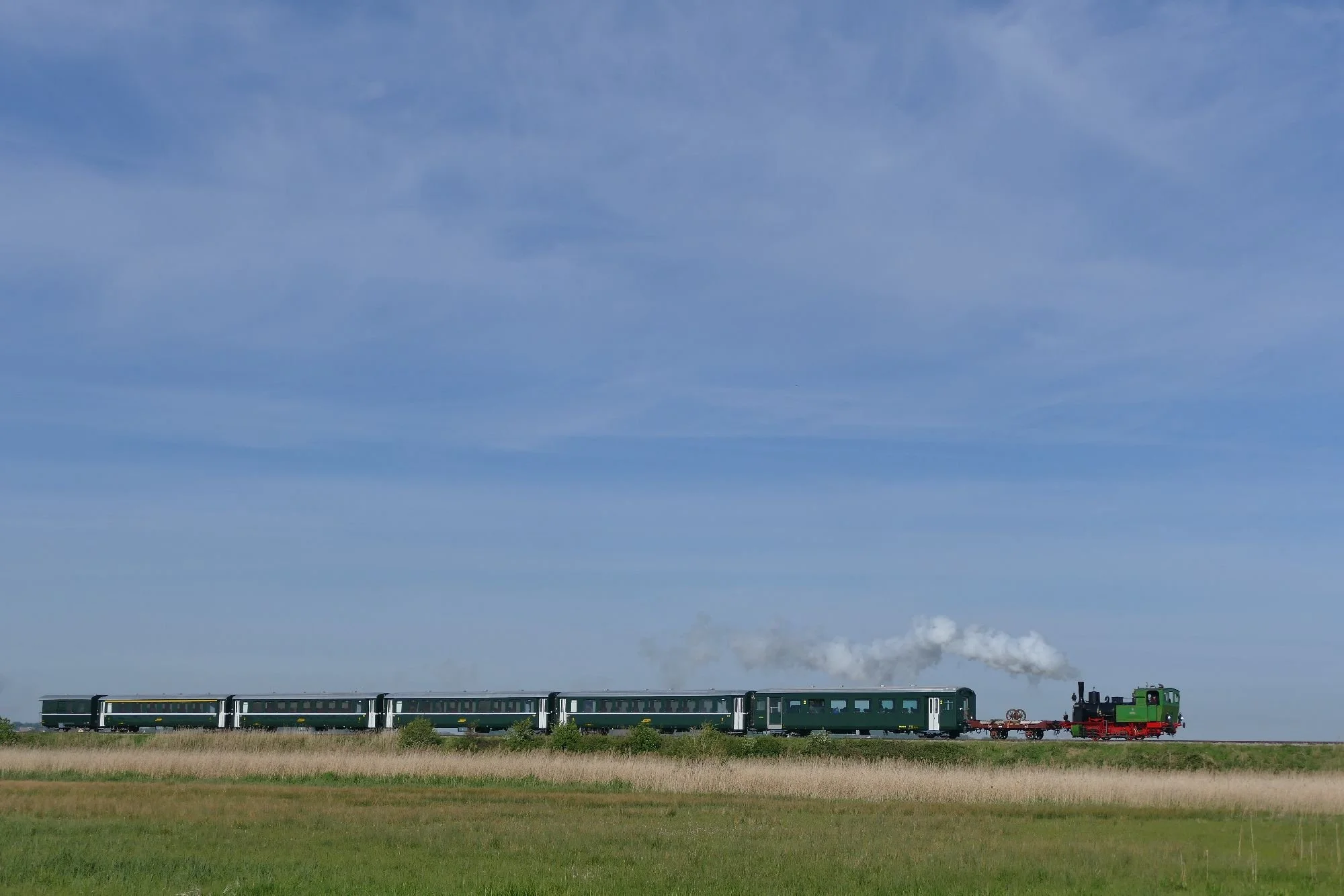
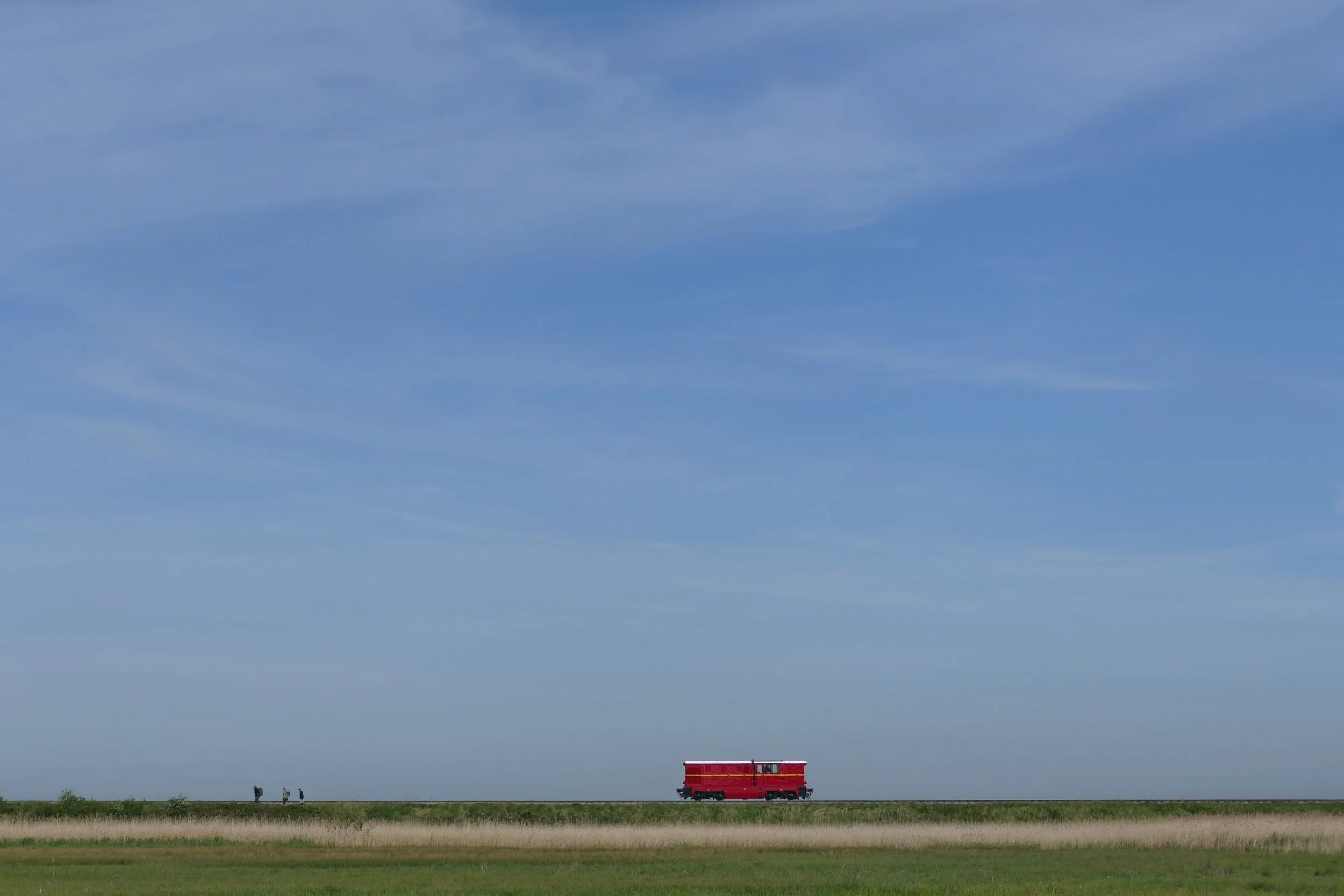
On crossing the bridge and sluice gates into Saint Valery, we find volunteers in yellow t-shirts doing a valiant task in guiding crowds and keeping people free from mishap. The distinctive yellow shirts at all the stations soon provided a familiar sight.
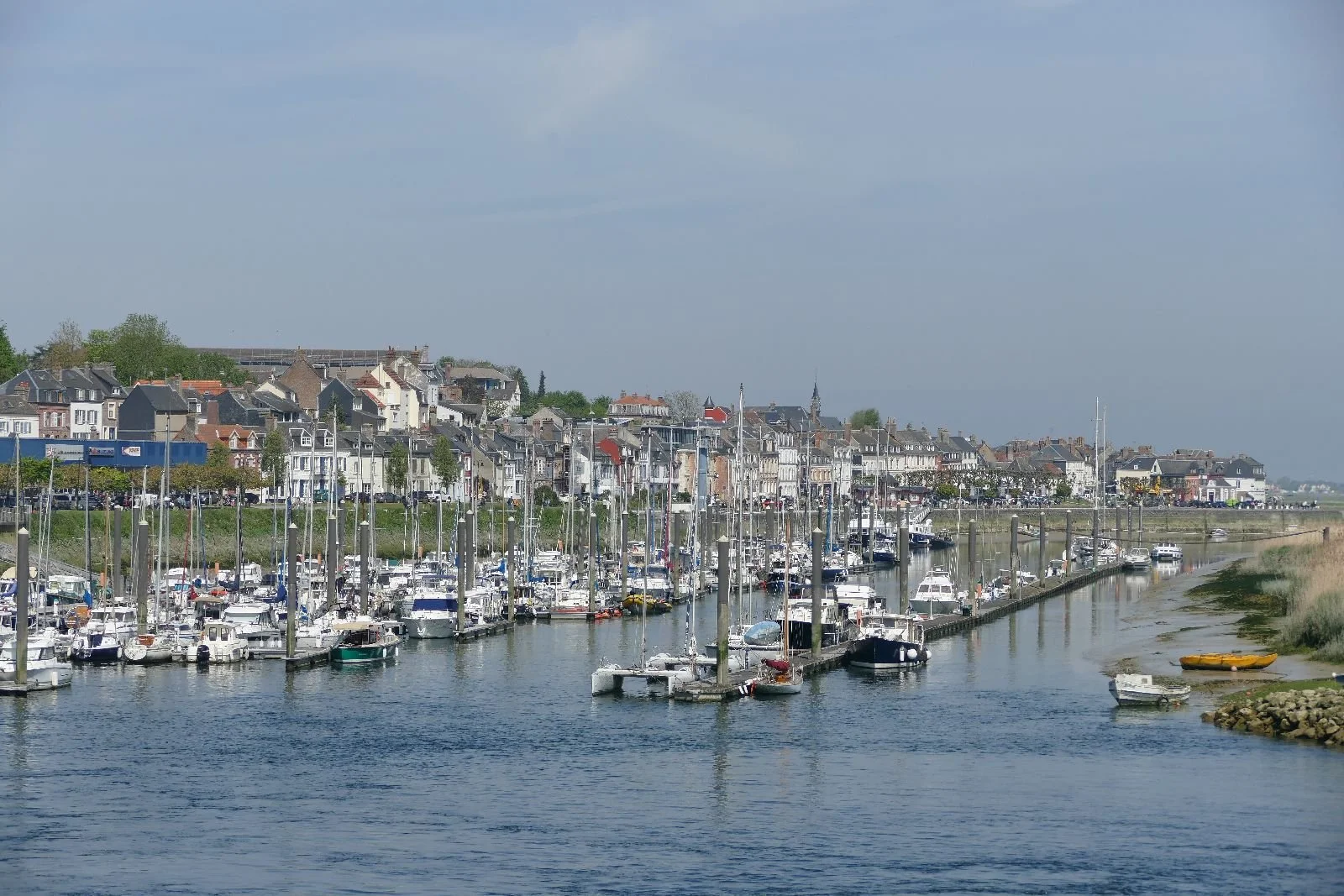
Around the station, stalls were set up to sell us local fare. From the port where William left to conquer Britain, dozens of berthed up yachts await their owners in the summer months (left). Le Crotoy remains visible in the haze across the estuary.
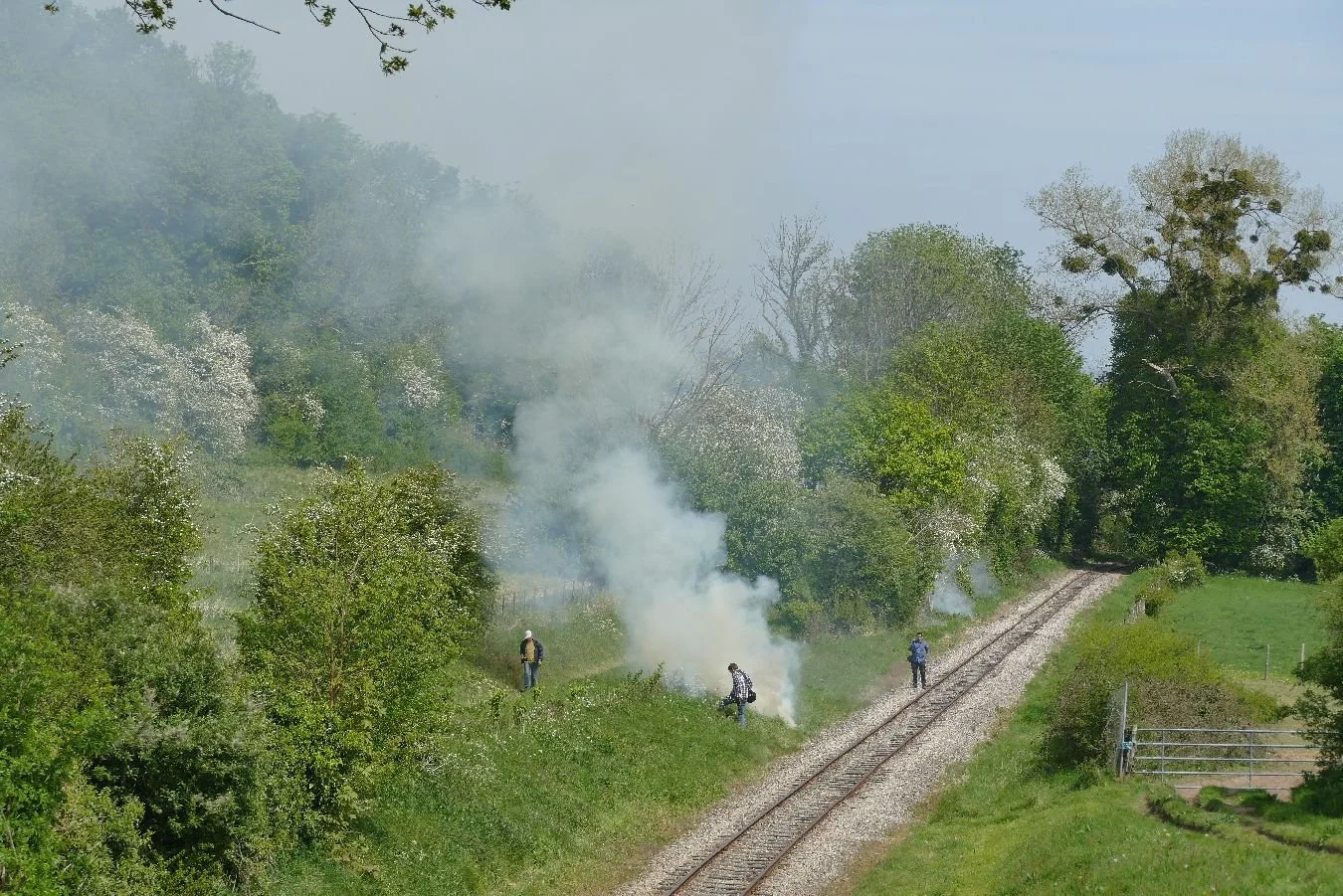
For us to see the ocean, or just the English Channel, required taking another train on to Cayeux-sur-Mer. The engine needed all its fire to hammer up the bank beyond the station, hauling its carriages on to the plateau above the estuary and spitting cinders in the effort. These set light to the trackside grass banks, but fortunately were quickly extinguished by some willing volunteers.
In our childhood, railway embankments in the UK were always clear of trees and here we saw the reason why. Leaves on the line were far less of a problem then, as passing locomotives were regularly the cause of lineside fires and kept the vegetation short.
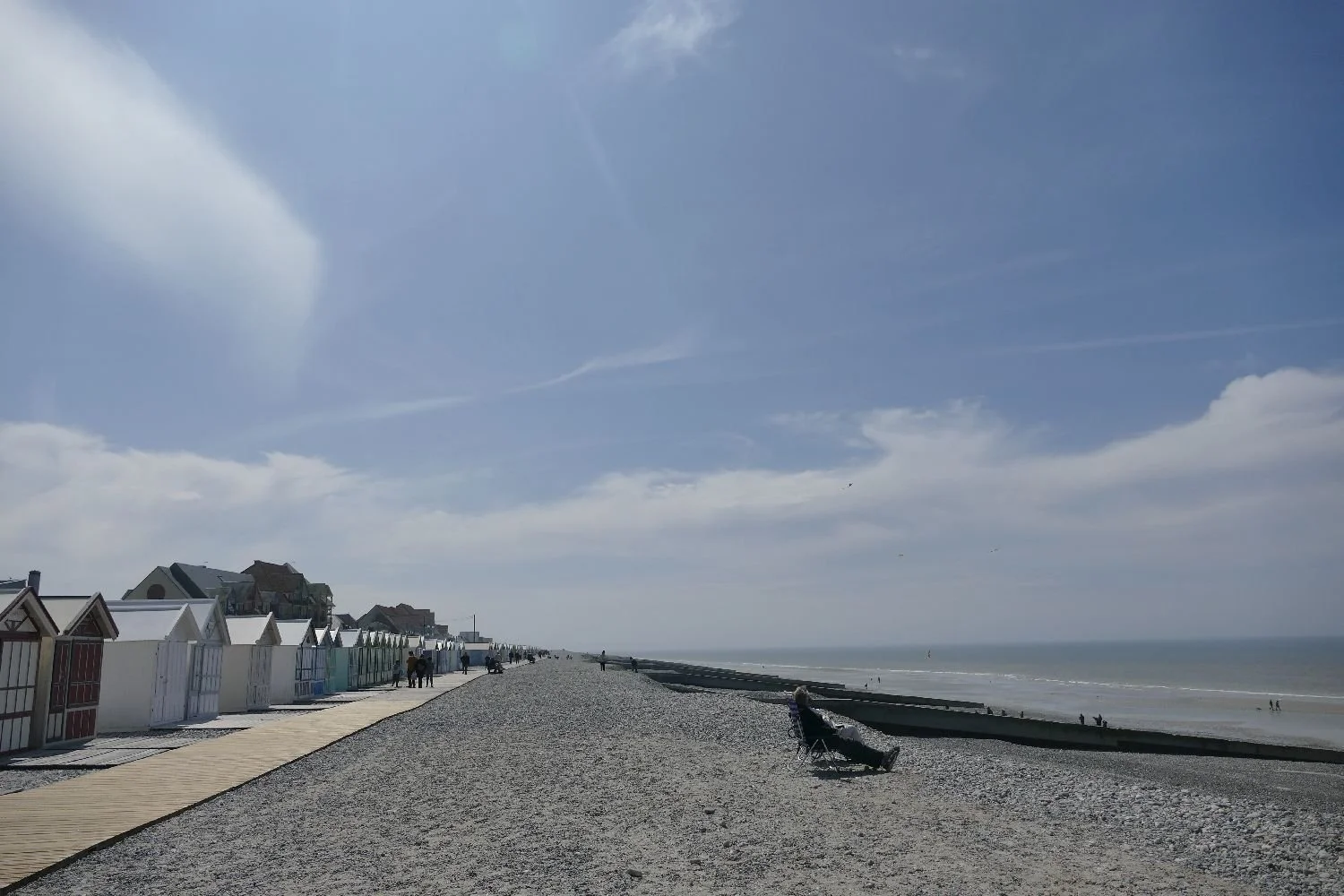
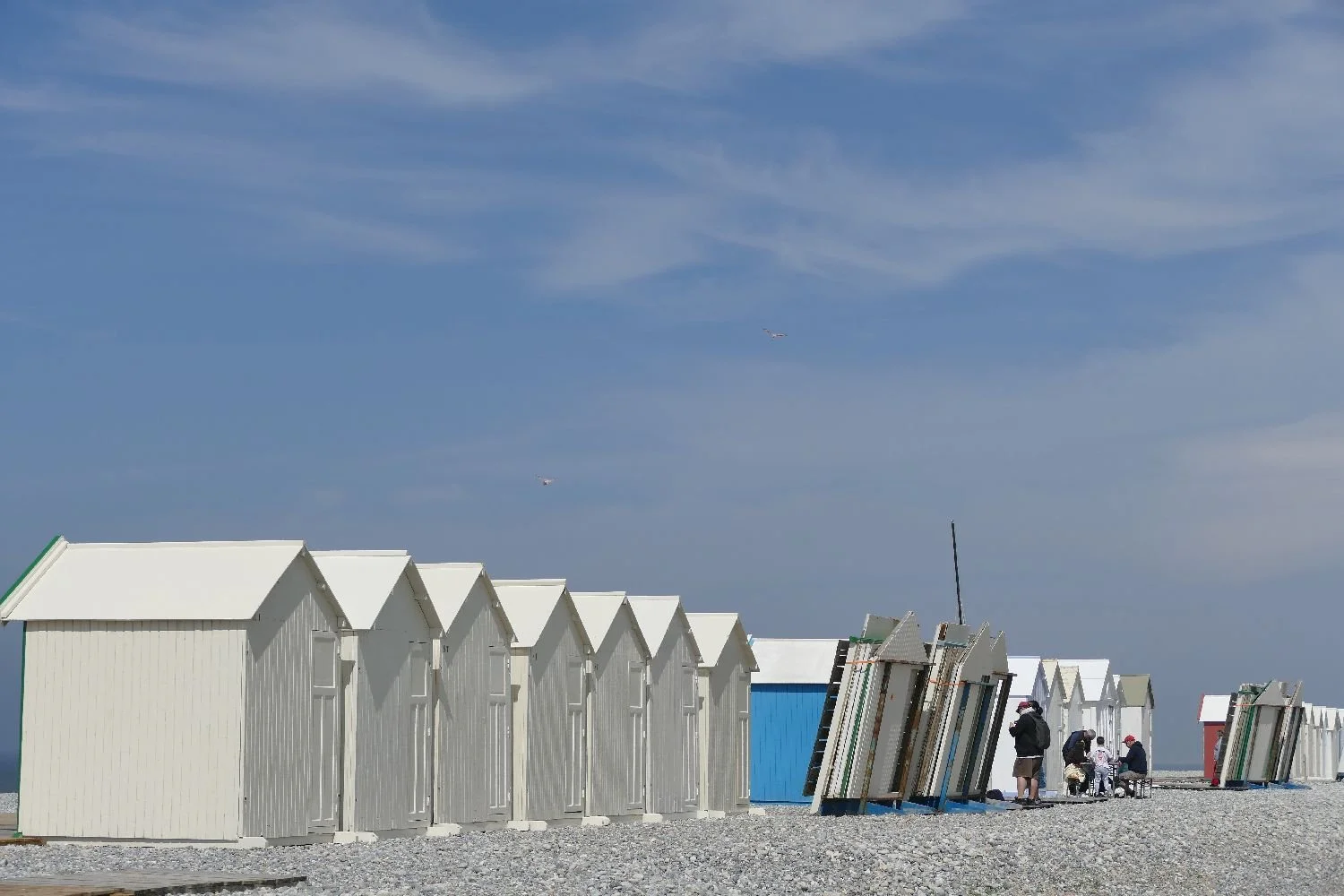
And finally we reached the sea, the lines of bathing huts , a proper beach, a few hardy souls already bathing. For us, an ice cream, the time to stand and stare, and look forward to the summer, while considering the big question:
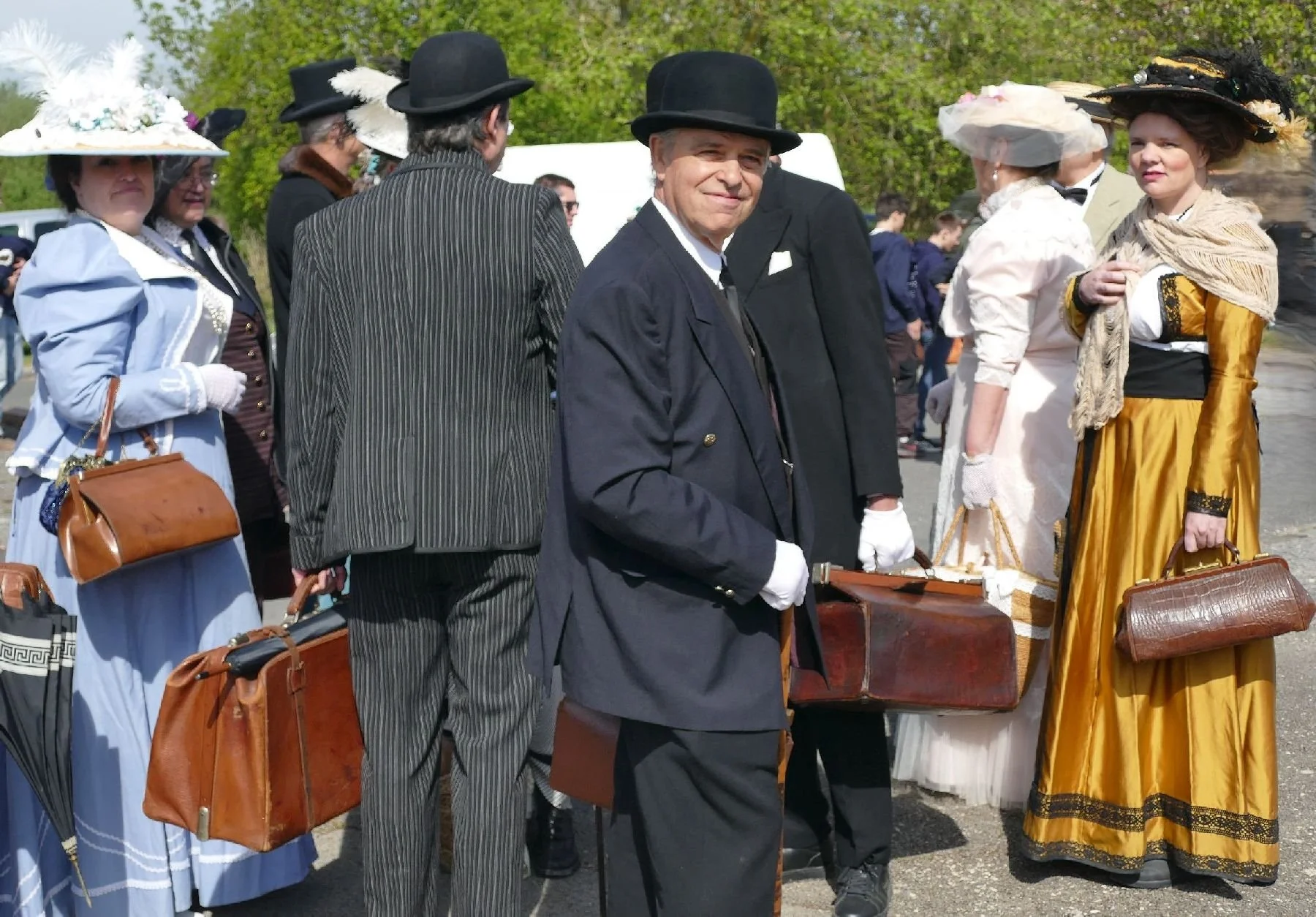
What is the appropriate wear for a ride on a heritage railway? Now, where’s my bowler?