Confused of Kingston
How many towns in the world are called Kingston? Wikipedia (https://en.wikipedia.org/wiki/List_of_places_called_Kingston) suggests that there are quite a lot, even if you ignore the settlements which are defined as hamlets, villages or suburbs. The impact of a largely male British monarchy and the enormity of the British Empire ensure that Kingston is a fairly common name throughout the English speaking world. ‘English’ in the geographical or political sense may also be significant: Wiki’s list for Scotland only records the name against a hamlet, a village and a district of Glasgow and the website has no listing at all for Wales. The fact that the letter ‘K’ does not exist in the Welsh alphabet may also be a factor.
This year, Terroir visited both Kingston upon Hull (for a Coldplay gig - yes, really) and Kingston-upon-Thames; or maybe it was Kingston upon Thames or Kingston-on-Thames. All these monikers have been assigned to this confusing town and we believe it is currently using the name Kingston upon Thames, a compromise between grandeur and hyphenation.
The reason for the trip to Kingston-up-river-from-London was to complete a further section of the London Loop which was obviously invented in Kingston, as its full name is the London Outer Orbital Path (no hyphenation). “The London Outer Orbital Path, or LOOP, almost completely encircles Greater London. Nearly 150 miles are split into 24 sections between Erith station [east London, south of the Thames} and Purfleet [east London, north of the river].’ (https://tfl.gov.uk/modes/walking/loop-walk). Of course the Loop (Sorry LOOP) crosses the Thames to the west of London at, wait for it, Kingston upon Thames.
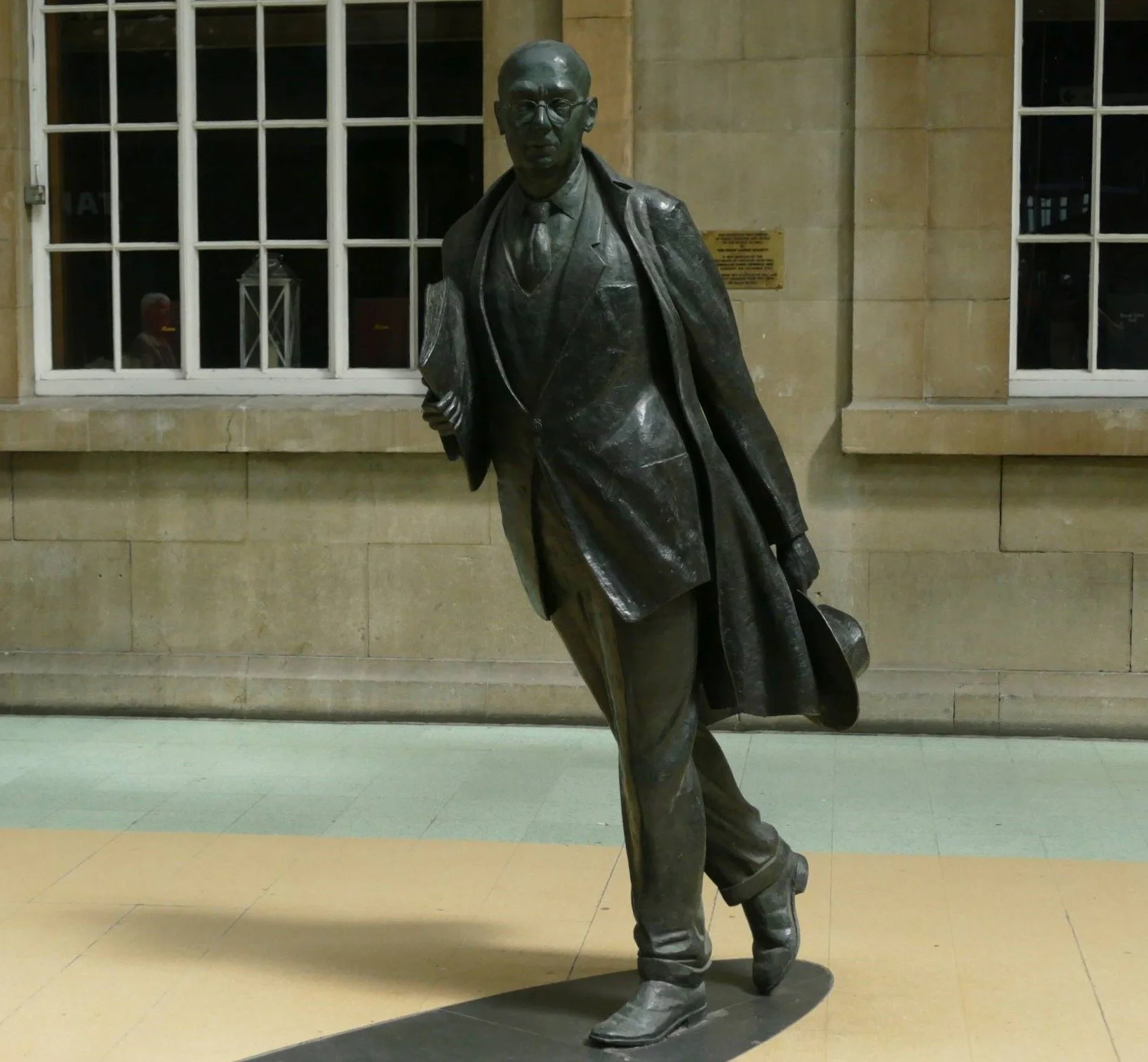
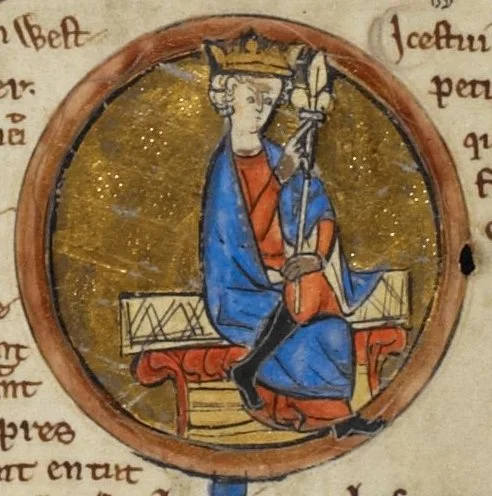
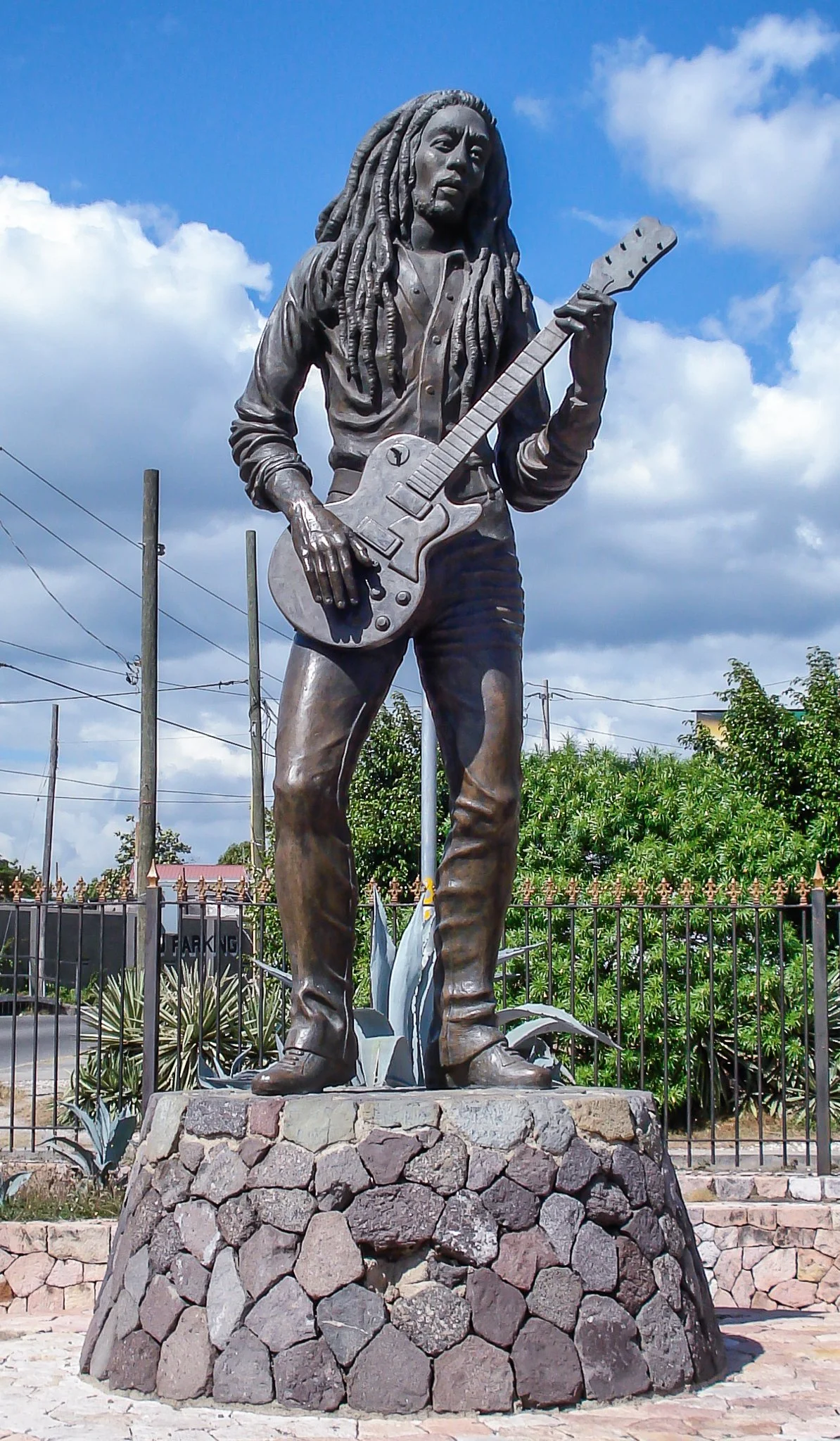
King Egbert: By Unknown author - http://www.bl.uk/manuscripts/FullDisplay.aspx?ref=Royal_MS_14_B_V, Public Domain, https://commons.wikimedia.org/w/index.php?curid=28008709
Bob Marley: By Avda - Own work, CC BY-SA 3.0, https://commons.wikimedia.org/w/index.php?curid=24942405
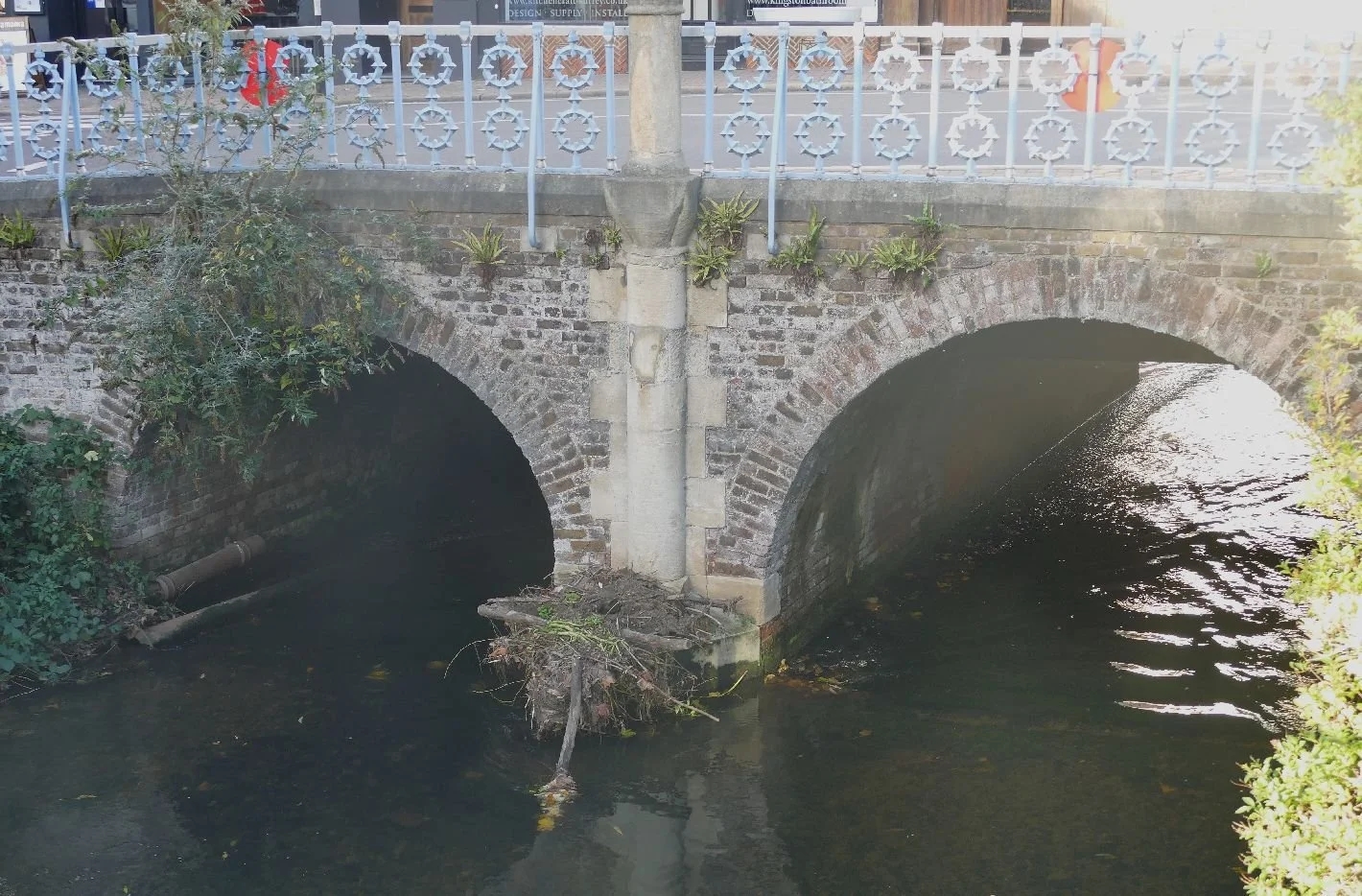
Kingston upon Thames means different things to different people. To part of the Terroir South team it means standing on Kingston Bridge waiting for Bradley Wiggins to race past (literally) during the 2012 Olympics. To many of our friends, ‘going to Kingston’ means failure in local shopping venues so heading to the Kingston shops (including a famous department store) to find that perfect outfit. Meanwhile, thousands of students sign up at Kingston University while John Everett Millais based his picture of Ophelia on (or rather in) Kingston’s other water way, the Hogsmill.
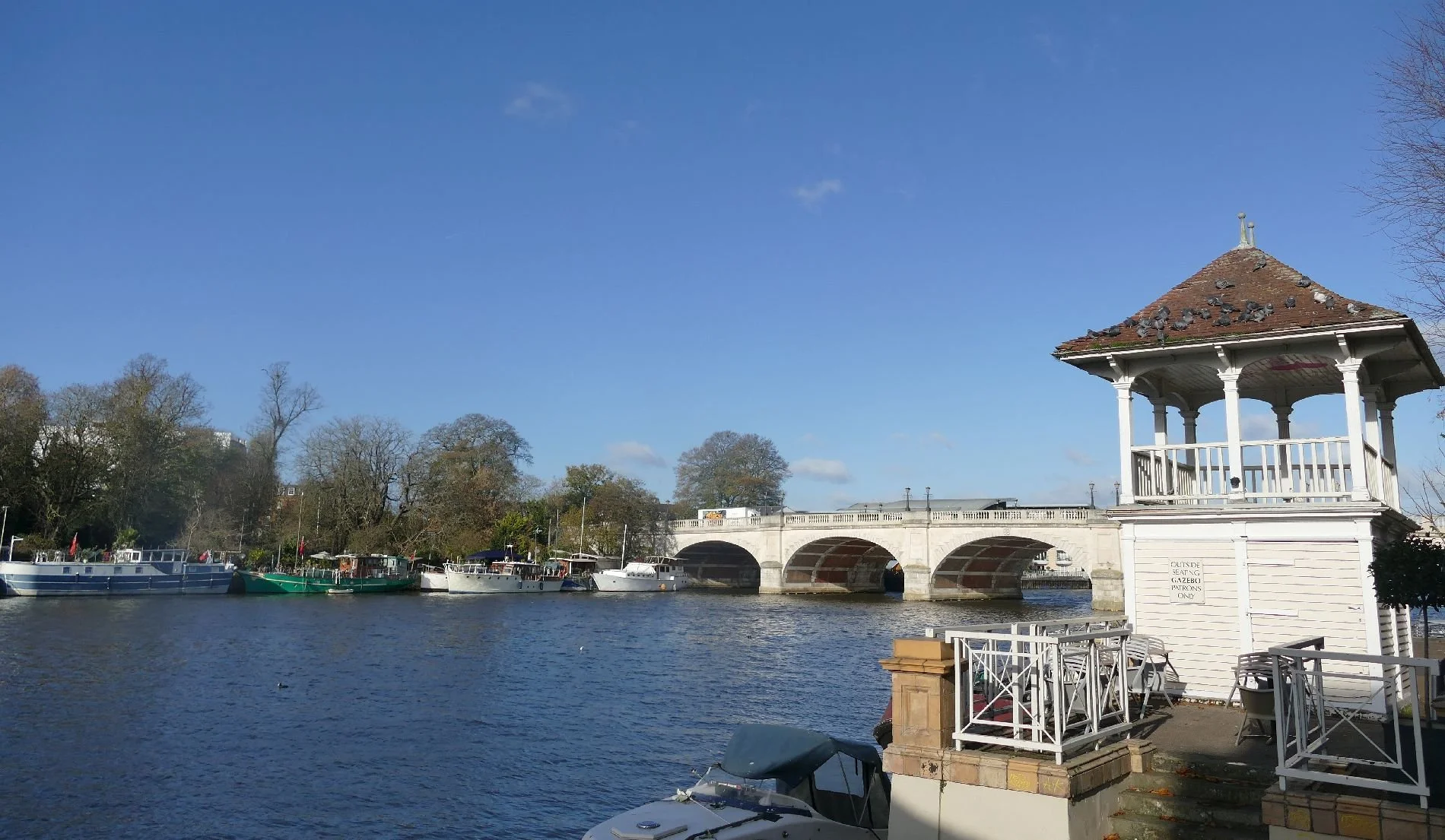
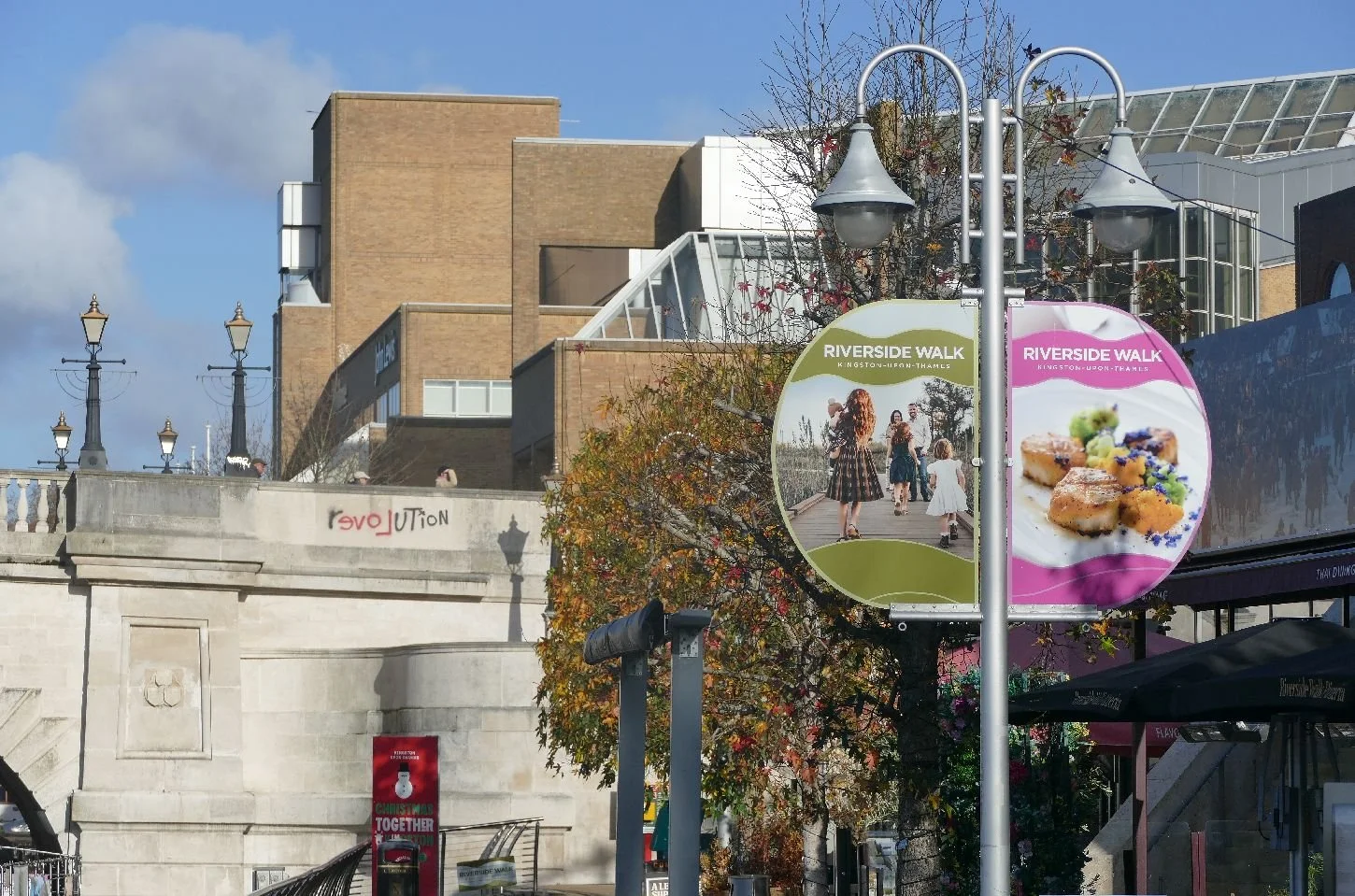
This all seems pretty clear cut, but controversy and confusion have a long history in the town. In 838, King Egbert (pictured above) was in charge of what was then a border town between Wessex (who knew that Wessex spread so far east?) and the mighty, midland territory of Mercia.
By the tenth century Mercia’s King Athelstan had combined the two and had, apparently, created England (https://en.wikipedia.org/wiki/Kingston_upon_Thames). As a result, “According to the Anglo-Saxon Chronicle, two tenth-century kings were consecrated in Kingston: Æthelstan (925), and Æthelred the Unready (978).” Clear enough, but further coronation evidence is “less substantial”. Perhaps things would have been easier if there has been more diversity in royal initials (no wonder explanatory suffixes were so necessary). Apparently the uncertainty relates to Edward the Elder (902), Edmund I (939), Eadred (946), Eadwig (956), Edgar the Peaceful (c. 960) and Edward the Martyr (975).”
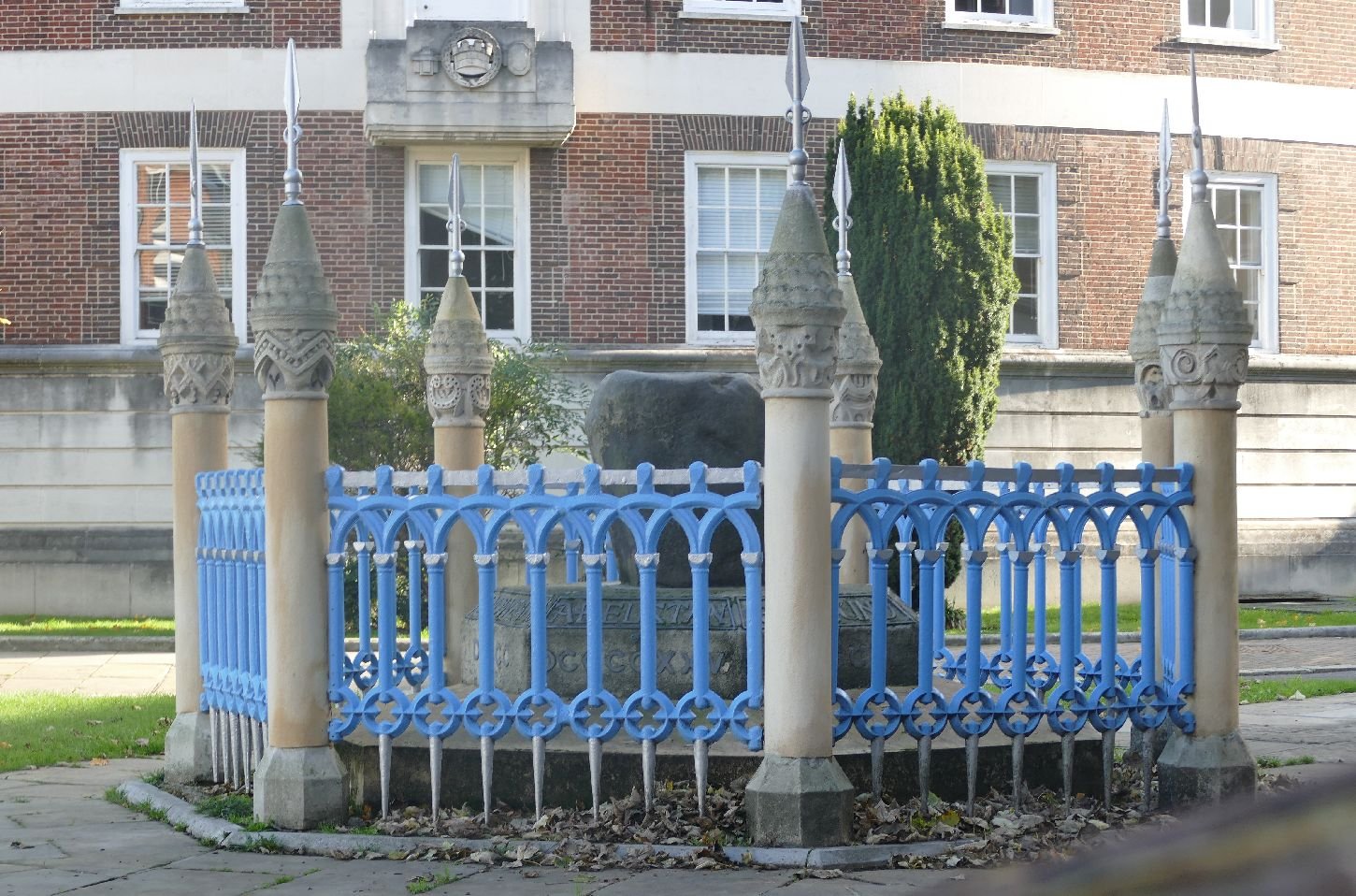
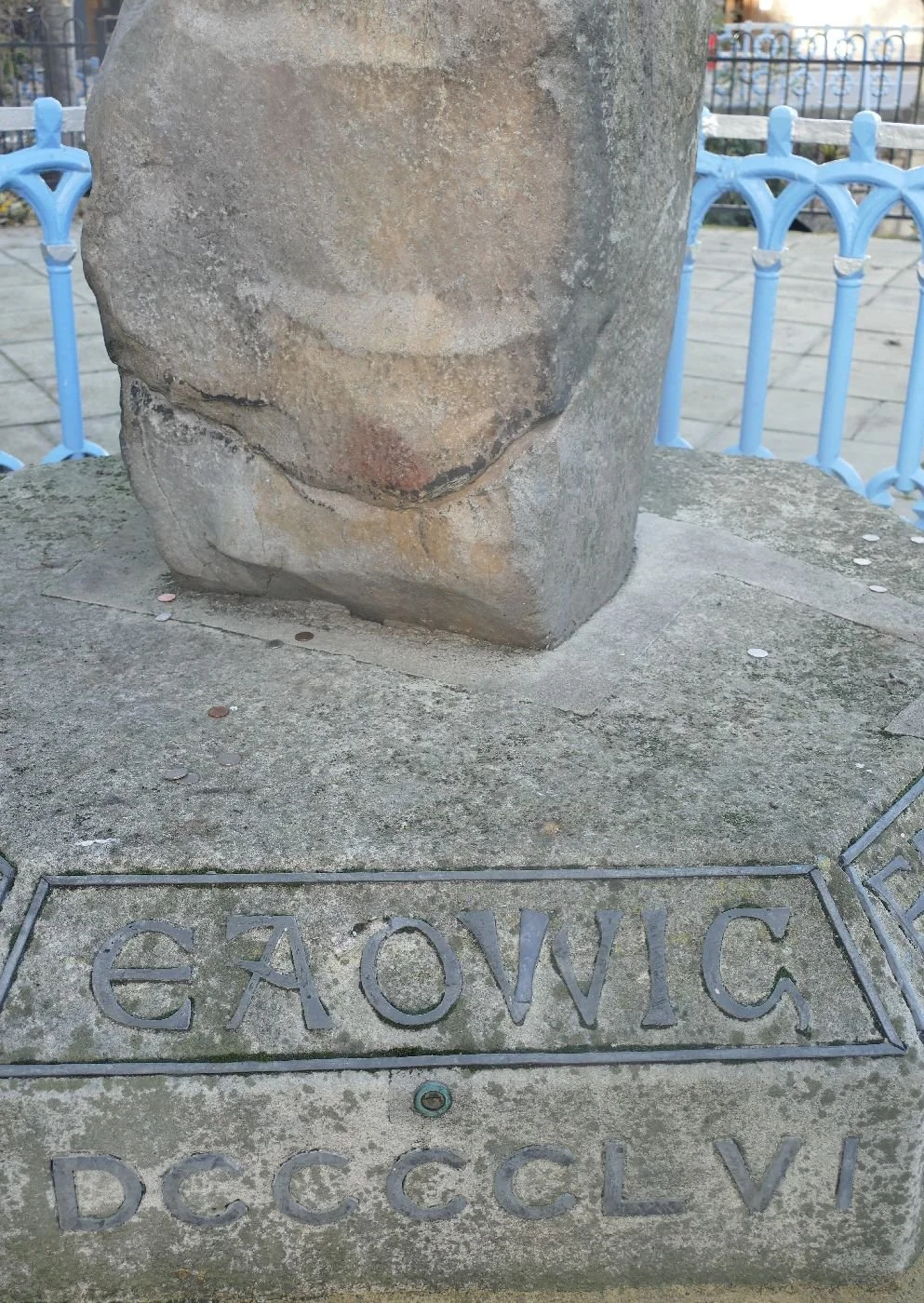
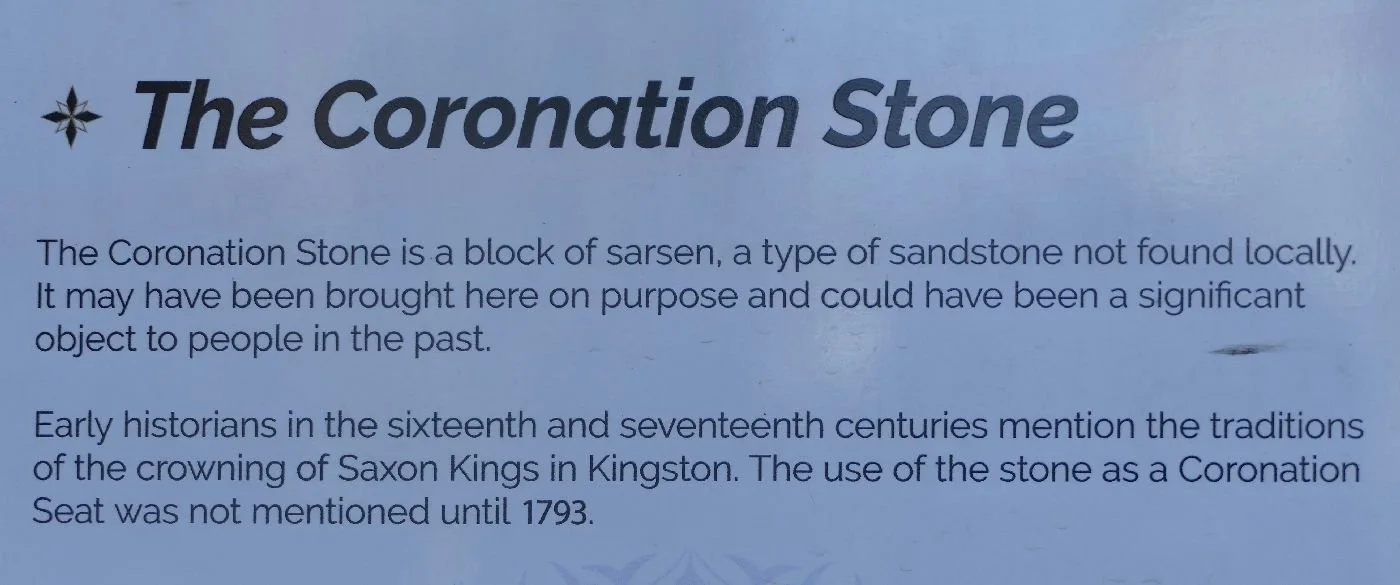
Today, Kingston’s ‘Coronation stone’ provides an impressive (if somewhat surprisingly brightly coloured) focal point between the town’s Guildhall and the Hogsmill River. It may not be an actual coronation stone and may not be as old as the Saxon kings, but it does what Kingston has been doing for centuries – combining old and new in a constant evolution of form and function.
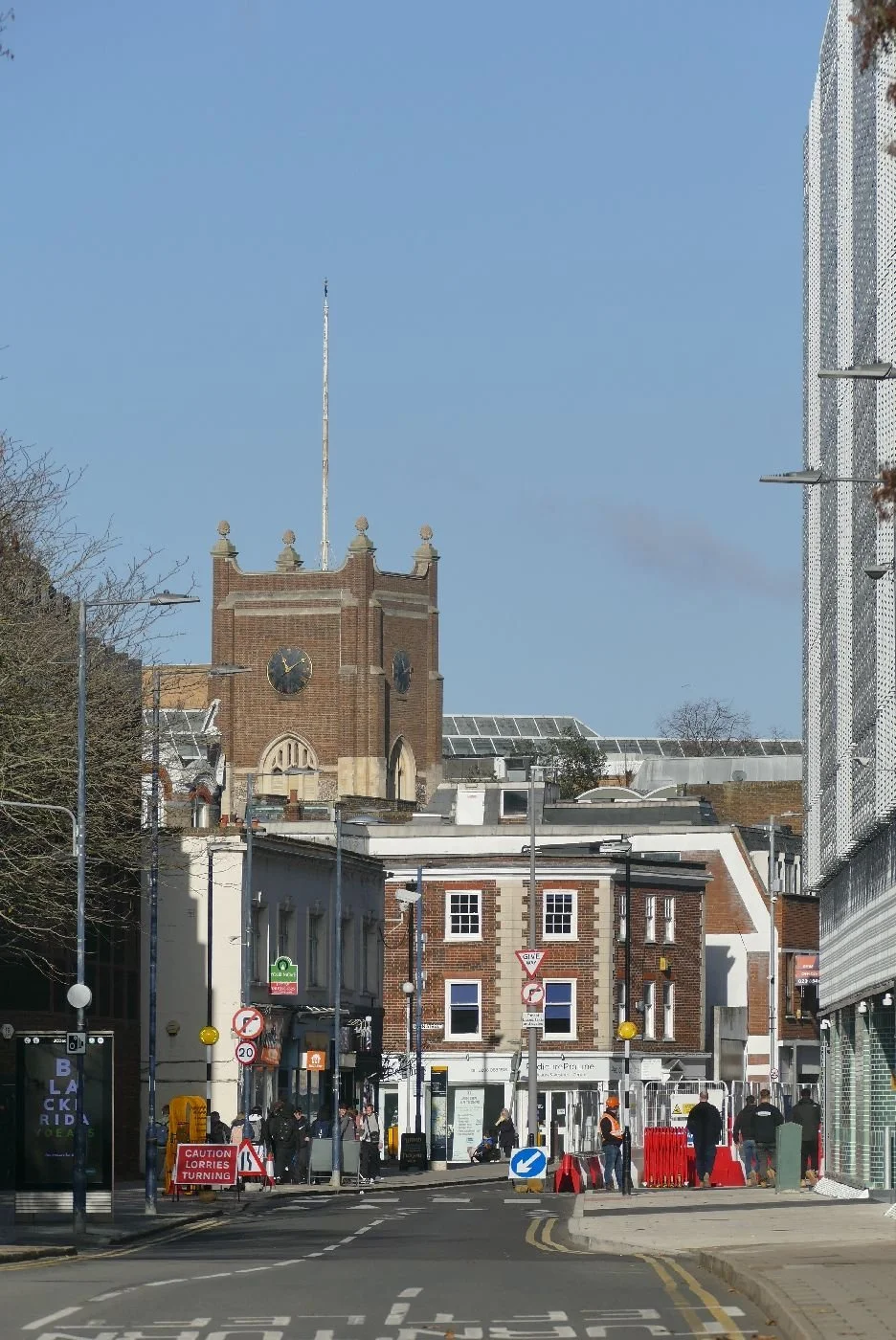
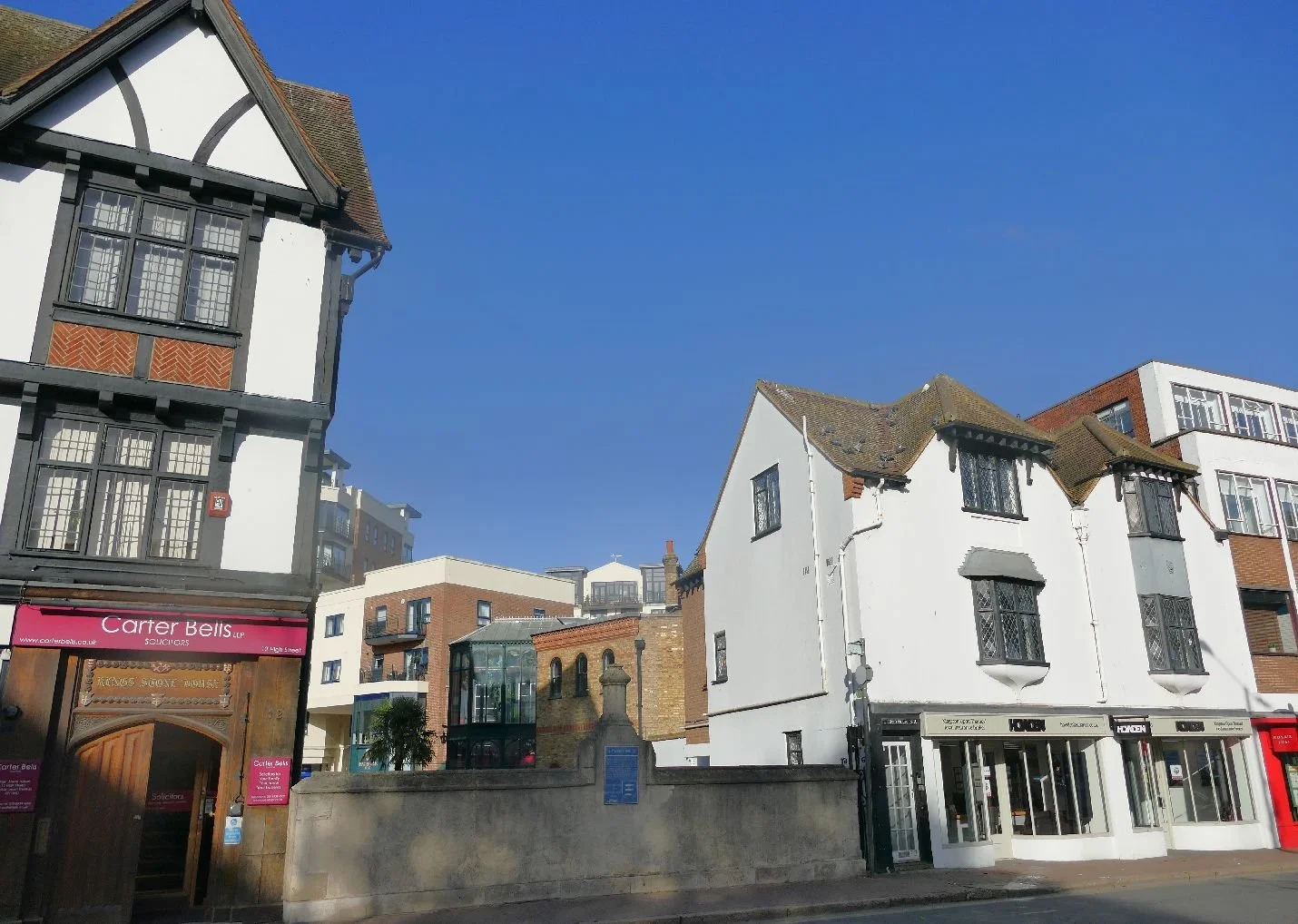
Bringing confusion right up to date means that Kingston’s best known bureaucratic oddity has finally been obliterated. For years, Kingston upon Thames was famous for being the County Town located outside it’s county boundaries. According to Wkipedia, Kingston has been a royal manor, a parish, a borough (since 1441) and became a formal Municipal Borough in 1836. Known for many years as a Royal Borough, King George finally formalised even that title in 1927.
Kingston’s role as a County Town started in 1893 when Surrey County Council moved HQ from Newington to a new and very grand County Hall in Penrhyn Road, Kingston. In 1965, the town became part of the London Borough of Kingston upon Thames (no hyphens) but, despite being located in London, the Penrhyn Road premises remained the focus of all things Surrey. Not surprising then that, for the next 35 years, Surrey’s County Hall’s location became a quiz question until the Council finally decided to vacate the imposing, Victorian, Grade II listed building for slightly less grandiose premises in Reigate - yes, in Surrey- but almost as far as you can get from Kingston, without being, once again, out of County. Welcome to the Far East.
As a post script, Surrey County Council itself will become history in April 2027, with the creation of two unitary Councils called, imaginatively, East Surrey and West Surrey.
Currently, the Kingston County Hall is under scaffolding for convertion into “high quality, residential led, mixed used[sic] development”. If you want to live in the land of the Saxon Kings, which your friends will mistake for Yorkshire or Jamaica, then you can register your interest in advance. Confusion is included at no extra cost.