What does the word ‘Border’ mean to you?
To the residents of Hay on Wye, the historic concept of a border as a line between two significantly different spaces is very familiar. Even today (or perhaps especially today) many English are still asking the question, ‘Is Hay on Wye in England or Wales?’ it is, of course, in Wales (just) but the fact that both town and river are known by their English names may account for some of the confusion.
Terroir has the feeling that the Romans were probably responsible for starting the English/Wales border hype, but the Normans were particularly hungry for the Welsh princedoms and fortified the border with numerous castles from which to launch their invasions.
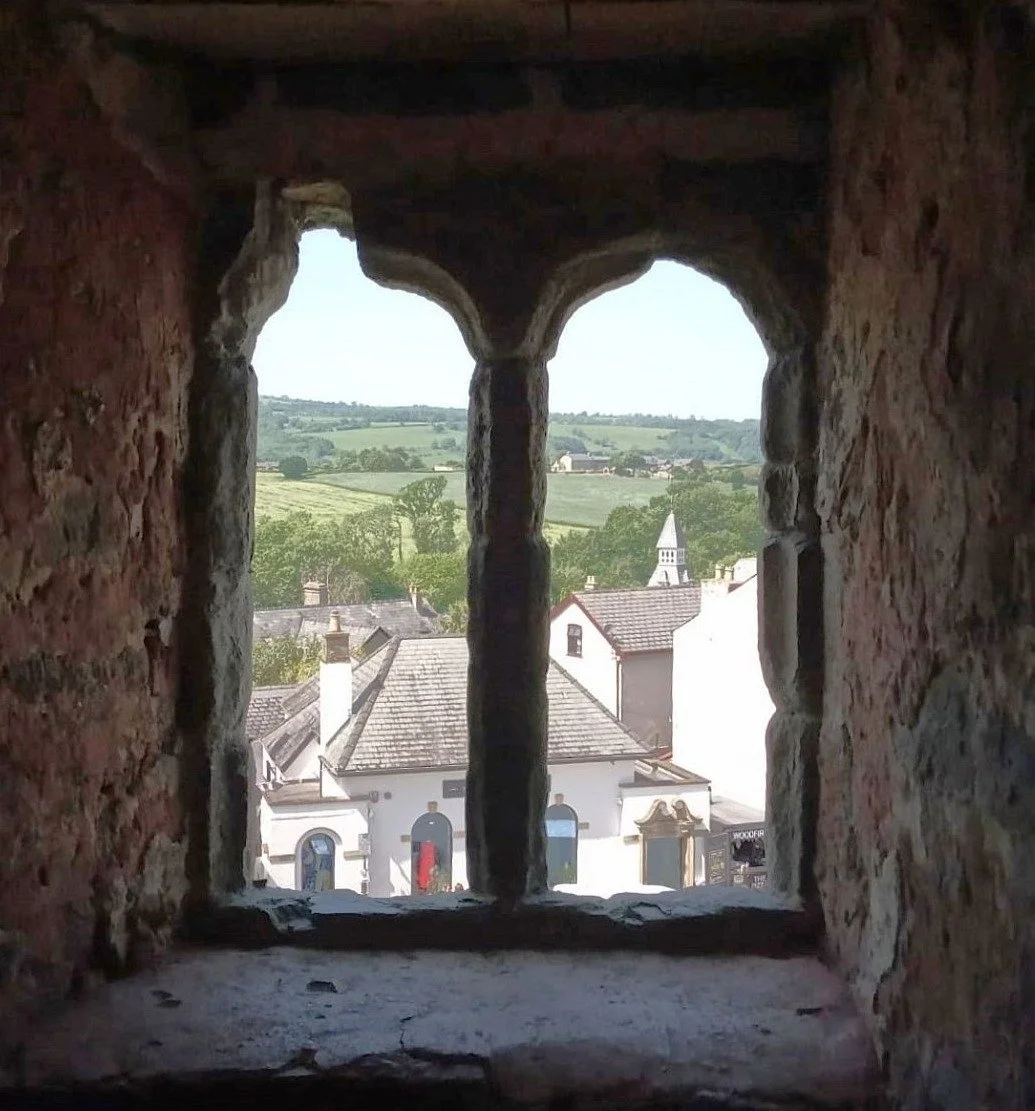
The first Castle at Hay seems to have been built sometime in the 12th century - perhaps as early as 1100 - but this was later abandoned and a new castle built on higher ground. This edifice saw considerable action against the Welsh and also in the Wars of the Roses. (en.wikipedia.org/wiki/Hay_castle)
Right: looking out from Hay Castle across the town to the hills of the Welsh border landscape beyond
This summer the Hay Castle Trust is presenting an exhibition entitled “Borderlands: From the Welsh Borders to Antarctica: twenty two contemporary artists explore territory, identity and belonging”. The petty response (from Terroir) was ‘does a good title really have two colons and a slightly dodgy supply of capital letters?’. The serious response from a companion was, ‘I don’t like borders’. Indeed. Should we celebrate things which divide us?
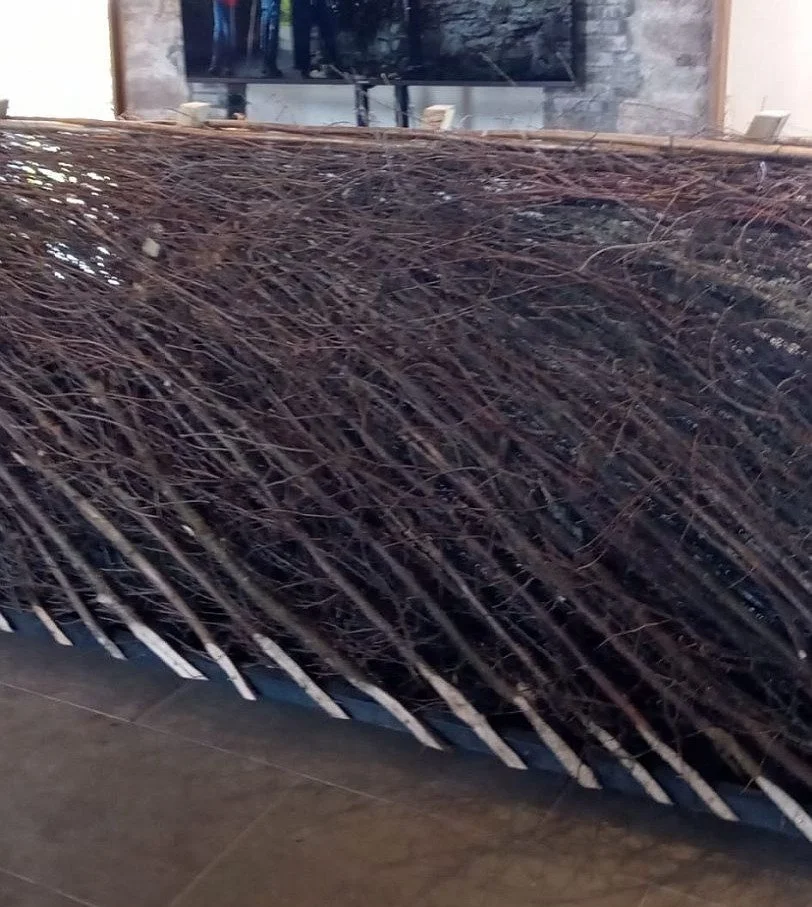
This Image (left) is of one of the Borderland exhibits (and apologies for the technically appalling photograph and lack of reference to the artist). As a display piece of rural crafts it is arresting and impressive, but it stands alone with no context. It is a barrier? Is it part of a pastoral landscape with a use and a social history? To Terroir it appeared aggressive and confrontational, not a border or boundary that was in any way comfortable. No, this is not a comfortable border.
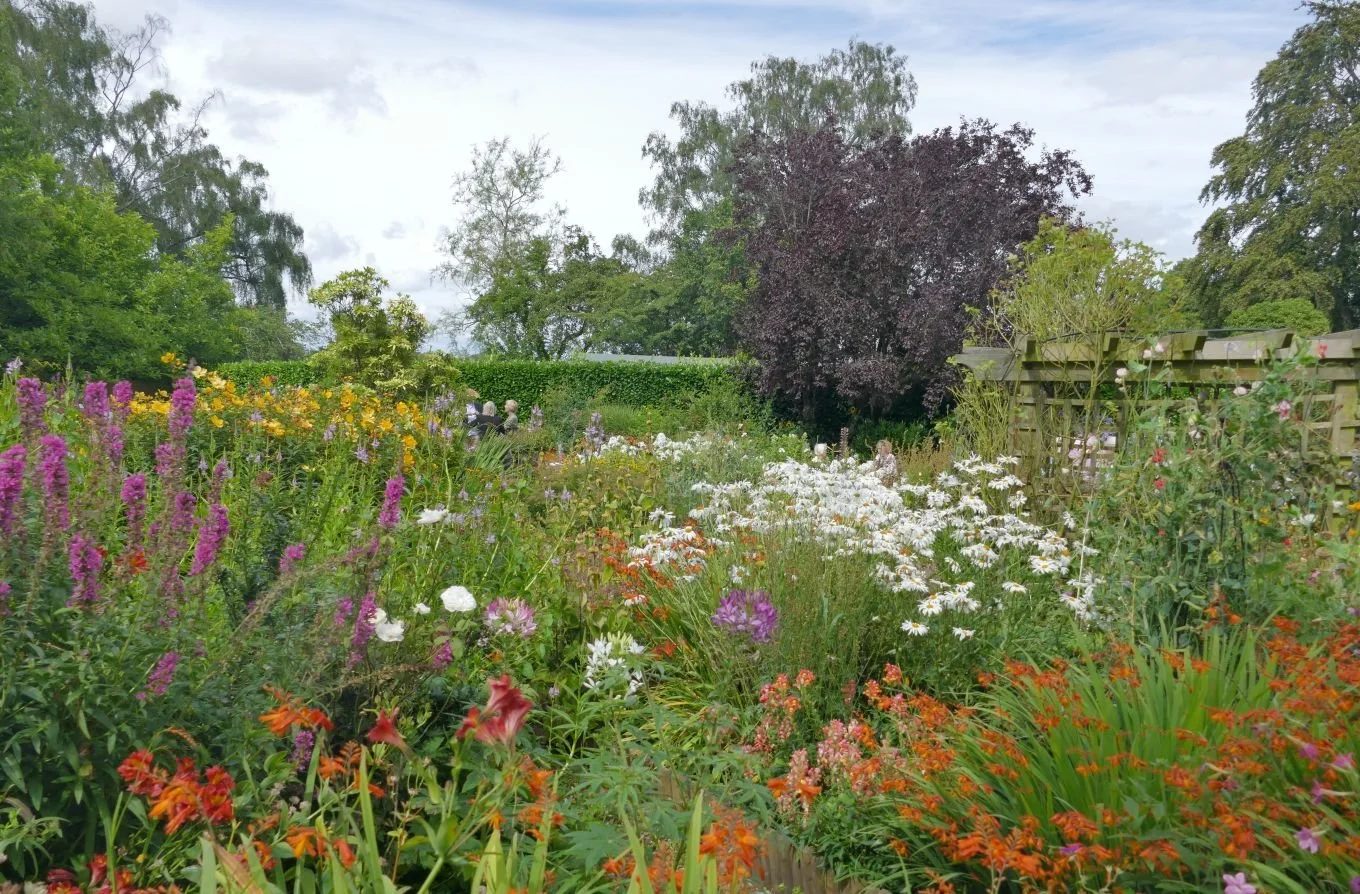
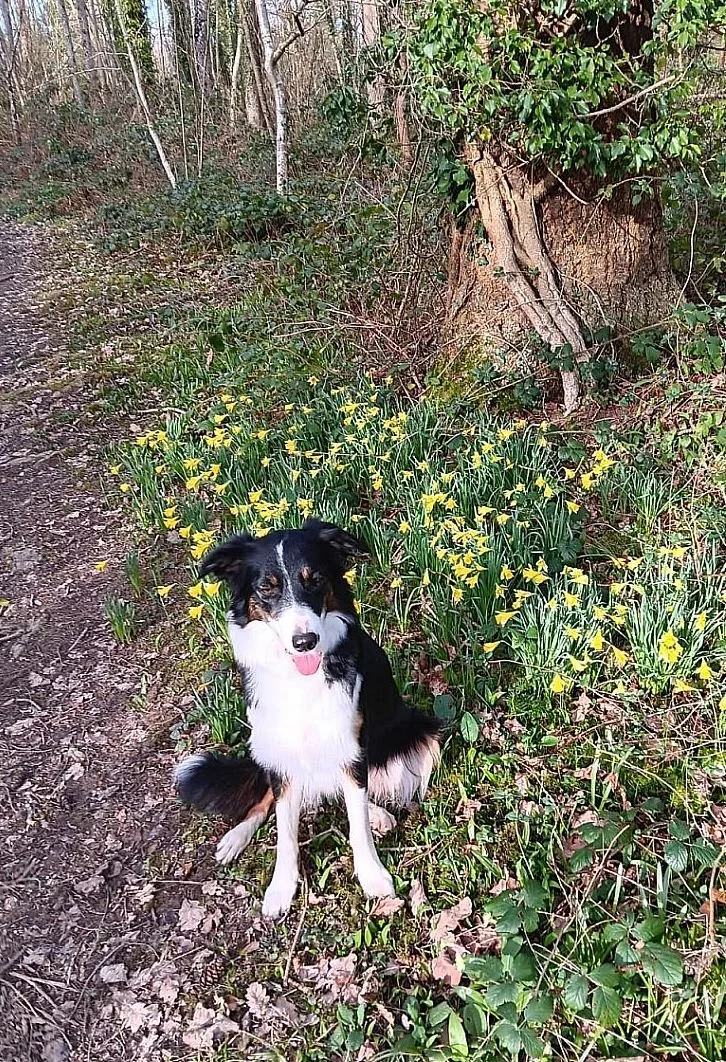
But borders don’t have to be political or even geographical in the traditional sense, The online Oxford English Dictionary definitions of the word includes flower borders, the decorative border on a piece of fabric, a type of dog, sheep or moth, a funeral border on notepaper and an exterior pile on a coffer dam. So no, borders don’t always have to be difficult or depressing.
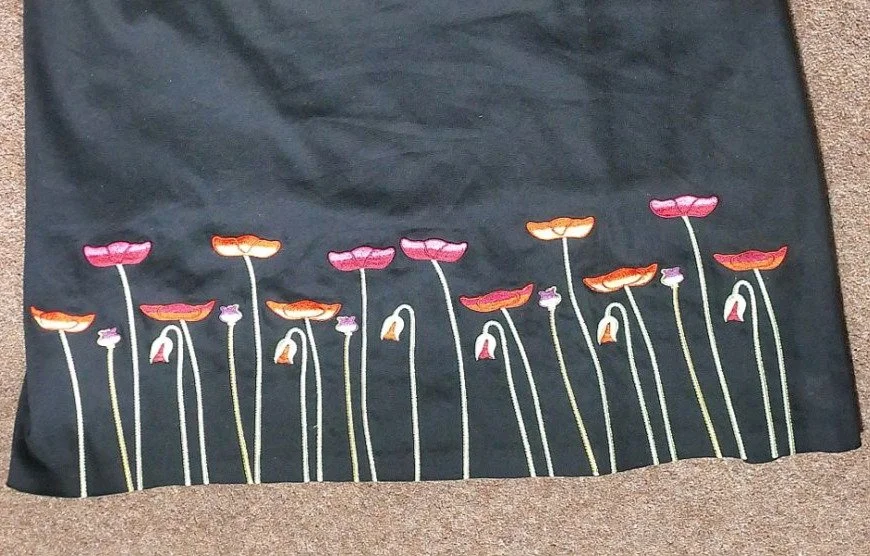
?
In landscape terms, borders are seen as something to encourage and celebrate. Exploiting the ‘edge effect’ aims to add richness and diversity to adjoining landscapes, by building on the attributes of each and adding a few opportunities from the edge itself. For instance, a wide forest ride with a south facing border which can bask in sunlight and warmth, may encourage a wider range of species and habitats than that contained within the woodland alone.
Inevitably, the theoretical ecology is complex but, to Terroir, the basic principle seems to be worth the effort. What’s not to like if the corridors created by footpaths and tracks are managed to create borders of local wildflowers between the path and the adjacent crop? Or if hedgerows and woodland borders are protected from grazing or ploughing to encourage greater species along their edges? Or if sharp transitions between one landscape and another are softened by a third vegetation type which exploits the boundary territory: a scrubby woodland edge with accessible blackberries waiting for the autumn harvest, a wildflower meadow between grass verge and road, a flood relieving rain garden between pavement highway or shallow water between main river and bank?
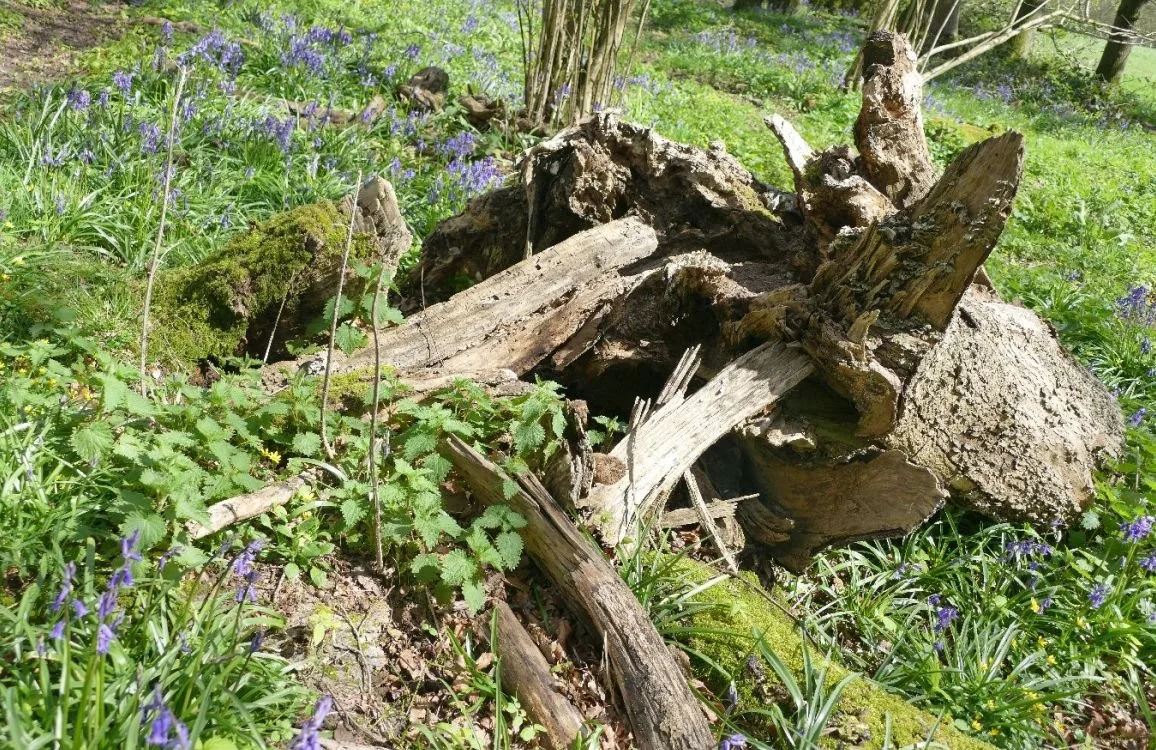
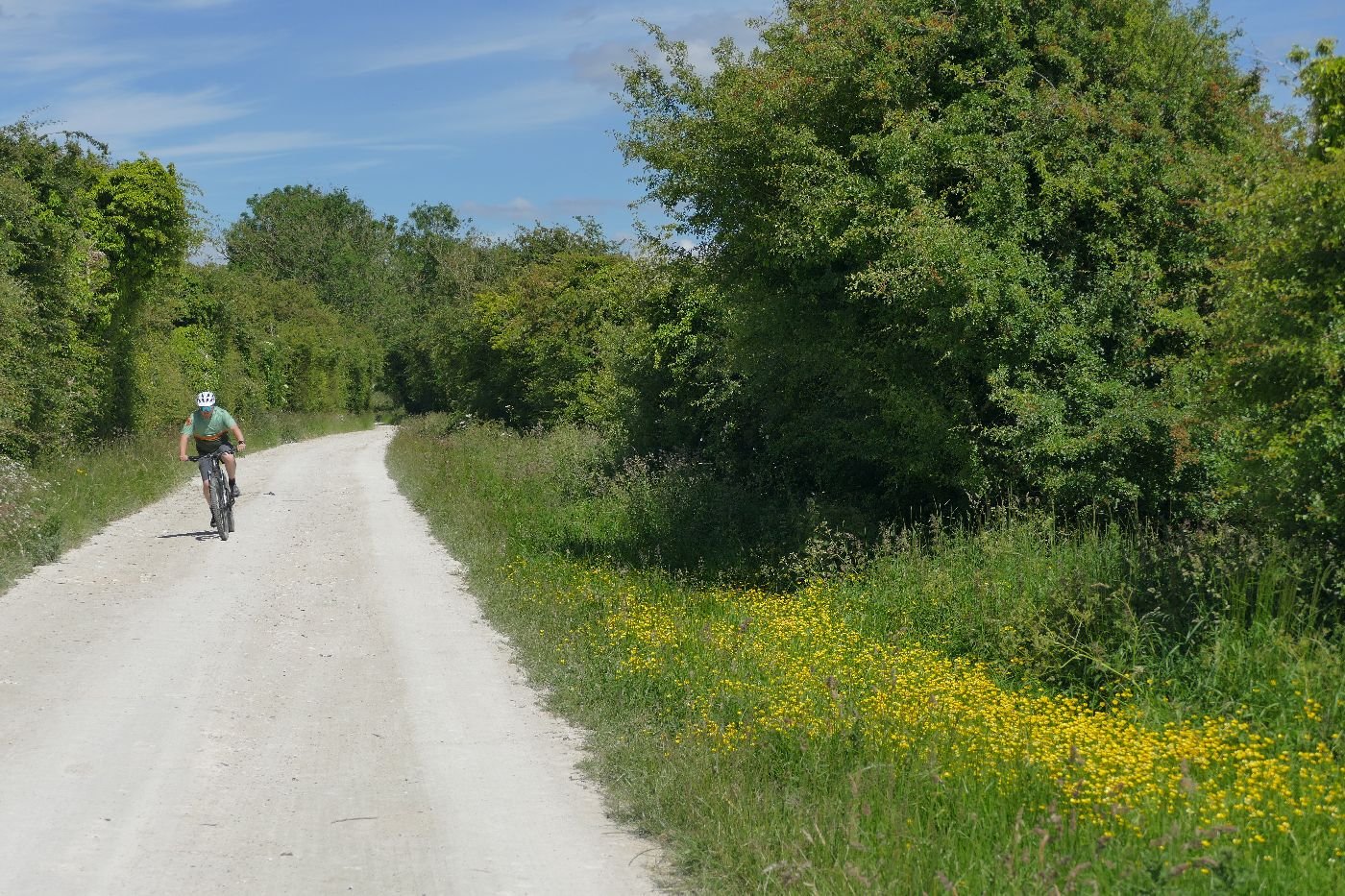
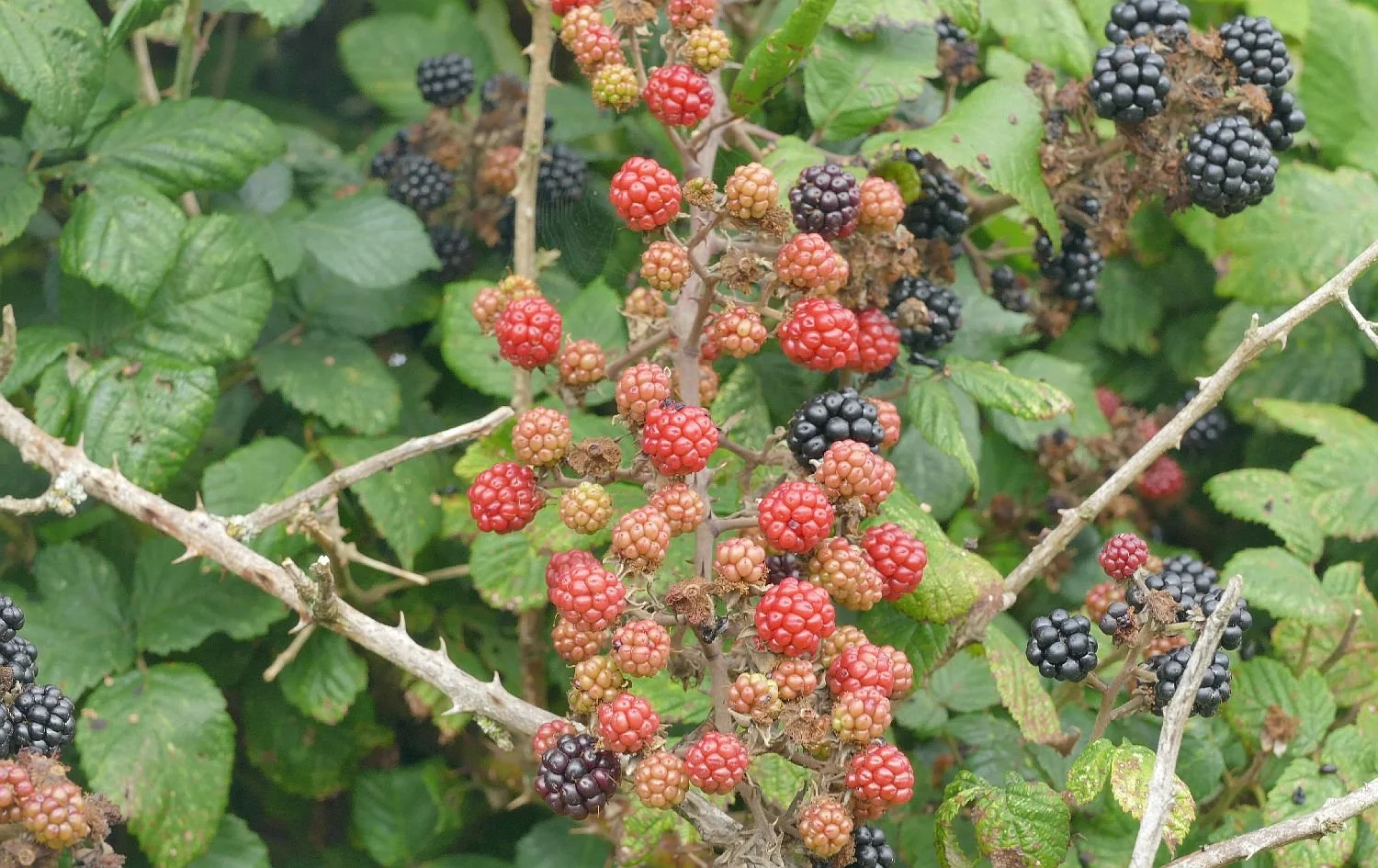
Can this philosophy be transferred to the political boundaries between nations or communities? The ‘edge effect’ requires consistent land management to ensure that communities on either side do not take over and obliterate the diversity of the border zone. This is something that politicians and diplomats find very difficult to accomplish. We doubt that even a border collie could achieve that but at least in landscape terms, not all borders are bad.