A Time to Plant …
It is with regret that we have to announce that Terroir South will not be renewing its allotment tenancy in the spring of 2027. Alternative arrangements will be made, chez Terroir, for increased fruit and vegetable production within the domestic garden.
Our allotment story began in April 2018. We kept a diary – there was obviously going to be a book in this – and the first entry reads:
“Lean over the gates of our two nearest allotment sites. Option 1 is a classic: well-tended, open aspect, attractive, even close to the railway line. Option 2 is close to the main road, sloping and surrounded by trees and has an air of neglect. But the site is much nearer. We send in an application and prepare to wait.”
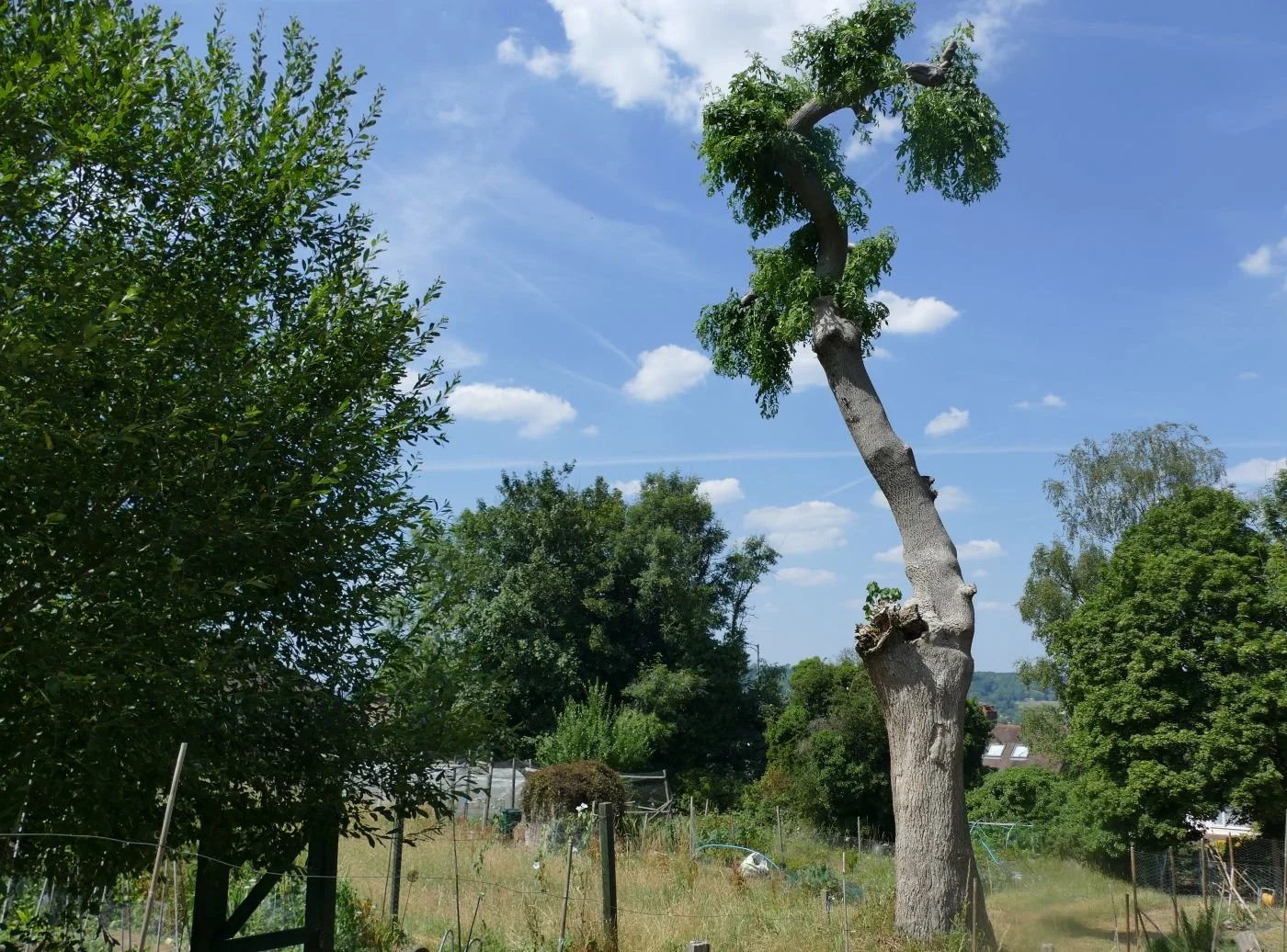
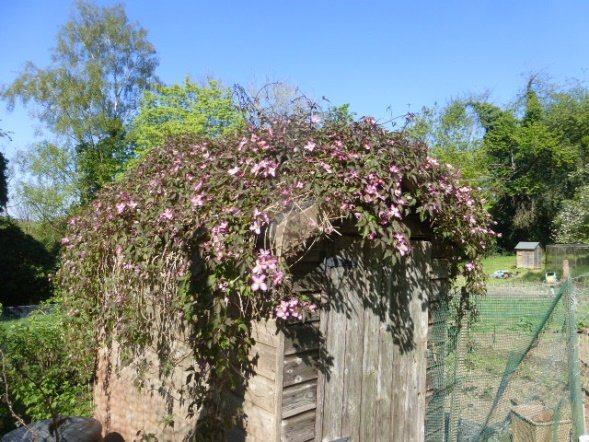
Within a surprisingly short time, we are offered a viewing with: “a young lad, training part time at Plumpton and working at the local authority offices [Plumpton College in Sussex specialises in land based skills training]. He tells me he is just about to get his chain saw ticket as we eye the weeping ash in the middle of the allotments. Once inside the site, the noise of the road fades; there are no allotments ridiculously close to the trees and a few which are hardly shaded at all. We have choices: 2 A has a tiny shed covered with clematis in full flower. It seems idyllic.
The whole site now has an air of excitement, of promise, of eccentricity, of homely potential, of inclusivity, of classlessness and shared values. I am surprised by how elated I feel at the prospect of being part of this. We discuss mulches, grass cutting and how quiet it is.”
We booked in and paid our ridiculously low rent
So why, eight years later, have we decided to quit? The short answer is ‘deer’. The long answer is far more complex: we aren’t quitting ‘allotment ideals’ but, inevitably, our lives have changed, priorities have altered and the allotment no longer fits comfortably with family life, responsibilities, aspirations and energy levels. The garden, however, will be getting a lot of attention.
We learnt a great deal from our allotment and in the first couple of years we became experts on allotment wildflowers. At the beginning a tiny (broadleaved?) willowherb, bindweed and self-heal were frequent in the rough grass, scarlet pimpernel and creeping buttercup on the more open areas, ragwort on the edge of a former planting bed (complete with cinnabar moth caterpillars), together with speedwell and forget me knots.
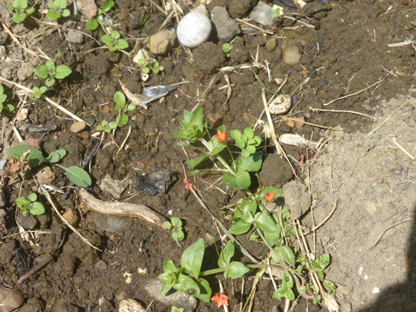
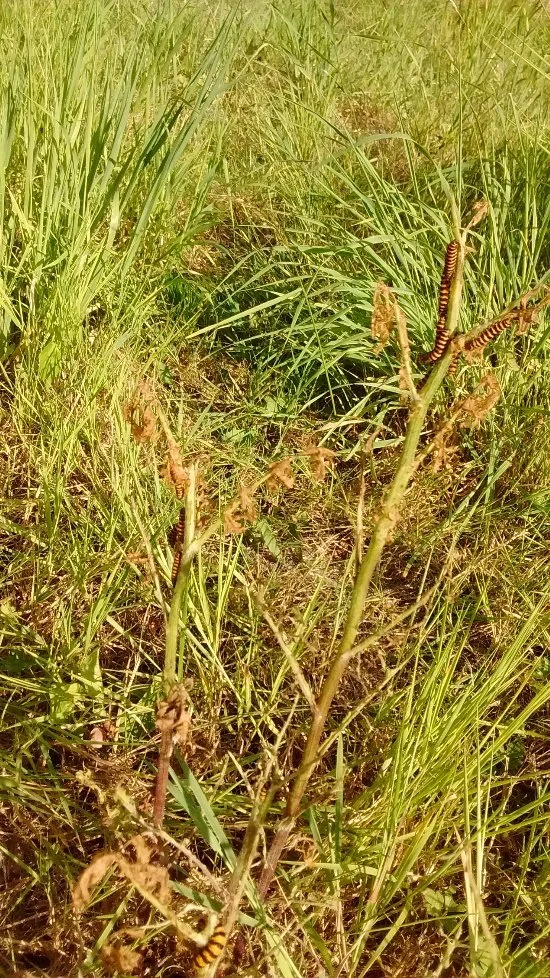
as time passed, the scarlet pimpernel disappeared, the bindweed became rampant, the forget-me-knots created massed blocks of green or blue depending on the time of year, buttercup and dandelion were ubiquitous and the ragwort came and went. At some point, aquilegias started to appear in the beds around each fruit bush; very pretty, very stubborn and largely tolerated.
Our biggest learning curve was related to control of those plants and animals which vied with the plants we wanted to grow and eat ourselves. We refused to call them weeds or pests but we finally started to understand why farming has acquired such a bad name for the mass use of pesticides. Year on year we lost significant percentages of our fruit and veg to plants and animals which had got to our crops either before they emerged or before we could harvest them. If our nutrition had depended on our allotment alone, we would have starved.
We seriously considered every form of pest control. We quickly found that our planting beds were too small for fabric mulches. Any plant with a decent root system – couch grass or dandelions for example – just carried on growing until their roots had found an edge and could come up for air and sunlight.
We were determined not to use chemicals so, much of our, and our neighbours, time is spent in hand weeding. Many horticulturists swear by hoeing but although a hoed row of brassica or beet may look neat and tidy, the weedy root is still there, lurking below the surface, just waiting to pop up again and steal the light and nutrients from our beloved crop. Weeding, particularly after watering or rain, can remove the roots of most unwanted vegetation, and will keep even creeping buttercup under control, if not completely eradicated. Of course neither hand-weeding nor hoeing will ever eliminate bindweed, dandelions and couch grass but it does significantly reduce the amount of work required to keep them at bay (and increases the volume of next year’s compost – most of us have two to three compost bins constantly working on production of soil enrichment material). A commercial crop of wheat, maize or cabbages could never be effective under such a labour intensive regime.
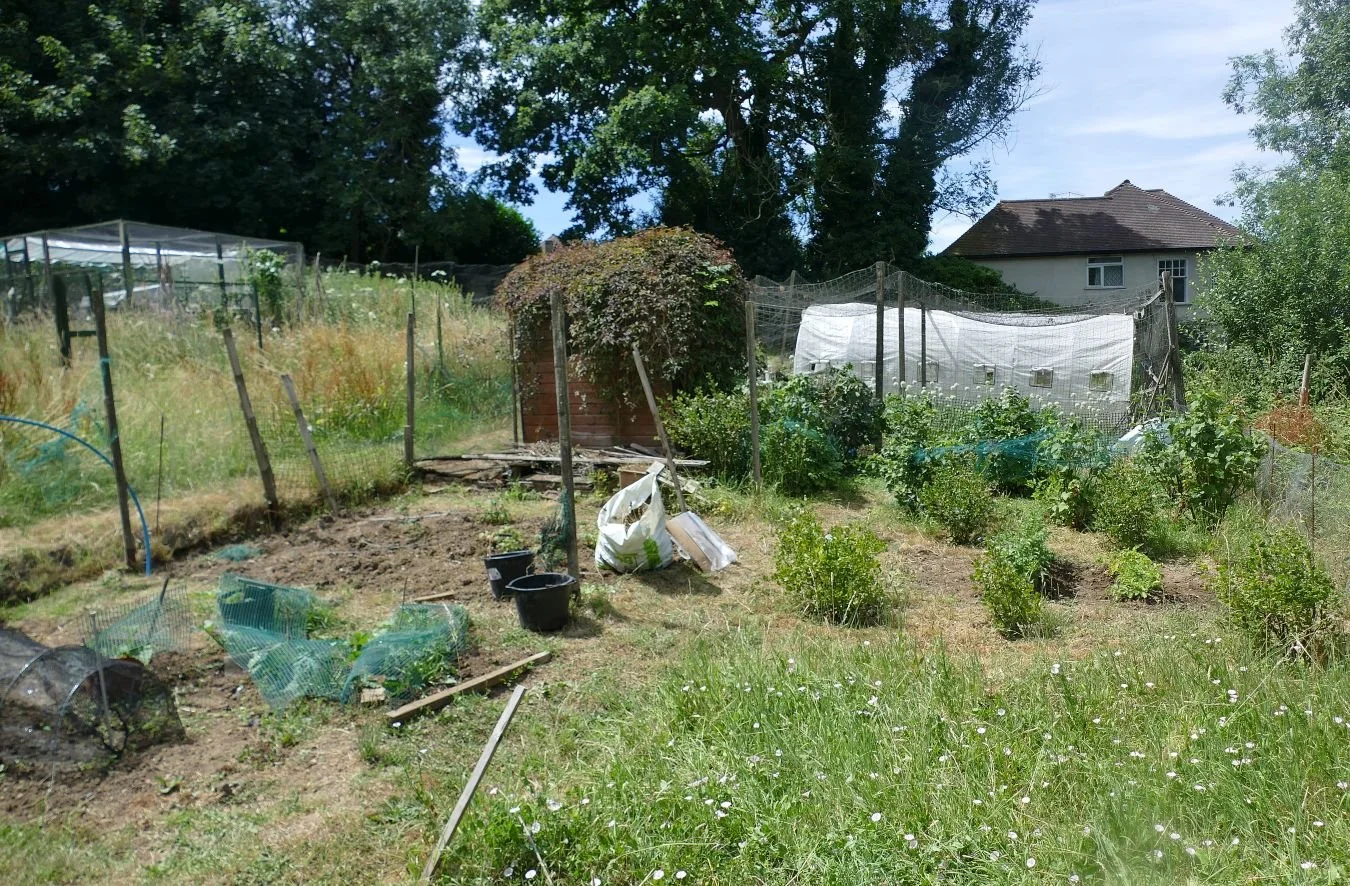
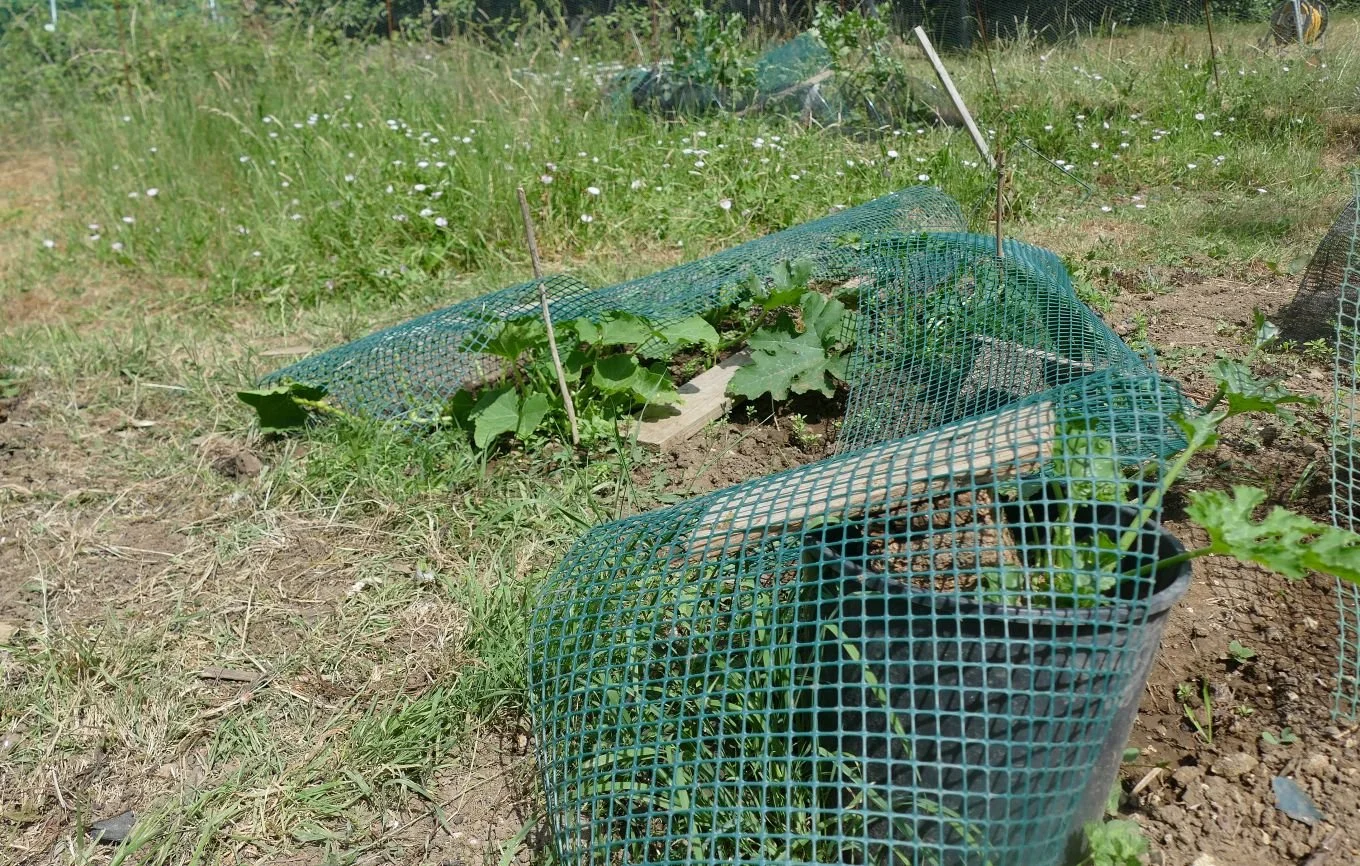
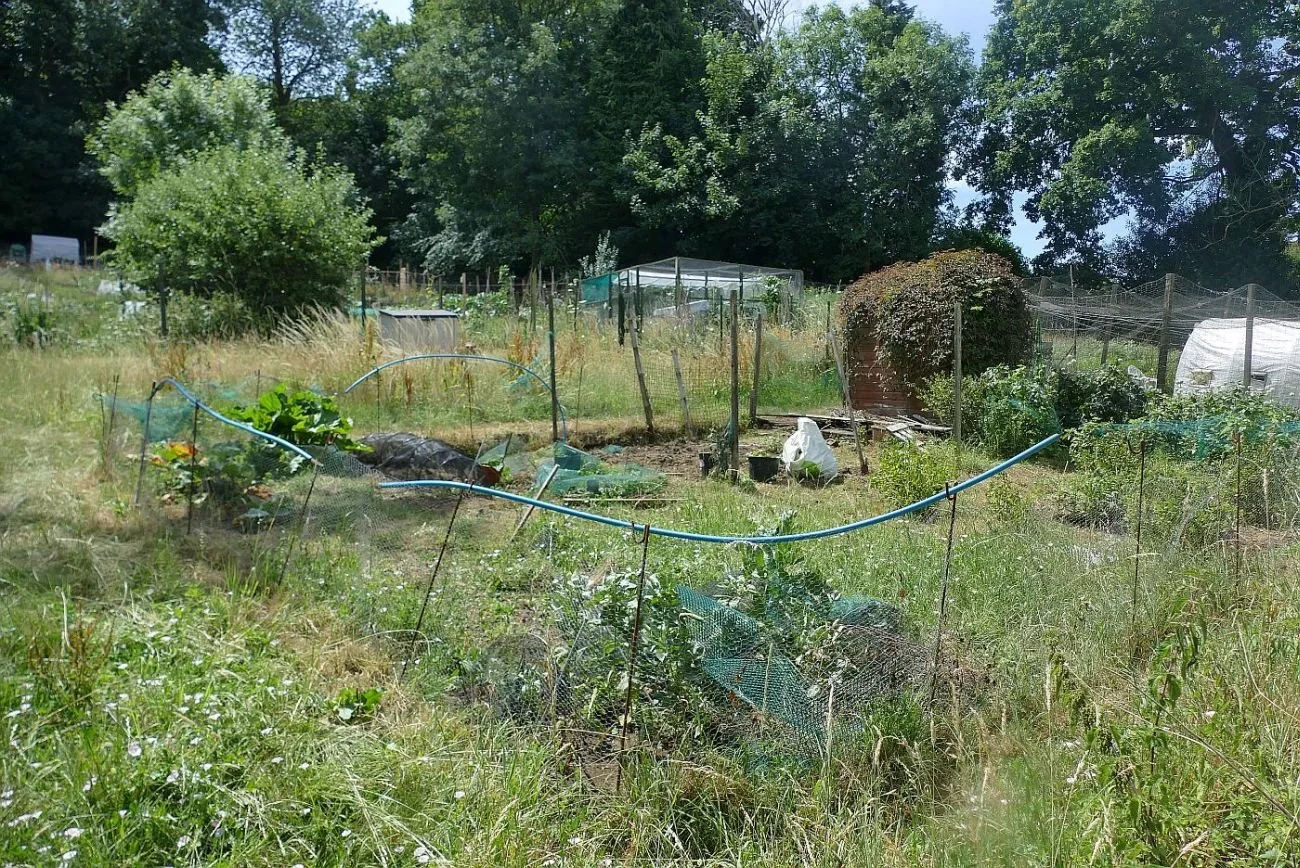
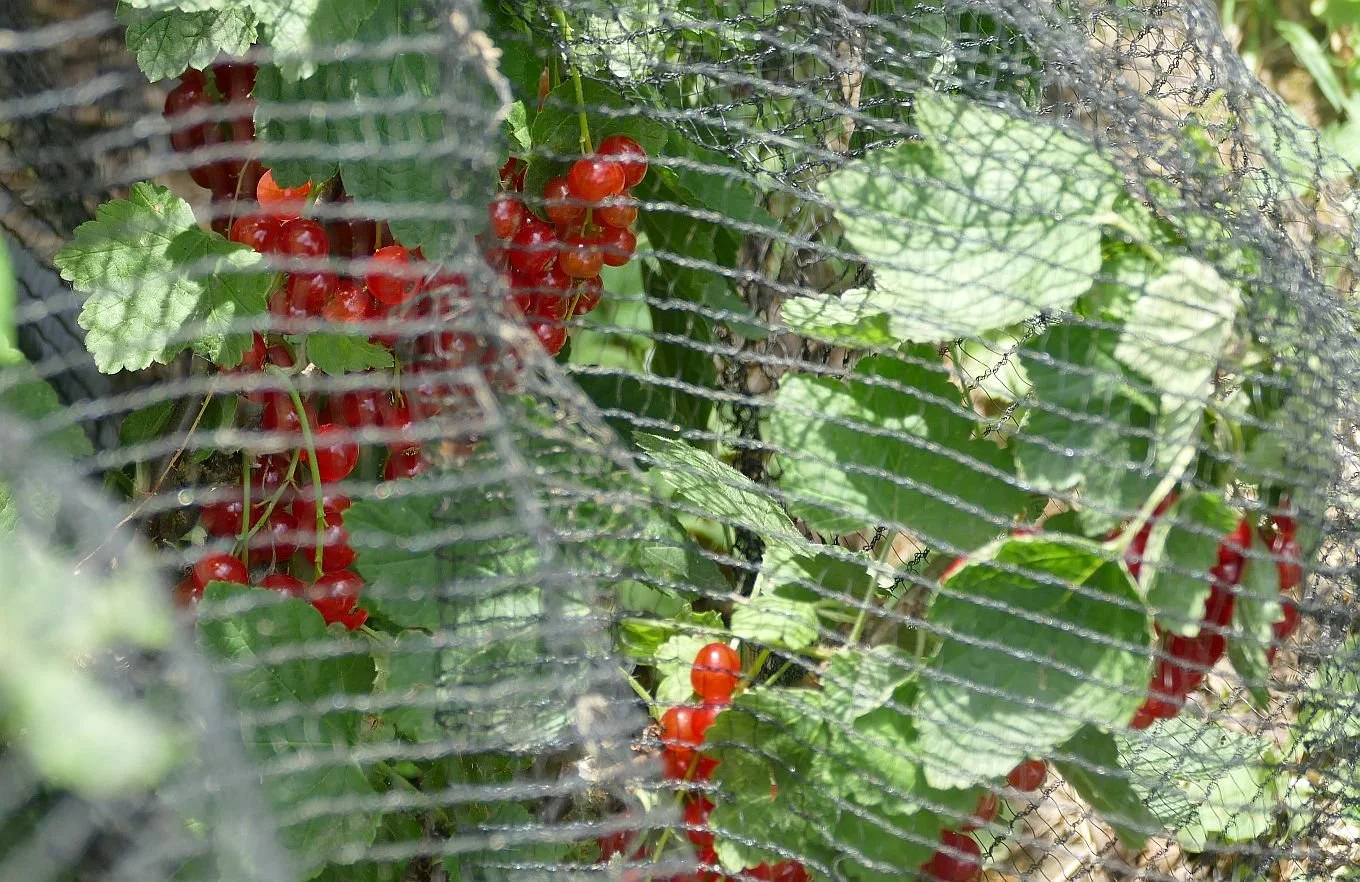
Many animal pests can be controlled fairly easily, even by using our hippie methods of recycling mesh, netting and other found objects. It’s not beautiful but it keeps the worst of the birds, slugs and even blackfly at bay. Again, commercial horticulture cannot survive on that philosophy. Pesticides or poly-tunnels are the norm – and some would say that these landscapes are not beautiful either.
Image above right: a neighbouring allotment poly-tunnel and below, a contrasting response to plant protection
The benefits of gardening and ‘allotmenteering’ to human health are well known. Apart from the upper body work out provided by weeding, the mental benefit of working among plants is outstanding. In particular, having your hands in the soil and experiencing, first-hand, the properties of your growing medium – water content, texture, bug life, root structures – is extraordinarily satisfying.
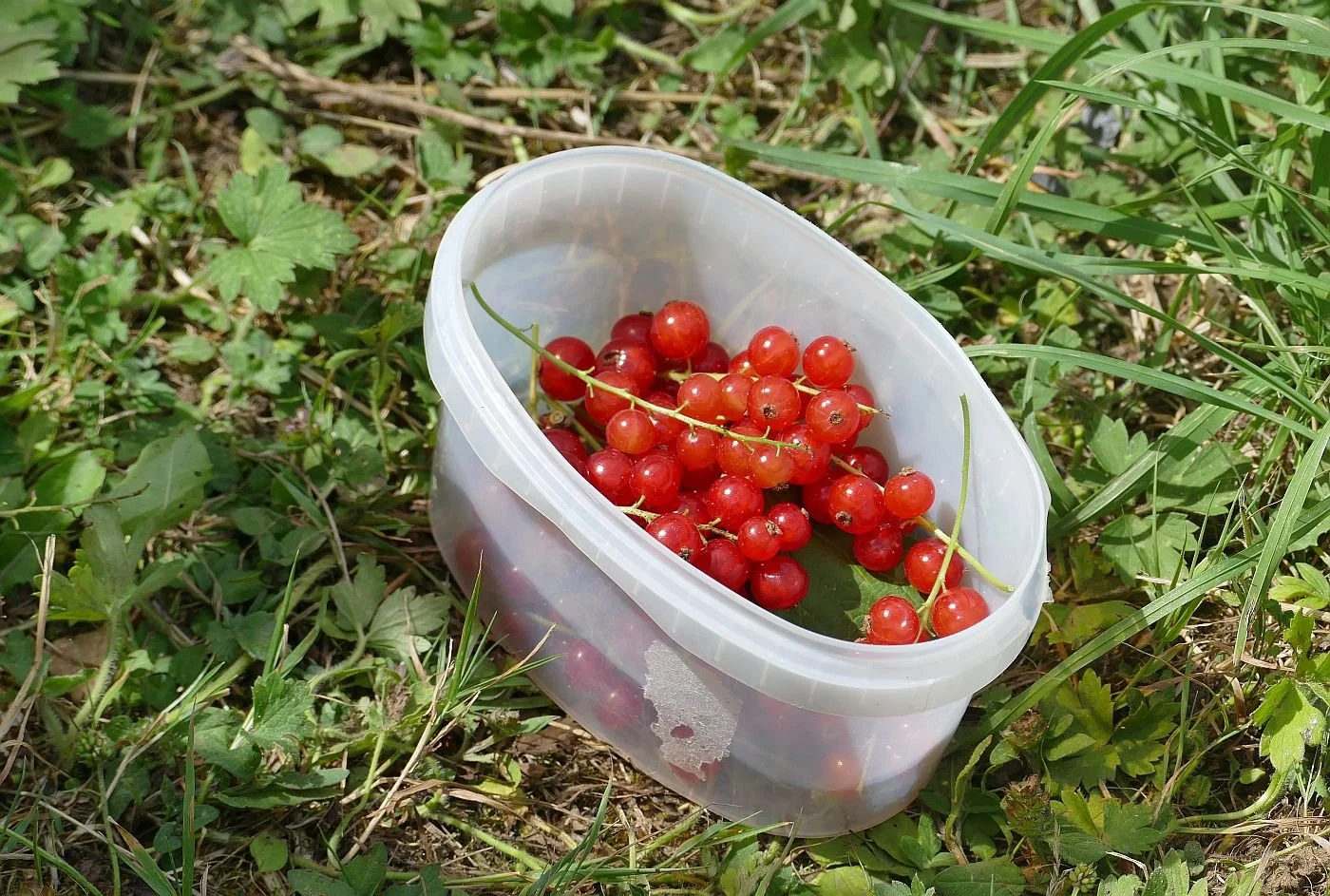
If you do raise a crop, the hope, the joy and the beauty of the process is followed by the thrill and deep satisfaction of picking and eating. When hope comes to fruition, there is the triumphant journey home with whatever has survived the onslaught of pests and weather. It peaks, of course, with the eating and preserving: homemade blackcurrant ice cream, fresh redcurrants on your morning cereal, rhubarb chutney and gooseberry crumble, courgette pie, Anglesey eggs with English leeks and chard, spinach or kale, fresh from the point of growth, gently wilted into any number of delicious dishes.
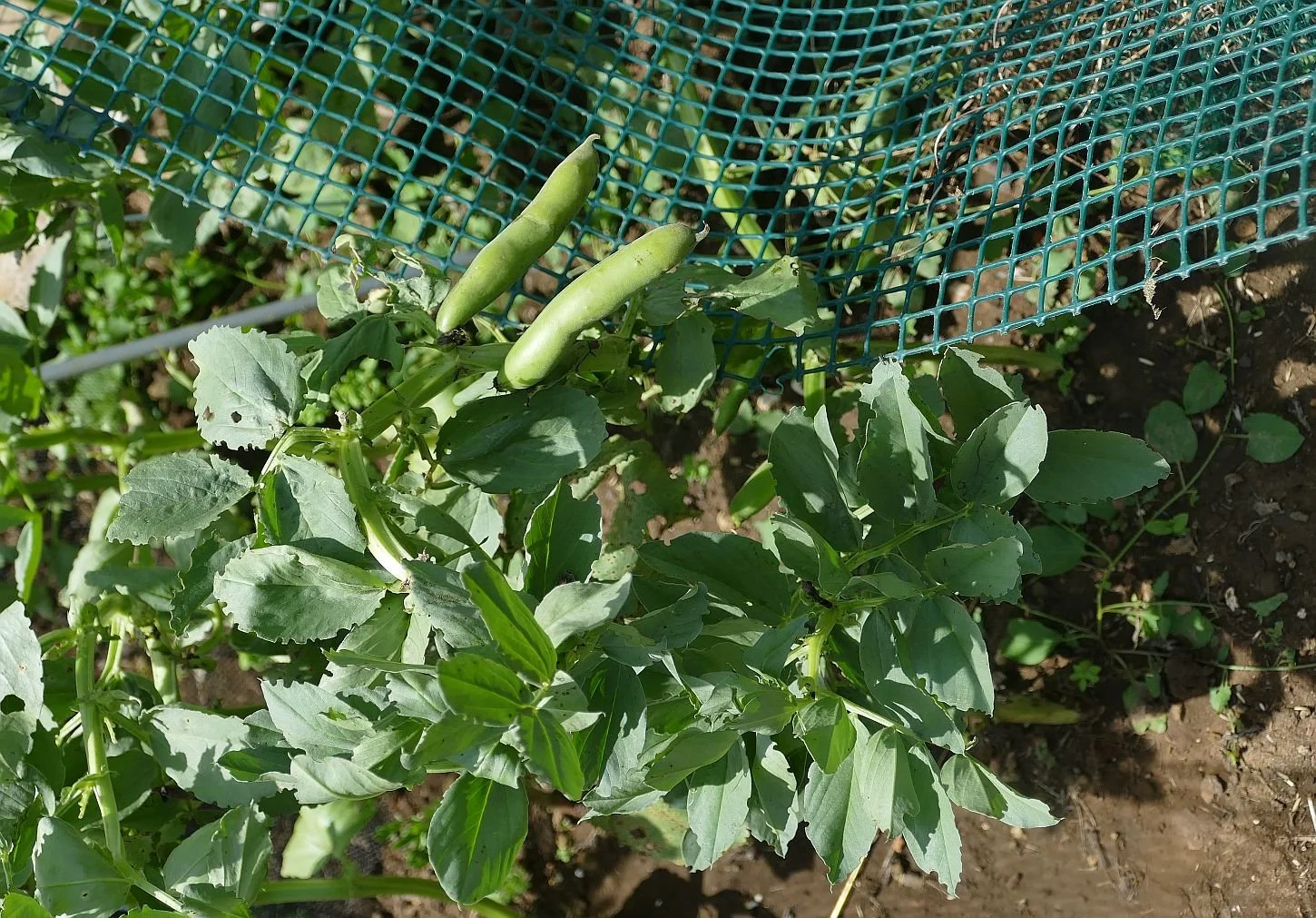
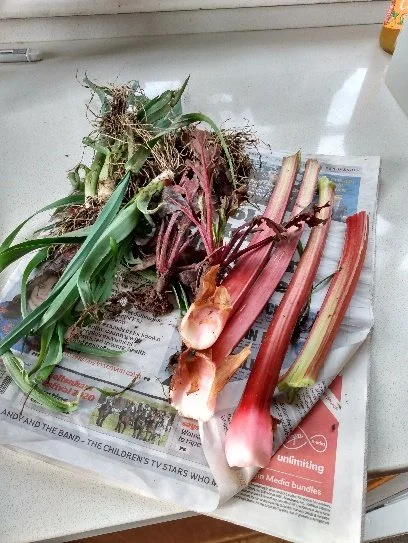
So what happened this year to make us even think about defaulting on allotment life? Enter the local deer – quite literally. Our allotment is surrounded on three sides by woodland. A main road deters deer from entering from the north and a proposed housing estate may well put paid to deer coming from the east, but the south is totally unprotected from these beautiful but ravenous browsers.
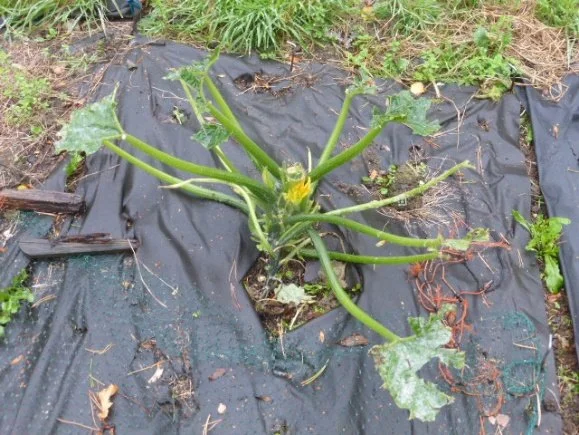
From the first year, we discovered that deer love the leaves of courgettes, pumpkins and raspberries. As we wanted to grow more than just rhubarb and potatoes, we erected netting around the raspberry plot in year 2 and wire mesh around the whole plot in year 3 - reuse of existing materials was insufficient to keep out the four legged raiders and we spent money on wire, posts and netting. The unit cost of allotment grown gooseberries shot up immediately but so did the production of other edible goods.
These days, however, our allotment site is busier than ever. We enjoy comparing notes and swapping plants with our neighbours. The chirrups of contented hens add to the soul-saving ambience. There are wild flower plots full of seasonal colour (we have one too - see below - but this year it’s mostly bindweed and grasses!), raised beds are contained by woven hazel stems, grapevines offer abundance and brassicas burgeon. The allotmenteers – all local – represent Ireland, mainland Europe and Canada. But we all have one thing in common: our plots are fenced against the deer.
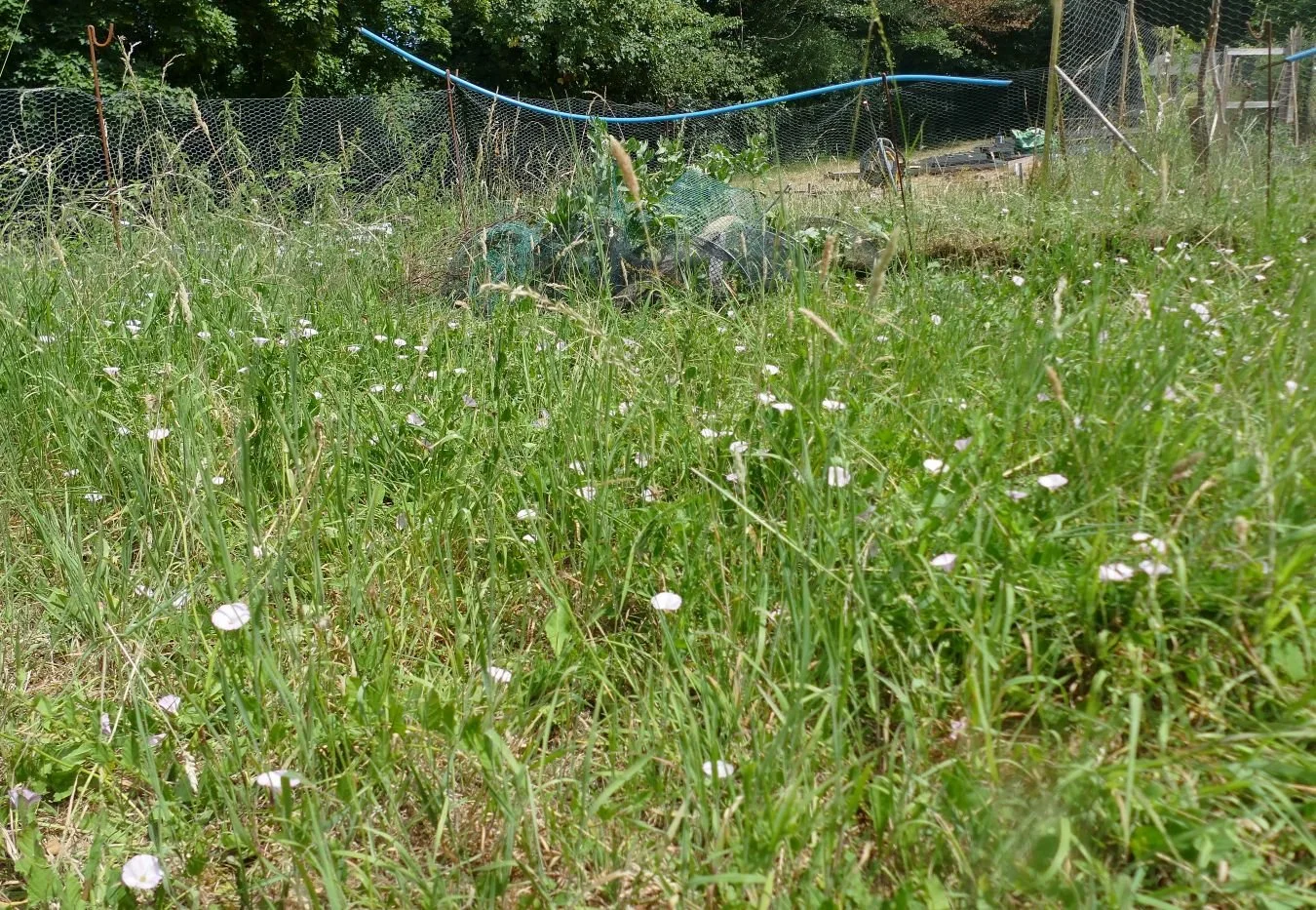
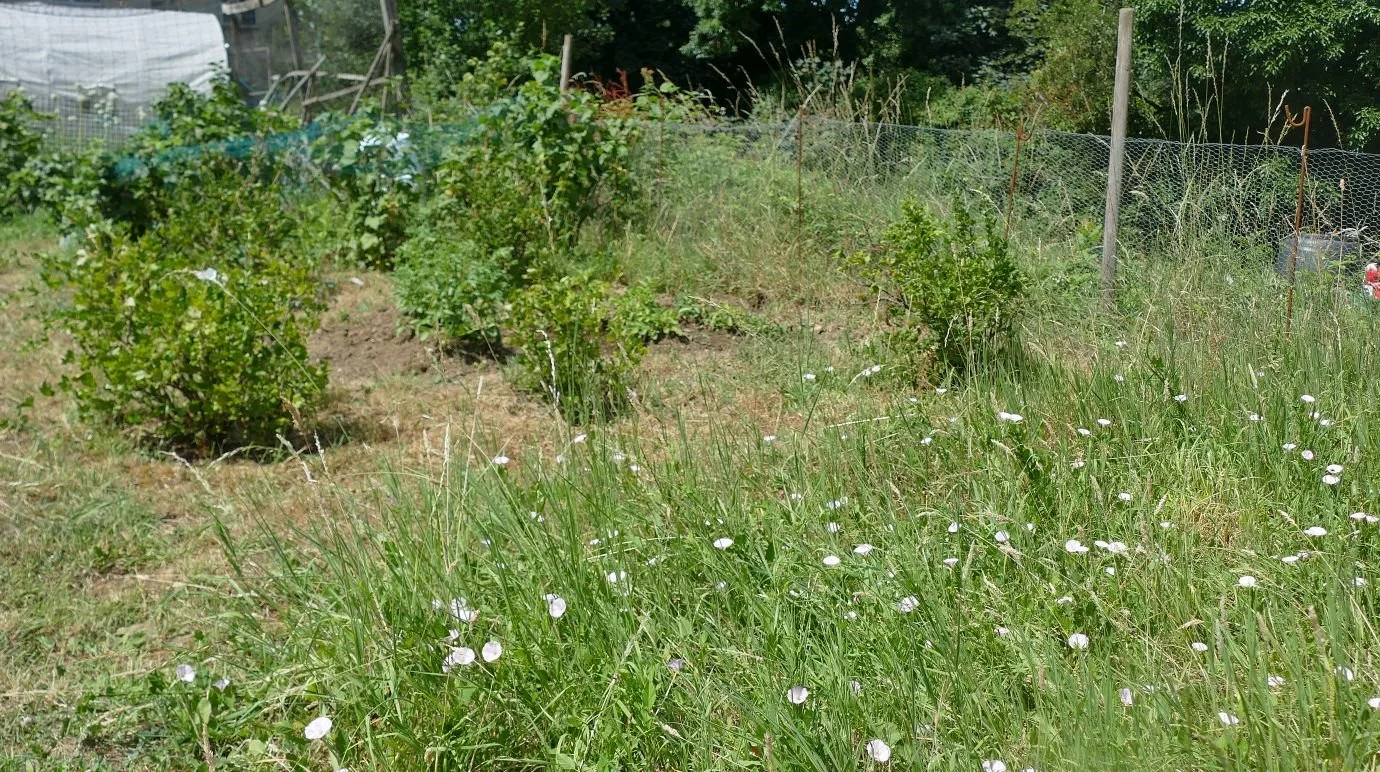
Our plot, however, was still ‘protected’ by our six year old stake and wire combination. With every other plot guarded by 2 metre high timber, trellis and wire combos, the deer homed in on us. Last Sunday, we arrived to find one of our brand new netting tunnels nosed aside and the complete crop of red and green chard grazed to the ground. One of us was devastated.
This year we had invested more time than ever before in the allotment. We were now faced with a huge fencing bill to justify those hours. Other areas of our life were also ramping up with demands from family – growing up or growing old depending on the generation – and a mature house demanding repair. Not to mention the garden which is sending ever more enticing demands for attention.
A little voice suggested the unthinkable: give up on the allotment. With a shock we realised that it would be a relief. “A time to plant and a time to uproot”.